Culture

Culture

The good, the bad and the ugly in books, exhibitions, cinema, TV, dance, music, podcasts and theatre.

Agent Zo: the Polish blonde with nerves of steel

More from Books

In recent years, far from diminishing, the number of books on the Nazis, Occupied Europe and the Holocaust – events that now lie three quarters of a century in the past – seem only to grow. New archives are opened and attics are raided for forgotten diaries and letters. One historian who has mined them

Edwin Lutyens: the nation’s remembrancer-in-chief

More from Books

In unduly modest remarks at the opening of this immaculate book, Clive Aslet, one of our most distinguished architectural historians, notes that there have been substantial biographies of Sir Edwin Lutyens, and he does not pretend to emulate them. His achievement, however, is considerable. Aslet has spent more than 45 years in intense and enthusiastic

The joy of hanging out with artists

Lead book review

Lynn Barber is known as a distinguished journalist, but what she always wanted to do was hang out with artists. This book feels like a marvellous cocktail party, packed with the painters and sculptors Barber has interviewed over the years: Howard Hodgkin, Phyllida Barlow, Grayson Perry, Maggi Hambling. Sarah Lucas and Tracey Emin eye one

The endless fascination of volcanoes

More from Books

Volcanoes, volcanoes, volcanoes. You wait years for a good book or a film about volcanoes to come along and then they blow up all at once. In 2022, Sara Dosa’s incredible, unmissable – incroyable! incontournable! – documentary about the eccentric French filmmakers and volcanologists Katia and Maurice Krafft, Fire of Love, was nominated for an

Kindness backfires: Sufferance, by Charles Palliser, reviewed

More from Books

Charles Palliser’s Sufferance tells us what happens to one family in an occupied country during wartime. What sets it apart is that all the characters are unnamed. The country, region and historical period also remain unspecified. This indeterminacy lends the novel enormous power. The father of the family decides to take in a young girl

The traditional British hedge is fast vanishing

More from Books

Five years ago, a documentary about the Duchy of Cornwall featured the then Prince of Wales in tweeds and jaunty red gauntlets laying a hawthorn hedge. It was a brilliant piece of PR. If Charles was a safe pair of hands with a hedge – something as quintessentially English as a hay meadow or a

The perils of waiting on a Tudor queen

More from Books

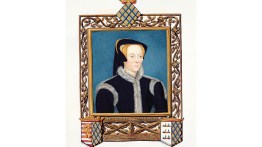
At 7 o’clock on a bleak February morning in 1542, King Henry VIII’s fifth wife Katherine Howard, so enfeebled by fear and misery that she could hardly stand, was half-led, half-carried from her cell in the Tower of London to the scaffold in a nearby courtyard. Watching as the axe fell on her mistress’s neck,

What do we mean when we talk of ‘home’?

More from Books

Given that I know the author, would I feel inhibited about reviewing her new book critically, I asked myself. But other than meeting her once at a party for two minutes, I realised that I know Clover Stroud only through her raw, ravishing memoirs and – like the rest of her 37,000 Instagram followers –

There’s much to be said for nostalgia

More from Books

Michel Barnier, the chief negotiator for the EU Commission, called Brexit an expression of ‘hope for a return to a powerful global Britain, nostalgia for the past’ – a mood that ‘serves no purpose in politics’. Popular historians have echoed his view of nostalgia as a syndrome which affects declining societies such as Great Britain.

When the local wizard was the repository of all wisdom

More from Books

What do you do when one of your possessions goes missing? Search behind the sofa cushions? Ask other members of the household where they put it? If you lived in Renaissance England, there’s a chance you would have consulted a local magician for advice, especially if the lost item was of value. In the absence

Death was everywhere for the Victorians, but it was never commonplace

More from Books

Death’s great paradox is its inconstant constancy. Its forms and rituals change from generation to generation. In our own era, antibiotics have reduced the chance of a fatal infection, and average life expectancy has risen to our eighties. Direct cremation means we can even ship Auntie Maudie, when her time comes, to the crematorium sight

Nietzsche’s thinking seems destined to be mangled and misunderstood

More from Books

For Mussolini’s 60th birthday, Hitler gave him a de luxe edition of Friedrich Nietzsche’s complete works, bound in blue pigskin. After the war, writers vied to revile the philosopher. Then, in the 1960s, he suddenly became philosophy’s darling. How come? Enter two erotically entangled Italians: Georgio Colli, a philosophy teacher at Lucca from 1942, and

Are all great civilisations doomed?

More from Books

To quote Private Frazer in Dad’s Army, ‘We’re doomed, doomed!’ That seems to be the message of Paul Cooper’s eminently readable series of essays about how and why 14 civilisations rose to greatness and then collapsed. He begins with the Sumerians in the fourth millennium BC, at the northern tip of the Persian Gulf, and

A surprising number of scientists believe in little green men

More from Books

In 1928, a young physicist and engineer named Karl Jansky began working at Bell Telephone Laboratories, tasked with investigating any sources of static that could interfere with long-distance radio communication. Cobbling together a system of antennae on a merry-go-round, he successfully found that thunderstorms were annoying in just this way. But there was a small

The identical twins who captivated literary London

Lead book review

The dazzlingly beautiful identical twins Mamaine and Celia Paget were born in 1916 and brought up in rural Suffolk – not the greatest springboard, you would think, for lives at the intellectual heart of the mid-20th century. Yet the list of their friends reads like a roll call of literary notables: Dick Wyndham, Peter Quennell,

The slave’s story: James, by Percival Everett, reviewed

More from Books

Rereading The Adventures of Huckle-berry Finn can be a saddening experience. It’s not just the oft-repeated n-word that jolts, then pains, then twinges; it’s the ‘no sah’, ‘I’s agwyne to’ locutions of Huck’s companion, the runaway slave Jim. In retelling the celebrated adventure story in Jim’s own voice, Percival Everett upends the convention. James and

Emily Dickinson was not such a recluse after all

More from Books

This is fanciful, I know, but I can’t help wondering about the great poetry that will surely be written in the early 2060s. Think about it: in the early 1960s, Sylvia Plath had her great creative outpouring, waking at 4 a.m. each day to work on the ‘Ariel’ poems that would make her name. Exactly

Hero and villain: The Two Loves of Sophie Strom, by Sam Taylor, reviewed

More from Books

Counterfactual thinking can be compelling. We imagine love affairs missed out on, tragedies averted. What if I hadn’t boarded that bus or woken from that sleep? Sam Taylor throws this thinking into a vital moment in a young boy’s life that has massive, world- historical resonance. Vienna, 1933. Nazi sympathisers burn down the flat of

The circus provides perfect cover for espionage

More from Books

The hall was before me like a gigantic shell, packed with thousands and thousands of people. Even the arena was densely crowded. More than 5,600 tickets had been sold. Cyril Bertram Mills started his circus career accompanying his father to European horse fairs in the 1920s. The two of them were soon familiar faces on

What does Christian atheism mean?

More from Books

Two opposed camps can only have a fruitful debate if they agree on what it is they disagree about. A militant atheist such as Richard Dawkins is right to call out scientific ignorance in some religious settings. But at a deeper level his argument fails, because the deity he rejects is a blown-up thing, not