Culture

Culture

Wallace Stevens and the magic of stuff

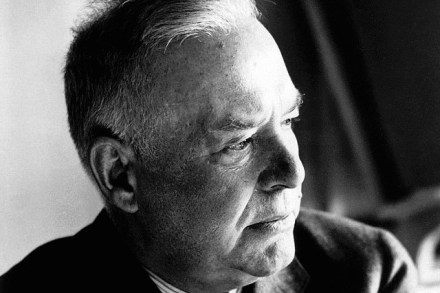
Writers have all sorts of hobbies. Tolstoy liked to play chess. Dostoevsky, as everyone knows, loved to gamble. Nabokov collected butterflies; Hemingway, wives. Eugene O’Neill’s favorite pastime was drinking. Flannery O’Connor, of course, loved birds. Emily Dickinson loved to bake. T.S. Eliot was an avid sailor. As a young man he regularly sailed along the shore of Cape Ann. One summer, Eliot and some friends sailed from Marblehead, Massachusetts to Mt. Desert Rock in a 19-foot knockabout in the fog and rough seas. It was a journey of well over 150 nautical miles and could have easily ended in disaster. The sea, of course, appears again and again in Eliot’s poetry.
Cancel culture gets its comeuppance

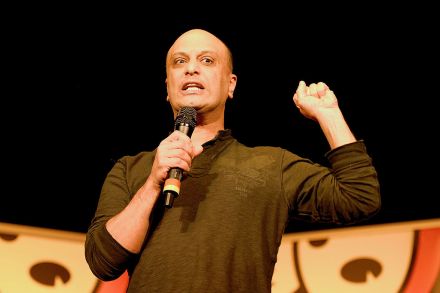
Cancel culture has struck again, but this time its would-be victims aren’t apologizing. The Daily Mail — a publication notorious for being “free” with its own speech — is leading the anti-cancel culture charge this month with a series of stories that point to an encouraging trend. A handful of prominent creatives are standing up to woke bullies and noting the dangers (and impracticalities) of their demands, which essentially amount to writers and entertainers forsaking their imaginative talents by only addressing things they’ve personally experienced. Except they aren’t supposed to be candid about those things, either, as they might offend someone if they’re too honest.

Will Smith (Getty Images)

Five other award show moments that needed a slap

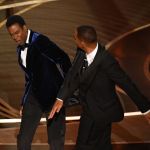
Actor Will Smith delivered the slap heard 'round the world Sunday night at the 2022 Oscars ceremony, smacking comedian Chris Rock for a joke about his wife's bald head. Regardless of whether you think Smith overreacted or did the right thing, the slap was the highlight of the evening and one of the most exciting awards show moments in years. In honor of the "Smith Slap," Cockburn has compiled a list of five other award show moments featuring celebrities that deserved to be slapped. 1.

will smith

Will Smith’s slap saved a poor Oscars

The news stories regarding the 2022 Academy Awards were supposed to be about how it was the first time a film (Coda) produced by a streaming service (in this case, Apple TV) took the highest award at the Oscars. But moments earlier, Will Smith had marched on stage to slap Chris Rock — and everything changed in an instant. Without any doubt, the thirty seconds it took Smith to assault Rock, who had been making poor-taste jokes about Smith’s wife Jada Pinkett’s alopecia, and to bellow repeatedly, “Keep my wife’s name out your fucking mouth,”will prove to be game-changing, both for the Academy Awards and for Hollywood at large.

Holbein at the Morgan

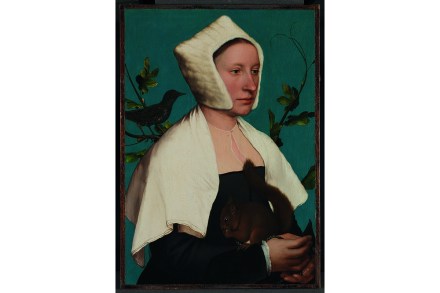
There’s a moment in portraiture when people started having a mind of their own. All of a sudden you see it in the faces: the eyes, the brow, the lip. We are no longer looking at a figure for all time — or even a sitter in a moment in time — but at something more like “me time.” The focus is not on outward appearances but inward looking. These people are lost in thought. That’s just where Hans Holbein the Younger, the great portraitist of the early sixteenth century, found them. The German artist, born into a family of painters around 1497, could conjure the smallest details at his fingertips. He quickly became the most sought-after portraitist in Europe and, by 1536, the court painter of Henry VIII (at a time when Henry himself was courting).

Holbein
Jackson

Michael Jackson on Broadway

Michael Jackson has a claim to being the most famous man in history. He is certainly the most widely seen and heard. His career straddled five decades and the heydays of radio and television. His Thriller is the best-selling album of all time. He went from playing nightclubs and The Ed Sullivan Show with the Jackson 5 to solo tours that each attracted more than four million fans. For musical celebrity, there is no comparison. The Beatles? MJ owned them, literally: he bought their entire catalogue in 1985. Elvis Presley? Lisa Marie was the King of Rock and Roll’s only daughter, but it took marrying the King of Pop to make her a star.

Belfast

Troubles in paradise

As Van Morrison’s lovely, Oscar-nominated “Down to Joy” plays over the opening credits of Belfast, I immediately accepted that I was being primed for the tears that would surely be flowing in an hour and a half. It’s obvious from the outset that Belfast, Kenneth Branagh’s touching Troubles-set coming-of-age story, is pure Oscar-bait, a film engineered to produce both weepy breakdowns and awards. The ingredients are all there. It documents a historical sectarian conflict, one pitting Protestants against Catholics. A beautiful young family, struggling financially, must navigate the chaos that has descended upon them.

keaton

Buster’s land stand

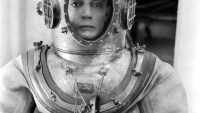
When Shakespeare wrote that “some men are born great, some achieve greatness and some have greatness thrust upon them,” the Bard could not have been thinking of Buster Keaton, who was born nearly three centuries after his death. Yet the idea expressed in that famous line from Twelfth Night — that some men guide their fate while others are controlled by it — carries a curious resonance for fans of the legendary silent performer known for his notably impassive, even indifferent comic persona in masterpieces including The Navigator (1924) and The General (1926). If ever there was a man on whom life, if not greatness, was thrust, it was the one they called the “Great Stone Face.

Volodymyr Zelensky’s sitcom is now as sad as it is funny

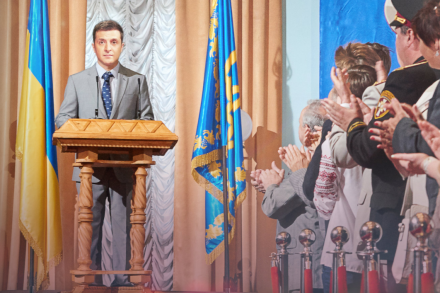
There are few world leaders braver than Volodymyr Zelensky. Ukraine's president spends his time holed up in his capital, defending his homeland from an onslaught of invading Russian troops. He's addressed every major parliament in the West to plead for weapons and aid. Joe Biden calls him weekly; Emmanuel Macron has started to dress like him. Given his present international standing, it's incredible to think that just six and a half years ago, Zelensky was settling down to watch himself play the president of Ukraine in the premiere of Servant of the People, the sitcom which set the stage for his political career.

President Stacey Abrams gives Star Trek its far-left final frontier

Star Trek: Discovery took one giant leap for the leftist ideology that defines it in its fourth season finale this week. Enter President Stacey Abrams, leader of the thirty-second century’s United Earth. Perhaps deliberately, the sci-fi show’s writers left viewers ignorant as to whether President Abrams was democratically elected to her fictional role. Star Trek’s democratic ideals, after all, seem poorly matched to a politician who lost an election and then claimed that it had been “stolen from the voters of Georgia.” No worries, however: Abrams’s future is bright. Concluding her cameo, Abrams asks Discovery’s star Sonequa Martin-Green, “there's a lot of work to do, are you ready for that?

stacey abrams star trek

Don’t cancel Russian culture

In the three weeks since Vladimir Putin launched his shocking invasion of Ukraine, the West has surprised the world with the severity of the economic sanctions it's imposed. No one has been more surprised than Putin himself, who believed the West too soft and his own nation’s oil too crucial to the global economy. How the West can further support Ukraine — while also avoiding the not-insignificant risk of a nuclear war — is a complex question. It will not be answered, however, by indulging in ugly prejudices or shunning Russian culture writ large. Since the war began, vandals have targeted businesses that are Russian-themed or owned by Russian expatriates.

William Hurt — a life in two acts

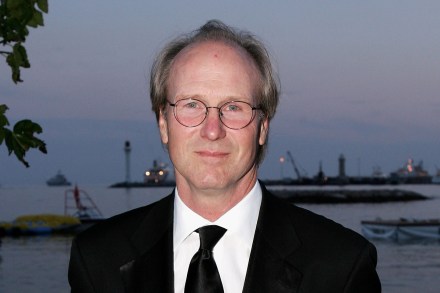
It is a depressing statement on the banality of the film industry that the death of actor William Hurt, at the age of seventy-one, was marked by at least one obituary stating, “Avengers star dies.” Hurt, who appeared in several Marvel films as the military character Thaddeus Ross in his latter-day career, did indeed appear in the mega-grossing Avengers films Infinity War and Endgame, and I very much hope that he received some tiny portion of the films’ enormous box office receipts in recognition of his appearance. But to describe Hurt’s life and work as defined by his Marvel roles reminded me of the great Alan Bennett line about his sexuality: “It’s like asking a man who has just crossed the Sahara whether he would prefer Perrier or Evian water.

william hurt

On receiving books in the mail

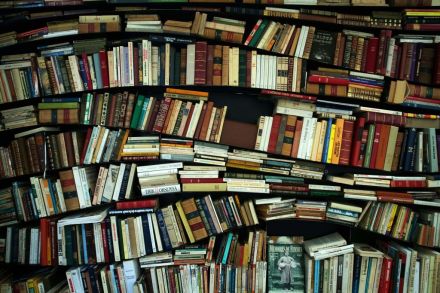
I receive a lot of books in the mail. Perhaps you do, too. Some of these I order. Most come from publishers or authors hoping for a review. A few are gifts. I prefer to buy books at used bookstores. You never know what they might have on hand, and there’s nothing better than discovering a gem of a book by a writer you’ve never heard of. Plus, the price is always right. Independent bookstores are great, too. I’m no snob. I bought a book just the other day at the gamified Barnes and Noble in town — the atrociously overrated Call Us What We Carry by Amanda Gorman, who read at Joe Biden’s inauguration (more on that at some point, perhaps). But I prefer independent bookstores because, like at used bookstores, there’s an element of surprise in the store’s stock.

mail

Anyone but Madonna should make the Madonna movie

The life story of Madonna Louise Ciccone is one of the most interesting real-life narratives of any twentieth-century star. From her Michigan origins to her world-conquering career as "Queen of Pop" and her continual, Bowie-esque reinventions, she has lasted decades in a notoriously fickle industry through a combination of chutzpah, publicity savvy and talent, to say nothing of allying herself with some extremely talented collaborators along the way. "It’d make a great film," people have said repeatedly. But what they should have quickly added is, "But Madonna herself must not write and direct it." It is a problem that only people at the highest, Olympian levels of fame face, but nobody will say no to them, no matter how stupid their ideas.

madonna

Why does Hollywood ruin literature’s best characters?

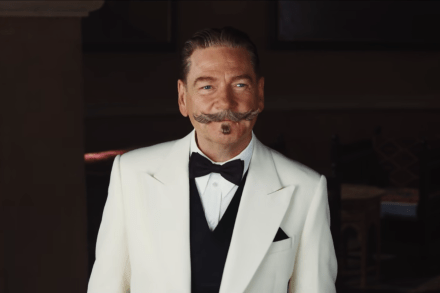
I remember enjoying Murder on the Orient Express a few years ago, when I took refuge from a real-life blizzard in a Jackson, Wyoming theater to watch Kenneth Branagh’s decadent take on Agatha Christie’s snow-covered murder mystery. It was memorably cast with big-name talent (Johnny Depp makes one heck of a sleazy bad guy) and exquisite, if sometimes over-the-top, costumes and décor. If memory serves, the movie ended as a suspenseful and satisfying cinematic treat. Death on the Nile, not so much. Branagh teased his next adaptation of an Hercule Poirot novel at the end of Orient Express, but I found his second attempt wasn't worth the five-year wait.

kenneth branagh poirot hollywood

When actors become politicians

The similarities between acting and politics are obvious. Someone stands on a stage, wearing makeup and an appropriate costume. With suitable gravitas, they read out a speech that someone else has written. If it goes well, there is applause. (If not, there can be booing, or a riot.) If they are good at their job, they can continue at a high-profile level for a considerable time, and arouse great public affection. If they are not, they are either swiftly forgotten or, at worst, become a figure of public loathing, a status that they might never live down for their rest of their lives.

How Arvo Pärt can help us through Lent

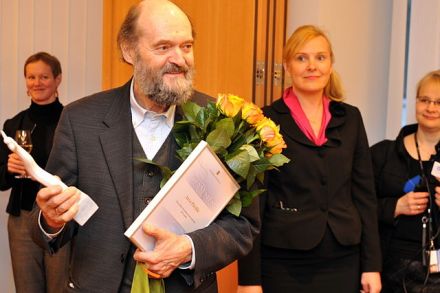
This year marks the forty-fifth anniversary of Arvo Pärt’s Fratres — one of a series of groundbreaking compositions that Pärt wrote between 1976 and 1978 using his tintinnabuli style. Most of Pärt’s works in this compositional style, which means “little bells,” are in two voices — usually one a triad and the other a melody — which are played in such a way as to create an underlying drone. This creates a piece of music that is both concrete (single notes ring out clearly) and ephemeral. We see this in pieces like Für Alina (1976), Fratres (1977) and Spiegel im Spiegel (1978). Pärt was born in Estonia and grew up in the Soviet Union, but was influenced by twelve-tone serialists like Pierre Boulez and Karlheinz Stockhausen.

arvo part

Will the real Robert Pattinson please stand up?

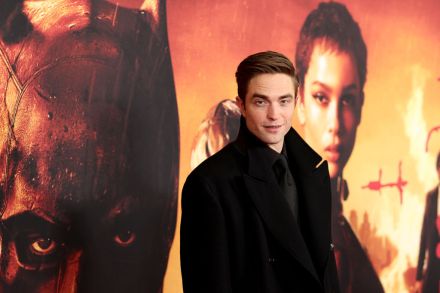
As Alan Bennett’s Prince Regent almost said in The Madness of King George, "Being Batman is not a position. It’s a predicament." Actors including Michael Keaton, Christian Bale, Ben Affleck, George Clooney, Val Kilmer and (vocally) Will Arnett have all had their turn at being the Bat-person over the past few decades, vying with one another to adopt their gruffest and manliest voice as they fly around dressed as a giant nocturnal mammal. It’s not quite Stanislavsky, but the various award-winning thespians have given it their all. Their mothers, and agents, must be proud. And now the youngest of their number, 35-year-old Robert Pattinson, has joined their Bat-ranks.

Ilya Kaminsky’s poetry in a time of war

There is currently a poem going viral on Twitter. “We Lived Happily During the War” is by the Ukrainian-American poet Ilya Kaminsky, and it is the first poem of his prize-winning collection Deaf Republic (2019). It is easy to see why it feels particularly relevant: Kaminsky was born in the former Soviet city of Odessa, which is now under attack from Russia. The poem opens: “We Lived Happily During the War” And when they bombed other people’s houses, we protested but not enough, we opposed them but not enough. It is a heart-breaking meditation on the way normal life continues despite crises. The speaker describes how “I took a chair outside and watched the sun.” But he ends with a plea: “we (forgive us) / lived happily during the war.

llya Kaminsky

Pop music isn’t getting better — and that’s okay

In last weekend’s Wall Street Journal, James R. Hagerty and Anne Steele argue that pop artists are using more imperfect — that is, half or slant — rhymes than before because of the pressure to be original in the age of Spotify. This, plus the influence of rap, which “requires verbal virtuosity,” they argue, “has upped the ante on originality in rhyming.” Color me unconvinced. Olivia Rodrigo rhymes “smart” with “car” in “Brutal.” Dua Lipa’s “Don’t Start Now” rhymes “full 180” with “crazy.” For Hagerty and Steele, these are examples of stunning creativity. But lyricists have been using slant rhymes for a long time. Why? Mainly because they are easier than perfect rhymes, at least in English.

olivia rodrigo pop music

The last stand for intelligent films?

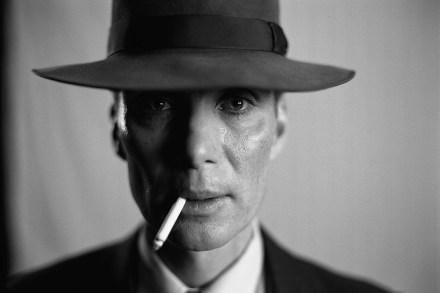
This week, Christopher Nolan’s new picture Oppenheimer began production. Its star-studded cast features everyone from Cillian Murphy as the theoretical physicist J. Robert Oppenheimer to Emily Blunt (as his wife Katherine) to Matt Damon (Manhattan Project director Leslie Groves) to Robert Downey Jr. (as Oppenheimer’s nemesis Lewis Strauss), with Florence Pugh, Rami Malek and Kenneth Branagh in support. Nolan has been granted a $100 million budget by his new studio, Universal, after angrily leaving Warner Bros. in a row over their decision to deny their 2021 pictures an exclusive theatrical release. The implication is clear: Oppenheimer will be a very big deal indeed. Nolan himself possesses a unique level of influence in contemporary Hollywood.

christopher nolan oppenheimer

Sibelius speaks

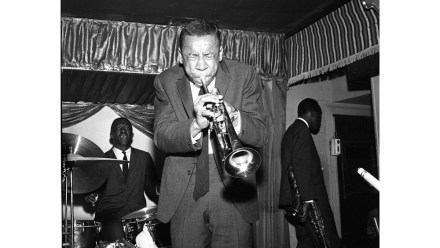
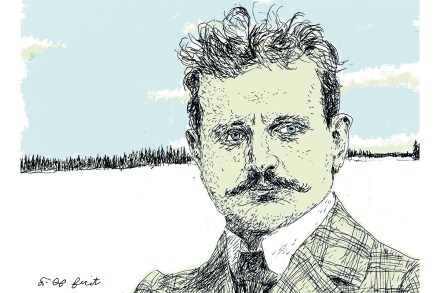
When it comes to music in the classical era, central Europe — or, to put it is where most of the action has taken place. Haydn, Mozart, Beethoven, Schubert and Brahms are, in a sense, the Big Five, commanding the limelight, with the likes of Mendelssohn and Mahler bringing up the rear. But if geography has somehow played a key role in the development of modern classical music, then another region has been gradually nudging its way into view. Names from northern Europe such as Kalevi Aho, Leif Segerstam, Per Nørgård and Vagn Holmboe must figure prominently in any tally of leading composers who have expanded the boundaries of musical expression.Take Holmboe’s brilliantly imaginative Concerto No. 11 for trumpet and orchestra.

Sibelius
Carnegie

Carnegie plus one

"A cable channel... but for classical music! It could be called ‘The Carnegie Hall Channel.’” I was on a beam reach to Eatons Neck about a quarter-century ago when a young man named Lawrence Perelman made this blustery pronouncement. We were Bill Buckley’s guests for an overnight sail across Long Island Sound. My first thought was: good luck with that. My second thought was no one wants to watch classical music on television. PBS’s Great Performances? More like lesser performances. With pixels the size of Cheez-Its and tin-can soundtracks, the experience was nothing like the real thing. But Perelman, an impresario who became an advisor to classical artists and institutions, as well as a friend, kept waving his baton long after we returned to Stamford.

Boston

Going Greco-Roman in Boston

In a way it felt like a walk around campus on graduation day: one last stroll through the Museum of Fine Arts, Boston before the mayor’s medically nonsensical, legally dubious, morally atrocious mandates force museums, restaurants, gyms and more to oblige entrants to prove that they’re vaccinated against Covid-19. I could comply, but I will not. “There’s nothing more American than coming together to ensure we’re taking care of each other,” said our unctuous new mayor in her typical passive-aggressive fashion. Perhaps, but there’s nothing less American than commanding such sentiments from City Hall and punishing us who see through the ruses of power. The commencement, then, was that of a new relationship between your reporter and his adopted city’s art holdings.

company

Swing for me

Lots of folks go to swingers’ parties; fewer go by accident. I achieved this distinction, once — and in my defense, I will plead only that my ignorance of the situation was so extreme, my credulity so extensive, that it took my asking one couple, in complete earnest, the most hilarious and incidentally incisive questions a person in my situation could ask — “How did you two meet?” and “How do you know the host?” — in order to set the record straight. To the first, the one said that the other’s husband had introduced them. The answer to the second was the old chestnut about “college roommates,” et voilà! At parties nowadays, I just ask people what they do for work.

hand of god

Naples and nurture

The climactic scene in the Italian director Paolo Sorrentino’s latest film, The Hand of God, finds the teenaged Sorrentino stand-in, Fabietto, being verbally attacked by an aging director named Capuano, the seaside at their backs. At this point in the film, the young Fabietto (Filippo Scotti), a sullen mama’s boy searching for meaning, has suffered an immense tragedy and is looking for answers. Enter the wise man. The scene, like many in The Hand of God, is on the nose and borders on the melodramatic, but when Capuano (Ciro Capano) yells “how does this city not inspire you?” at Fabietto, he reveals the film’s emotional core. The Hand of God, like Sorrentino’s previous work, is highly stylized and aesthetically beautiful — a true visual feast.

Macbeth

Witches brew

Since its initial publication in the legendary 1623 First Folio, Shakespeare’s Macbeth — one of the Bard’s late tragedies, and among his greatest — has been reimagined in countless ways. By the late seventeenth century, it had already been updated by Sir William Davenant to meet changing tastes. It was supposedly restored (though still thoroughly altered) by David Garrick in the eighteenth; and it was further “cleaned up” by Thomas Bowdler (which gave us the term ‘bowdlerized’) for his Family Shakespeare collection in the nineteenth century, an era that also brought us Verdi’s enthralling operatic version.