Books and arts - 15 June 2017
The good, the bad and the ugly in books, exhibitions, cinema, TV, dance, music, podcasts and theatre.
When techno first appeared amid the urban wasteland of mid-1980s Detroit, its futuristic sound palette was inspired by the whirring and clanking of the Motor City’s defunct assembly lines. Early techno was darker and more hypnotic than its close cousin house, but you could still dance to it. There was still soul in the machine.
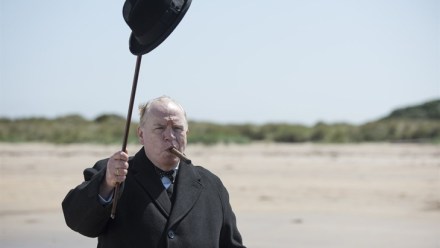
The star of this film is the music, composed by Lorne Balfe. I really liked it, which was just as well, because it plays for about half the 98 minutes, while a superannuated Churchill, played by Brian Cox, moons about on beaches, deeply penitent for his catastrophic authorisation of the Gallipoli disaster in which a
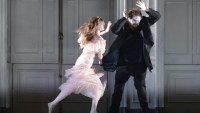
Brett Dean’s new opera for Glyndebourne is a big-hearted romantic comedy, sunny and life-affirming. Only joking — this is contemporary opera, after all. It’s about the usual stuff: neurosis, violence and toxic sexuality. Those seem to be the emotions most naturally suited to the language of mainstream contemporary classical music, and Dean speaks that language
At one uncharacteristically low-key point in Sunday’s Poldark — back for a third series on BBC1 — Ross (Aidan Turner) left off the brooding and cliff-top galloping for a while to review his finances. They were, his genial banker Harris Pascoe told him, in good shape. Hearing that Ross’s marriage was going through one of
‘History is not the past,’ says the writer Hilary Mantel in the first of her Reith Lectures on Radio 4 (produced by Jim Frank, Tuesday). ‘It’s the method we’ve evolved of organising our ignorance of the past.’ In Resurrection: The Art and Craft, her series of five talks, Mantel shows her mettle as a novelist
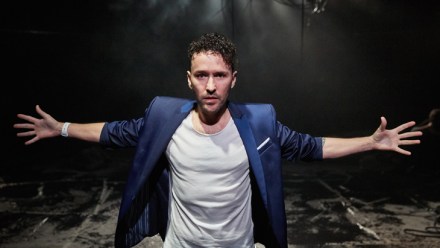
The National Theatre could hardly resist Barber Shop Chronicles. The play shines a light on a disregarded ethnic community, black urban males, who like to hang around in barber salons seeking friendship, laughs and tittle-tattle. Setting the play in a single venue would just be a sitcom, like Desmond’s, so the show establishes a series
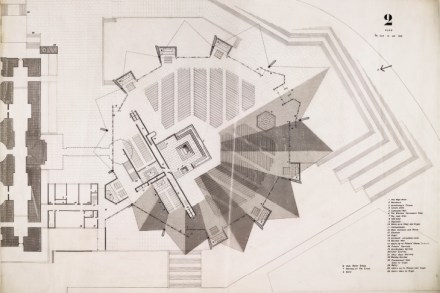
Liverpool is the New York of Europe. The business district looks like old Wall Street: a miniature Lower Manhattan on the Mersey. It’s a city of scale, drama, melodrama, tragedy and comedy. Not to mention rich and poor. And often all these effects are simultaneous. No other British city has a similarly contrary architectural character:
Thrilling debuts, starry guests and a tear-stained farewell at Covent Garden this week as the Royal Ballet closed the season with a triple bill of works by Sir Frederick Ashton. The company’s founder choreographer could often be spotted lurking at the back of the house during Marius Petipa’s Sleeping Beauty enjoying ‘a private lesson’. Today’s
Late on the Friday afternoon of The Great Escape — the annual three-day event for which the London music industry decamps to Brighton to spend three days drinking and trying to get into tiny venues to see new bands — two very young men stood outside a pub, making quite the impression. One, with bleached
Sand in the Sandwiches is the perfect show for those who feel the West End should be an intellectual funfair. It sets out to amuse, surprise, divert, uplift and nothing more. Edward Fox’s biographical portrait of John Betjeman has a smattering of his most famous poems ingeniously woven into the narrative. Fox knows his stuff.
Handel’s Semele, one of the most enjoyable operas (or opera-oratorio, if you insist) in the repertoire, is, in its upshot, an enchanting display of thoughtless hedonism and a warning about what may happen, or even what is bound to happen, if you take hedonism too far. Wormsley, to which Garsington Opera moved several years ago
The problem Calvin Broadus has is persuading the rest of us that he still a baaaad muthafucka. Snoop is now 45 and a rather avuncular figure in the US, with his own reality TV show in which he comes across as, God help us, likeable. Those days of running with the Crips in Los Angeles
By chance on Saturday morning, I tuned into Radio 4 and heard Professor Clare Brant talking on Saturday Live about Dear Diary, a new exhibition at Somerset House in London that celebrates the art of writing a daily journal. It caught my ear because diaries are such a crucial tool for the biographer yet whenever
My Cousin Rachel is an adaptation of Daphne du Maurier’s mystery-romance and, even though it stars the forever wonderful Rachel Weisz, it’s more sedate than suspenseful, more tasteful than dangerous. This should be a creepy, gripping tale of paranoia, deception, lust, and suspicions that are founded, unfounded, founded, then unfounded again. (There is a great
There’s an incredibly addictive old iPhone game called Doodle God where you effectively invent civilisation from scratch by combining basic elements. So, for example, water plus lava creates steam; the steam, in turn, can be combined with another more advanced element, I forget which, later in the game to create steam power; and so on
Playing in an orchestra that disintegrates mid-concert is not an experience you forget. One moment everything’s motoring along nicely. Suddenly a harmony doesn’t quite fit, the soloist enters on the wrong beat: it doesn’t matter, because before you can work out what to do next the confusion spreads, the conductor signals frantically and with a
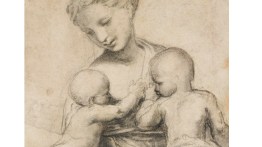
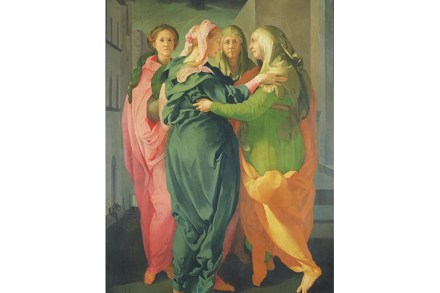
Bump to bump they stand: Mary and her cousin Elizabeth, both pregnant, both apple-cheeked and glowing as expectant mothers should be. It is a moment of shared joy. The whispered intimacy of ‘I’m pregnant!’ ‘Me, too!’ Joseph and Zacharias stand sheepish in the background, as men do on such occasions. Joseph has more reason than
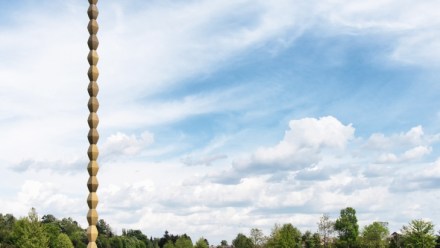
One evening a few weeks ago I was on my way to the opening of an exhibition at the Venice Biennale when I stopped for a moment in a quiet campo off the main drag. An elderly priest was standing on the steps of the church of Santa Maria della Fava in the weak sunshine.
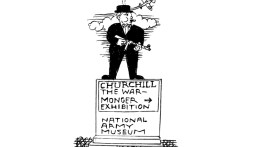
I used to love the National Army Museum in Royal Hospital Road, Chelsea, which was crammed with the memorabilia of four centuries of the British Army. I even visited it on the morning of my wedding. It taught you about the history of the British Army in a completely non-political way, allowing the objects —
In such times as these, enough to try a man’s soul, a dose of John Finnemore is advisable. His brand of comedy, as fans of Cabin Pressure will know, makes you laugh out loud (unlike, I fear, a lot of the programmes in that 6.30 p.m. slot on Radio 4). His quirky stabs at the
A Covent Garden barfly was scanning her programme during the first interval: ‘Oh yes, the one about the gynaecologist.’ She meant Strapless, of course, an attempt to tell the back story to John Singer Sargent’s ‘Portrait of Madame X’, which scandalised the Paris Salon of 1884. ‘Madame X’ was Amélie Gautreau, a Creole beauty who
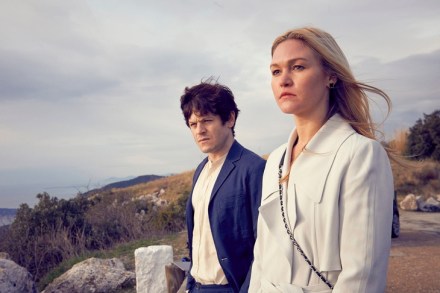
On the face of it, the two new big drama series of the week don’t have a great deal in common, with one set in a determinedly present-day Britain, the other in a dystopian American future. What they do share, though, is a general air of classiness, some impressively understated central performances and, above all,
Pop’s counterfactuals tend to be built on questioning mortality: what if Jimi Hendrix had lived? Or Buddy Holly? Rarely does geopolitics enter into the speculation. Nevertheless, there’s a case for arguing that the landscape of British pop would have been markedly different had Harold Wilson acceded to the wishes of President Lyndon Johnson and sent
Georg Büchner, a justly neglected German playwright, died at the age of 23 leaving a half-finished script about a mad soldier and his cheating girlfriend. This relic has fascinated dramatists ever since because Büchner is regarded as a visionary left-wing artist cruelly stolen before his time. (Not a moment too soon, if you ask me.)
The ancient Greeks had a word for it —katabasis, descending into the depths, to the underworld itself, in search of answers. To cross the threshold between life and death, innocence and knowledge, the everyday and what lies beyond, is an act woven through art, resurfacing in each generation. For Orpheus, and for Monteverdi, the journey
Seven years ago I ripped the CD off the front of a music magazine and found myself in the thick of a Poulenc concerto that was being played as if life depended on it. Now Poulenc is the acme of laid-back and the solo instrument, the harpsichord, had been consigned to the junkshop before young