Venezuela

Inside Trump’s war on the cartels

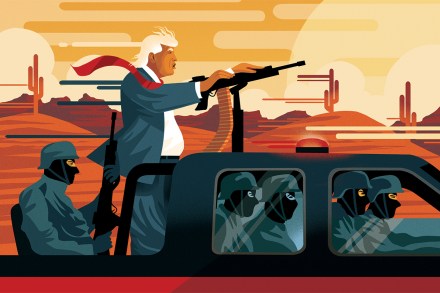
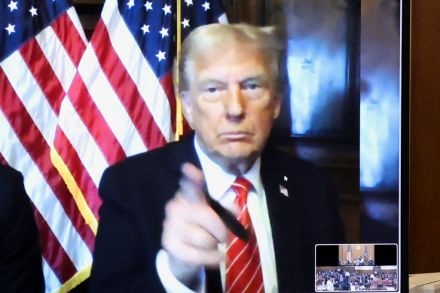
To deal with big problems, the second presidency of Donald Trump adopts a three-step approach. First, the declaration of authority: in this case, the designation announced in February of multiple Mexican and South American cartels as international terror organizations, opening up new avenues for legal, intelligence and potential military responses. Next, eye-popping kinetic action: this came with SOUTHCOM’s deployment in August of eight warships to the Caribbean and Pacific Oceans, including three Aegis guided-missile destroyers parked off the coast of Venezuela along with a landing dock, amphibious assault ships and a fast-attack nuclear submarine.

cartels

By taking on the cartels, Trump is reasserting American authority

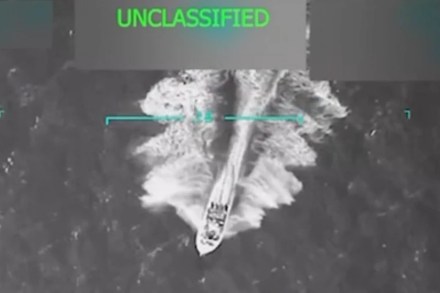
The reporting process on Donald Trump's war on the cartels for my latest cover story for The Spectator, published here today, mostly focused on the administration's theory of the case: what they intend to do about the challenge of the drug running, human trafficking and terrorist activity by the narco syndicates to America's south and why they believe a major escalation is necessary. In the intervening time between filing a piece and going to press, the theoretical became very real with the fiery destruction of a boat carrying drugs in international waters, allegedly steered by 11 now-dead members of Venezuela's Tren de Aragua cartel.

cartels

Trump’s strike on the Venezuelan ‘narco terrorists’

President Trump has authorized what he called a "kinetic strike" from a US warship that destroyed a boat allegedly carrying drugs from Venezuela bound for the US, killing 11 so called "narco terrorists" aboard. The action by a US naval task force in international waters in the southern Caribbean is the first since the President threatened armed intervention against narcotics smuggling by Venezuela’s drugs cartels in January. Trump said that the attack was aimed at members of Venezuela’s Tren de Aragua drugs cartel which the US branded a terrorist organization in February, and which it claims is controlled by Venezuela’s socialist Maduro regime. The US Department of Justice has called Venezuela’s President Nicolas Maduro "the world’s No.

Tren de Aragua

Trump’s big Bolivia opportunity

After nearly two decades of reign over Bolivia, the Movement Toward Socialism (MAS) party was banished at the ballot box on August 17. Its fall is a dramatic political realignment to the right for Bolivians, and a rare opportunity for the United States to reform relations with a geopolitically critical nation. As one expert, Leonardo Coutinho, told us, “The Trump administration can not only contribute to the restoration of democracy but also play a central role in dismantling a fully functioning narco-state.” Despite its 25 percent inflation rate and a 93 percent debt-to-GDP ratio, Bolivia is rich in natural resources, boasting some of the world’s largest lithium reserves, making it an attractive target for both American and Chinese grand strategies.

Will Venezuela crisis spill into conflict with US?

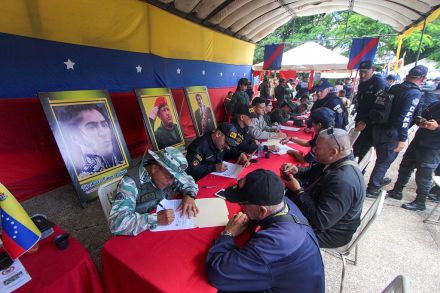
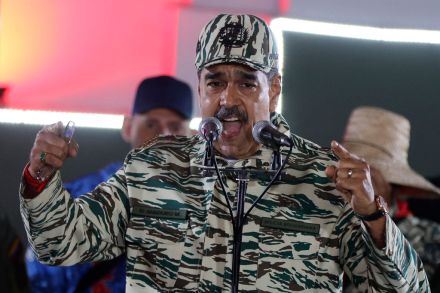
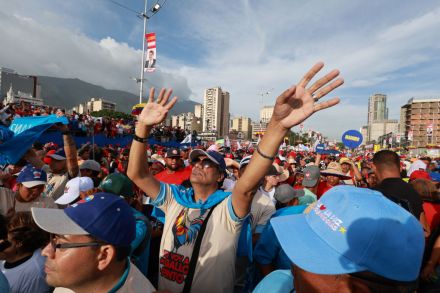
The authoritarian left wing regime of Venezuelan President Nicolás Maduro has mobilized his ruling Socialist party’s paramilitary militia in response to US President Donald Trump sending a task force of warships into Venezuelan waters as part of a US crackdown against alleged cocaine trafficking by the poverty-stricken country.Declaring that “no empire will touch the sacred soil of Venezuela “ Maduro sent his militia to reinforce the country’s borders with neighboring Colombia, who he has accused of collaborating with America in a pincer movement against his country.

Venezuela

Why Washington should make Latin America a priority

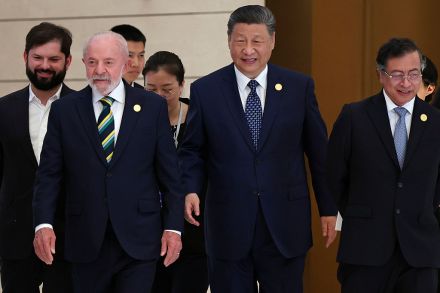
As American eyes remain fixed on the Middle East — understandably so — China has been rolling out the red carpet for Latin America, and we have barely noticed. While Xi Jinping welcomes Colombia, one of Washington’s historically reliable allies, into the controversial Belt and Road Initiative, he’s also introducing visa-free entry for South America’s largest economies and greeting regional leaders in Beijing with billion-dollar credit lines and lavish, all-expenses-paid political junkets. Washington, meanwhile, was… busy. If this sounds familiar, it’s because it is. The US has been snoozing through Latin America’s strategic realignment for years, occasionally waking up to mutter something about narcos or illegal migration, then hitting the snooze button.

washington

Trump will not be punished for ‘hush-money’ case

New York justice Juan Merchan sentenced President-elect Donald Trump this morning for his conviction in the so-called “hush-money” case that saw a jury convict him last year of thirty-four felony counts of falsifying business records. As was predicted, Judge Merchan handed down an “unconditional discharge” sentencing, meaning Trump will not go to jail, be forced to pay fines or be punished in any way. Trump will remain, however, a convicted felon.The hush-money case, we’ll recall, centered around allegations porn star Stormy Daniels made that Trump paid her $130,000 to keep quiet about an alleged affair between the pair. Trump’s conviction had him facing up to four years in prison and steep fines.

Venezuela prepares for clashing inaugurations

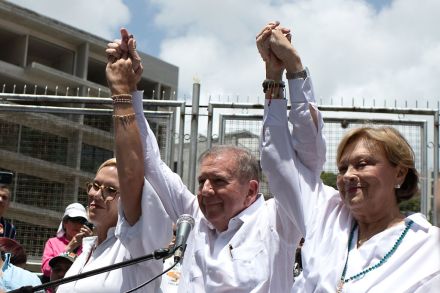
A new presidential term is set to begin officially in Venezuela on January 10. Despite the electoral commission’s failure to release the results of the July 28 election, Nicolás Maduro’s swearing-in appears inevitable. Opposition leader Edmundo González Urrutia, however, says he’ll be inaugurated as the country’s new leader. Will he return to Caracas? That’s the question Venezuelans keep asking, with González Urrutia having promised exactly that. “I am going to return to Venezuela to take the responsibility that 8 million citizens gave me,” he told Infobae five days ago after meeting with Argentinian president Javier Milei. This week he also met with President Biden, Uruguayan president Lacalle Pou and Panamanian president José Raúl Mulino.

The Venezuelan practice of property invasions has emigrated to America

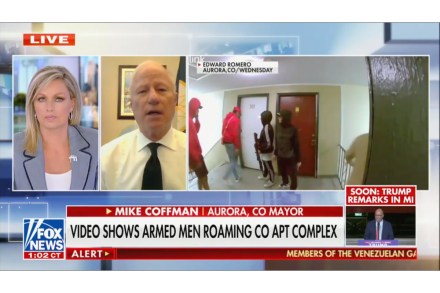
Viral footage showing armed Venezuelan gang members taking over an apartment complex in a Denver suburb has shocked thousands, especially after Mayor Mike Coffman of Aurora, Colorado joined Fox News’s Sandra Smith on Thursday to explain how failed border policies are affecting his city — which is around 700 miles away from the US-Mexico border. In the interview, Coffman confirmed that at least two apartment buildings in Aurora were taken by what some suspect are members of the notorious Tren de Aragua gang.  All of this is not quite surprising for those who are familiar with Venezuela. “Invasiones” (invasions, as Venezuelans call it) have been a recurrent phenomenon throughout the oil-rich South American country in the last twenty years.

property invasions

Venezuelans topple Chávez statues as they reject Maduro victory

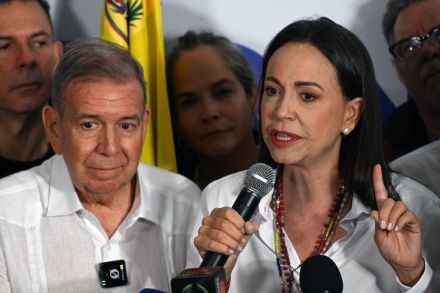
Nicolás Maduro’s rival Edmundo González and opposition leader María Corina Machado told reporters at around 6:30 p.m. Monday that with more than 70 percent of votes counted, González is more than doubling Maduro’s votes. During the press conference, both candidates emphasized peaceful protests, especially as thousands began taking to the streets the day before, when the country’s electoral council declared that Maduro had won with 51 percent of the vote. They called on voters to gather at 11 a.m. Tuesday. “I speak to you with the calmness of the truth,” González said to his cheering supporters from outside his campaign’s headquarters in Caracas. “We have in our hands the tally sheets that demonstrate our categorical and mathematically irreversible victory.

maduro

Will the US apply pressure to combat Maduro’s election fraud?

Sunday night was a long one in Venezuela. At midnight, the much anticipated yet dubious results came in for the South American country's election. The head of the National Electoral Council, Elvis Amoroso — a close ally of Venezuelan president Nicolás Maduro who has served as a deputy for his party — said that with 80 percent of ballots counted, Maduro had won with 51 percent of the vote. His rival, Maria Corina Machado’s replacement, Edmundo González, ended with 44 percent. The opposition has a different story. “Venezuela has a new president and his name is Edmundo González Urrutia. We won! And everyone knows it,” Machado said from a press conference following some silence after Maduro’s announced win.

maduro fraud

Things are about to get ugly in Venezuela

At 3:45 a.m., the sun was not yet out in the Venezuelan valley of Caracas, but Andrés, a twenty-two-year old who lives in the outskirts, woke up and with the Gloria Al Bravo Pueblo national anthem at maximum volume, roused his family too. From deep in the valley, Natalia showed up to the polls at 7 a.m. She then headed back to pick her elderly parents; “they can skip the line now,” she tells me.  Like them, thousands of others got up Sunday morning with a mission: make the Venezuelan presidential election — the most consequential one in twenty-five-years — fraud-proof. The logic: the world has to see what Venezuelans see, eyes don’t lie.  “It's 5 a.m. and we have work!,” said the face of the opposition, María Corina Machado.

venezuela

What to expect in this weekend’s Venezuelan elections

Venezuelans will gear up to vote in what has devolved into an unfair and unfree presidential election Sunday — one that nonetheless offers its citzens the best chance in a decade to get rid of the twenty-five-year-old Chavista regime that brought the oil-rich nation to its knees. Nicolás Maduro, the man who, among other things, caused a forty-two-place drop in Venezuela’s Press Freedom Index in ten years, will be facing Edmundo González. González, a little known diplomat who served in Algeria and Argentina, became the opposition’s unitary candidate after the government banned María Corina Machado from running. Though “inabilitated,” as Venezuelans put it, this election continues to be a Maduro versus Machado match.

venezuelan

Why Russia is flaunting its ships in the Caribbean

Two Russian ships docked Tuesday in Venezuela’s La Guaira port, twenty miles away from Caracas. The stop comes after military exercises were conducted in the Atlantic, with four vessels stopping in Havana late last month. This is all part of a decades-long “look-at-us” operation, also known as a “show the flag” move, as Russia’s defense ministry puts it. While Russia’s presence in Cuba and Venezuela is not a new phenomenon, conflict in the East has only accelerated their muscle-flexing in the West. These movements mark Russia’s first extensive military exercises in the hemisphere in five years, as well as their first deployment of a nuclear submarine in close proximity to the US since the Cold War.

Russia

The Venezuelafication of American streets

My grandma loves to joke about how she got a tooth knocked out by a motorizado (biker) in the Venezuelan capital of Caracas. “¡Dame el aro!” (Gimme the hoop!) exclaimed what looked like an off-duty bodyguard. “My hoop? What the hell?” Grandma thought to herself, before realizing the man was talking about her wedding ring.  “I never wear it when we go to church; I must’ve forgotten that day,” she tells us, in what feels like a skit. “I don’t know what got into me, but after the man pointed at his pocket and said he had a revolver, I said, ‘I have one too!’” “Show me,” the motorizado inquired as my frozen grandpa thought to himself, “What the hell is she talking about?

venezuelafication

Venezuela’s arepas are a godsend

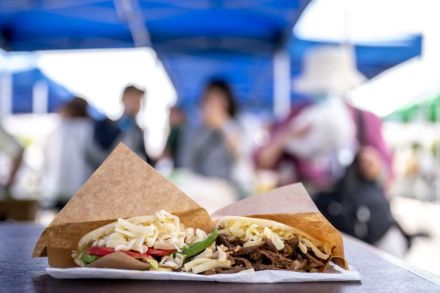
Venezuela is a prideful nation. Prideful about what? Is it the inflation or the fact that close to 25 percent of the oil-rich country’s population has fled the place? I know, the pride sounds misplaced. The average American likely thinks about their own southern border, dog-eating and communism when Venezuela is mentioned. Yet Venezuela also has the world’s tallest waterfall (Angel Falls), the most wins in the big four international beauty pageants, stunning white-sand beaches, lots of oil and award-winning rum and cocoa. Still, if there’s anything that makes me want to sing the Venezuelan national anthem, as someone who spent part of his childhood in Caracas, it’s the taste of a chicken, avocado and Gouda-filled arepa.

arepas

Is Venezuela preparing for war?

Earlier this month, two American supersonic fighter jets flew over Georgetown, the capital city of Guyana. The US show of force is not only for the attention of Venezuela’s socialist regime who has been escalating toward a military conflict with its smaller neighbor since at least September 2023 when Nicolás Maduro returned from Beijing. The message of sending two F/A-18 Super Hornets flying from a nuclear-powered aircraft carrier sailing in the Caribbean Sea is also for the Islamic Republic of Iran. At first glance, the Venezuela-Guyana conflict is about a century-old border dispute of a dense territory called the Esequibo that makes up two-thirds of Guyana’s land mass but only 15 percent of its population.

nicolas maduro venezuela

Should Biden change his Venezuela approach?

Venezuela has been leading the United States on, maintaining the pretense that they will ensure that the upcoming presidential elections are free and fair. That's despite the US relieving sanctions, releasing prisoners and months of “diplomacy.” The Nicolás Maduro regime has also gone on offense, threatening to take back the Esequibo, an area now under Guyana’s jurisdiction, where American oil companies have invested billions. This Wednesday, Maduro mocked the Biden administration once again, arresting two high-level officials from opposition candidate María Corina Machado’s team and issuing arrest warrants against several others.

nicolas maduro venezuela

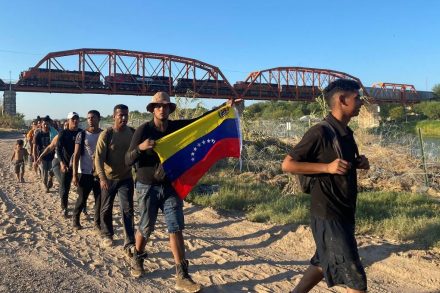
Behind the Venezuelan migrant crime wave

Jose Antonio Ibarra, a twenty-six-year-old Venezuelan illegal immigrant, was charged in connection with the gruesome murder of Laken Riley, a nursing student at the University of Georgia last week. Another Venezuelan, thirty-two-year-old Renzo Mendoza, was arrested last week on two felony charges for sexually assaulting an underage child in Virginia.  These cases, along with a series of others connected to Venezuelan migrants, have become central to the debate on immigration policy. Tuesday morning, for instance, Republican members of the House Judiciary Committee sent a letter to the Department of Homeland Security asking for more information about Ibarra.

tren de aragua venezuela

Biden should stop appeasing Venezuela, says Salazar

Venezuelan presidential hopeful María Corina Machado had filed a claim in December, arguing to the country’s highest court, that a ban prohibiting her from holding office was unconstitutional. The verdict came last week — and the ban was upheld. As south Florida congresswoman María Elvira Salazar told The Spectator, the conclusions reached by the “Chavista-controlled” tribunal were “unfortunate but not surprising.” The upholding of the ban comes after months of negotiations, where the Biden administration eased sectoral sanctions in pursuit of a “path to democracy.” This approach riled up Florida Republicans, a state with a vast Venezuelan-American population.

salazar