Uk politics

Labour try to silence ‘austerity-lite’ accusations

13 min listen

James Nation, formerly a special adviser to Rishi Sunak and now an MD at Forefront Advisers, joins the Spectator’s deputy political editor James Heale and economics editor Michael Simmons, to talk through the latest on the government’s spending review, which is due to be announced on Wednesday. The last holdout appears to be Home Secretary Yvette Cooper, pushing for more police funding. But, against a tough fiscal landscape, what can we expect? And how much does it matter with the wider public? Plus – former chairman Zia Yusuf returned to Reform just two days after resigning, what’s going on? Produced by Patrick Gibbons.


Surprise Labour victory as Reform’s fallout continues

14 min listen

Scottish Labour have a new MSP today as Davy Russell won the Hamilton, Larkhall and Stonehouse by-election, taking the seat from the SNP. Labour won with 31.6% of the vote with the SNP second on 29.4%, Reform close behind on 26.1% and the Conservatives a distance fourth with just 6% of the vote; this marks rare good news for both Keir Starmer and Scottish Labour leader Anas Sarwar. Both SNP and Reform will be disappointed not to have won, but Reform have been quick to highlight how close they came, considering how new the party is. Plus, there are signs that Reform took votes away from the incumbent SNP, demonstrating

Zia Yusuf resigns from Reform

10 min listen

Zia Yusuf resigned this evening from his position as chairman of Reform UK, saying: ‘I no longer believe working to get a Reform government elected is a good use of my time.’ This comes after he tweeted yesterday that it was ‘dumb’ for Sarah Pochin, Reform’s newest MP, to urge the Prime Minister to ban the burka during PMQs. Did he jump before he was pushed? And can Reform UK really claim to have ‘professionalised’ when this is the second high profile departure this year?  Oscar Edmondson speaks to James Heale.

Nigel wants YOU, secularism vs spirituality & how novel is experimental fiction?

52 min listen

How Reform plans to win Just a year ago, Nigel Farage ended his self-imposed exile from politics and returned to lead Reform. Since then, Reform have won more MPs than the Green Party, two new mayoralties, a parliamentary by-election, and numerous councils. Now the party leads in every poll and, as our deputy political editor James Heale reveals in our cover article, is already planning for government. The party’s chair, tech entrepreneur Zia Yusuf, describes the movement as a ‘start-up’; and like a start-up, Reform is scaling up at speed. Among the 676 councillors elected last month, a number are considered more than ready to stand as MPs. James also

From Thatcher to Truss, who's haunting Mel Stride?

17 min listen

Shadow Chancellor Mel Stride delivered a speech today where he attempted to banish the ghost of Liz Truss and improve the Conservatives’ reputation over fiscal credibility. And he compared leader Kemi Badenoch to Thatcher, saying she too struggled at first and will ‘get better’ at the dispatch box. LBC broadcaster Iain Dale and the Spectator’s economics editor Michael Simmons join deputy political editor James Heale to unpack Stride’s speech, talk about Labour’s latest policy announcement over free school meals and discuss why both the main parties are struggling with fiscal credibility. Plus, Iain talks about his new book Margaret Thatcher and the myths he seeks to dispel. Why does he

Is the public ready for difficult decisions on defence?

16 min listen

Former Commander of Joint Forces Command – and one of the authors of the Strategic Defence Review – General Sir Richard Barrons joins Lucy Dunn and James Heale to talk through the main conclusions of the review, and the questions it raises. Labour have talked up the fact that this is the first government in a generation to not reduce the size of the armed forces. But, as Sir Richard explains, difficult choices await politicians and the public if the UK wants to be more prepared, and faster, for potential threats. Produced by Patrick Gibbons. 

Should cannabis be decriminalised?

21 min listen

London Mayor Sir Sadiq Khan has called for possession of small amounts of cannabis to be decriminalised following a report by the London Drugs Commission. The report has made 42 recommendations, which include removing natural cannabis from the Misuse of Drugs Act. Former cabinet minister, now Labour peer, Charlie Falconer and Tory MP Dr Neil Shastri-Hurst join Lucy Dunn to discuss whether now is the time to decriminalise cannabis. For Lord Falconer, who chaired the Commission, the present law doesn’t work and he explains the principles behind the review; Neil, however, believes that the proposals send the wrong message that cannabis is harmless. He argues that a balance needs to

Can Reform conquer Scotland?

23 min listen

Dissatisfaction with the established political parties is driving a ‘tartan bounce’ in Scotland for Nigel Farage’s Reform UK. Far from being an English phenomenon, Reform is polling favourably with Scottish voters. There will be a by-election next week for the Scottish Parliament seat of Hamilton, in what will be Reform’s first big test inside the politics of devolved government.  For councillor Thomas Kerr, who defected from the Scottish Conservatives to Reform earlier this year, Reform’s appeal in Scotland is no surprise. He joins Lucy Dunn to explain why he thinks the ‘sky is the limit’ for Reform, why Farage is an asset to the party in Scotland and to explain

How to do a spending review

21 min listen

Labour’s spending review is expected on the 11th of June, when we will find out which government departments face cuts and which costs have been ringfenced. This can set the tone for politics for months to come as it gives a clue to which priorities matter most – especially in times of fiscal restraint – and which ministers are up, and which are down. But how is a spending review conducted? How does His Majesty’s Treasury balance the negotiations with those competing for its attention? And, following the leaked Angela Rayner memo, do we know which economic arguments are winning out? James Nation, formerly an official at HMT and then in

Is the welfare state about to expand?

18 min listen

James Heale and Michael Simmons join Patrick Gibbons to discuss the speculation that Labour could scrap the two-child benefit cap. Is this just red meat for the left of the party or is it a sign that public opinion around welfare has shifted? And, with mixed messages on the economy, can the country afford to scrap it? This comes just a week after Labour’s partial U-turn over the winter fuel allowance so, with pressure also increasing from Reform, is the welfare state about to expand? Produced by Patrick Gibbons.

Why is antisemitism so pervasive? Irving v Lipstadt 25 years on

31 min listen

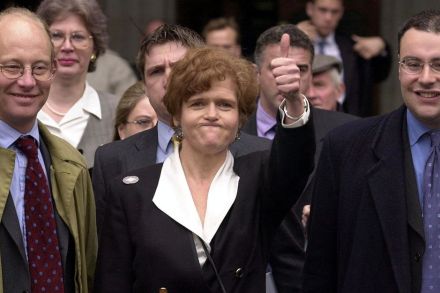
This spring marks the 25th anniversary of the landmark judgment in the infamous Irving v Lipstadt Holocaust denial case. David Irving sued American academic Deborah Lipstadt after she had described him as a Holocaust denier in her 1994 book, for his claims that Jews had not been systematically exterminated by the Nazis. Given the burden of proof in English libel law being on the defence, it was up to Lipstadt and her publisher Penguin to prove her claims were true that Irving had deliberately misrepresented evidence. In 2000, the Judge found in her favour. Deborah Lipstadt and the lawyers that represented her, Anthony Julius and James Libson, join Michael Gove

The mystifying process – and problems – behind choosing the next Archbishop of Canterbury

39 min listen

After Pope Francis died, it took the Roman Catholic Church just 17 days to choose a successor in Pope Leo XIV. It has been well over 6 months since Archbishop of Canterbury Justin Welby resigned and we are only just making sense of those chosen to sit on the Crown Nominations Commission (CNC), that will recommend his successor. Even then, it’s unlikely we will know more until the autumn. Why has it taken so long? Journalist, commentator – and quite frankly expert – Andrew Graystone joins Damian Thompson and William Moore, the Spectator’s features editor, to take listeners through the process. From committees to choose committees and confusion about the

James Heale, Angus Colwell, Alice Loxton, Lloyd Evans, Richard Bratby, Christopher Howse and Catriona Olding

38 min listen

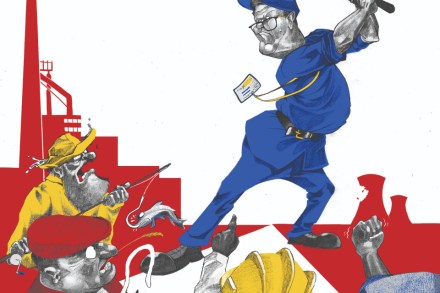
On this week’s Spectator Out Loud: James Heale analyses the splits in Labour over direction and policy (1:27); Angus Colwell asks if the ‘lanyard class’ are the new enemy (6:21); Alice Loxton explains why bite-sized histories have big appeal (9:58); Lloyd Evans reports on how Butlin’s is cashing in on nostalgia (15:00); Richard Bratby on Retrospect Opera, the non-profit record label that resurrects the forgotten works of British opera (20:40); Christopher Howse provides his notes of typos (27:27); and, Catriona Olding reflects on the death of her partner, the Spectator’s Jeremy Clarke, two years ago this week (32:15).  Produced and presented by Patrick Gibbons.

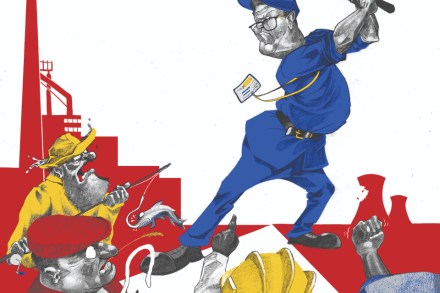
Michael Gove on Starmer vs the workers: why Labour needs to learn to love Brexit

20 min listen

Spectator editor Michael Gove joins Natasha Feroze to talk about his cover article this week: ‘Starmer vs the workers’, the real Brexit betrayal. Michael puts forward his arguments for why Labour should learn to love Brexit, should take back control to protect British jobs and industries, and could use Brexit as an opportunity to harness AI and science & technology. Plus, has the UK-EU deal brought back ‘happy memories’ for the former prominent Brexiteer? Produced by Natasha Feroze and Patrick Gibbons.

David Gauke on prisons, probation & the political reaction to his review

18 min listen

Former Justice Secretary and Lord Chancellor David Gauke joins James Heale to talk about his review into prison sentencing. The former Tory minister was appointed by the current Labour Justice Secretary Shabana Mahmood, but says there is a clear centre-right argument for prison reform. He talks James through his policy proposals and the political reaction to them, the thinking behind expanding chemical castration for sex offenders and why deportation is complicated when dealing with the very worst foreign criminals. Ultimately his review is designed to reduce what is currently the highest incarceration rate in Europe. Produced by Patrick Gibbons. 
The real Brexit betrayal, bite-sized history & is being a bridesmaid brutal?

44 min listen

The real Brexit betrayal: Starmer vs the workers ‘This week Starmer fell… into the embrace of Ursula von der Leyen’ writes Michael Gove in our cover article this week. He writes that this week’s agreement with the EU perpetuates the failure to understand Brexit’s opportunities, and that Labour ‘doesn’t, or at least shouldn’t exist to make the lives of the fortunate more favourable’. Michael makes the argument that ‘the real Brexit betrayal’ is Labour’s failure to understand how Brexit can protect British jobs and industries and save our manufacturing sector. Historian of the Labour Party Dr Richard Johnson, a politics lecturer at Queen Mary University writes an accompanying piece arguing

Live by the rule of law, die by the rule of law

11 min listen

The Independent Sentencing Review chaired by former Lord Chancellor David Gauke has today announced its suggested reforms which sees a major shift from imprisonment to community-led sentencing. Measures include the recommendation that convicted criminals leave prisons after serving around one-third of their sentence, that short prison sentences of up to 12 months are drastically reduced and – the attention grabbing – expansion of chemical castration for paedophiles. What are the political ramifications of these policies, and will they work?  Danny Shaw, former advisor to Home Secretary Yvette Cooper, and James Heale discuss with Lucy Dunn. Also on the podcast, they discuss a last minute obstacle to resolving the Chagos deal

What has reaction been to the UK-EU deal?

18 min listen

Fallout continues from yesterday’s summit and the announcement of a deal between the UK and EU – or is it fair to call it ‘fallout’ as, despite criticism over the deal from Nigel Farage and Kemi Badenoch, has the public got Brexit fatigue?  James Heale and Michael Simmons join Patrick Gibbons to talk about the reaction to the deal. Fisheries has taken up most discussion but Michael points out a lesser talked about commitment to energy policy. And, with the government keen to talk about it in tandem with recent deals with India and the US – and Gulf states soon, according to Rachel Reeves this morning – what’s the

EU-UK reset: ‘brexit betrayal’?

15 min listen

As EU leaders arrive in London for a summit hosted by Keir Starmer, there has been an announcement that the UK and EU have reached a deal. The UK has extended its agreement on EU fishing boats in British waters, while in return fewer checks on British food exports are expected. There have also been discussions about a defence pact, reduced tuition fees for EU students and access to electronic passport gates for British holiday-makers.  While we await further details, deputy political editor James Heale and director of the Centre for European Reform Charles Grant join Lucy Dunn to unpack what we know so far. Will the deal be an

Mixed signals for Labour as GDP rises but the rich leave

13 min listen

The Prime Minister is in Albania today to focus on immigration: the government has announced that the UK is in talks to set up ‘return hubs’ with other countries to send failed asylum seekers abroad.  Unfortunately for the government though, also going abroad are Britain’s millionaires. In the cover article for this week’s Spectator, our economics editor Michael Simmons writes that London lost 11,300 dollar millionaires last year alone. These figures run in stark contrast to today’s news that GDP increased by 0.7% in the first quarter of 2025. This continues a trend of mixed signals for Britain’s economy.  Also on the podcast Spectator editor Michael Gove discusses his interview with justice secretary