Nigel farage

Ukip leadership: runners and riders

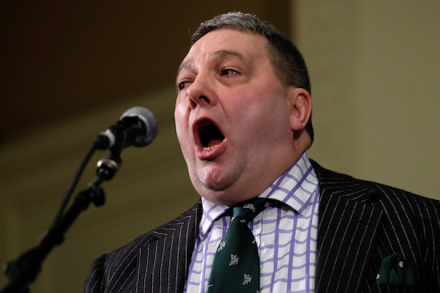
Today Nigel Farage has announced that he will be standing down as Ukip leader. Farage has pledged not to ‘unresign’ this time around, stating that now he has achieved his goal in the referendum, it’s time he ‘stood aside’ as leader of the party. This means that the search is on to find Farage’s successor. With Farage known to have a fractious relationship with some members of Ukip, his departure could mark a new more harmonious chapter for party relations. Steven Woolfe: Woolfe is the one to watch in the race. Loyal to Farage and with experience as an MEP, he has been being talked up as a future leader in Ukip circles

Nigel Farage resigns as Ukip leader

Nigel Farage has resigned as Ukip leader. Farage announced his decision to stand aside as the party’s leader in a speech this morning. In a surprise move, Farage said that the Brexit vote meant that his ‘political ambition has been achieved’ and that he was calling time on his leadership of the party. He said: ‘I have decided to stand aside as Leader of UKIP. The victory for the ‘Leave’ side in the referendum means that my political ambition has been achieved. I came into this struggle from business because I wanted us to be a self-governing nation, not to become a career politician. UKIP is in a good position

Portrait of the week | 30 June 2016

Home David Cameron, standing in the middle of Downing Street with his wife Samantha alone near him, announced his resignation as prime minister after the United Kingdom voted to leave the European Union by 17,410,742 votes (51.9 per cent) to 16,141,241 (48.1), with a turnout of 72.2 per cent. The result surprised the government. Mr Cameron said he’d stay on until a new Conservative party leader and prime minister could be chosen, before the party conference in October. In Scotland, 62 per cent of the vote was to remain and in London 59.9 per cent. The area with the highest Leave percentage was Boston, Lincolnshire, with 75.6, and the highest

Nigel Farage does his best to alienate the rest of Europe

Thankfully, many in Europe – not least the European Parliament – will have stopped listening to Nigel Farage a long time ago. The Ukip leader, no stranger to attempting to infuriate his MEP colleagues, has been winding them up again. In this morning’s session, he gloated: ‘You all laughed at me. Well, I have to say, you’re not laughing now, are you?’ But Farage didn’t stop there, telling those around him: ‘I know that virtually none of you have ever done a proper job in your lives, or worked in business, or worked in trade, or ever created a job, but listen’ It was clear from the huge smile across Farage’s face during

Brexit lies are opening up a terrifying new opportunity for the far-right in Britain

The Tory leaders of Vote Leave, those supposedly civilised and intelligent men, are creating the conditions for a mass far-right movement in England. They have lined up the ingredients like a poisoner mixing a potion, and I can almost feel the convulsion that will follow. They have treated the electorate like children. They pretended that they could cut or even stop immigration from the EU and have a growing economy too. No hard choices, they said. No costs or trade-offs. Now the Tory wing of the Brexit campaign, the friends of the City and big business, insists that we should remain part of the single market. So should you, if

Fascism is alive in Britain – on both the left and the right

At the time of writing, no one knows the result of Britain’s European Union referendum. But everyone has learned in the hardest manner imaginable that Britain has a fascist movement. A real fascist movement, that is. Not what students with incontinent tongues call ‘fascism’, which turns out to be the beliefs of anyone who disagrees with them. But actual fascism that legitimises racial hatred, conspiracy theory, ethnic cleansing and the assassination of left-wing politicians. Since the murder of Jo Cox we have learned another truth, which ought to be uncontroversial but is everywhere resisted. The far right and the far left are essentially the same. For all their voluble differences,

What next for Ukip after the EU referendum?

For someone who has spent his whole life building up to the referendum, Nigel Farage has had a rather patchy campaign. On the one hand, he has performed reasonably well in his TV question time slot, exceeding the expectations of those in the Leave camp who were dismayed that ITV had signed up the Ukip leader to its referendum programme. But on the other, he has unveiled a poster that bears striking similarities to ones used by the Nazis and has been shunned by the official Leave campaign. Today, the Ukip leader gave his final speech of a campaign that he has spent his political life pushing for. At one

Every political generation has its low moment; this is ours

No, there was never a Golden Age of genteel and elevated discourse. Never a time when the fate of the country didn’t seem to hang in the balance or when politics was ever played for anything less than all the marbles. Check old election-day copies of the Daily Mirror if you doubt this. Check the hammers and tongs with which Gladstone and Disraeli set about each other if you doubt this. Check the 1970s, when Britain seemed to be falling apart, or the early 1980s when terrorism and race riots and industrial action scarred the British political and social landscape. Politics is, and always has been, a contact sport and every generation

Little England

In the art of insult, the sting lies in the adjective, no matter how derogatory the noun. So it is ‘You stupid bastard.’ Last week, David Cameron, by calling opponents of the EU Little Englanders, wanted the epithet little to be transferred to them. He urged voters to say: ‘We don’t want the Little England of Nigel Farage; we want to be Great Britain.’ It recalled a remark from 2014 by Nick Clegg, who actually asked where voters wanted to live — ‘Great Britain or little England?’ Literally, that makes no sense. Great Britain is not a kind of Britain that one would like. It is a geographical term. In

My big fat Gypsy fortune

In his latest documentary for the This World series, the Romanian film-maker Liviu Tipurita could have been forgiven for treading carefully — and not just because it meant him entering the world of organised crime. After all, his previous film in the series, the uncompromisingly titled Gypsy Child Thieves, was ferociously denounced by Roma groups for showing how some Roma parents send their children into European cities with strict instructions to beg and steal — the charge being not that this was necessarily untrue, but that it might confirm ugly prejudices. So how would Tipurita tackle the equally awkward facts behind The New Gypsy Kings (BBC2, Thursday)? The impressive answer

Battle of the Thames! Nigel Farage and Bob Geldof take their EU differences to the river

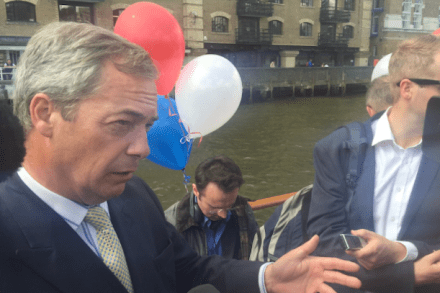
Forget the big EU debates, the most important face-off ahead of polling day is playing out on the Thames right now. Nigel Farage has taken to the water today as part of a Brexit flotilla, organised by the Fishing for Leave campaign. The stunt sees Scottish skippers boarding Brexit boats as they make the case for Out. https://twitter.com/kayaburgess/status/743012072976470016 However, not wanting to be outdone, the Remain camp are fighting back with their own attempt at some gentle naval warfare. Bob Geldof is leading the charge today — sharing an In boat with Rachel Johnson. He has attempted to win over voters by playing Chicago’s ‘If you leave me now’ at full volume

Denmark's former Prime Minister speaks out: Brexit would not lead to Dexit

There has been much speculation that a Brexit could lead to a number of other countries following suit and leaving the EU. Top of that list is Denmark, with Nigel Farage claiming that the country would be the first to leave in a domino effect triggered by Brexit. Now Denmark’s former Prime Minister Helle Thorning-Schmidt has waded into the discussion. When asked, at Fortune’s Most Powerful Women event in London, whether Denmark would leave the EU if Britain did, Thorning-Schmidt poured cold water on the suggestion. The former Social Democrat politician, who is the current chief exec of Save the Children, says the majority of Danes want to remain in the EU

The week in EU deceptions: Richard Reed, Ian McKellen and Eddie Izzard

Anyone with any more corkers in their armoury should take note there’s less than a fortnight left in which to release them. This week did see George Osborne finally challenged on why he and David Cameron keep pretending that a country they have always campaigned to bring into the EU will never in fact come into the EU. Questioned by Andrew Neil about David Cameron’s 2010 speech promising to ‘pave the road from Ankara to Brussels’ George Osborne said: ‘Well I was 16 years old when Turkey first applied to join the European Union, I’m now 45 and I don’t think it’s going to happen in my lifetime because sadly

Transcript: Nigel Farage grilled by Andrew Neil on Brexit

This is an abridged transcript of Nigel Farage’s Brexit interview with Andrew Neil IMMIGRATION Reducing the level of immigration has been central to your pitch to voters, can you tell the British public at what level broadly you’d expect net migration to fall if we left the EU? Up to us. The point about this referendum, too much of this is sounding like a manifesto, a Remain manifesto, a Leave manifesto.  The real point about this referendum is who makes the decisions, do we have the ability to control the numbers that come to Britain or not, that’s the first and most important point to make.  What do I think

Nigel Farage has just been rumbled on immigration

The Leave campaign has been talking a lot about immigration, but just what kind of effect would Brexit have? How many fewer would come? “Up to us, that’s the point of this referendum” said Nigel Farage, in is interview with Andrew Neil. Let MPs debate the ideal figure in the Commons, he said. His implication: that post-Brexit Britain could pick a number for net migration, any number. Given that Britain’s net migration is about 330,000 a year, Andrew Neil asked Farage how far he sees it falling after Brexit. He didn’t have an answer. From the 1050s to the 1990s, it used to be 30,000 to 40,000 a year, he (wrongly)

The Andrew Neil Interviews: Nigel Farage tones it down

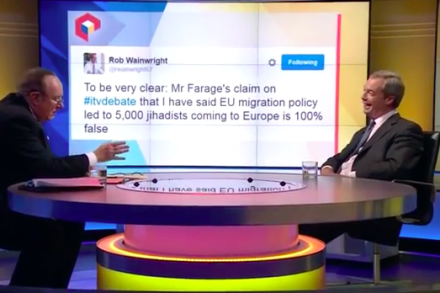
Sometimes you sense that Nigel Farage is keen to create controversy, to stir things up. But tonight in his interview with Andrew Neil, Farage seemed keen to do the opposite; turning in a restrained performance. When Andrew Neil asked what net migration would be post-Brexit, Farage replied that ‘it would be up to us’. He said that the two sides in this campaign shouldn’t be putting forward manifesto-style promises, as the question is really about who governs not what they do. The subtext of this seemed to be that it wouldn’t be him deciding the policy. Under further questioning from Andrew Neil, Farage said he would like to get net

Ukip's David Coburn cries BBC bias... over ITV debate

Nowadays it’s difficult for the BBC to air anything without facing some accusation of bias. As well as the well documented strand of right-wing bias and EU bias, there’s now anti-Corbyn bias — with the BBC’s Nick Robinson even accusing his employer of the latter. Last night things got so bad in the EU debate with David Cameron and Nigel Farage that the Beeb were accused of pro-EU bias once more. Ukip’s David Coburn took to Twitter to vent that the ‘BBC Knew the questions in advance’ and ‘chose which audience members speak’ so Remain had an easier ride. Alas, the Scottish MEP concludes that ‘Cameron still lost despite Aunties

How the papers reacted: Farage 'destroyed' as Cameron is 'taken to task' during live EU showdown

David Cameron and Nigel Farage both avoided making any disastrous blunders during last night’s TV showdown and for that reason alone they’ll be pleased with their performances. Those in the ‘Leave’ camp especially were concerned about what Farage might do or say when he took to the stage. On the basis of last night’s showing, however, they need not have worried too much (albeit for the moment he told a woman watching to calm down). But as with last week’s EU events involving the Prime Minister and Michael Gove, much of the press coverage doesn’t focus on the two politicians who took the stage. Instead, it’s those in the audience

EU referendum TV debate - David Cameron vs Nigel Farage

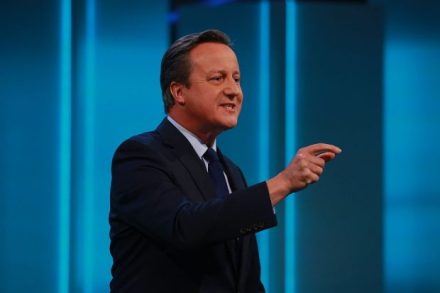
Welcome to Coffee House’s coverage of ITV’s EU referendum debate. David Cameron and Nigel Farage faced public questions on the EU referendum. Here’s our commentary, as well as audio and video highlights, from the discussion.  PODCAST: Listen to Fraser Nelson, James Forsyth and Isabel Hardman give their verdict on Cameron vs Farage: DAVID CAMERON:   James Forsyth David Cameron looked pretty happy at the end of that. He got his choice of opponent in this debate and did everything he could to take advantage of that, mentioning Farage at every opportunity. Cameron also benefited from going second, another thing which he got his way on, as he could rebut Farage’s points without any

Today in audio: 'Remain' fights back as PM warns of Brexit 'bomb'

Momentum in the ‘Leave’ campaign seems to be growing after Brexit took the lead in two polls out today. There are, however, still several weeks until the actual day of the EU referendum and the gap between the two sides remains marginal (four per cent). But ‘Remain’ still seem shaken by these polls. Here’s how they spent the day fighting back: David Cameron said Brexit would put a bomb under Britain’s economy, going on to say that ‘the worst thing is, we would have lit the fuse ourselves’: The PM was backed up Lib Dem leader Tim Farron. In a joint event, Farron said the argument for ‘Leave’ was built