Netflix

Why does Netflix never show us business heroes?

God bless Netflix: I’ve just watched all 28 episodes of Foyle’s War, the 1940s detective series set in Hastings and London that first aired on ITV more than 20 years ago. Pedants may have spotted minor anachronisms or been irritated by London scenes filmed in Dublin, presumably for tax breaks. But for me, the whole oeuvre – Spitfires, ration books, moustaches and all – stands as a monument of meticulous and compelling period drama. And as an amateur actor who always struggles to keep a straight face on stage, I’m in awe of Michael Kitchen’s gift of expressing Detective Chief Inspector Foyle’s moral outrage and inner pain by the tiniest

The Beast in Me is surprisingly addictive

The Beast in Me is one of those ‘taut psychological thrillers’ that everyone talks about in the office. This might sound disparaging – as it is, obviously – but I have to admit that, having succumbed in desperation (because, as usual, there is so little else on), I did find the show pretty addictive and unusually satisfying. What makes it stand out is that it doesn’t go for the obvious. Yes, its heroine – played by Claire Danes – is feisty, talented and capable. But she’s also whiny, uptight and really quite unsympathetic, as perhaps screenwriter Gabe Rotter intended when he gave her the weirdly repellant name Aggie Wiggs. Aggie,

Noah Baumbach needs to try harder: Jay Kelly reviewed

Noah Baumbach’s Jay Kelly stars George Clooney as a handsome movie star playing a handsome movie star who has an identity crisis and is forced to reflect on his life. It’s being sold as a Hollywood satire, but it’s far too affectionate to be biting, and contains moments where it drowns in schmaltz. For a director of Baumbach’s calibre (Marriage Story, The Squid and the Whale, Frances Ha), it all feels like very low-hanging fruit. That said, it’s not such an ordeal to spend a couple of hours in the company of Clooney as the golden Tuscan sunshine beats down (it’s mostly filmed in Italy). I found I could cope.

An adorable Taiwanese debut: Left-Handed Girl reviewed

Left-Handed Girl is a Taiwanese drama about a single mother who moves back to Taipei with her two daughters to run a noodle stand in the night market. It’s one of those films where the stakes don’t appear that high – will the mother make the rent this month?; will the littlest daughter settle at her new school?; what’s grandma’s game? – yet we become so attached to this family and their survival it will all matter a great deal. It also features an adorable pet meerkat, GooGoo, and I doubt you’ll see a better film starring an adorable pet meerkat called GooGoo this year. I’d bet my life on

Pluribus is a mess

Pluribus is another drama set in the dystopian future. But on this occasion the integrity of the entire human race depends not on someone ordinary and likeable who could almost be you, but on a bolshie, misanthropic middle-aged lesbian called Carol. Carol (Rhea Seehorn from Better Call Saul) is so grumpy that when in flashback we see her wife Helen treating her to an expensive jaunt to a romantic ice hotel in Scandinavia, she refuses to snuggle beneath the fur bedspread, sip designer vodka and gaze at the Northern Lights above. Instead, all she wants to notice is that sitting on a bed made of blocks of ice makes her

Nobody Wants This could learn a few things from Seinfeld

Nobody Wants This, the Netflix romcom that brought us the ‘hot rabbi’, recently returned for its second season. For the uninitiated, the first series introduced us to sex and relationships podcaster Joanne, played by Kristen Bell, who meets Noah, played by Adam Brody (of The O.C. millennial crush fame), a reform rabbi who has just broken up with his long-term girlfriend. The premise felt fresh and original: a romcom that dared talk about religion and even made it the key part of the plot. It’s undoubtedly a hit, with season two racking up more than eight million views in its first four days of streaming, taking it to the number one spot

Excruciating: Netflix's House of Guinness reviewed

First the surprising news: not a single one of the four Guinness siblings in 1868 Dublin is black; and only 25 per cent of them – surely a record for Netflix – is gay. Now the bad: despite these oversights, House of Guinness remains very recognisably the work of Steven Knight, the Peaky Blinders screenwriter who once set a drama in 1919 Birmingham and said to himself: ‘I know just what this period needs to make it more echt: a cameo appearance by dub poet Benjamin Zephaniah.’ As a Brummie (more or less), I loathed Peaky Blinders. I hated the accents (some were OK, but too many were a melange

Meghan Markle’s TV show is a balm for desperate housewives

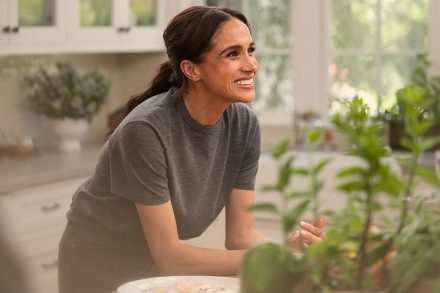
The Duchess of Sussex has achieved something quite remarkable. After the brickbats hurled at the first season of her Netflix show With Love, Meghan – the furious pro-monarchy outrage, the eye-rolling from critics, the memes that lampooned her syrupy anecdotes – many TV personalities would have flinched. They would have called consultants, tweaked the format, apologised by going in a ‘new direction’. Meghan Markle (or should I say Sussex) has done the opposite. Season two arrived last month: unchanged, unrepentant and every bit as twee as the first.  Like her homemade ‘jam’, that’s not to say it’s gone down well. ‘Painfully contrived’, ‘irrelevant meets intolerable’ and ‘tone-deaf’ were just some of the

The Office is the TV show that will never die

A thought hit me when bingeing the first series of The Paper on Sky’s Now streaming service this week: how on earth did it take this long for someone to make a sequel to The Office? Don’t get me wrong, this wasn’t a glowing verdict on the comic merit of The Paper – an Office-style mockumentary set in a struggling regional newspaper in Toledo, Ohio. Rather it was a reflection on the usually mercenary economics of big television. During the pandemic, the American version of The Office racked up an astonishing 57 billion streaming minutes, despite its final episode having aired in 2013. The show premiered in 2005, inspired by the

Netflix's Hostage is an act of cultural aggression

Apart from hunting, one of the very few consolations of the end of summer is that telly stops being quite so dire. But that moment hasn’t quite arrived yet – as you can tell from the fact that I’m reviewing Hostage. There’s so much that is annoying about Hostage that I don’t know quite where to begin. But let’s start with its cloth-eared use of the word ‘abducted’. Suppose you were the prime minister (Suranne Jones) and your implausible Médicins Sans Frontières husband Alex (Ashley Thomas) had been kidnapped by a masked terror group in French Guiana and you had to brief your teenage daughter on what had happened, which

The curious allure of ‘cosy crime’

Just a glance at the cast list tells you everything you need to know. Netflix’s adaptation of Richard Osman’s cosy crime sensation The Thursday Murder Club stars Dame Helen Mirren, former James Bond Pierce Brosnan (as well as a former Bond villain Sir Jonathan Pryce), the Oscar-winning Sir Ben Kingsley and the gold-plated national treasure Celia Imrie, alongside a supporting line-up which includes David Tennant and Richard E. Grant. Released today in selected cinemas before landing on the streaming service on Thursday, the film has an awful lot of talent for what appears at first glance to be a mash-up of One Foot in the Grave and Hetty Wainthropp Investigates.

I love how awful My Oxford Year is

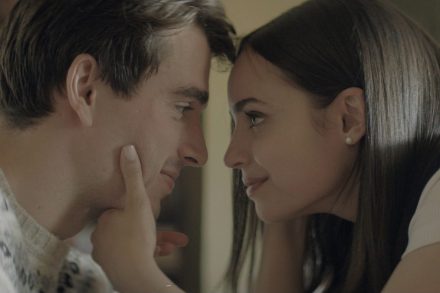
The punters are saying My Oxford Year is a disaster. ‘Predictable, uninspiring and laughable,’ complains some meanie on Rotten Tomatoes. But they’re missing the point. My Oxford Year may be a work of accidental genius, but it’s a work of genius nonetheless. You will squirm, you will laugh derisively, you will cringe. By the end, though, you will be forced to admit that you secretly enjoyed every moment, for this is the very examplar of a so-bad-it’s-good masterpiece. You know it’s going to be awful from the very first frame: a still representing the bookshelf of our handsome, clever and poor heroine Anna De La Vega (Sofia Carson) who has

Worth watching for Momoa’s gibbous-moon buttocks alone

If you enjoyed Apocalypto – that long but exciting Mel Gibson movie about natives being chased through the jungle with (supposedly) ancient Mayan dialogue – then you’ll probably like Chief of War, which is much the same, only in Hawaiian. Like Apocalypto, it even has sailing ships appearing mysteriously from Europe with crews that serve the role of dei ex machina, rescuing endangered native protagonists at key moments. This time our based-on-a-true-story hero is Ka’iana, the 18th-century Maui chieftain who succeeded in uniting the four warring island kingdoms (Oahu, Maui, Molokai and Lanai) and turned them into the kingdom of Hawaii. He is played by Jason Momoa – to you,

What I learned from running my own Squid Game

You know how this story goes. The cameras are rolling. The audience is cruel. You’re trapped in the game and the game is death and the game is going out live from the heart of the state of nature where empathy is weakness and you kill each other off until there’s only one left. What will you do to survive? Who will you become if you do? This is the plot of Squid Game, Netflix’s Korean mega-hit that just drew to its gory conclusion. It is also the plot of The Hunger Games, Battle Royale, The Running Man, Chain-Gang All-Stars and The Long Walk. We have spent several decades watching desperate people slaughter each other for survival to entertain

Style, wit and pace: Netflix's Dept. Q reviewed

Can you imagine how dull a TV detective series set in a realistic Scottish police station would be? Inspector Salma Rasheed would have her work cut out that’s for sure: the wicked gamekeeper on the grisly toff’s estate who murdered a hen harrier and then blamed its decapitation on an innocent wind turbine; the haggis butcher who misgendered his vegetarian assistant; the Englishman who made a joke on Twitter about a Scotsman going to the chippy and ordering a deep-fried can of Coke… It would get lots of awards, obviously, but I doubt it would do that well in the ratings. As with Slow Horses, this is about enjoying the

Excruciating: Sirens reviewed

You had a narrow escape this week. I was about to urge you to watch Sirens, the latest iteration of that fashionable genre Ultra-Rich Lifestyle Porn, currently trending on Netflix. But luckily for you I watched it right to the end and got to witness the whole edifice collapsing like a speeded up version of Miss Havisham’s wedding cake. Normally, this doesn’t happen. Like most critics I have neither the time nor the work ethic to view a TV series in its entirety before putting in my tuppenny-ha’penny’s worth. I just assume that if something starts well or badly it’s going to continue that way. Not Sirens, though. It’s as

If you are of a certain age, you’ll really enjoy Tina Fey's The Four Seasons

The Four Seasons is one of those shows you notice in the ‘Top TV Programmes on Netflix’ section, see it’s some kind of glossy romantic comedy starring American actors you’ve vaguely heard of, and skip past quickly in search of something with zombies or subtitles. This would be a mistake though because, at least if you are of a certain age, you’re really going to enjoy it. I think the litmus test is whether you’re old enough to remember the 1981 Alan Alda film on which it is based, which I do, just about, vaguely. It’s that kind of movie where a bunch of old friends who have been holidaying

The overlooked brilliance of BBC’s The Hour

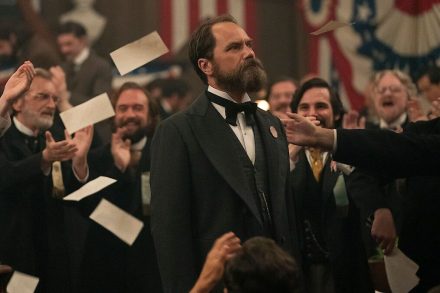
With reluctance – but enticed by its surprisingly starry cast and the fact that it had landed, ironically enough, on Netflix – I recently tuned in to The Hour, the BBC’s 2011 political drama series. It’s about a BBC TV news programme being launched in 1956, against the backdrop of the Suez Crisis. And, goodness me, isn’t it good? Better than good, in fact – it’s a high-carat television diamond, and not some lab-grown job either, but the real, romantic, sparkling deal hewn out of the earth and hawked via Antwerp before ending up in the Imperial State Crown. From the get-go – those classy, Hitchcockesque credits – you know

Better than Hollywood: Netflix's The Eternaut reviewed

‘Next time you do a review, you’ve got to find something you like. You’ve been far too negative,’ said the Fawn. ‘Well, it’s hardly my fault if everything on TV is crap at the moment. I can’t just call up good stuff to order,’ I said. ‘Try,’ said the Fawn. Luckily – and unwontedly – Netflix has come to my rescue with a dystopian sci-fi series called The Eternaut. Though I’m not totally convinced by the name – a conflation of ‘eternity’ and ‘astronaut’ – it’s a very enjoyable watch, which confirms, yet again, Delingpole’s Iron Law of Television: always go for the shows with subtitles. This one is from

Confection of sex, bad history and nonsense: Apple TV+'s Carême reviewed

Antonin Carême was known as the ‘chef of kings and the king of chefs’. His patrons and employers included Talleyrand, Napoleon, the Prince Regent, Tsar Alexander and the then richest man in France, James Rothschild. He popularised the tall ‘toque’ hat worn by chefs; he either invented or perfected culinary classics including the vol-au-vent, the profiterole and the mille-feuille, as well as sauces including velouté and béchamel. All this he managed to achieve despite having come from a desperately poor background, raised in a shack in revolutionary France and sent off as a young lad to help make ends meet as a kitchen boy and later as apprentice to Paris’s