Nasa

How Artemis II returned to Earth

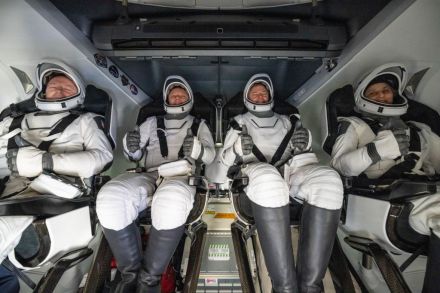
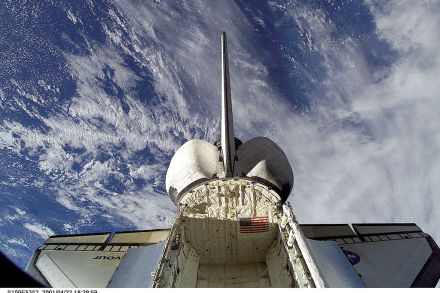
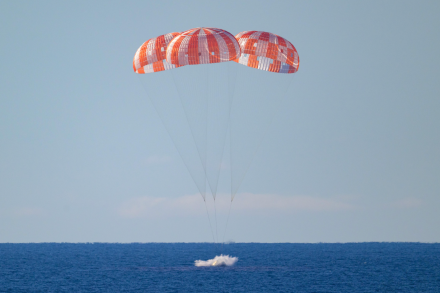
The key event in the return of the Artemis II crew was the moment of real drama during what mission controllers call Entry Interface. The capsule is 400,000 feet above the Earth and still traveling at 25,000 miles an hour. They were among the fastest humans even though they did not break the incoming speed of the Apollo 10 mission. It is only fourteen minutes until splashdown in the Pacific, there is no turning back, no second chance, re-entry will happen no matter what. A few hours earlier the crew donned their orange so-called crew survival suits and lowered their visors. In essence these are personal spacecraft providing everything they need to survive for up to six days. Their water-cooled inner suit was keeping them cool even though the cabin temperature was normal.
Artemis II

Why Artemis II matters

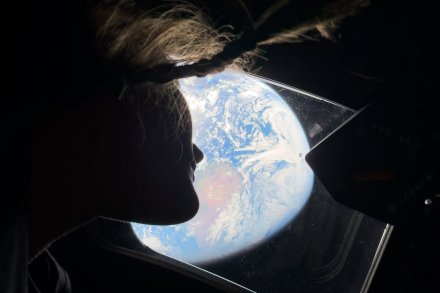
Weren’t those images beamed back from the Artemis II mission something to catch the breath in the throat? If something in you wasn’t stirred by the sight of Earth, glimpsed through the window of the space capsule past the silhouetted face of the astronaut Christina Koch, I don’t think you can be fully alive. And what about the thought that for the first time in history, human eyes will look directly on the dark side of the moon; or that the inhabitants of that spacecraft will travel farther from our home than any humans have ever done? That for a few tens of minutes before earthrise, they will be wholly out of contact with home as they travel through the vast dark? Stir the soul it might; but why, some will reasonably ask, should we be doing it at all?

Will Artemis II fulfill our Space Age dreams?

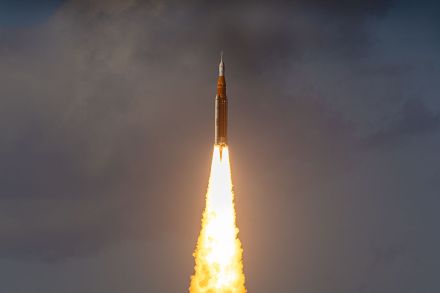
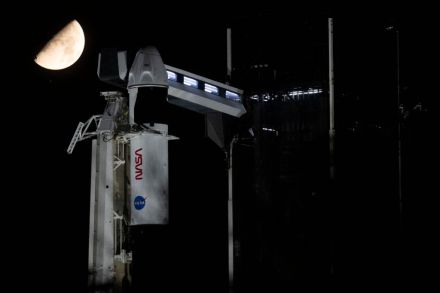
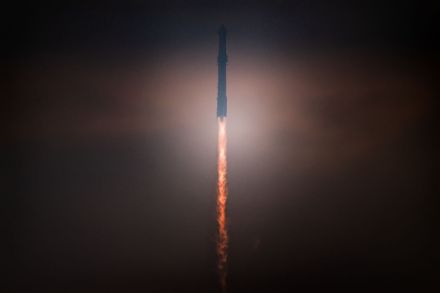
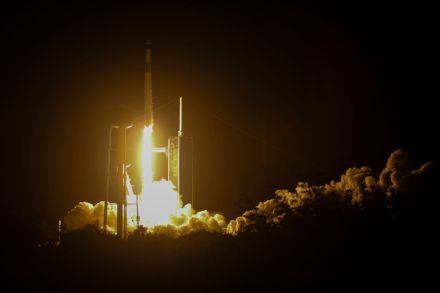
As the Artemis II mission thundered into the sky last night, a full moon rose above Cape Canaveral. It was no coincidence: the timing of the lift-off was ordained by lighting requirements and the mechanics of the Moon's orbit. The mission set off not in the direction of the Moon, but towards where the Moon will be in five days’ time when the spacecraft swings around it in what is called a "free-return trajectory." The crew of four are the first in almost 54 years to go to the Moon. In a way, things have not changed so much since then.

Will Bezos beat Musk to the Moon?

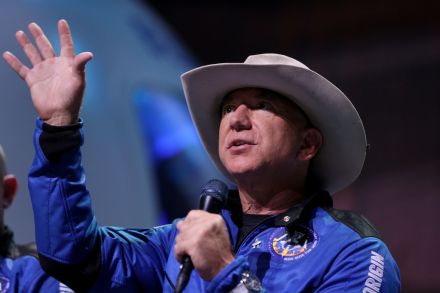
Even Elon Musk has to face a dose of reality every once in a while. Technology and politics have forced him to turn his gaze away from Mars, for the moment at least, to put Americans back on the surface of the Moon before China gets there. But it might already be too late. If America has any chance of beating China, it now seems inevitable that the next American human landing on the Moon will not be by Musk’s Starship but using a craft being developed by his rival Jeff Bezos. Announcing the pivot, Musk wrote on X: “For those unaware, SpaceX has already shifted focus to building a self-growing city on the Moon, as we can potentially achieve that in less than 10 years, whereas Mars would take 20+ years.

Bezos

Will US businesses profit from a return to the Russian market?

Rome Will peace in Ukraine also prove to be a great deal for US business? Vladimir Putin would certainly like Donald Trump to think so. Within days of Trump’s election victory last November, the Kremlin ordered major Russian corporations to prepare detailed proposals for economic cooperation with Washington. Coordinating these efforts were Maxim Oreshkin, deputy head of Putin’s presidential administration, and Kirill Dmitriev, the US-educated Harvard, Stanford and Goldman Sachs alumnus who heads Russia’s sovereign investment fund.

Why Trump must build a nuclear reactor on the Moon

Sean Duffy, the secretary of transportation whom President Trump appointed last month as temporary leader of NASA, has issued a directive to fast-track efforts to put a nuclear reactor on the moon. “To properly advance this critical technology to be able to support a future lunar economy, high power energy generation on Mars, and to strengthen our national security in space,” he says.A small nuclear reactor on the moon is a good idea, but the directive is about more than that: it is about renewing America’s leadership in space exploration that, with its magnificent achievements receding into the past, looks vulnerable. Bill Nelson, NASA’s last leader, didn't mince his words when it came to the new rivals, China. “It is a fact: we’re in a space race.

The Moon

How politics tainted the delayed homecoming of stranded astronauts

The return of two NASA astronauts – Suni Williams and Butch Wilmore – back to Earth after equipment malfunctions saw their intended week-long sojourn to space turn into a nine-month stay on the International Space Station, should be cause for national celebration. Alas, politics has tainted the stratosphere, with each side of the aisle playing a part in the blame game for the astounding delay in getting our stranded astronauts back home.  Williams and Wilmore will have endured more than just a few missed family events and some extra time spent conducting experiments (they carried out more than 150) aboard the ISS.

The death of the American museum

It starts with the promise of skipping school — always an illicit thrill at nine years old. My son and I, seasoned truants, hop the early train to downtown Chicago for what I’ve convinced him is a real education. The day’s agenda: two of the city’s iconic museums — grand, intimidating and, up until recently, somewhat sacred. These sprawling neoclassical behemoths, both originally constructed for the 1893 World’s Columbian Exposition, dot the waterfront like ancient ruins. They once felt like temples to knowledge, where wonder and learning collided, where static displays ignited curiosity. But as we step inside, I can’t shake the feeling that maybe, just maybe, their magic has faded. Can museums as we know them survive my lifetime?

museum

The space race gets serious

We are shifting from the early era of space exploration to a more serious phase extending ever further from Earth’s orbit, focused on key opportunities such as mining and manufacturing as well as military purposes. This newly expanded playing field will determine not only who rules in space, but who ends up dominating Earth. The protagonists include some familiar faces — the US, Russia and the European Union — but much competition will come from emerging powers, notably India and China, both of which look upon the “final frontier” as critical to their economic and military futures. Yet the rise of non-state space entrepreneurs, notably SpaceX, has introduced a fresh and potentially decisive factor to the new space race.

space

Scientists’ strange offering to the final frontier

Dr. Jonathan Jiang dreams of beaming an easy-to-read message into space before civilization collapses. He’s run the simulations to test humanity’s self-destruction rate. According to his computers, there’s a 0.1 percent chance that humanity destroys itself in the not-so-distant future. He’s even more pessimistic than Stephen Hawking, who bowed out of public life saying, “I don’t think we will survive another 1,000 years without escaping beyond our fragile planet.” Jiang, who works for NASA’s Jet Propulsion Laboratory, co-authored the 2022 paper “A Beacon in the Galaxy,” which argues for the importance of streamlining the communications we send into space hoping they might be intercepted by an interplanetary species.

space

What exactly is the new space race all about?

The recent spate of articles about attempts by different countries to land vehicles on the Moon make it clear that a new space race is on. Just last month, Russia launched its first mission there in forty-seven years. And although the automated Luna-25 spacecraft spun out of control and crashed at the last minute, India’s heavily-instrumented Chandrayaan-3 landed successfully just four days later. NASA itself aims to return humans to the lunar surface in 2025 with its Artemis program. Remarkably, more than eighty countries, including Israel and the United Arab Emirates, have thus far established some kind of presence in space.

space

Biden admin: OK, sure, we do want to ban your gas stoves

Sinema abandons ActBlue Arizona maverick Kyrsten Sinema has been ruffling feathers this week, after taking a scalpel to the caucus lunches she used to have to attend while a Democrat. “Old dudes are eating Jell-O, everyone is talking about how great they are,” the independent senator told a group of GOP lobbyists today, according to Politico magazine. “The Northerners and the Westerners put cool whip on their Jell-O, and the Southerners put cottage cheese.” A moderate Democratic colleague told the same reporter that Sinema is "the biggest egomaniac in the Senate." Some honor! Further proving her independent streak, Sinema has finally changed payment processors, from ActBlue to Anedot, a competitor used mostly by independents and Republicans.

gas stoves

When the moon brought America together

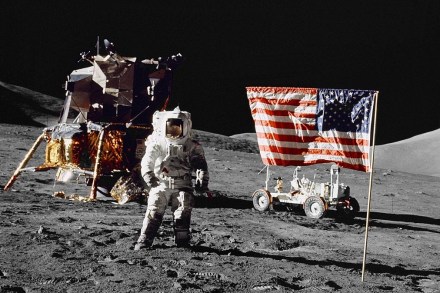
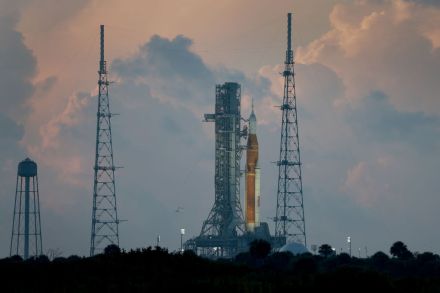
The Artemis rocket is back from the moon. Within a couple of years, if all goes to plan, it will bring men to the moon’s surface. It is a great loss that a bigger deal hasn’t been made of this expedition. I was only three when John F. Kennedy died, and his famous 1962 pronouncement that we would go to the moon not because it was easy but because it was hard was already history. The picture books I got on birthdays always included him in the history of space exploration. Those books made sure every kid knew how “we” were going to get to the moon. They changed us, and with us, America. We started with Mercury, baby steps mostly proving we could launch men into space. Then Gemini, a long proof-of-concept program to try out the technology of docking.

The culture war inside the space program

For many, the upcoming launch of NASA’s Artemis 1 (after a botched attempt earlier this week) undoubtedly seems the start of a new and exciting era in space exploration. Not only is the US finally planning to return to the Moon — this time to build a permanent outpost on the lunar surface — but in just a few months Elon Musk’s SpaceX will be sending its gigantic Starship, theoretically capable of carrying 100 astronauts, into Earth orbit. “Space is sexy again,” as astrophysicist Paul M. Sutter recently put it. “After the excitement of the initial Apollo missions dwindled into a subject only discussed by ultra-nerds, and the cool factor of the Space Shuttle gave way to the realization that it didn’t really do much, people generally lost interest in space.

Let’s ban the metaverse and colonize space

The way I see it, there are two options for the future: a transplanetary society or a transhuman one. What got me thinking about this was right-wing billionaire Peter Thiel’s recent interview with Mary Harrington, which she wrote up in UnHerd. As Harrington puts it, Thiel’s diagnosis of modern social ills is not that “progress is inevitably self-destructive,” but that we’ve been making the wrong kind of progress. "We’ve had continued progress in the world of computers, bits, internet, mobile internet, but it’s a narrow zone of progress. And it’s been more interior, atomizing and inward-focused,” Thiel said. Meanwhile, “there’s been limited progress in the world of atoms.” So far, so good. But then the interview took a strange turn.

NASA’s multi-billion dollar Mars reality TV show green-lit for another season

The American businessman and astronomer Percival Lowell first popularized the notion of life on Mars in 1906 when he described vast canals observed on the planet, some spanning the equivalent distance of Boston to San Francisco. He believed an intelligent Martian civilization was in peril, their world drying out and dying, and they had constructed as a planet-wide irrigation system to move water from Mars’s polar ice caps to the rest of the planet.American folklore has it that the idea of Martian intelligent life was so pervasive that a 1938 radio drama of H.G. Wells’s War of the Worlds, about a Martian invasion, ignited mass panic when millions of people believed it was a real newscast.

mars