Marriage

Ian McEwan’s capacity for reinvention is astonishing

McEwanesque. What would that even mean? The dark psychological instability of The Comfort of Strangers and Enduring Love? The gleeful comedy of Solar and Nutshell? The smart social realism of Saturday and The Children Act? The metafictional games of Atonement and Sweet Tooth? Ian McEwan’s brilliant capacity for reinvention is a hallmark of his literary career. It’s simpler to say what McEwanesque is not: baggy, meandering, plotless, long. Yet all of these adjectives could be applied to his surprising new novel, Lessons. This cradle-to-grave (well, seven-ish to seventy-something) narrative concerns the life and times of Roland Baines, born, like McEwan, in 1948. Roland shares more than just a birth date

The funny truth about life as a diplomat’s wife

In the early 2000s my husband, a diplomat for the EU, was posted to Kazakhstan, a vast empty steppeland next to Siberia. It was winter and the place was covered with thick snow. My family were in England, my husband was mostly in the office; I was 61 and I didn’t know a soul. Our previous posting had been to Damascus and I had occupied myself by writing a book about the old palaces there, but here there were no old buildings as the Kazakhs had been nomads. I had nothing to do. Everyone spoke Russian – I didn’t. As my husband was a senior diplomat we qualified for a

Momentous decisions: Ruth & Pen, by Emilie Pine, reviewed

Emilie Pine writes about the big things and the little things: friendship, love, fertility, grief; waking, showering, catching the bus. She did so in her startling collection of essays Notes to Self, and she does it again in this, her equally startling debut novel Ruth & Pen. As Ruth (‘Counsellor. Patient. Wife. Wife?’) tells herself in the morning: ‘Swing the wardrobe door open, make a choice. To run. Or to stay. Or just which jacket to wear…’ This short novel takes place in Dublin on Monday 7 October 2019. It’s a significant day for our protagonists, two strangers who briefly cross paths. Ruth, 43, is deciding whether to end her

Anxiety is killing parenthood

Britain is on a slow descent to oblivion. Scotland is even closer to the abyss, with a birth rate of just 1.29, well below the UK’s sub-replacement level of 1.65. It turns out the answer to the West Lothian question is that West Lothian will disappear. Doomsday demography should matter, but Whitehall is in no way prepared to deal with it. New research published this week found that mental illness in early adulthood could account for up to 60 per cent of future childlessness. A generation too worried to have children spells disaster for countries that need to support ageing societies. Researchers looking at the populations of Sweden and Finland

Howard Jacobson superbly captures the terrible cost of becoming a writer

Howard Jacobson, who turns 80 this year, published his first novel aged 40. Since then he has produced roughly a book every two years, including The Finkler Question, which won the Man Booker in 2010. Given that he was put on Earth to write, why the wait? This is the subject of Mother’s Boy, a tale of self-persecution in the form of a monologue which includes interjections from the ghosts of his parents and one chapter, recording a period in his twenties that he drifted through in a dream state, printed in a font resembling handwriting. ‘How’s the novel coming along?’ his father would routinely ask after Jacobson graduated from

Reassess every relationship you’ve ever had before it’s too late

‘Reading is a celebration of the mystery of ourselves,’ according to Elizabeth Strout, who writes to help readers understand themselves and other people. In Oh William!, Strout resurrects Lucy Barton, the enigmatic heroine of a previous novel, setting her on a mission to get to know William, her first husband. This is Strout’s third outing for Lucy, who also reappeared in Anything is Possible, a collection of interlinked stories about the residents of Amgash, Illinois, Lucy’s hometown. Now in her early sixties and newly widowed, Lucy is good friends with William, who is on wife number three — Estelle, a woman 22 years younger than him. ‘And that was no

The life of an ambassador’s wife

‘One day,’ she writes, ‘we had the Minister for Northern Ireland for the night. He arrived wearing a kilt, which must have made the evening memorable for our German guests.’ Writing here (I should explain) is the widow of Sir Julian Bullard, then ambassador in Bonn, the West German capital. ‘Harry [the butler] beckoned to me and whispered “Come and see his bed”… so I followed Harry upstairs. The bed was neatly turned down. Tucked in, with only their heads showing, was a line of stuffed animals.’ The pair are surprised by the minister himself, nipping back to fetch papers. ‘He introduced each animal to me in turn. “Never travel

They weren’t all that pious in the good old days

You need to be wary of being too flattering about English churches. As John Betjeman said: ‘Be careful before you call Weymouth the Naples of Dorset. How many Italians call Naples the Weymouth of Campania?’ Even so, the rise of the English medieval church was extraordinary. As early as 1200 there were 9,500 churches in England — all built since 597, when St Augustine started his mission to the English at Canterbury. And lots of them are still there. Our Anglo-Saxon, Norman and Gothic churches must be the highlight of our architectural history, just ahead of our country houses. But how did the English use their churches? Step forward Nicholas

The young bride’s tale: China Room, by Sunjeev Sahota, reviewed

Sunjeev Sahota’s novels present an unvarnished image of British Asian lives. Ours Are the Streets chronicles a suicide bomber’s radicalisation, and its Booker-shortlisted successor, The Year of the Runaways, follows illegal immigrants in Sheffield — where Sahota now lives, having been raised in Derby by Punjabi-born parents. China Room, his most autobiographical work to date, mines his adolescence in deprived 1990s Chesterfield and imagines that of his great-grandmother in rural Punjab. In 1929, a 15-year-old girl is married to one of three brothers. On a remote farm, Mehar shares confined quarters with the best china and two other veiled brides —each competing to conceive a son first. Couplings take place

How to have an affair

Gstaad After six-and-a-half months apart, I had no trouble recognising my wife. Out she came on to the driveway to greet me as Charlie the horny driver brought a sleepy Greek boy home after a long flight from the Bagel. I pretended not to know her and embraced the maid instead, but it didn’t work. My son and two grandchildren added to the merriment, playing along when I asked them who that lady was who tried to kiss me. Here’s some advice to all you young whippersnappers: women will forgive anything as long as you keep it light and make them laugh. I’ve been in trouble with women throughout my

Forget race or class, marriage is the big social divide

The latest spark to ignite the culture wars is a report from the parliamentary education committee on the underachievement of working-class white boys. But this isn’t about race. The boys don’t underachieve because they are white. Their skin colour is merely a marker by which we can see that a certain cohort is doing worse than another. And despite received wisdom, it’s not just about poverty, school funding or investment. Children of other ethnicities who are equally poor, and even potentially at the same school, will likely do considerably better. It’s not even about class, which seems to be the latest factor on which the fickle finger of blame is

Boris Johnson’s refusal to talk about faith

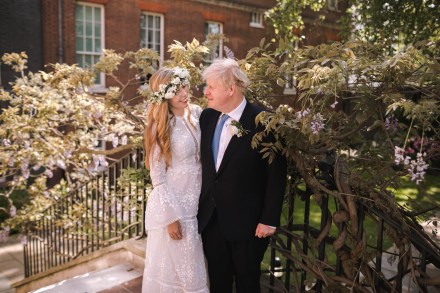
I am struggling to make sense of the Prime Minister’s answer to my question: whether he is a practising Roman Catholic – which I asked in good faith and with good reason because he was recently married in Westminster Cathedral. His answer was: ‘I don’t discuss these deep issues. Certainly not with you.’ He is aware that – for better or worse (worse for a long time) – this has been a pertinent question for chief and prime ministers since Henry Vlll. More broadly, the professed faith (or none) of a leader matters to many voters. But it was the ‘certainly not with you’ that took me aback. There is

Marina Warner becomes her mother’s ‘shabti’

There comes a time after the death of parents when grief subsides, the sense of loss eases, and you, the child, are left wondering who those people were. What were they like? Not as you knew them as parents, but as people? For most of us, as the cliché goes, time is a healer, and these questions, thoughts, urges and memories lose their urgency. For others, and Marina Warner is clearly one, there is a more active, urgent, passionate and, yes, Proustian process at work — a need to bear witness — and it does not leave you alone until the questions are answered. For Warner, the questions relate in

Coromance is blossoming

It’s heartening to hear that while it’s curtains for the economy, our domestic lives are on the up. In Wuhan there was a spike in divorce rates, and in Japan, wives have been sending their husbands away to hostels. But here in Britain, there’s love in lockdown. Sales of engagement rings have risen significantly since we were all told to stay at home and couples have found creative ways to pop the question in their living rooms and local parks. For those who have been married for longer, working, eating and sleeping at home together 24/7 for weeks on end has been a strange novelty — an odd throwback to

Dear Mary: Can my marriage survive my husband working from home?

Q. Our son and his girlfriend have announced their engagement and we are delighted with his choice. Our problem is with what I regard as the misjudged tone of hilarity among some friends, many of whom we have not heard from for years, who have telephoned to congratulate us. It’s the emphasis on how clever our son has been and how thrilled we must be — the subtext being ‘because you’re all such snobs’ — which rankles. Yes, it’s a fact that our future daughter-in-law is a member of the aristocracy and has a bit of cash — but our son is, by any standards, an exceptional young man. Moreover,

How to avoid a lockdown divorce

They say absence makes the heart grow fonder. Well, the coronavirus pandemic now provides us with the ideal conditions to test whether the opposite is equally true: does being cooped up together in a small space for a long period of time also do the same? I think we all know the answer to that one. It will come as no surprise to any married couple – happy or otherwise – that the Chinese city of Wuhan, epicentre of the coronavirus outbreak, has seen a large spike in divorce cases after couples escaped from a month’s quarantine. So, as millions of families across Britain embark on weeks, and possibly even

How could any woman fail to be won over by my new cinema room?

As Christmas approaches, fighting has broken out in the Young household. No, I’m not talking about my three boys, aged 11, 12 and 14, who have taken to playing a no-holds-barred version of American football in the kitchen. Rather, it’s Caroline and me who have been going at it. My sin has been to assume responsibility for the decor of one of the rooms in our house. This has been Caroline’s domain until now. She chooses which colour to paint the walls, what furniture to buy at Ikea and how that furniture should be arranged. My role is confined to assembling desks and bookshelves and occasionally moving beds around. But

Emma Watson, ‘self partnering’ and the rise of marriage for one

Emma Watson has said she is not single but ‘self-partnered’. The actress told Vogue: ‘I never believed the whole ‘I’m happy single’ spiel. It took me a long time but I’m very happy [being single]. I call it being self-partnered.’ Here Ariane Sherine writes about the rise of the marriage for one: As far as the bride was concerned, the wedding was perfect. Her dress was beautiful, the vows were traditional and she changed her name after the ceremony. The clifftop scenery was breathtaking, the seven bridesmaids were encouraging and supportive: move over Princess Di. There was only one thing missing: the groom. Like a growing number of single women,

Letters | 18 July 2019

Leave we must Sir: It is interesting that as the Brexit process drags, people become more distanced from what was a simple decision made at the referendum. The question was stay or leave, and the decision was leave. In last week’s letters, Mark Pender writes that it is a mystery to him why MPs continue to support the decision to leave despite knowing it is against the country’s interests. I would venture to say that it is most certainly not ‘known’ to be against the country’s best interests. Pender goes on to say that this decision flies in the face of advice ‘from the civil service and others who have

Male order | 4 July 2019

Another turn around the block for David McVicar’s handsome 1830s Figaro at the Royal Opera — the sixth since the production’s 2006 premiere — scarcely raises an eyebrow, let alone a pulse. But a quick glance down the cast list of the current revival reveals some curiosities. First to catch the eye is Kangmin Justin Kim — the first countertenor in the company’s 250-year history to play sexually rampant page Cherubino, traditionally a trouser role for a woman. Read on and you’ll see starry German baritone Christian Gerhaher making an unexpected mid-career role debut as Figaro, as well as a main-stage house debut for his Susanna — young American soprano