Israel

Antony Blinken embodies decades of failure

There is no sign marking the entrance to Barman Dictat. The bar under 44 Khreshchatyk Street in Kyiv boasts the largest mezcal collection in Eastern Europe. On a typical night you can find it by noting the crowd of people wafting cigarette smoke into the evening air. Inside, you’ll find shelves of more than 400 glowing bottles perched above a steel bar stretching more than thirty feet. You’ll find bespoke cocktails — Kraken, Smoky Voice and Tickle Balls. And, on one particular May evening, you’ll find the seventy-first secretary of state of the United States of America at center stage. Clad in black and wielding a scarlet electric guitar, Antony Blinken seemed less enthused about the moment than his staff had perhaps anticipated.

Blinken
letters

Letters from Spectator readers, July 2024

The cunning of the Democrats’ lawfare On the right flank the aristocrats of the conservative intelligentsia dominated by the likes of Max Boot, David Frum, David French, Bill Kristol and George Will would rather compromise than soil their false pride; the haughty intellectual snobs are thus perfect targets for Alinsky’s “Make the enemy live up to its own book of rules” — aristocratic intellectual elites that would rather die than support a judicial and policy juggernaut with bad table manners. As Victor Davis Hanson observed, Marquess of Queensberry Republicans would rather lose nobly than win ugly. — Adler Pfingsten Will Cherelle Parker become the next ‘America’s mayor’ in Philadelphia?

war

What is war good for in the twenty-first century?

What exactly is war good for in the twenty-first century? The US should have asked itself this before embarking on decades of aimless occupation in Iraq and Afghanistan. Israel and Russia — very different countries, morally and otherwise — should be asking themselves today. The wars in Ukraine and Gaza both began with changes in an uncomfortable but previously stable status quo. Sometimes Westerners who try to imagine a peace deal for Ukraine invoke Finland’s strategic neutrality during the Cold War. But Ukraine was Finlandized for nearly twenty years after the fall of the Soviet Union, precariously balanced between Russia and the West but fully committed to neither. No one was entirely happy with that — yet there was peace from 1991 until 2014.

Biden White House rocked by protests

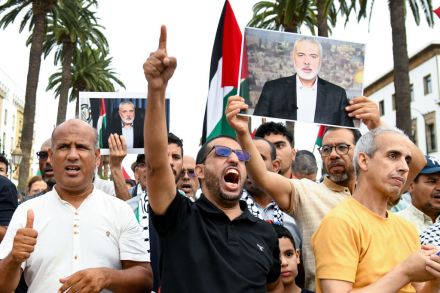
The Biden White House had a difficult weekend as pro-Palestinian protesters continue to be a thorn in the side of the administration and the Democratic Party. Thousands arrived outside of the White House on Saturday to call for an immediate and permanent ceasefire and for Biden to stop sending weapons to Israel. Police erected additional fencing around the White House in anticipation of the protests and deployed pepper spray against at least one demonstrator, but no arrests were made. Instead, the pro-Palestinian activists left graffiti on statues in Lafayette Square and trash strewn around the perimeter of the White House complex.

protests

Joe Biden’s TIME interview: the good the bad and the ugly

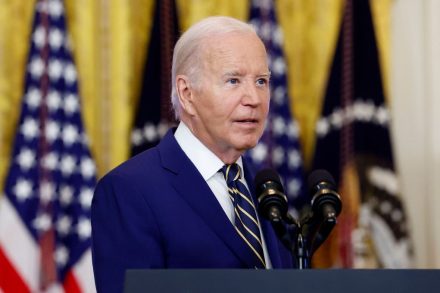
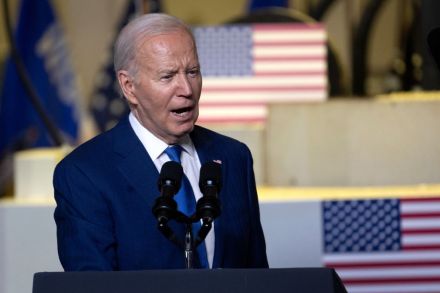
President Joe Biden sat down for an interview with TIME magazine in the White House last week. The questions centered around foreign affairs, with interviewers Massimo Calabresi and Sam Jacobs asking about D-Day, Ukraine, Israel and Hamas, nuclear power, China, inflation, tariffs and immigration. Back in March Americans generally agreed that the economy and foreign affairs were weak points in Biden’s administration. The TIME interview is unlikely to change anyone’s mind. Cockburn identified a few overarching themes: Biden accused TIME of misreporting and leaving his accomplishments unreported. The first accusation: “The Russian military has been decimated. You don’t write about that. It’s been freaking decimated.” Another theme: senility.

joe biden time magazine

Joe Biden’s non-defense policy

No one can say the Iraq War was under-discussed. On the eve of the 2003 invasion, President George W. Bush and his advisors explained and defended Operation Iraqi Freedom to, among others, British prime minister Tony Blair, Saudi ambassador prince Bandar bin Sultan, the United Nations Security Council and skeptical members of Congress, the media and the American public. Bush even faced opposition from his own secretary of state, Colin Powell, who cautioned the president against invading Iraq with what would come to be known as the “Pottery Barn Rule”: if you break it, you own it. An experienced military leader, General Powell understood the complexities of war and the importance of having an exit strategy.

ukraine war biden defense

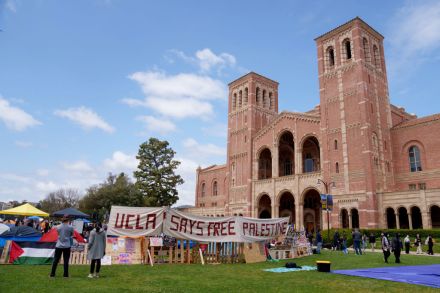
Why the Gaza protests are worrying

As the weather has warmed, it’s time for that time-honored tradition — protest season. Because everyone knows the plight of the disenfranchised is best solved at 70°F. Setting up winter camp in a college quad seems unpleasant — the revolution will take place at a time, place and temperature that’s convenient for America’s poetry graduate assistants. Campus protests are nothing new in America. They’ve been a feature of university life since at least the Vietnam War and beyond. And sure, it’s fun to get wrapped up in a romantic cause you only just learned about and of which you have only a surface-level knowledge. It might give your life meaning at a time when you’re trying to figure out what the point of all of this is.

protests
letters

Letters from Spectator readers, June 2024

The rise of reverse gaslighting Sir — To an otherwise excellent article, I have a small correction. In 1860, the Southern states did not keep Lincoln off the ballot. Unlike today, where voting ballots are printed by the states, in 1860, voters were not presented with official ballots at polling stations that allowed them to check off which candidate they were voting for. Instead, a nineteenth-century ballot or “political ticket” was a slip of paper, provided by each party, listing their candidates for whatever offices were up for election. This allowed voters to easily “vote the ticket” for their party without having to know the names of every candidate and office.

gaza ai war

AI and the new way of war

What is happening in Gaza now provides a glimpse of how all wars may be fought in the future — with artificial intelligence. In The Spectator last November, I wrote about an Israeli airstrike that brought down a six-story building in Gaza City, reportedly killing more than forty civilians. One of the residents, a man named Mahmoud Ashour, dug through the rubble with his bare hands, trying to find his daughter and her four children, a girl aged eight and three boys of six, two and six months — all killed. The Israeli military would not tell me why the building was hit, beyond saying that Gaza’s armed groups put their military infrastructure amid civilians, but Amnesty International said there had been a single member of Hamas living there.

Biden

Biden’s base rebels over Gaza

Joe Biden’s reelection campaign is a multifront war. Unfortunately for him, the youngest soldiers in his coalition would rather fight Israel than Donald Trump. Biden was elected in the first place as the anti-Trump. In 2020 Democrats were desperate, and the ex-vice president was the most prestigious figure they had to field. He didn’t have to be inspiring or energetic — Trump would provide all the inspiration and energy Biden voters needed. What inspires the voting-age activists on America’s campuses today, though, isn’t aversion to Trump, and it certainly isn’t love for Joe Biden: it’s outrage at Israel. Four years ago, George Floyd became a symbol of injustice that spurred progressives to take to the streets and take back the country at the ballot box.

Hezbollah

The fight among the olive trees

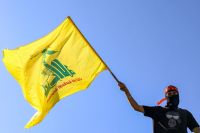
Rmeich, Lebanon On October 8, 2023, the day after the Hamas massacre further south, Hezbollah started firing rockets into northern Israel, reviving the world’s most dangerous game of chicken. What exactly has been accomplished? Hezbollah’s Shia supporters may be comfortable with their leader Hassan Nasrallah and his Iranian sponsor, head of state Ali Khameini, risking open war. But no one consulted the local Christians, who would never agree to spill Lebanese blood as a supportive gesture to Hamas. “The south [of the country] belongs to Lebanon, and Hezbollah cannot go to war on behalf of the Lebanese,” says Marc Saad, a spokesman for the Lebanese Forces, a Christian political party and Hezbollah opponent.

Joe Biden’s failure is Bob Gates’s vindication

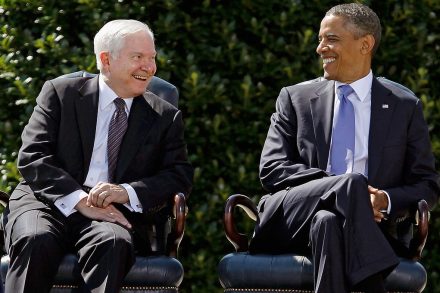
One of the most famous criticisms of Joe Biden over the years came from former Bush and Obama secretary of defense Robert Gates, who wrote in his 2014 memoir that "I think [Joe Biden] has been wrong on nearly every major foreign policy and national security issue over the past four decades.” The former SecDef has repeatedly been asked if he stands by the statement — and each time, he does. Of course, we're a decade removed from that memoir — and in that time, Gates has openly criticized Biden over the botched Afghanistan withdrawal, his administration's approach to Putin and Russia and the slow walking of military aid to Ukraine. So it seems it's safe to say we're at five decades now. https://www.youtube.com/watch?

robert gates

Why Gaza and not the Uighurs?

The Babylon Bee, “the newspaper of record” for anyone with a sense of humor, posed a more interesting thought about the campus demonstrations than anything you can find in the New York Times or Washington Post. The Bee’s headline proclaimed, “Uighur Slaves Struggling to Keep Up with Demand for Palestinian Headscarves.” Dark humor indeed. The headscarves, like the masks, serve one obvious function: they hide the faces of demonstrators. That’s why bank robbers wear masks, too. Students know they are breaking the rules and professional agitators know they are breaking the law, so it’s smart to hide their faces. But the scarves have one additional advantage that bank robbers’ masks don’t: the keffiyeh is a visible symbol of Palestinian identity.

gaza

Joe Biden gives in to the Squad

Welcome to Thunderdome. It’s been clear since day one that Joe Biden was more scared of the progressive left than anyone else. His White House was incredibly fearful of a challenge from Bernie Sanders or a Squad member within the 2024 primary and the damage it would do to the Democratic coalition and his own re-election hopes. So the White House swung left — not just on economic policy, where he threw everything behind massive expenditures that pleased leftist politicians, pundits and people who have shrines to FDR in their houses, but on social policy as well, where he embraced the culture war issues of abortion and the trans agenda and hung on tight.

Biden’s Israel betrayal

President Joe Biden has been straddling an incredibly thin line when it comes to his stance on the Israel-Gaza conflict. The president historically has been supportive of the US’s alliance with Israel but his posture has been tested by a vocal pro-Palestinian contingent in the Democratic Party; in the Democratic primaries, they voted “uncommitted” to send a message to their party’s leader and in recent weeks have showed up on college campuses to demand university administrations divest from Israel. Biden has responded by remaining vocally pro-Israel but inching further away from Israel from a policy standpoint.

Biden’s pause of weapons shipments to Israel is another misstep

President Biden just made a strong move against Israel, ordering the US government to stop shipping weapons supplies to the Israeli Defense Forces. It was his fine strategic mind at work, once again.  Usually the public defers to the president and his advisors on foreign policy, unless the issues become very prominent or the president forfeits their trust. Those are the two problems now facing the Biden administration. The war in Gaza is a major issue — and the public has zero confidence in Joe’s strategic wisdom. He lost the public’s confidence on that score after the disastrous withdrawal from Afghanistan and the failed attempts to appease Iran. Now, they are unlikely to defer to his judgment in distancing himself from Israel, America’s greatest ally in the region.

biden weapons

Marjorie Taylor Greene’s strategery

Dumb is dumb. Among the dumbest is a political strategy that harms your own side and infuriates your normal allies, the ones who stand with you on most issues. That describes Marjorie Taylor Greene, who is a master of both bad ideas and bad strategies. She’s a bomb-thrower who lights the fuse, gathers her friends around her and then drops the bomb on her own toes. She illustrated those qualities last week, not once but twice. First, she opposed a House bill on antisemitism, which passed easily with bipartisan support. Her reason was that the resolution could be used to attack believing Christians. To prove it, she dredged up medieval calumnies against the Jews as “Christ-killers,” who handed Jesus over to the Roman authorities.

An explanation of the campus protests

A friend wrote me to ask, “Why is this mess happening on campus?" Here is my response.  Let me offer some thoughts, as a long-time professor, in hopes they spur your own.  Let's begin with something apolitical: young people love expressions of group solidarity. Some protests are like football games, held conveniently in the spring when spirits soar. Let's all join in, especially if it is costless virtue-signaling. And in the absence of any serious punishment, that's what it is.  These demonstrations happen a lot more often when the weather is nice. It's a lot easier to pitch tents on the quadrangle in April or October than in January and February. It’s a lot easier to sit on the Golden Gate Bridge, too.  But why the hatred of Israel and so often of Jews?

campus protest

Will Israel wreck Chicago?

Welcome to Thunderdome. There’s really no question now that Israel will be a major issue driving protests at the summer conventions, particularly at the DNC in Chicago. The scene that’s played out on Ivy League campuses over the past several weeks can easily be transported to the outskirts of the Chicago convention, where media presence alone will be beneficial for protesters and sympathetic Democratic politicians could provide aid and comfort. As someone who enjoyed getting teargassed in Minneapolis in 2008, and was profoundly disappointed at the Rage Against the Machine non-protests in 2016, I’m eager for the test. Tim Stanley shares his thoughts: One: Biden owns the Middle East conflict even as he denounces the casualties.