Etiquette

The power of the walkout

To walk out of a public performance before the end – be it the theater, a concert or a lecture – is not the done thing. It’s considered an antisocial act that disrupts the performance and thus other people’s pleasure. To walk out provokes tuts of disapproval and scowls of indignation. And yet while it’s something we all disapprove of (at least in theory) it’s also something we all secretly long to do. Who hasn’t sat and squirmed in their seat at some tedious piece of theater and wondered: how much more of this must I suffer? And who hasn’t been subjected to one of those long, sycophantic interviews with

walkout

Against flakes

A new drinks-party-shirking method has taken hold in society. I call it “Lastminute.non.” Previously, the way of not going to someone’s party was to write a polite message of refusal at least a week in advance, giving the host or hostess ample time to absorb the sad but inevitable fact that various friends would not be able to attend – usually for copper-bottomed reasons, such as that they had other plans for the evening or would be away on holiday. The new trend seems to be to accept an invitation, and then, mere hours before, to duck out of it. This means that from breakfast time onward throughout the day

The lost art of the insult

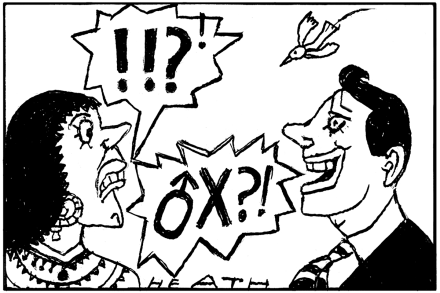
Imagine I were to begin this column by remarking that a woman preaching is like a dog walking on its hind legs: it is not done well, but you’re surprised to find it done at all. Dear me, that would never do, even in as cheeky a magazine as The Spectator. Then try instead: “Dr. Johnson was no admirer of the female sex. ‘A woman’s preaching,’ he said, ‘is like a dog’s walking on his hinder legs. It is not done well, but you are surprised to find it done at all.’” I could get away with that. An antiquated opinion, safely attributed to an 18th-century writer, enclosed behind quotation

insult

Dear Mary: How can we use our neighbour’s tennis court without inviting him to play?

Q. Our neighbours have a tennis court which, under the property’s previous owner, we enjoyed playing men’s fours on. The new owner is very welcoming and friendly. The problem (without sounding conceited, I hope) is that he is not up to the standard of the rest of us in the village who would like to play on his court. How do we politely say that we want to play — but not with him? — Name and address withheld A. What about one of your number inviting him to play golf? He will thereby have the opportunity to introduce the new court owner to lots of locals, or businessmen, or