Downton abbey

The literary appeal of the English upper classes

“However British you are, I am more British still,” said the American expatriate novelist Henry James, explaining his fascination with all things aristocratic and Anglo. It’s a type of fascination that’s only gathered steam over the years. A grand representative of the establishment, Lady Anne Glenconner, sold thousands of copies of her first book, Lady in Waiting, in the US, and recently discovered that her (admittedly predominantly homosexual) American fanbase has taken to throwing Lady Glenconner-themed costume parties. Meanwhile, Carla Kaplan, whose biography of Jessica “Decca” Mitford, Troublemaker, went on sale at the end of last year, discovered that Decca, known as “the Queen of the Muckrakers,” has a manic following among cowboys and long-haul truckers.

Please let this be the end of Downton Abbey

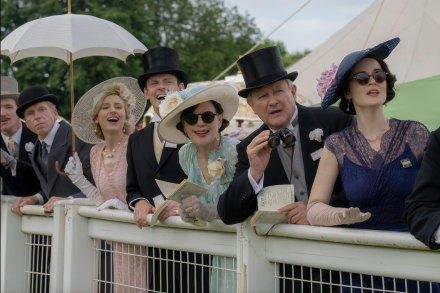
The third and supposedly final Downton Abbey picture released in American cinemas this Friday. Ominously subtitled The Grand Finale – oh how I wish, given the residual camp elements within the show, that it had instead been called The Final Curtain! – it supposedly wraps up the story of the Grantham family, the privileged idlers who inhabit the eponymous grand house, and their unusually devoted and long-serving staff, all of whom converse with their superiors on easy and intimate terms that bear precisely no relation to how the English upper classes have ever spoken (or been spoken to) by their servants in history. Still, if you’re looking for historical accuracy from Julian Fellowes’ Downton, you are not going to find it.

RIP, Dame Maggie Smith

The death of Dame Maggie Smith at the age of eighty-nine represents not just the end of a very English tradition of acting that she exemplified, but a passing of a generation. With the exceptions of Judi Dench and Eileen Atkins, there are no few grand dames of British stage and screen surviving; there is a distinct difference between, say, Smith and Helen Mirren, who pivoted early to the cinema and has largely remained there ever since. Smith was a consummate actress for film — she won two Oscars and was nominated for plenty more — but it was the smaller environs of television and stage where she truly excelled. A misapprehension about Smith is that she was a camp, OTT presence. This impression is largely derived from her latter-period work in Gosford Park (in which she was superb..

maggie smith

The Gilded Age is a Bridgerton-esque disappointment

I am on record as being somewhere between weary and terrified of the threatened arrival of Downton Abbey 2 in our movie theaters imminently. But this is also tinged with sadness. When Julian Fellowes emerged with his screenplay for Robert Altman’s Gosford Park in 2001, it fizzed with wit and imagination. Now, he has seemingly become the go-to chronicler of English upper-class life, churning out increasingly nonsensical variants on the same story with greatly diminishing returns. So how does he fare when he turns his attention to American upper-class life? The new HBO series The Gilded Age attempts to answer this question. It primarily concerns two New York figures in the 1880s, who are schematically represented as "snobbish Old Money" and "arriviste New Money.

Threatened with yet another Downton Abbey film

I love a British costume drama. My idea of a perfect Sunday afternoon film is something picturesque, with Anthony Hopkins, Emma Thompson, Helena Bonham Carter and others looking alternately repressed and joyful, even as they exchange clenched platitudes about weather, money and train times. "The trains mean sex," someone who knows about these things told me once. "And so does money." "But what about the weather?" I asked. "Surely storms mean passion and sunshine means sex?" The expert looked at me as if I was mad. "The weather means the weather. Don’t forget, these things are filmed in Britain.

downton

Not in front of the servants

This article is in The Spectator’s inaugural US edition. Subscribe here to get yours. Tina Turner believed that she and Ike were the reincarnation of god-kings from ancient Egypt. That, she reasoned, was why they’d been reincarnated in Memphis, Tenn.; their souls would feel at home in a city that, like Memphis in ancient Egypt, was sited on a big river and noted for its artisanry. In a perversion of Buddhism by celebrity culture, people select past lives that are more interesting than their present ones. Plenty of people believe they used to be Napoleon Bonaparte, but when was the last time you met someone who boasts of having been an illiterate Corsican goat-herder who married his cousin?

downton abbey britain u country