Campus

Another spring, another round of anti-Semitism on campus

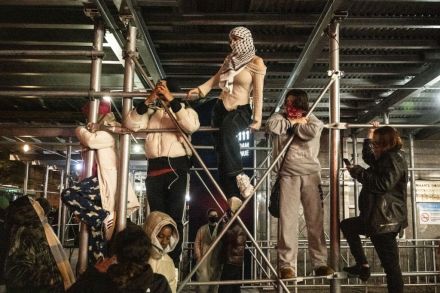
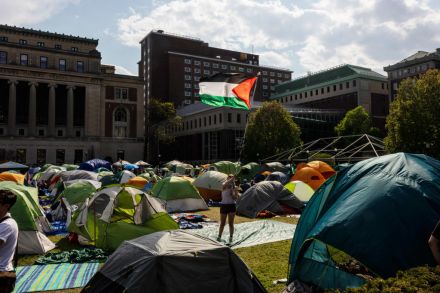
The weather is growing warm, which means anti-Semitic demonstrations are blooming at elite universities. The hatred of Jews is no longer hidden, as it was in the days when Jewish enrollment was quietly limited by quotas. Now, it is displayed openly by a campus coalition led by hardline American leftists (students, faculty, and administrators) and Muslim students, some from America, some from the Middle East.  Their hatred is screamed at Jewish students and pro-Israeli speakers—and then at anyone who dares support them or simply demands the basic right to speak or be heard. Any support for Israel is damned as “genocide” and then shouted down, shamed, or worse.
campus

The classroom panopticon

Is it ironic to give a prize for encouraging “open discussion and debate in the classroom” and “creating an environment where all perspectives can be heard” in the name of William F. Buckley Jr.? Although best known today as the founder of National Review and longtime host of Firing Line, Buckley first came to prominence in 1951 with the publication of his book God and Man at Yale, subtitled: The Superstitions of “Academic Freedom.ˮ Buckley’s secular and secularized Protestant critics might well have considered the firmly Catholic young man, twenty-five years old at the time the book appeared, an apologist for something they regarded as superstition. But Buckley did not mean the term as a compliment when he applied it to academic freedom.

classroom

Coercion and coddling take campus

On October 7, 2023, I was the chairman of the political science department at a large public university, but not for long. I did what I presumed universities are for, encouraging students to talk with professors about big questions and important issues of the day. So on October 18, I held a faculty-student discussion with a Middle East expert. I opened the event by stating some facts: that a terrorist organization committed to the death of Jews had attacked Israel, raping and murdering many young people at a peace concert and seizing hostages. I said that these events raised deep moral questions about what should be done in response, regarding the destruction of Hamas and the fate of thousands of noncombatant Palestinians. Discuss. The discussion did not go well.

campus

An explanation of the campus protests

A friend wrote me to ask, “Why is this mess happening on campus?" Here is my response.  Let me offer some thoughts, as a long-time professor, in hopes they spur your own.  Let's begin with something apolitical: young people love expressions of group solidarity. Some protests are like football games, held conveniently in the spring when spirits soar. Let's all join in, especially if it is costless virtue-signaling. And in the absence of any serious punishment, that's what it is.  These demonstrations happen a lot more often when the weather is nice. It's a lot easier to pitch tents on the quadrangle in April or October than in January and February. It’s a lot easier to sit on the Golden Gate Bridge, too.  But why the hatred of Israel and so often of Jews?

campus protest

Emma Camp almost gets it

In 2014, Sandra Y.L. Korn, a Harvard undergraduate, published a column in the Harvard Crimson, in which she denounced “The Doctrine of Academic Freedom.” Korn’s preferred alternative was what she called “academic justice.” Under this doctrine, a university would drop the silly pretense of letting proponents of dumb, bigoted or politically naive ideas have their say. Instead, Korn asked, “If our university community opposes racism, sexism and heterosexism, why should we put up with research that counters our goals simply in the name of ‘academic freedom?’” Korn’s screed provoked a lot of attention.

emma camp