Book review

John le Carre’s son resurrects George Smiley

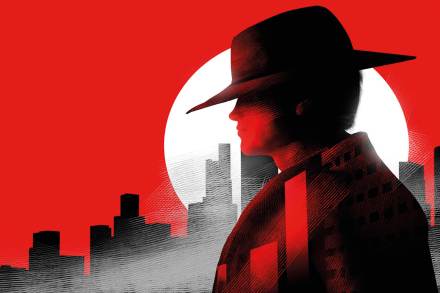
Anyone reading this review will know a few fundamentals of the Smileyverse: spymaster George Smiley is podgy, spectacled, middle-aged, soft-spoken, wears ill-fitting clothes, can vanish in a crowd and is routinely cuckolded by his wife over the course of all “his” novels. Thanks to the success of John le Carré’s novels about him, the Smiley canon is now (we might assume) unchangeable: so, making a virtue of necessity, novelist Nick Harkaway has gone back to his Golden Age. Karla’s Choice opens in 1963, the year after the Cuban Missile Crisis, the era when the Berlin Wall went up, the aftermath of Suez, the “candle-end days” of Empire. In East Berlin, a charismatic young man is carted away by the Stasi.

Harkaway

The powerful, brutal story of Polish resistance fighter Elżbieta Zawacka

In May 1942, Agent Zo was in the home stretch after a long and risky mission that had placed her in Berlin, at the heart of Nazi Germany. As usual, she picked up a small stone and threw it at the second-floor window of her sister’s apartment in a grimy industrial city in occupied Poland, south of Warsaw. But no one in the flat turned on a light, the agreed signal. She threw another. Nothing happened. With a mounting sense of unease, she knocked at the door of a first-floor apartment, and a pallid face appeared. The terrified neighbor told her that the Gestapo had appeared two days ago and arrested the occupants. “Get away, by God. They are here!” she urged.

Zo
Levy

The Position of Spoons is flawed but fascinating

"When you take a flower in your hand and really look at it, it’s your world for the moment. I want to give that world to someone else.” The final installment of Deborah Levy’s “Living” biographies, Real Estate, begins with this quote from the artist Georgia O’Keefe. It would be neat — oh, so neat! — for me to remark that if her memoirs were each a single flower — the world of the writer unfurling between its papery leaves — her latest book, The Position of Spoons, is a bouquet: a collection of variously published and unpublished letters, essays, short stories and poems spanning her entire life as a writer. But The Position of Spoons is not neat. Instead, reading it feels rather like rummaging through Levy’s desk.

Shakespeare

Why Shakespeare remains the great playwright

William Shakespeare’s tragedies stand apart. Their impact is profound and lasting, in cultural, artistic, emotional and psychological terms. Who could forget the ghost’s first appearance in Hamlet, or Lear bearing the dead Cordelia? No other dramatist has achieved what Shakespeare did: in subject matter, emotional heft, innovative usage of source material, character development and startling deployment of language Shakespeare is (and there is no other word for it) extraordinary. He surpasses both his predecessors (sorry, Thomas Kyd!) and those that came after him. He built on the foundations the classical playwrights established, and then, almost casually, bettered them, too.

Kennedy

The real Kennedy men

Long before the #MeToo movement shattered the careers and reputations of people like Harvey Weinstein and Kevin Spacey; long before Jeffrey Epstein and R. Kelly were locked up for committing heinous sex crimes; and long before we’d become familiar with names like Monica Lewinsky and Virginia Roberts Giuffre, there were the Kennedys. In very basic terms, that’s the premise of Maureen Callahan’s book Ask Not — a title that riffs on JFK’s inaugural address — which salaciously chronicles how men from three generations of one of America’s most exalted families spent their lives perpetrating violent misogyny and psychological abuse without suffering so much as a polite slap on the wrist.

Catherine Nixey’s Heresy is a joy to read

What people tend to forget about Jesus Christ is that he killed children. As a five-year-old, Jesus was toddling through a village when a small boy ran past, knocking his shoulder. Taking it like any five-year-old would, Jesus shouted after him "you shall not go further on your way," at which point the boy fell down dead. Later, when the boy’s parents admonished Joseph and Mary for failing to raise their son properly, Jesus blinded them. Something to bear in mind next time you ask yourself: "What would Jesus do?" If this story is unfamiliar, that is because it doesn’t appear in any of the Bible’s traditional Gospels.

Heresy

Michael Richards’s memoir is heavier on introspection than laughs

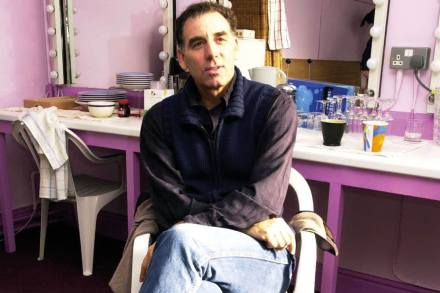
An unusual disclaimer greets the reader on the title page of this memoir of an actor chiefly known for starring as the lovable goofball Cosmo Kramer on the hit TV sitcom Seinfeld. “Neither the US Army nor any other component of the Department of Defense has approved, endorsed, or authorized this book,” it notes. But in the event the Pentagon probably needn’t have worried. Drafted into the army in 1970, the actor in question, Michael Richards, seems to have avoided any Sergeant Bilko-like shenanigans and instead separated from the service with a heightened appreciation for the punctuality, discipline and meticulous preparation that characterized his later career.

Richards

Charles Baxter’s Blood Test is a necessary novel

The books that most vividly and expansively illustrate the human experience are not the ones that grapple with life’s most romantic or fantastical tribulations. Charles Baxter’s latest work is splendid proof of this abiding literary fact. Baxter, a Minnesotan who is author of a multitude of novels and short story collections, returns with Blood Test, a book that delves into some quotidian yet disconcerting aspects of modern American life. He is well-known for 2000’s The Feast of Love, which garnered a National Book Award nomination, and 2020’s The Sun Collective, among others; his new offering continues his tradition of blending the mundane with the extraordinary.

Blood Test

Will Self’s impressive paean to his mother’s frustrating life in the US

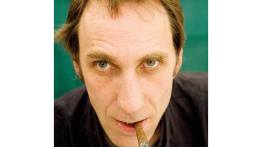
Will Self’s recent, exceptional fictional trilogy, comprising Umbrella, Shark and Phone, displays a deep preoccupation with the ways that time, memory, family, psychosis and history interact. The novels are complex, multigenerational narratives, composed in a late modernist style as engaging as it is experimental. Formal playfulness, with the prose switching between its characters’ consciousnesses, sometimes even midsentence, is married to solidly satisfying plots. Having already excavated his own life in a memoir, Will, Self has now turned to his mother in a novel, Elaine. Self has written about Elaine Rosenbloom before (in the short story “North London Book of the Dead”); she also appears as the narrator, Lily Bloom, in How the Dead Live.

Self

Back to the birth of the Greenwich Village music scene

In 1961, the folk guitarist Barry Kornfeld moved back to Manhattan after spending a year in Boston. The Greenwich Village folk musicians he called friends, who before his trip to Boston had been enduring a hand-to-mouth existence, were now making a living playing their music in clubs along MacDougal Street — not necessarily “a good living,” Kornfeld noted, but certainly enough to get by. Kornfeld spotted another difference, too. Audiences at clubs weren’t merely clapping; they were snapping their fingers in appreciation, which felt like the hippest thing ever. Rolling Stone writer David Browne’s latest book, chronicling the history of Greenwich Village music, pivots around 1961.

Greenwich

The chameleonic life of Claire Clairmont

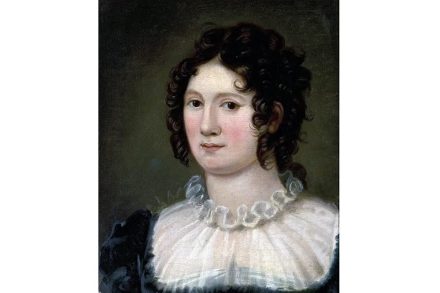
Commentary on the young Romantics can be curiously puritanical. Not on saintly John Keats, who died too young to cause any trouble. But Byron and Shelley? Beastly to women, negligent as parents, destructive as friends, oblivious to their own privilege. Feminist observers tend to resemble the English visitors to Geneva in 1816 who borrowed telescopes to spy on the renegade inhabitants of the Villa Diodati across the lake, hoping to be scandalized. A central character in the summer that saw the birth of Frankenstein was the only non-writer of the villa’s gathering, Byron’s young lover and Mary Shelley’s stepsister, Claire Clairmont.

Clairmont

Nick Lloyd takes you through the horrors of the Eastern Front

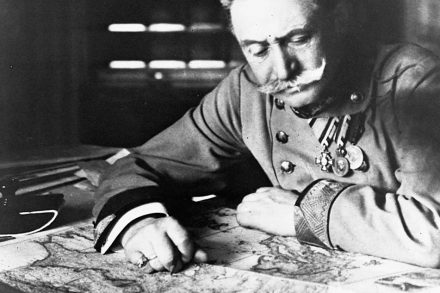
Ten years ago David Cameron, as the British prime minister, pledged $65 million for the centenary of World War One. The focus was on “capturing our national spirit in every corner of the country, something that says something about who we are as a people.” Beyond a celebration of the Tommy on the Western Front and a belated acknowledgement of colonial Britain’s sacrifice, it was a missed opportunity. There was little attempt to better understand the region where the war began — and where, according to Nick Lloyd’s exhaustive The Eastern Front, it never really ended.

Lloyd

Giles Milton retells the story of the Grand Alliance as a cinematic thriller

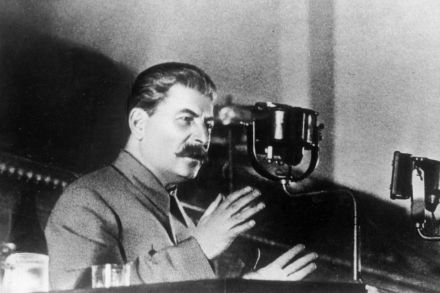
On June 22, 1941, the German army invaded the Soviet Union. Over the next four months, the Wehrmacht blasted through the Soviet defenses, taking millions prisoner and destroying thousands of tanks. By early December, German scouts were purportedly within site of the Kremlin. Even though the Wehrmacht was forced back from the gates of Moscow by the Red Army, the renewed German offensive in spring 1942 threatened to deliver the coup de grâce to the Soviet Union. That it didn’t was due to an unlikely alliance between British prime minister Winston Churchill, US president Franklin D. Roosevelt and Soviet dictator Joseph Stalin.

Alliance

Examining children’s literature and its enduring worth

My first reaction, on tipping this vast compendium — soaring toward 600 pages — out of its padded bag onto the kitchen table, was straightforward envy at the thought of anyone being paid what, you infer, was quite a reasonable sum of money to spend several years on the intoxicating trail of the children’s book. My second was intense curiosity over the procedural approach employed, which is to say that there are a variety of well-worn pathways into the heart of the genre; it would be fascinating to see which ones Leith, the literary editor of The Spectator in the UK, had chosen to follow. The first path, exemplified by Francis Spufford’s 2002 The Child that Books Built, involves writing a memoir that broadens out into a consideration of the form as a whole.

Leith

Creation Lake is one of the best books of the year

Rachel Kushner’s ambitious, intelligent and gripping latest novel, Creation Lake, concerns the eternal human capacity for delusion, while wondering whether utopian ideals can ever be realized without serious compromise. And it manages all this within the form of an expertly slick thriller, set against the backdrop of contemporary rural France, its history, politics and class system, all carefully woven in alongside an account of the rise and fall of the Neanderthals. Sadie, the first-person narrator, used to work as an undercover intelligence agent in the United States; she was discharged after entrapping a young man who was engaged in animal activism.

Kushner

Jane Thynne pulls off a new kind of spy novel

To some, the female sex might seem ideally suited to spying, and as their exploits in the Special Operations Executive showed, women on both sides of the Atlantic could certainly match men in courage and daring during World War Two. Yet espionage fiction has tended to be a male preserve. Jane Thynne is one of the handful of women novelists to have absorbed the lessons of John le Carré: a spy novel can also be a love story, a quest for institutional integrity and an exploration of inconvenient truths. The female perspective on all this, unsurprisingly, turns out to be worth having. Set in 1938, Midnight in Vienna introduces us to poor, thirtyish, Oxford-educated Stella Fry.

Thynne

A superbly written and insightful account of the contemporary American military

Four-star Marine General Kenneth “Frank” McKenzie headed US Central Command — CENTCOM, covering the Middle East — from spring 2019 until spring 2022. It was an eventful, and stressful, three years: taking out long-time Islamic State head Abu Bakr al-Baghdadi in 2019, then notorious Iranian Quds Force commander Qasem Soleimani in early 2020 and overseeing the disastrous final withdrawal from Afghanistan in 2021. Prior to CENTCOM, McKenzie had spent four years in two top-level Joint Chiefs staff posts, and before that he served multiple tours of duty on the ground in Afghanistan. As a younger officer he had been in the Pentagon on September 11, 2001, when American Airlines Flight 77 hit; he was commissioned in the Marine Corps right out of the Citadel in 1979.

McKenzie
Mandelbaum

A compelling and evocative biography of the redoubtable Mrs. Mandelbaum

If you thought organized crime in the United States had its roots in the Prohibition era, think again. As Margalit Fox demonstrates in this compelling and evocative biography, its seeds were sown half a century earlier, when a resourceful, daring and ingenious woman enjoyed a long and successful career as a forerunner of the familiar twentieth-century “Godfather” figure. By the mid-1880s, she was the boss of America’s most notorious crime syndicate, presiding over a multimillion-dollar criminal empire which stretched across the country and even into Mexico and Europe. Born in Kassel, Germany in 1825, Fredericka “Marm” Mandelbaum came to America in 1850, part of the mass exodus of European Jews in that period.

Pat

Pat Nixon, ambassador of goodwill

The Watergate scandal already commands a wide bookshelf. In the fifty years since Richard Nixon fell on his sword, we’ve had the big-ticket books by the tag-team of Woodward and Bernstein, and others, by contrast, seeking to exonerate Nixon and pin the whole thing on his adversaries; tales about secret sources and White House interns and plucky whistleblowers like the oleaginous John Dean and that human hand grenade Martha Mitchell; not to mention self-serving memoirs from all the principals, some now on their second or third helping at the table; or the ones saying it was all a conspiracy involving an unholy alliance of the FBI, MI6 and KGB, with the little green men from Mars thrown in.