Art criticism

The life of David Sylvester

It’s 1960, and the clock has struck seven in the morning on Manhattan Island. A car weaves through the clamorous city as the morning sun settles. In the front seat are the Canadian-American painter Philip Guston and the British art critic David Sylvester; the pair have just enjoyed a sobering Chinese meal after a long night of drinking with Willem de Kooning and Franz Kline, which called for the digestif of a drive. It has been an epochal night for Sylvester; he just doesn’t know it yet. In 1996, Sylvester, who would have turned 100 this year, wrote his essay “Curriculum Vitae” later reproduced in his acclaimed About Modern Art: Critical Essays 1948-2000.

Sylvester

The notorious feud between John Ruskin and James Whistler

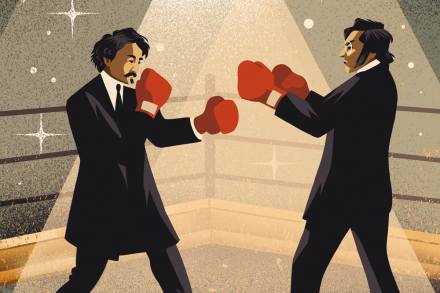
It was too dark to see, and the painting was upside down. In 1877 John Ruskin, the leading art critic of Victorian England, attended an exhibition that included paintings by the American-born artist James Abbott McNeill Whistler. He hated them — and said so. In print. “I have seen, and heard, much of Cockney impudence before now; but never expected to hear a coxcomb ask two hundred guineas for flinging a pot of paint in the public’s face.” Whistler sued. The following year the argument came to court, on a dark day in a gloomy and gaslit courtroom. The canvases that Ruskin had so disliked were propped up against a wall and barely visible; one was the wrong way up, and another was dropped unceremoniously onto an elderly gentleman’s balding head.

ruskin

The eyes have it

Art historians do not generally become household names, as Kenneth Clark did later in life after embracing television, most famously with Civilisation (1969). They can, however, acquire legendary or semilegendary status within the profession and among amateurs. One such was Leo Steinberg (1920-2011), who taught for many years at the City University of New York and the University of Pennsylvania. Academic art historians are expected to ‘publish or perish’: college texts, monographic studies on individual artists, or down-the-rabbit-hole treatises on arcana that seem to require more pages of footnotes than text. Steinberg mainly wrote for professional journals. He also lectured widely, testing ideas that later might make their way into print.

steinberg

All modern art is quite useless

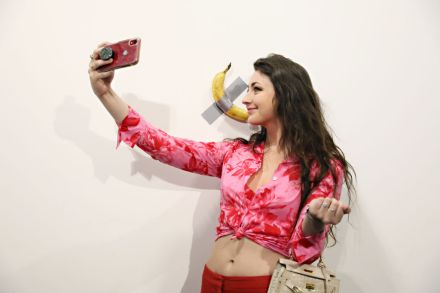
This article is in The Spectator’s January 2020 US edition. Subscribe here.Laramie, Wyoming ‘It’s pretty, but is it art?’ Rudyard Kipling asked in 1890. In those days the modernist movement across the Beaux Arts was gaining a grip on the western world that it maintains in the 21st century and is likely to hold into the 22nd, if there is one. One hundred and thirty years later, Kipling’s question calls for a plain response: ‘If it’s ugly, it has to be art.’ Aquinas defined art as ‘right reason in action’; reason in making. Right reason depends upon a man’s knowing what he ought to believe, desire and do. The modern artist is ignorant of all of these things.

art