Abraham lincoln

What would Lincoln do?

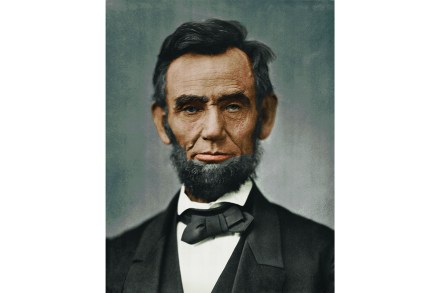
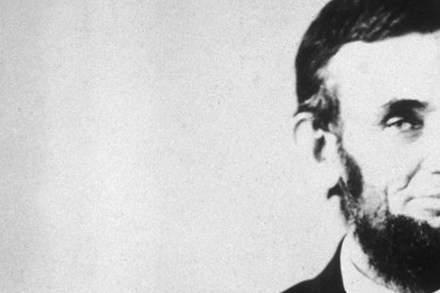
If Americans are feeling gloomy as the nation’s 250th birthday approaches, they might look back to what Abraham Lincoln thought about the condition of the country in 1838 to get some perspective on present discontents. That was the year a young Lincoln, then just a state senator, delivered a speech at the Young Men’s Lyceum in Springfield, Illinois, on “the perpetuation of our institutions.” Lincoln perceived trouble ahead, but not exactly of the sort that would lead to the Civil War. He was already concerned about the lawlessness arising from racial strife, and there’s a hint of his future insistence upon the truth of the Declaration of Independence’s assertion that “all men are created equal.
lincoln

Freedom is still the Revolutionary War’s legacy

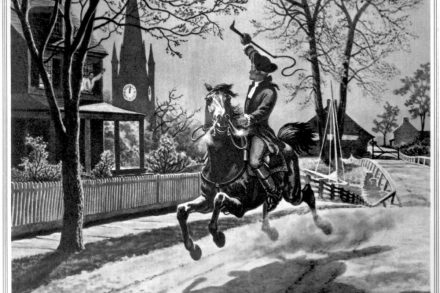
When the first shot rang out at dawn on Lexington Green, a decade of frustration and growing alienation between the American colonies and the British government boiled over into armed conflict. By the time the British staggered back into Boston on the evening of April 19, 1775, having fought a running battle for twenty-five miles from Concord’s North Bridge and losing at least 73 killed, the American Revolution had begun. Like many turning points in history, the encounter at Lexington Green was not planned. British troops acting on the orders of General Thomas Gage were on their way to capture arms and munitions stored by the Massachusetts militia when they ran into Lexington’s “Minutemen” drawn up on the Green.

The Biden-Trump debates won’t measure up to the past

It’s happening. Presidents Joe Biden and Donald Trump will debate. Of course, the Biden team is making sure the debates are dominated by the left-wing media and held in studios with no citizens present. Given this surprisingly undemocratic arrangement, it occurred to me it might be useful to look at the most famous candidate debates in American history. In 1858, while running for the US Senate in Illinois, incumbent Senator Stephen A. Douglas agreed to debate his opponent, Abraham Lincoln, seven times — once in each congressional district in which they had not yet spoken. Douglas was frustrated. Lincoln had spoken in Springfield and Chicago one day after Douglas and just torn apart all of Douglas’s arguments leaving him with no chance to respond.

Letters from Spectator readers, June 2024

The rise of reverse gaslighting Sir — To an otherwise excellent article, I have a small correction. In 1860, the Southern states did not keep Lincoln off the ballot. Unlike today, where voting ballots are printed by the states, in 1860, voters were not presented with official ballots at polling stations that allowed them to check off which candidate they were voting for. Instead, a nineteenth-century ballot or “political ticket” was a slip of paper, provided by each party, listing their candidates for whatever offices were up for election. This allowed voters to easily “vote the ticket” for their party without having to know the names of every candidate and office.

letters

Revisiting Gettysburg

The Civil War, said Gore Vidal, is “the great single tragic event that continues to give resonance to our republic.” Gettysburg was its climacteric battle, and Ron Maxwell’s epic Gettysburg (1993), filmed on and around the battlefield, is the definitive cinematic treatment of the most consequential, written-about and argued-over military engagement in the history of the United States. (I would call it the most stirring as well but then I remember the words of the eminent historian J.G. Randall, best-known for his four-volume Lincoln the President: “That there was heroism in the war is not doubted, but to thousands the war was as romantic as prison rats and as gallant as typhoid or syphilis.

Gettysburg

What does a ‘proportionate’ response to Hamas look like?

As the world stumbles through the fog of war following the savage attacks on Israel by Hamas last week, I thought it might be worth pondering two things.  First, since the news is full of headlines warning against Israel’s conducting a “disproportionate” response, I wonder what a “proportionate” response to the wholesale murder and mayhem perpetrated by Hamas would look like?  Second, I know that I am not alone in sensing that the attack, though brutal, was but the opening gambit of a plan whose origin and course is, as of this writing, still unknown to the public. As to the first, this was the strophe: on October 7, hundreds of Hamas terrorists suddenly and without warning swarmed across the border separating the Gaza Strip and Israel.

gaza proportionate hamas

Don’t condemn Ukraine for its ‘illiberal’ measures against Russia

The war in Ukraine is being fought on two fronts: the battlefield and the information space. From the beginning of Russia’s interference in Ukraine in 2014, the information war has been a key factor in the Kremlin’s strategy for victory. Because of this, Ukraine has taken a series of wartime measures to stabilize and protect itself, from political restrictions to media regulations. Some in the West have used these measures to paint Kyiv as undemocratic, but such rhetoric rings hollow. What these criticisms miss is the fact that Ukraine, unlike other Western democracies, has been in a state of war for eight years.

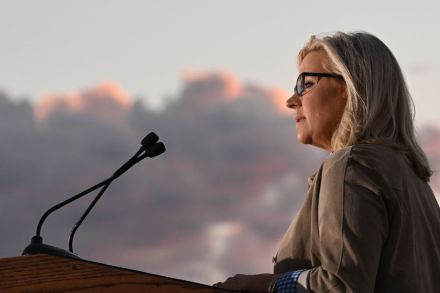
Liz Cheney: the end of the affair

Laramie, Wyoming Liz Cheney’s concession speech, delivered from the Mead Ranch near Jackson before a small group of subdued supporters last night, was a thundering anti-climax that shook what remained of the glaciers free from the granitic steeps of the Grand Tetons. The quiet, almost matter-of-fact tone of the address differed strikingly from the modestly grandiloquent substance, which was “Now, the real work begins;” an implicit acknowledgement that, for its defeated representative-at-large, Wyoming and its interests have been of small importance in her ascent to greater things.

liz cheney

Lincoln’s hideaway

I hope Abraham Lincoln rests in peace. He got little of it as president. What solace he did find often came during stays in what today is known as President Lincoln’s Cottage, a thirty-four-room Gothic Revival home three miles north of the White House. This little-known site is where he, his wife Mary and son Tad lived for thirteen months during summers and falls from 1862 to 1864 — key periods when he wrote the Emancipation Proclamation, when the Battle of Gettysburg was fought, and when he was struggling to win reelection. Lincoln escaped to this 300-acre hideaway, the former home of a banker set on a wooded breezy plateau, to flee the heat — and the White House. His son Willie had died there of typhoid at just eleven, shortly before his first stay.

Lincoln

The laziness of blue-state separatists

Dean Obeidallah has an impressive résumé. While he is not a household name, the lawyer-turned-award-winning-comedian hosts a satellite radio program, is a frequent guest on MSNBC and CNN, and has written for all the big publications. But while he has good chops for a progressive pundit, he is no Abraham Lincoln. It shows. Far from emulating the tone taken by the Great Emancipator, Obeidallah prefers to fan the flames of political disunity. In a recent tweet, for example, he wrote that he does not believe that a civil war is coming because 'the Civil War in 1861 happened when Red States said we are leaving and Blue States waged a war to preserve the Union. Today if Red States wanted to leave Blue states would say "Check out time is 1 p.m.”’ That tweet is preposterous!

separatists Obeidallah

The mock revolution of the elites

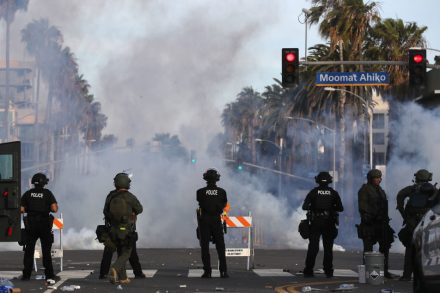
‘Protesters in California set fire to a courthouse, damaged a police station and assaulted officers after a peaceful demonstration intensified,’ ABC News recently tweeted. The wording was perfect — better than any satire as an illustration of the corporate media’s biases. These biases have lately come at cost for CNN and the Washington Post, both of which have paid to settle the suits brought against them by Nick Sandmann, a Covington Catholic High School student whose life they nearly destroyed last year. But the corporate media cannot be embarrassed into mending its ways, neither by its own risible tweets nor by lawsuits from the people harmed by its misreporting.

elites revolution

Do we erase black history when we take down statues?

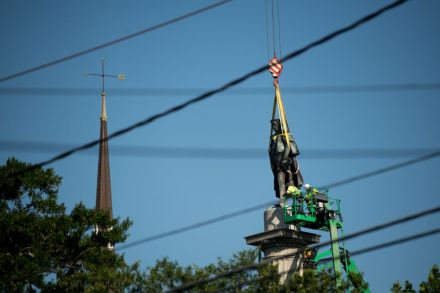
The Summer Of Our Discontent is in full swing and the social guillotines — at first applied to legitimate injustice and prejudice — have now come for history itself.We watch as mobs tear down statues and monuments to the past. The destruction is supposedly performed in the name of justice, but can we seize true justice by destroying the past?American history is a fascinating and sometimes tragic tale of oppression and rebellion, injustice and progress. There is a push and a pull to it all that has led us to be the most successful and prosperous society in human history.Undoubtedly there has been much pain: but how can we know how far we’ve come if we’re not allowed to see where we’ve been?The history of black America is an exhaustive tale of overcoming.

statues black america

Republicans should now reclaim their strong history on civil rights

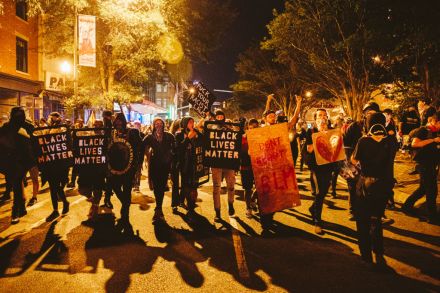
If you want a perfect example of how the progressive mindset betrays African Americans, look at the now viral video of two white women spray-painting a Starbucks with Black Lives Matter slogans while a black woman pleads for them to stop. 'Y'all doing that for us and we didn't ask you do that,' says the black woman. 'Don't spray stuff on here when they gonna blame black people...and black people didn't do it.' 'Don't police people's way of expressing themselves,' says the white woman's white friend. That is a neat metaphor for how white liberal Americans have behaved for the last 40 years, taking actions they think show support for minorities but which only hurt them more. https://twitter.

civil rights

Lessons from the Johnson impeachment

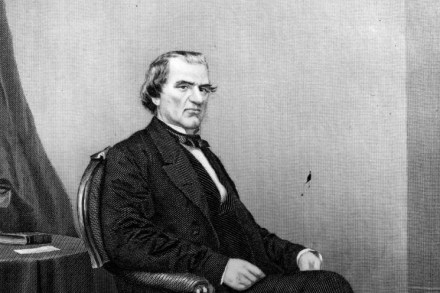
The first time Congress impeached a president was in 1868.  The president was Andrew Johnson, a man almost as surprising to find in the White House then as Trump is now. Johnson, a Tennessee Democrat with a taste for hard liquor, had been the only southern senator to stay loyal to the Union when the Confederate slave states broke away in 1861, provoking the Civil War.  President Abraham Lincoln was a Republican but he ran for re-election in 1864 as a 'Unionist', and adopted Johnson as his running mate, hoping to pick up northern Democrats’ votes. The scheme worked and Lincoln won. Johnson was so drunk at his swearing-in as vice-president early in 1865 that his speech made no sense and he had to be led away by embarrassed friends.

andrew johnson