-
AAPL
213.43 (+0.29%)
-
BARC-LN
1205.7 (-1.46%)
-
NKE
94.05 (+0.39%)
-
CVX
152.67 (-1.00%)
-
CRM
230.27 (-2.34%)
-
INTC
30.5 (-0.87%)
-
DIS
100.16 (-0.67%)
-
DOW
55.79 (-0.82%)
Starmer must move fast without losing his head
When Keir Starmer’s Labour party gathered on Monday to celebrate their election victory, the difficulty was finding a big enough venue. There were so many MPs that aides had to abandon Labour’s usual meeting room on parliament’s committee corridor, and instead head for Church House, where Tony Blair met his party after the 1997 landslide. Cabinet ministers joked that their biggest problem in government would be learning their colleagues’ names. Later in Strangers’ Bar, the queue for a drink went six rows back. ‘It’s freshers’ week,’ said one newbie.
Yet some in the party still felt a sense of unease. ‘This majority is a mile wide and an inch deep,’ said one new MP. ‘Lots of these wins are very slight.’ Already Labour strategists are worried about the next election. ‘If we don’t deliver, we will be out.’ The fear is that the same wave of anti-government sentiment which led Starmer to Downing Street could quickly turn against Labour. As one frontbencher in a northern seat put it: ‘The threat from the Reform party could become our problem.’
‘This majority is a mile wide and an inch deep,’ said one new MP. ‘Lots of these wins are very slight’
Throughout the campaign, when Labour had a 20-point lead in the opinion polls, Starmer often talked about a ‘decade of national renewal’. In the end, Labour’s lead was ten points and the vote share was just 34 per cent: the lowest of any governing party since 1923.
Despite the scale of Labour’s majority, Starmer knows he does not yet command the public’s trust. His plan is to respond with action. With no real room to borrow or spend more, the only way to do that is with reform. When he became the Labour party leader, a few members of his shadow cabinet – Wes Streeting, Bridget Phillipson, Pat McFadden and Steve Reed – would often meet to talk about the need for public sector reform, knowing there would be little money if they came to power. Starmer has two things Rishi Sunak did not: a huge majority and a united party. This means Labour may be able to oversee the kind of structural reform that the Tories never dared to do for political reasons. ‘This is the stuff we’re really excited about,’ says a Starmer ally.
The pace so far has been striking. Within two hours of being appointed Health Secretary, Wes Streeting declared that the NHS was broken and that Labour’s huge majority was a mandate for reform. The arch Blairite and former health secretary Alan Milburn was also hired as an adviser. Streeting has not said much about what he plans, but Milburn’s agenda is clear: NHS care should be defined by patient outcomes, so we need more private clinics to meet the demand.
Milburn is closely associated with market-based reform and he has been working with Streeting and his team for 18 months on plans for government. During the election campaign, he helped Streeting get the party ready ‘to hit the ground running and prepare our plans for day one’, says a Labour figure.
Milburn is not the only returning Blairite. I understand that Paul Corrigan, who served as Milburn’s special adviser during his time as health secretary and was known to be even more radical, will come into the department to lead a new strategy unit – at the age of 76.
How far will Streeting go? His team say there are some red lines. The NHS will not be privatised – still a dirty word – but independent clinics will probably be used for more than just bringing down waiting lists. There will also be closer ties with pharmaceutical companies and tech entrepreneurs.
The first mission for the Starmer reformation is an overhaul of planning, which is essential for the Treasury’s growth plan. In Reeves’s first few days as Chancellor, free market thinktanks have been quick to shower her with praise for bringing back a firm housing target – equivalent to 300,000 a year – while also axing what she calls the ‘absurd’ ban on onshore wind farms.
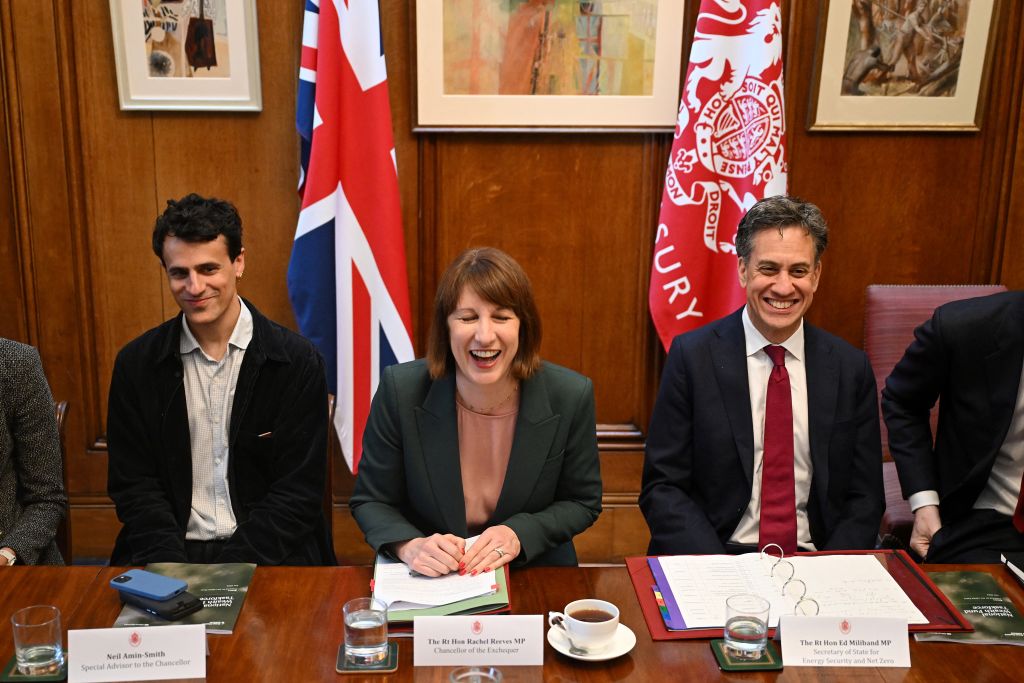
The planning battle will be fought by Angela Rayner, the Deputy Prime Minister and Housing Secretary. Blair promised 200,000 homes a year and hit the target. Gordon Brown raised the goal to 240,000 a year, but didn’t come close. Boris Johnson promised 300,000 a year only for the number of new projects to drop to lower than it was a quarter-century ago.
Under Starmer, a consultation on planning rules is expected before the summer recess. There is a view in government that changes can be made quickly since plenty of measures require no primary legislation. Labour’s promise of new towns will be more complicated to enact. Decisions on where they will be built will come in the first year, and the government hopes building will start by the time of the next election.
Planning reform will, of course, be wildly unpopular – not just among nimbys, but also the current cabal of housebuilders who have a huge grip on the market and cannot be trusted to do things to the required quality. In Ed Miliband’s Energy Security and Net Zero department, his team are most worried about the reaction from rural England to the number of pylons they need to build to hit their 2030 target.
It wasn’t so long ago that Labour was opposing Gove’s planning liberalisation on environmental grounds. But Starmer’s voter base is 25- to 45-year-olds who want to get on the housing ladder. Since 2021, migration has added 1.9 million people to the country but only 600,000 houses have been built. Labour is moving quickly not just because the housing crisis is so acute, but because Starmer’s political clout is never likely to be higher than after a landslide victory. Starmer will soon find out how much of No.10’s power is illusory: how many levers, if pulled, do nothing. There are many ways to stop development – mainly through the courts and judicial reviews demanding studies on the effect of wildlife.
Prisons will be another urgent area for reform. Britain’s are close to full. There were 87,000 inmates in England at the last count and the Tories’ lock-’em-up policy means this number will rise to 95,000 by Christmas if nothing changes. Sentences have been getting longer (the maximum sentence for animal cruelty is now five years, up from six months) without any significant increases to prison capacity. The new Justice Secretary, Shabana Mahmood, has told her colleagues not to promise longer sentences unless they can find the money for prison places.
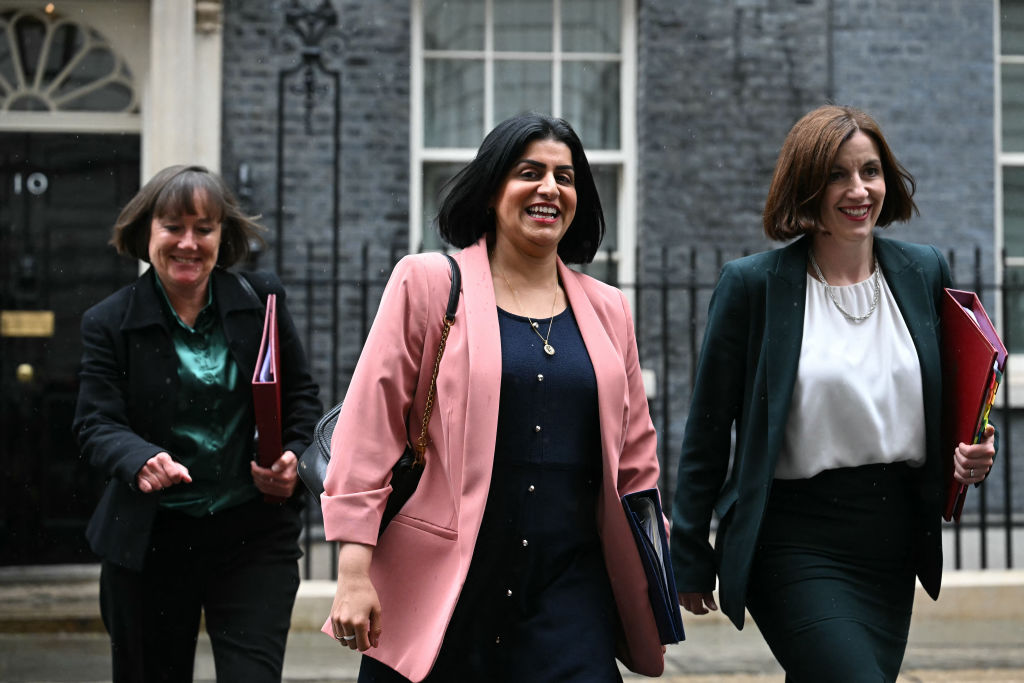
The appointment of James Timpson, head of the key-cutting firm, as prisons minister, suggests Labour intends radical reform. He’s on record praising the Dutch example where a third of prisoners were released and Labour has already announced that it is considering releasing inmates after they’ve served 40 per cent of their sentence. As one Whitehall figure puts it: ‘Timpson would not take the job unless serious change was planned on prisoner release and rehabilitation.’
Tories are already pointing out that when Italy released thousands of prisoners in 2006, crime rose. Each year of a sentence, it was calculated, prevented between 14 and 46 crimes reported to the police. The soon-to-be-Lord Timpson has spent years working with prisoners (one in nine Timpson’s staffers has ‘prison experience’) so he is well placed to make a careful case for targeted early release. He believes these changes would save some £3.5 billion a year.
On education, there is little money for new schools. Even Starmer’s manifesto pledge for 6,500 more teachers was minuscule (an increase to the headcount by just 0.3 per cent a year). So Phillipson, the Education Secretary, is more interested in the curriculum than schools structure. Harder subjects should still have a place, she believes, but critical thinking and creativity should feature more. Starmer takes great pride in the fact that 21 of his 22-member cabinet are state-educated (his school, Reigate Grammar, went private by the time he left). By promoting ‘oracy’ and certain other subjects, ministers believe they will help less-privileged children compete with private-school pupils, whose fees will soon be going up.
The biggest crisis facing the new government is one that has so far had little attention: welfare. The volume of mental health complaints has discombobulated the system so much that the number of people on disability benefits is likely to rise by 1,000 a day each day for the rest of this parliament. Once the various Tory pension promises are also considered, this all amounts to an extra £50 billion a year being spent by the Department for Work and Pensions. The Chancellor views the cost as too high as it stands.

Liz Kendall, the Work and Pensions Secretary, is no stranger to having a fight with the left. Her 2015 Labour leadership contest flopped because she did not oppose some of the Tory government’s benefit cuts. Morgan McSweeney and Matthew Doyle, who worked on her campaign, are now two of Starmer’s most senior aides. Are they prepared to support benefit cuts again? It’s thought that they have the intention but not yet the agenda.
For years, Starmer’s team has been obsessed with Joe Biden’s trouble in America – how he can end up, after four years, on the brink of losing to Donald Trump. Olaf Scholz is not having much more luck in Germany. There are some recent examples of centre-left politicians winning power, but not many of them keeping it. ‘The age of voter loyalty has gone,’ said one member of the new No. 10 political strategy unit. ‘Either we prove beyond doubt that we fix what the Tories could not, or we’ll be out.’ Starmer has good reason to act quickly – the closer MPs get to the next election, the more concerned they will become about their majorities.
Dems begin to dogpile on Biden’s reelection campaign
Support for President Joe Biden continuing his reelection campaign is polarizing his own party. The Hill reported yesterday that discontent was growing among Democrats, and the publication offered live updates all day from the Democratic National Committee headquarters, where Dem leadership gathered to discuss Biden’s future as their nominee.
House minority leader Hakeem Jeffries and Senate majority leader Chuck Schumer have both expressed their continued support for Biden. They were joined yesterday by Representatives Ami Bera, Jim Clyburn, Lou Correa, Veronica Escobar, Adriano Espaillat, Steny Hoyer, Stephen Lynch, Jerry Nadler, Jan Schakowsky and Debbie Wasserman Schultz. Over the weekend, Representative Alexandria Ocasio-Cortez said she spoke at length to Biden and that she supports him. Senator John Fetterman, himself no stranger to questions about cognitive abilities, has also repeatedly backed Biden, saying on CNN yesterday, “That’s our guy. Joe Biden has been a great president … and I’m not going to chuck him for a rough debate.”
Representatives Lloyd Doggett and Seth Moulton were the only lawmakers reported to have dissented from what the Hill labeled a “lopsided internal debate” at the DNC. On X, however, the impressions were less positive, with Semafor political reporter Kadia Goba writing, “One member who attended today’s Dem Caucus meeting tells me, ‘The morale of the caucus is at historic lows.’ When I asked if they’d compare it to a funeral like others have, they said, ‘That is an insult to funerals.’”
James Carville has weighed in on the situation, saying “it’s inevitable” Biden will drop out. Former speaker of the House Nancy Pelosi withheld her endorsement, saying on Morning Joe today, “It’s up to the president to decide if he is going to run. We’re all encouraging him to make that decision because time is running short.”
Hollywood star George Clooney, whom the Hill reminds us “just last month hosted a star-studded fundraiser for President Biden’s campaign,” has penned an opinion piece for the New York Times declaring, “I love Joe Biden. But we need a new nominee.”
Clooney’s mutiny comes following Endeavour CEO Ari Emanuel’s revelation at the Aspen Ideas Festival last week that, “I talked to a bunch of big donors, and they’re moving all their money to Congress and the Senate. It’s a legal issue now. Maybe there’s some wiggle room, but I haven’t seen it. I don’t know, I’m not a lawyer, but we’re in fuck city!”
-Teresa Mull
On our radar
PICK ME FOR VP As the time for Donald Trump to pick a vice president is quickly approaching, some commentators are convinced he hasn’t actually decided yet. Those who were with Trump after his rally last night believe his staff has genuinely no idea who he will pick and just wants him to pick someone. Options seem to have narrowed down to Senators J.D. Vance and Marco Rubio, as Trump says North Dakota governor Doug Burgum’s signing of a strict abortion ban is a “little bit of an issue.” And in case you were wondering, which we know you were, Vance’s beard is not too big of a problem for Trump, as 45 says the US senator from Ohio “looks like young Abraham Lincoln.”
BACK TO THE FUTURE CNN will cut about 100 jobs as part of a plan to consolidate news operations and bolster its digital business, according to an internal memo seen by Reuters on Wednesday. “We are building a billon dollar+ digital business of the future,” CEO Mark Thompson told (remaining) staff in a memo.
NOEMWHERE TO BE SEEN South Dakota governor Kristi Noem has reportedly deleted her professional X account and Facebook and Instagram pages, and so far, no one has announced why. Noem’s personal social media pages, as well as her governor’s YouTube channel, remain in place.
RNC party platforms questioned
It seems some disillusionment with the Grand Old Party is attempting to be solved by mixing up the platform. Either that or the party is reworking its key tenets to fit exactly in line with Trump’s talking points — which seems to be the general consensus among certainmediaoutlets. The Republican National Committee (RNC) Platform Committee has made some controversial decisions regarding abortion, gun rights and religion.
In 2020, Republicans chose not to write a new party platform and instead chose to keep the one from 2016, which was a much longer document than the one currently on the table.
Abortion has traditionally been a strong issue, with the platform specifically emphasizing the need to seek a federal abortion ban. The new platform, though, gives the choice largely to the states, voicing opposition to “late-term abortion,” but little else. The GOP is now taking a much softer approach to life issues, as the platform expresses support for access to birth control and in vitro fertilization.
Many Republicans, including former vice president Mike Pence, have expressed displeasure at these changes. Pence posted on X yesterday: “The RNC platform is a profound disappointment to the millions of pro-life Republicans that have always looked to the Republican Party to stand for life.”
The entire platform discusses gun rights just once (a simple head nod to “the right to bear arms”) and omits any discussion of tangible gun policy ideas. The 2016 document addressed specific gun policies, stating: “We support firearm reciprocity legislation to recognize the right of law-abiding Americans to carry firearms to protect themselves and their families in all fifty states. We support constitutional carry statutes and salute the states that have passed them.” The old platform continues to oppose laws that restrict magazine capacity or the sale of rifles, federal licensing, registration of ammunition and so on. Compared to this earlier stance, the new platform is virtually silent on gun policies.
When it comes to God and religion, the theme remains the same — the updated platform takes a more even-keeled approach. God is mentioned twice in the new document, religion once, and “Christian” three times — compared to the 2016 version that mentions God sixteen times, religion six times and “Christian” eight times.
The RNC’s platform committee approved the platform on July 8, but there’s still time to amend it before it’s formally adopted at the national convention next Monday. Time will tell how important these controversial issues will become.
-Ella Johnson
Exploring the rise of vaping
For those of us with a poor grasp of time, who can still recall when a night at the bar could be sharply revisited by a Proustian wave of stale smoke arising from yesterday’s clothes, it can almost feel as if vaping crept up on us out of nowhere. One moment, it seemed, all the authorities had firmly agreed that pushing for vaping was creepy, and were pledging to legislate and tax cigarettes into oblivion; the next, great hordes of schoolchildren were apparently free to suck constantly on little vials of liquid nicotine with sugar-rush names such as Cherry Fizzle and Blue Razz Lemonade.
What happened? Regulators and legislators seem to have hung up a metaphorical “gone fishin” sign while Chinese vape factories cranked into overdrive, churning out boxes of sweet jitter juice marked “for export only.” Even in Britain, Rishi Sunak’s much-vaunted Tobacco and Vapes Bill, which planned to place greater restrictions on the sale of vapes in the UK, has temporarily vanished with the general election. To understand how we got here, it’s worth listening to Backfired: The Vaping Wars, in which the hosts Leon Neyfakh and Arielle Pardes chart the evolution of the technology and the habit in the US.
It began with defensible intentions. Two Stanford students, James Monsees and Adam Bowen, both cigarette smokers, set out to design a product that helped people like them to give up tobacco. They wanted to retain the ritual of smoking without the excessive health risks. Work began on a prototype vape which eventually evolved into “Juul,” the first e-cigarette to hit the mass market. As the cash mounted, the moral rot set in. Since the new e-cigarette inhabited a murky regulatory zone, it was not subject to the same restrictions as tobacco products, something Juul rapidly capitalized on with vape flavors such as mango and crème brûlée. The company then launched an advertising campaign featuring cool young people, some looking so tender in years that they worried the more ethical staff. It was a roaring success. Sales rocketed, not least among the young. “Juuling” even became a verb.
Parents and public health experts began to take notice, agitating for a ban, and thereafter the story of regulators and vapes has been that of a cat-and-mouse game, albeit featuring a notably toothless and erratic cat. Donald Trump, at first swayed by parental outrage, seemed soon to realize that the targeted ire of disgruntled vapers could be more electorally damaging. A compromise was found in early 2020, offering a lorry-sized loophole: vapes with replaceable cartridges such as Juul were banned from offering a range of popular flavors, but disposable vapes could still do just that, with predictably disastrous results for public health and the environment. As Juul became mired in lawsuits, illegal imports of varying quality and strength poured in.
Pardes and Neyfakh, a confirmed and regretful vaper himself, are informative and genial hosts, delving into the detail of a sinuous history without becoming dull. Yet their portrait of a seemingly unstoppable industry makes me more anxious than it seems to make them. At the end, a medical expert on vaping emphasizes that it is useful for helping cigarette smokers to quit, but muses that “there’s a lot of unknowns” about long-term harm. “It’s the devil you know versus the devil you don’t know,” he says, equably. But as more medical studies raise concern over the dangerous effects of vapes, especially on developing brains and lungs, the latter devil seems to be flashing a little more of himself every day.
This article was originally published in The Spectator’s UK magazine. Subscribe to the World edition here.
Listen: Patrick Vallance slams Brexit
Another day, another drama. This time Sir Patrick Vallance is in the limelight, after attacking Brexit on the BBC. The new science minister – and former scientific adviser to the government – has given a rather curious interview this afternoon in which he has slammed the decision to leave the EU and refuses to rule out free movement. Golly.
Speaking to the Beeb today, the new peer started by telling his interviewer he was ‘surprised’ but ‘honoured’ to be asked to be the science minister by Sir Keir Starmer. The conversation then took a rather, um, bizarre turn.
Turning to the ‘problem’ of Brexit, Vallance said that visa rules should be eased for researchers, and added that UK needs to be part of an ‘international’ science community. Sarah Montague quizzed the new minister on the upcoming G7 science meeting in Bologna. ‘How do you think that the United Kingdom is faring relative to other countries?’ she asked.
PV: Well we’re really good at science but we need to be part of an international science community. People need to know the UK is open for science partnerships.
SM: How much did Brexit set us back then?
PV: Brexit was definitely a problem for science. We were part of a very successful European funding scheme with very large collaborations, right the way across Europe which took a setback. And we had to leave that scheme and getting back into it has been a big achievement and I’m really pleased we are back in it.
SM: So would you be pushing the Prime Minister to make a much closer relationship with other EU countries, even if it comes at the cost of perhaps making concessions on free movement?
PV: You can’t do the type of science that everyone’s trying to do and make progress in isolation. You need brains that come with other backgrounds, other thought processes, other training.
SM: And do you need a more benign visa regime? All the rules have just been tightened, that’s the direction of travel. Is UK science going to suffer as a result of that?
PV: We know there’s an impact of the difficulty of some of those schemes so that means that there is an opportunity there to make this easier again for people who do come into do contributions to scientific knowledge creation and indeed companies. We’ve just got to be realistic about how we do that. We need to be as competitive as other countries in terms of attracting that talent.
Oo er. Mr S isn’t quite sure that’s the line the Labour lot would have signed off on…
Listen to the clip here:
Does Starmer’s ‘cast-iron’ defence spending pledge mean anything?
When the agenda for this week’s Nato summit in Washington DC was announced, one of the items on it was funding for the alliance. This was no surprise: the need to financially supporting Ukraine since the Russian invasion in 2022 and the possibility of a second Trump presidency leading to a lower US commitment have brought the issue of money into sharp focus. It transpires that the new Prime Minister, Sir Keir Starmer, is urging his fellow Nato leaders to increase their levels of defence spending, but he may find that his moral authority is shaky.
The subject of defence spending is one which has bedevilled the alliance for years. In 2006, Nato’s defence ministers agreed that every member state should commit a minimum of 2 per cent of their gross domestic product (GDP) to military spending to ensure a basic level of preparedness for operations. This obligation was reiterated at the Wales summit in 2014, following Russia’s annexation of Crimea and ongoing instability in the Middle East (plus ça change…). It was not an excessively onerous requirement: during the Cold War, many Nato countries were spending between 3 and 5 per cent on defence, while the United States regularly exceeded that. Equally, there was an acceptance that the West had gone too far in cashing in the ‘peace dividend’ after the collapse of the Soviet Union in 1991.
Without a notional timescale, any commitment, whether ‘cast-iron’ or not, is literally meaningless
But now it has become a long and tortuous process to compel members to meet even this modest commitment. In 2014, when the target was reemphasised – eight years after it had first been agreed – only three Nato countries, the United States, the United Kingdom and Greece, were fulfilling their obligation to spend more than 2 per cent. There was much excitement earlier this year when the outgoing secretary general, Jens Stoltenberg, announced that 2024 would see 23 member states meet the minimum. As I have previously noted, that still leaves nine who will not – nearly a third of the total (though Iceland has no standing military forces).
The Prime Minister believes the ongoing threat from Vladimir Putin requires a clear signal and increased spending. This was underlined by the destruction of Ukraine’s largest children’s hospital on Monday, probably by a Russian cruise missile. Starmer’s spokesman has been in full sermon mode:
We obviously want to see other countries continue to take steps to increase defence spending as well in order to ensure that we’re sending a strong signal to Putin that we will do whatever it takes to support Ukraine in their defence. The first duty of any government is to keep the nation safe and protect our citizens, and the defence of the UK starts in Ukraine.
There is an obvious problem here. The UK currently spends 2.3 per cent of its GDP on defence, more than meeting the Nato target. The previous government had promised to increase that to a symbolic 2.5 per cent by 2030. Starmer has said his government will match that increase in spending, and in Washington told the media that this commitment was ‘cast-iron’. But he has refused to set a timescale, unlike his predecessor, and says it will be within the government’s ‘fiscal rules’.
Let us be quite clear about this: without even a notional timescale, any commitment, whether ‘cast-iron’ or of any other metal, is literally meaningless. It represents words that may as well not be said. When Starmer speaks to his fellow leaders and urges them to spend more money on defence, as he is promising to do, they might reasonably ask ‘When?’ Or, full of the bonhomie of international summitry, they might enthusiastically agree to match his commitment, just as soon as he does.
I am not for a moment suggesting that it is an easy task to find an extra 0.2 per cent for defence in straitened economic circumstances. That is still billions of pounds in additional resources. But time and again the Prime Minister shows an unwillingness or inability to distinguish between saying things and doing things, combined with a readiness to preach to others.
It is a scandal that, 18 years after the 2 per cent target was first agreed, only two-thirds of Nato member states are meeting their financial obligations, and the United Kingdom can take credit for always having done so. Equally, 2 per cent is probably too little in the current geopolitical climate. It beggars belief, however, that Starmer feels he has the authority to encourage allies to move further to 2.5 per cent when he can offer nothing more than a promise to do so at some unspecified time in the future. This is the reality of government: deeds, not words, are the currency in the international community.
Biden’s leadership, not his health, is America’s biggest problem
Since Joe Biden’s now infamous debate performance, the Democratic party has been having palpitations about his candidacy. But all brouhaha about Biden’s decline has distracted the public from critically examining his administration’s more significant failures.
Democrats now talk as if the only problem with Biden is his ability to convince the public that he’s fit to serve. But a fish rots from the head and, thanks to his inept leadership, Biden’s government has weakened America’s security, its economic stability, and its international standing. These shortcomings should not be ignored.
The failing policies of the Democratic left have made America less safe and less prosperous.
One of the most contentious issues of Biden’s presidency has been the handling of the U.S. southern border. Since taking office, the Biden administration has overseen approximately 7.2 million illegal border crossings, setting new records each year. Biden’s effectively open-borders agenda has significantly weakened immigration enforcement and exacerbated the crisis. The unprecedented surge in migrants has strained local resources, overwhelmed border enforcement agencies, and led to significant humanitarian and security challenges. The focus on Biden’s cognitive condition and debate performance detracts from this critical policy failure, which has substantial implications for national security and public safety.
The chaotic and abrupt withdrawal from Afghanistan in August 2021 stands out as one of the most glaring failures of Biden’s foreign policy. The operation not only left over $7 billion (£5.5 billion) worth of U.S. military equipment in the hands of the Taliban but also resulted in the deaths of 13 U.S. service members. This debacle is widely held to be one of the most humiliating foreign policy catastrophes in American history, severely damaging the nation’s credibility with its allies.
During an emergency session of the UK’s parliament convened after the Taliban’s takeover, lawmakers from across the political spectrum, including Boris Johnson and Keir Starmer, criticised Biden and accused him of abandoning Afghanistan. Johnson argued bitterly that Britain was forced to withdraw its troops after Biden committed to the U.S. departure. Starmer called Biden’s chaotic withdrawal a ‘disastrous misjudgment.’
In other foreign areas, the Biden Administration has undermined U.S. credibility as a defender of democracy, fuelled resentment in the developing world, emboldened aggressors like Iran and Russia and enabled authoritarian rivals like China to gain influence by presenting themselves as an alternative to U.S. hegemony.
Biden’s presidency could be forever remembered as one of history’s most corrupt. The Department of Justice targeted and undermined political opponents, chiefly Donald Trump, in the run up to the 2024 election. That smacks of a banana-republic government.
Democrats will continue to deny it, pompously insisted that ‘nobody is above the law.’ But to the rest of the world it seems clear that the Biden administration has pursued retribution against Trump and other political enemies through investigations, indictments, and other legal action.
The debate, while deeply concerning, should not obscure the broader context of Biden’s presidency and the woeful impacts of his policies on the nation. The central question burns as to who is formulating and driving those policies, because Biden clearly lacks the wherewithal.
From the urgent border crisis to serious foreign policy missteps and a reputation for worrying corruption, these issues have profound implications for America’s future. Voters must not lose sight and perspective that, at this point, Biden is nothing but a placeholder. Whether he remains on the ticket or not, if not replaced by a Republican administration, the failing policies of the Democratic left have made America less safe and less prosperous.
In this pivotal leadership crisis, the American electorate faces a crucial decision that transcends the immediate spectacle of debate performances and media frenzy. The challenges presented by president Biden’s administration are not just political talking points but fundamental issues that impact the health of the nation and the globe.
Voters must demand not only cognitive competence, but accountability, clarity, and vision from those who seek to lead us, recognising that our choices now will determine the trajectory of the nation. In the end, however, it is not just about who stands (if they can) on the debate stage, but who stands for the principles and policies that will ensure a secure, prosperous, and just America. On his current record, Joe Biden fails on that score, too.
The trouble with Rachel Reeves’s ‘National Wealth Fund’
What country ever went wrong with a sovereign wealth fund? It is easy to envy Singapore and Norway – the latter of which now has £1.3 trillion squirrelled away, equivalent to £240,000 for every citizen. Britain would be in a much better situation now had it, like Norway, invested its windfall from the North Sea, rather than chucking it into the pot of general day-to-day expenditure. Paying state and public sector pensions liabilities out of tax revenue rather than from a long-term investment fund is going to become an ever more serious burden on the state.
We shouldn’t, then, sniff at Rachel Reeves’ idea for a ‘national wealth fund’. It is just that what the Chancellor has in mind is very different from what Norway has. Firstly, there is the question of scale. Britain doesn’t exactly have a lot of state wealth to invest just at the moment. While Norway’s fund has been grown from half a century’s worth of oil and gas revenues, Reeves’ fund will be started with a modest £7.3 billion squeezed out of the public budget, in a context of a government that is heavily overdrawn on its current account. From a personal point of view I would look to pay off my credit card balance before I started having a flutter on the stock market.
But then Reeves’s fund isn’t predominantly about accumulating wealth. While the Norwegian fund has its 18 trillion kroner spread over 9000 companies in more than 70 countries, Reeves is looking to concentrate on one asset class, and an extremely dodgy one at that: early stage green technology. She wants to invest in green steel (made using hydrogen rather than coking coal as a reducing agent), in hydrogen production from electrolysis of water and in carbon capture and storage – the sort of technologies we need, in other words, if we are to get anywhere near reaching Britain’s 2050 net zero greenhouse gas emissions target without returning to the stone age.
I can tell you what investing in this sort of stuff is like from personal experience. Three years ago I bought a small stake in a company called ITM power – whose business is in producing green hydrogen – at 240 pence a share. It was great at first as the shares galloped up to over 600 pence. I thought I would just wait until I had trebled my money and then sell at least half my holding. But then I went away on holiday and forgot about them. Their price now? Er, 57 pence a share.
That is what Reeves can expect to happen to her National Wealth Fund. She will have losses galore. If she does make us a profit it will come on the back of fantastic returns on one or two holdings – while most others collapse. That is the nature of investing in early-stage companies.
What Rachel Reeves is setting up doesn’t really deserve to be called a National Wealth Fund
This is not to say that it is wrong for the government to invest in green technology. Clearly, there is a national interest in cleaning up our energy system and the like. And if taxpayers are going to put money in, it is better that we buy a stake rather than simply handing out grant after grant. Then we can at least share in the success stories.
Moreover, it is a relief to know that Reeves and her Treasury officials won’t be picking the stocks themselves. They plan to leave it to the National Infrastructure Bank set up by Rishi Sunak when he was Chancellor in 2021 – and which will have to take a very hard-headed attitude and be prepared to ditch companies whose ideas are failing. Governments, it hardly needs repeating, have a pretty appalling record at trying to ‘pick winners’. They tend to go for all the highly visible stuff and prestigious stuff, like making cars and aeroplanes, and miss out the boring companies which are making the better profits. They also have a habit of chucking money at companies which happen to employ large numbers of people in marginal constituencies – not the greatest investment technique.
For years, Britain has seemed to possess a Sovereign Poverty Fund that invests our cash in basket cases like Royal Bank of Scotland (now NatWest) and then sells out at the first hint that a company might actually make a profit. Taxpayers bear the losses and leave private investors to enjoy the gains. It would be a novelty for our cash to be invested purposely to make a profit. However, what Rachel Reeves is setting up doesn’t really deserve to be called a National Wealth Fund. It is really just a novel way of subsidising green technology. Seen in that light it is not such a bad idea – just don’t expect it to pay your pension.
Listen to more analysis from Katy Balls, Kate Andrews, and James Heale on Coffee House Shots:
Labour slammed over cost of scrapping Rwanda plan
Uh oh. It’s day five of Sir Keir’s new Labour government and already the reds are running into trouble. Politicians confirmed last week Sunak’s Rwanda plan was to be scrapped, with the Labour party instead planning to tackle immigration by ‘smashing the gangs’. But there is a cost to the change of tack – and a rather steep one at that.
It turns out that the Rwandan government is a little reluctant to repay the money it received from the UK for the scheme, saying it is ‘under no obligation’ to return the £270 million sum. Dr Doris Uwicyeza Picard from the country’s ministry of justice told the BBC:
We are under no obligation to provide any refund. We will remain in constant discussions. However, it is understood that there is no obligation on either side to request or receive a refund. We were informed of the UK’s decision. We take note of the UK’s decision to terminate the agreement. There is a break clause which means the UK can withdraw from paying a further £50m in 2025 and again in 2026. Rwanda has maintained its side of the agreement, and we have ramped up capacity to accommodate thousands of migrants and asylum seekers. We have upheld our end of the deal. We understand that changes in government happen and incoming governments have different priorities and different policies. However, this was a state to state agreement and we believe this good faith will remain.
In the meantime, Downing Street has promised to look ‘very carefully’ at money that could be retrieved and new Home Secretary Yvette Cooper is planning an audit of the policy. Home Office rep Sir James Eadie has said that asylum claims from those initially expected to be deported to the African country ‘will be considered in a manner consistent with the new government’s new asylum policy’ adding that this ‘does not involve removals to Rwanda’. How curious…
Former home secretary James Cleverly – whose ex-aide called the scheme ‘crap’ – has hit out at the government over the move, criticising it for giving up on millions of pounds and starting a ‘diplomatic row’. He tweeted sarcastically: ‘Great start for Yvette at the Home Office…’. Quite.
What will the relationship between Starmer and King Charles be like?
When the King greeted Keir Starmer last Friday, his first words to him were: ‘You must be utterly exhausted and nearly on your knees’, to which the new Prime Minister replied: ‘Not much sleep.’ From the body language and easy rapport between the two men, most inferred that this was a relationship that was likely to be a productive and enjoyable one on both sides. This is quite the turnaround from Starmer having said in 2005, ‘I also got made a Queen’s Counsel, which is odd, since I often used to propose the abolition of the monarchy.’
Starmer has since rowed back from his republican views, without wholly disavowing them; his meetings with King Charles will now become a weekly tradition. Most Wednesdays, if the Prime Minister or monarch is not absent on business – as is the case this week – the two men have an audience, without any courtiers or special advisers present. No record is kept of the discussions that occur, although that did not stop Peter Morgan speculating as to their content, firstly in the film The Queen, secondly in the play The Audience and lastly – and most notoriously – in The Crown. The idea behind them is, ideally, for an experienced monarch to offer a less seasoned PM counsel and useful advice, and for his (or her) first minister, in turn, to keep them abreast of affairs of state.
The King’s weekly meetings with Starmer should be a fruitful and pleasant association for them both
It is generally known which prime ministers Elizabeth II liked (Winston Churchill, Harold Wilson, John Major, Gordon Brown) and which ones she was either cool about or positively detested (Margaret Thatcher, Tony Blair, Boris Johnson). Although she was once described by the diarist Chips Channon as ‘openly, assuredly, dangerously Tory’, the late Queen was anything but party political, as might be seen by the leaders she had a rapport with, and those she disliked. She tended to favour those who made a fuss of her and were (Churchill aside) non-demonstrative personalities, while disliking the more confident, outgoing types who would attempt to tell her what to do and put her in her place.
King Charles’s politics are believed to lie to the left of his mother’s, and if his last two Christmas Day addresses are to be taken as a guide, his social and environmental concerns place him somewhere between the Green party and New Labour. In theory, then, his weekly meetings with Starmer should be a fruitful and pleasant association for them both.
Yet it would be wrong to see Charles as some kind of egalitarian figure. He is, after all, King, and has grown up in luxury and privilege all his life. Although he has talked about opening up monarchy to make it more accountable to the people, in practice so far this has meant allowing access to Balmoral and Buckingham Palace for expensive, limited guided tours. And if Starmer ever comes out with his time-honoured line about his father being a toolmaker, Charles has a ready-made riposte: ‘My mother was Queen.’
Some have suggested that the thin-skinned King may be unwilling to forgive Starmer his youthful comments on abolishing the monarchy, but this may be giving Charles too little credit. His first formal encounter with Starmer came in 2014, when he knighted the former director of public prosecutions, and since then the two men have frequently met on formal occasions. It was an undeniable mark of favour – as well as Buckingham Palace seeing which way the political wind was blowing – that Starmer was invited to Charles’s first ‘dine and sleep’ occasion at Windsor Castle in March 2023. As recently as last month, the Labour leader was very deliberately placed next to the King’s private secretary Sir Clive Alderton at the banquet to commemorate the Japanese emperor’s state visit. One imagines that there were more pressing matters for discussion than the quality of the wine.
Starmer is currently in the midst of what may be a short-lived honeymoon period, where the hostile media have largely kept their distance and his partisans are swooning over a man many once privately decried as stolid and uncharismatic. When his relationship with Charles can develop in earnest, he is likely to find, as every prime minister does, that the shine will come off very quickly, and he will need the older man’s counsel from both a practical and human perspective.
As for the King, still recovering from a gruelling cancer treatment, he had mixed feelings towards Starmer’s predecessor – calling the election without giving him sufficient consultation was very much frowned on. He will be hoping then for a respectful, civilised PM who wishes to forge a partnership on issues that interest the monarch, and won’t cause havoc on constitutional matters. Only time will tell whether Starmer – in this matter and others – can live up to his expectations.
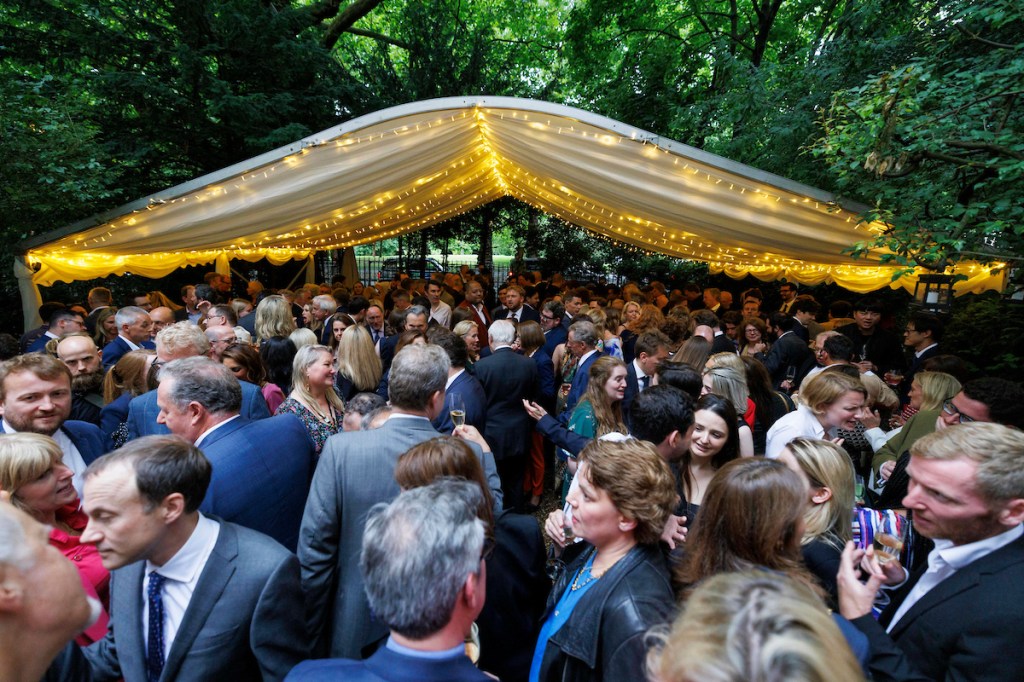
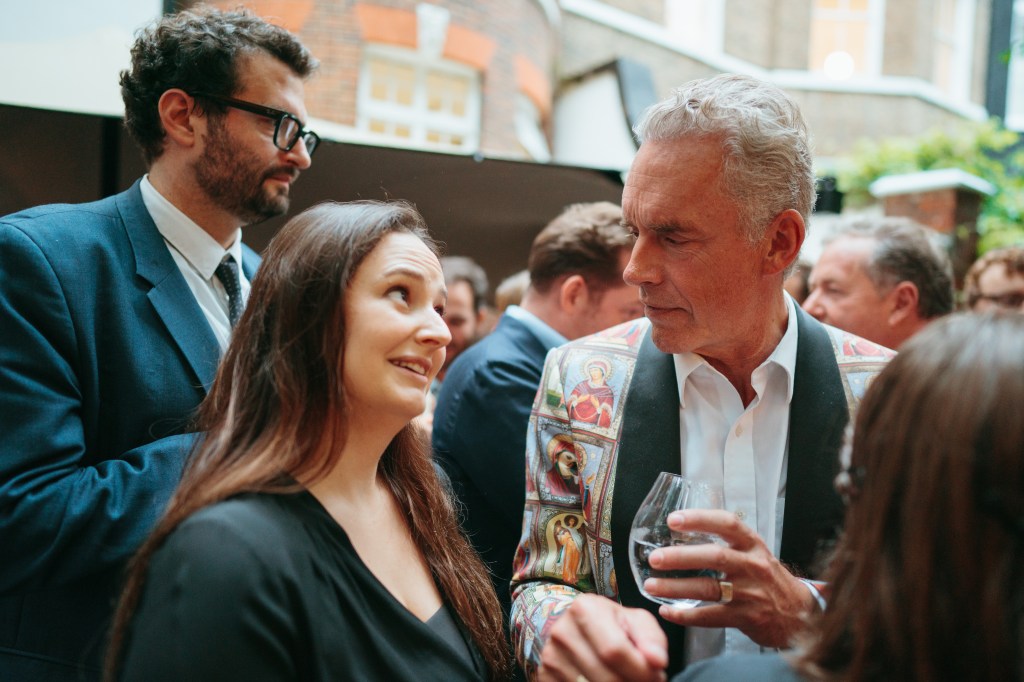
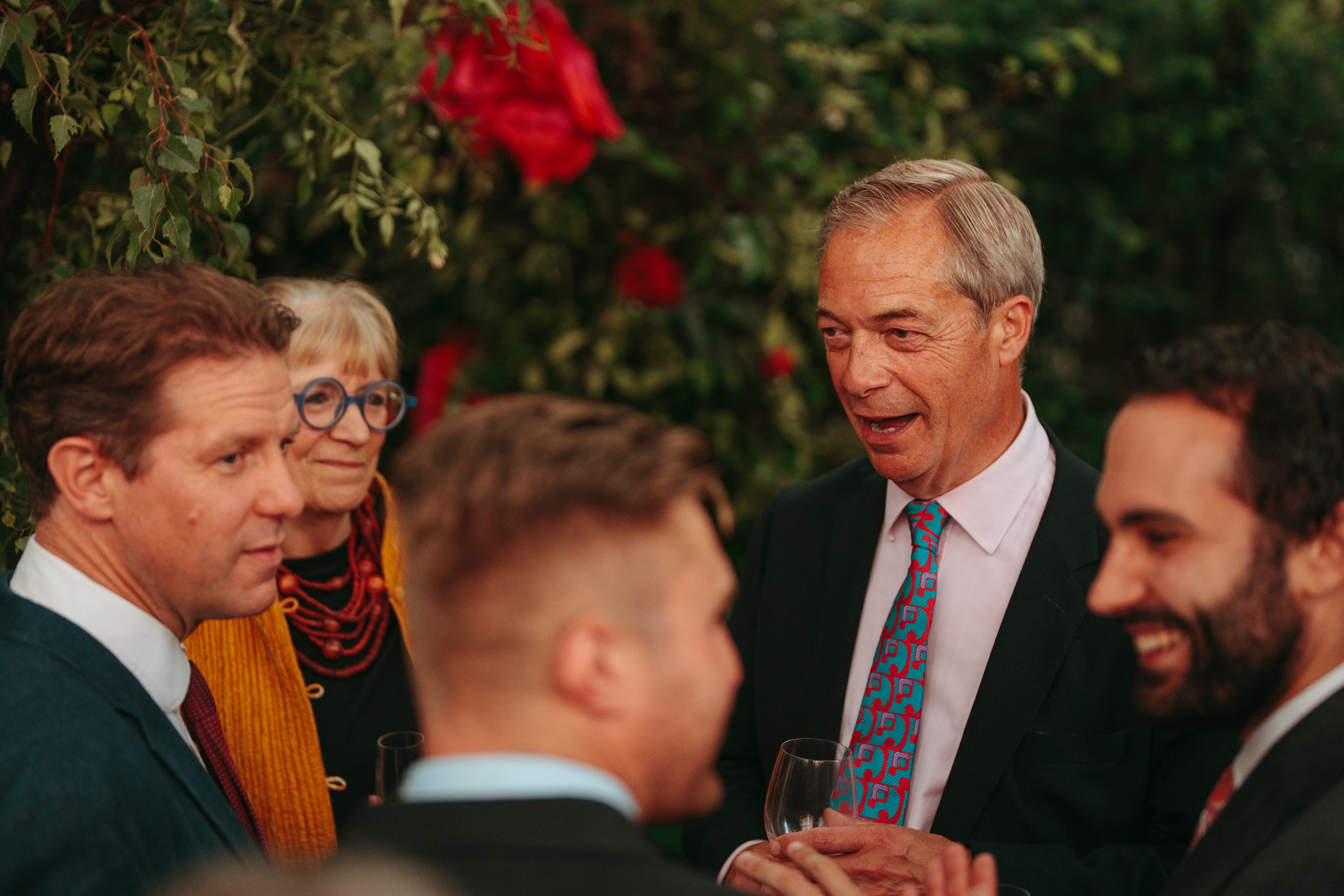
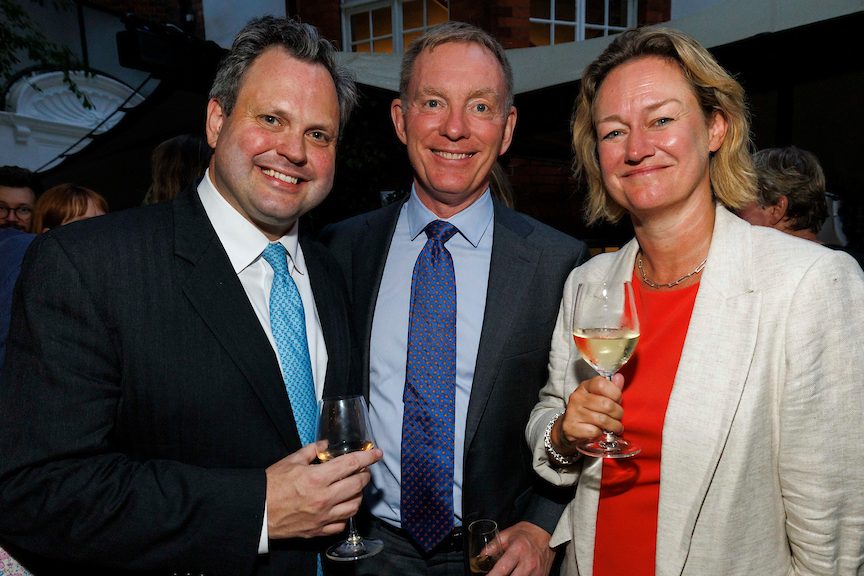
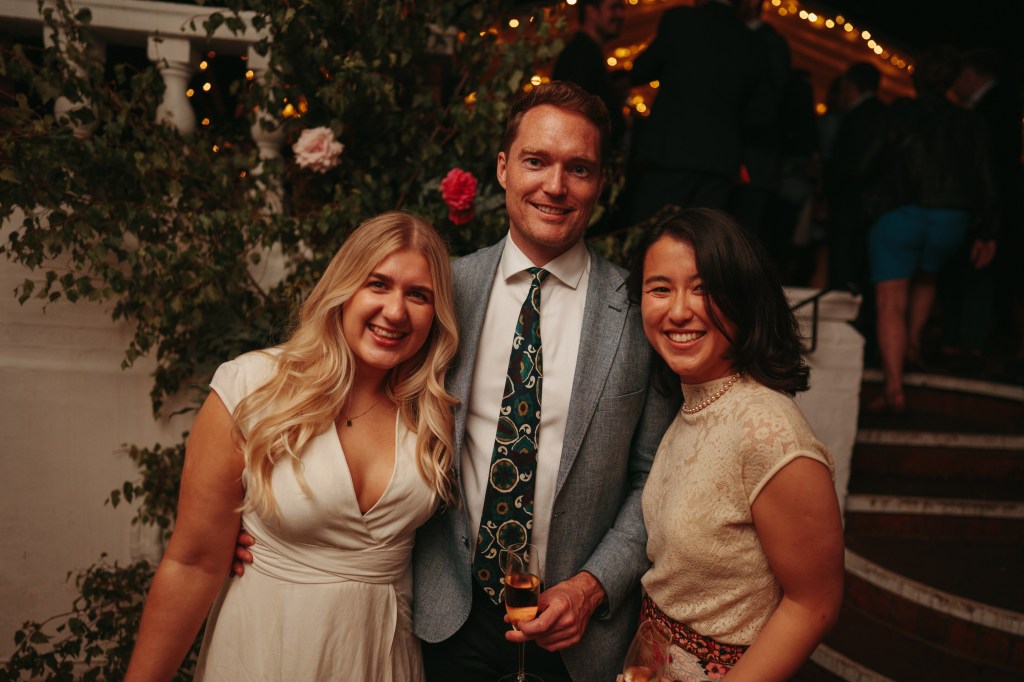
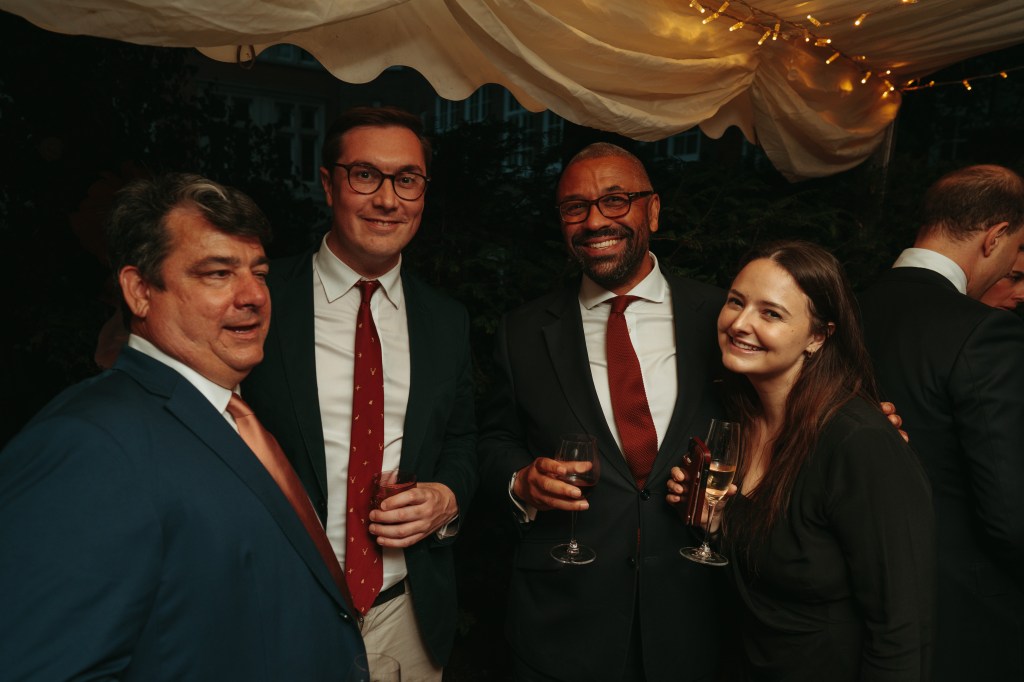
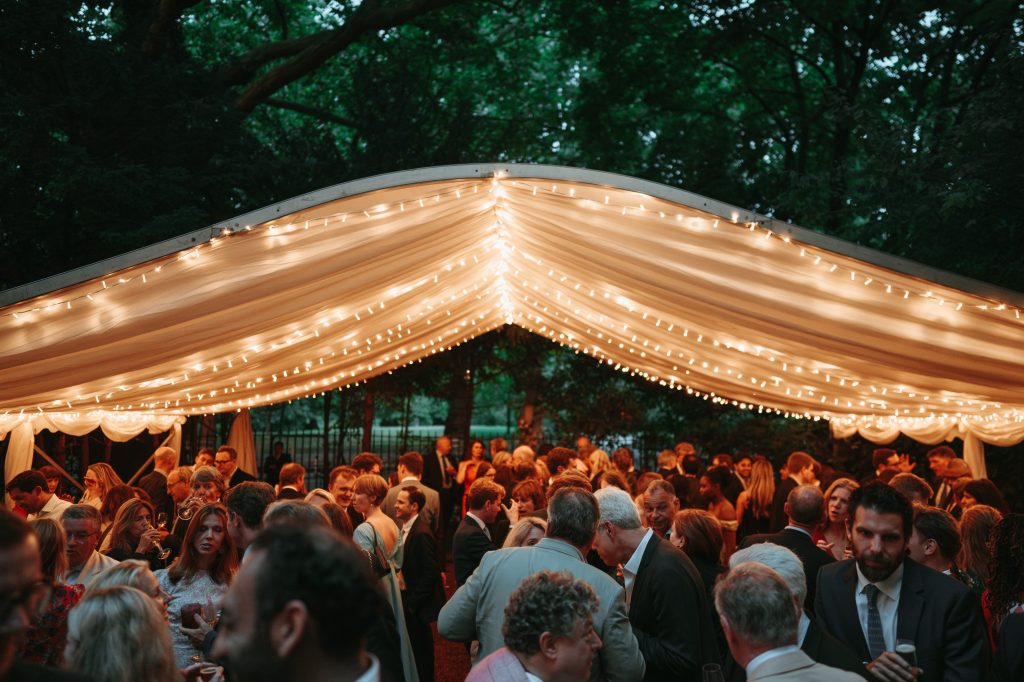
Spectator summer party 2024, in pictures
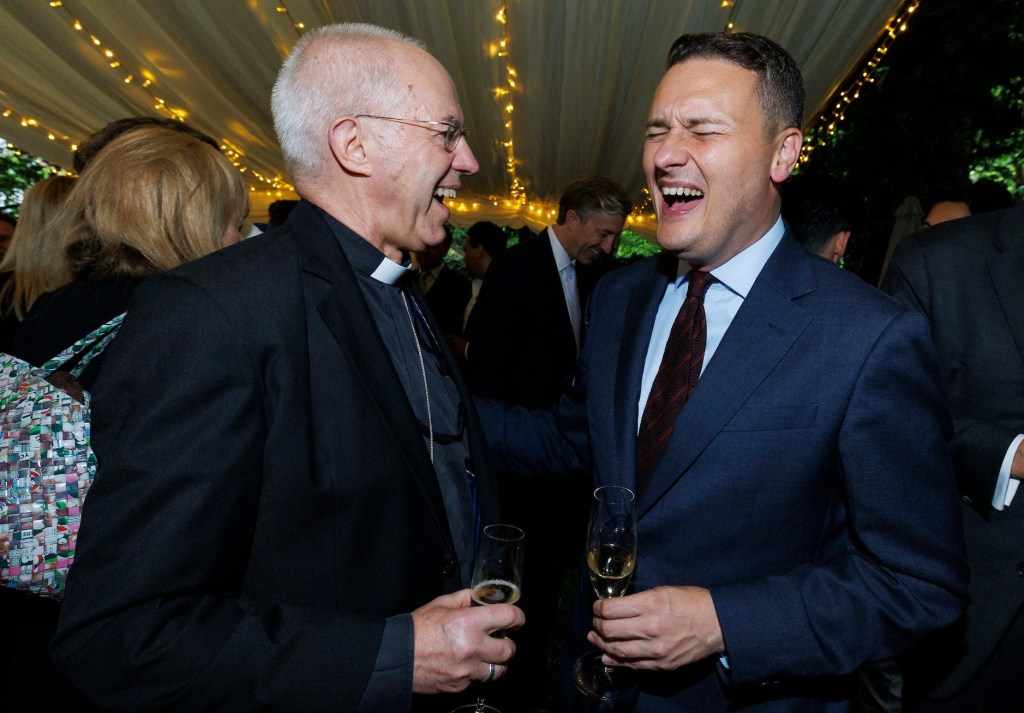
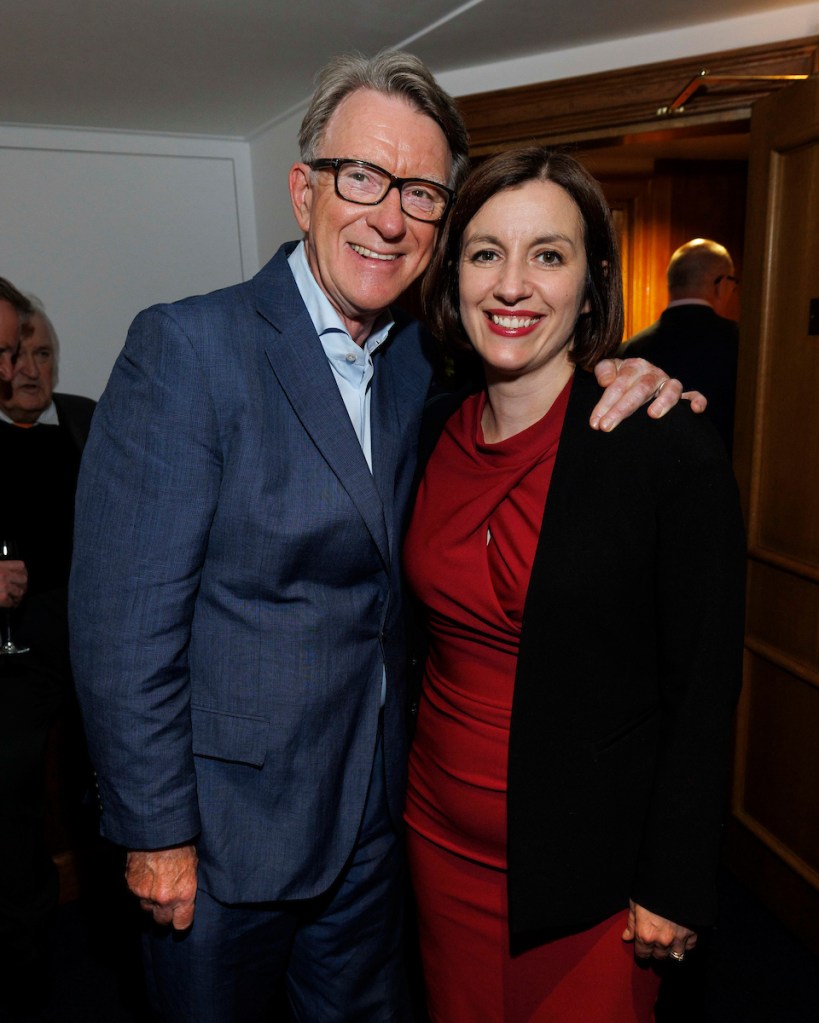
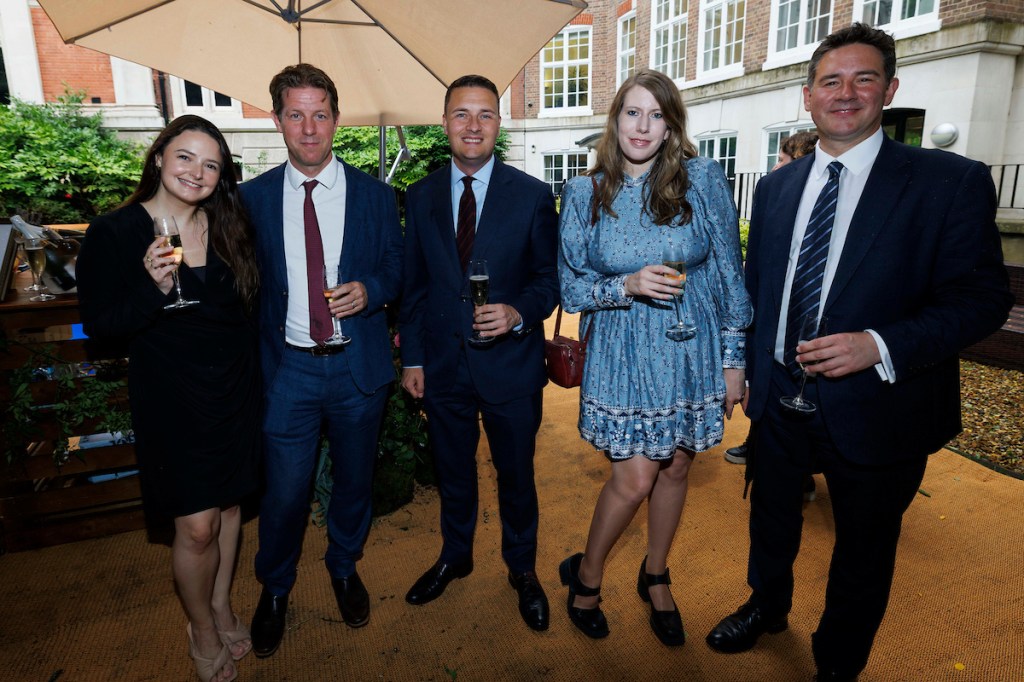
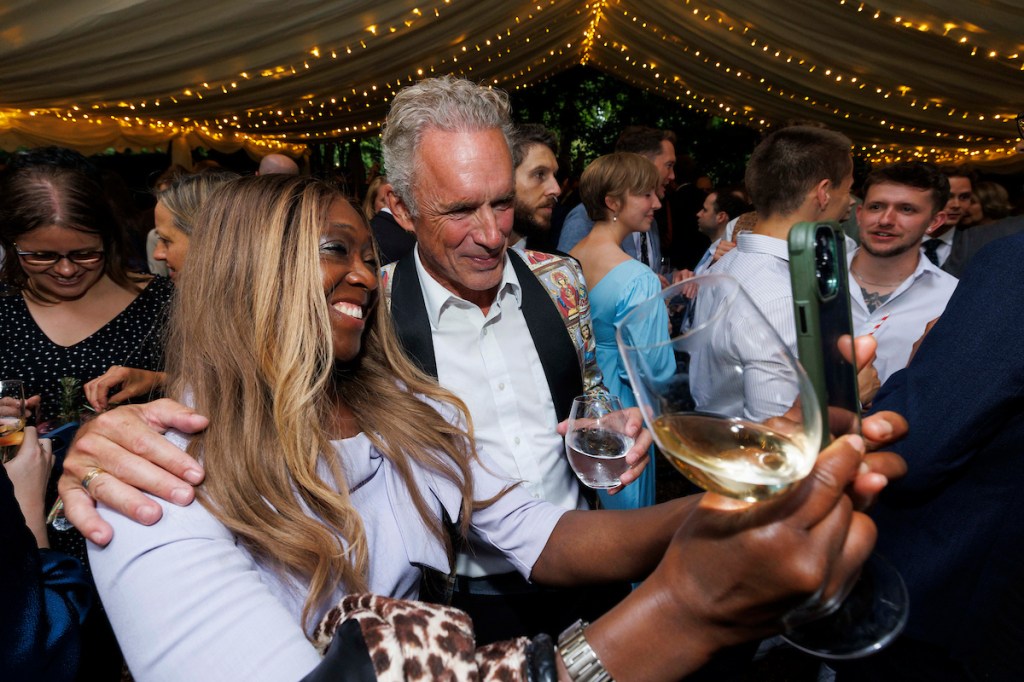
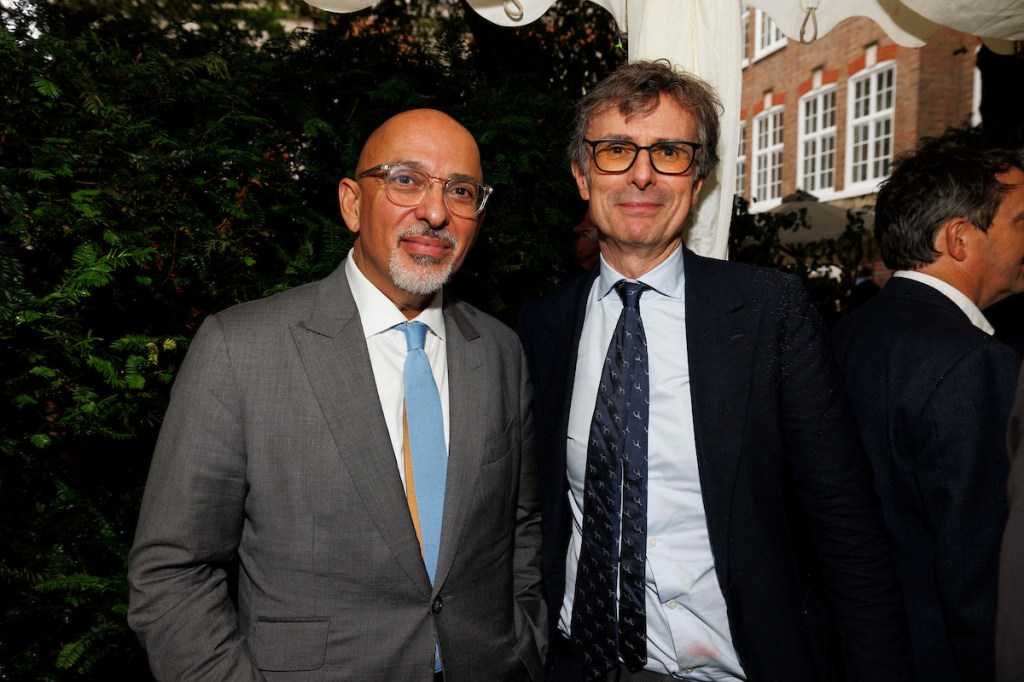
The election is over and with MPs now being sworn in, where better to take the temperature of Westminster then at The Spectator’s annual summer party? As New York Magazine recently wrote, it is ‘an unmissable event on the social and political calendar’ and perhaps the only place in the world that you would find Jordan Peterson laughing at the Archbishop of Canterbury’s jokes.
The party, always in early July, is typically a scene of political drama: prime ministerial resignations, leadership plots etc. ‘But while the Tories inside are licking their wounds,’ said Sky News’s Sam Coates, reporting outside the door, ‘it’s been a parade of Labour cabinet members coming in and out of the building behind me that has been the most striking.’ The Times made the same observation. Amidst the usual mix of politicians, actors, academics, journalists and clerics we were delighted to welcome ten students from the Social Mobility Foundation (with whom we have long collaborated). And of course, Mr S was on hand to hear all the latest gossip.
Below are a selection of photos from the event, taken by Jamie Lorriman and Tom Aizenberg.
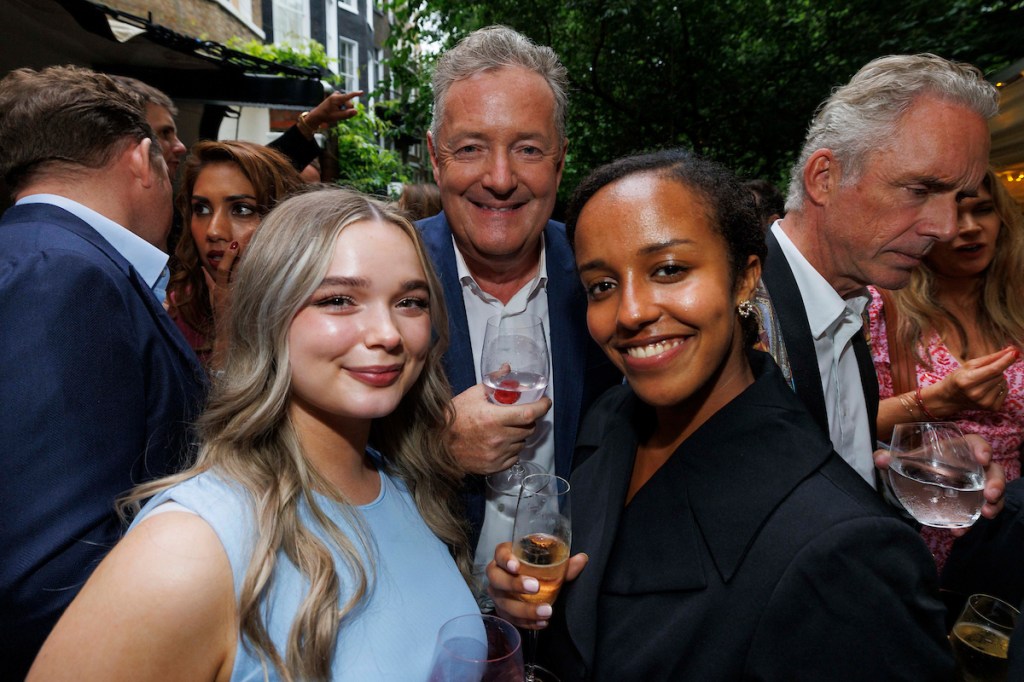
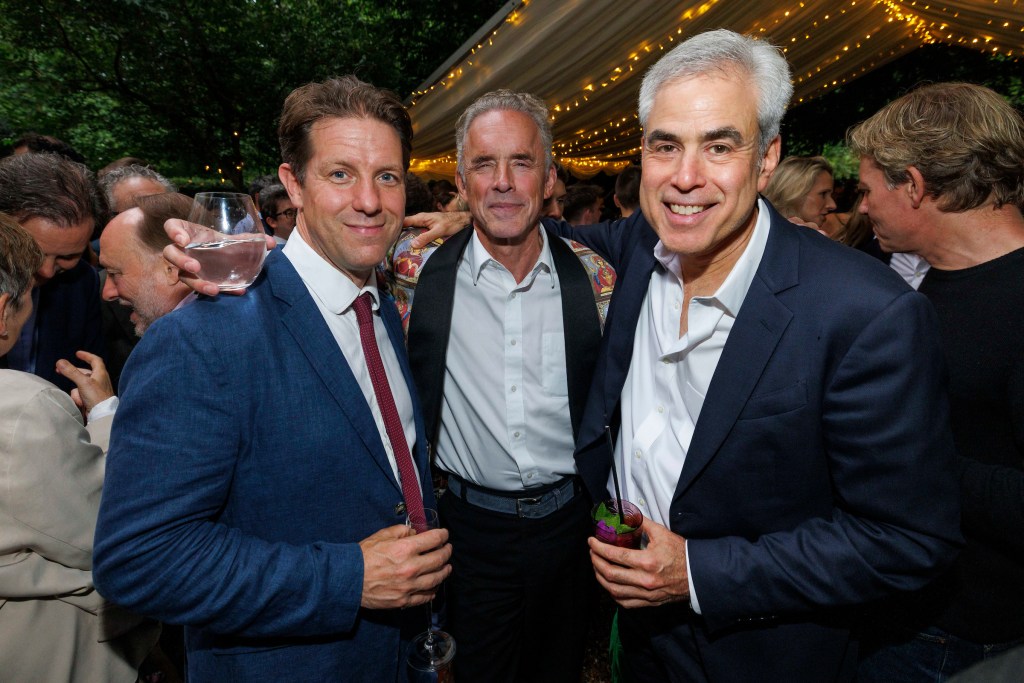
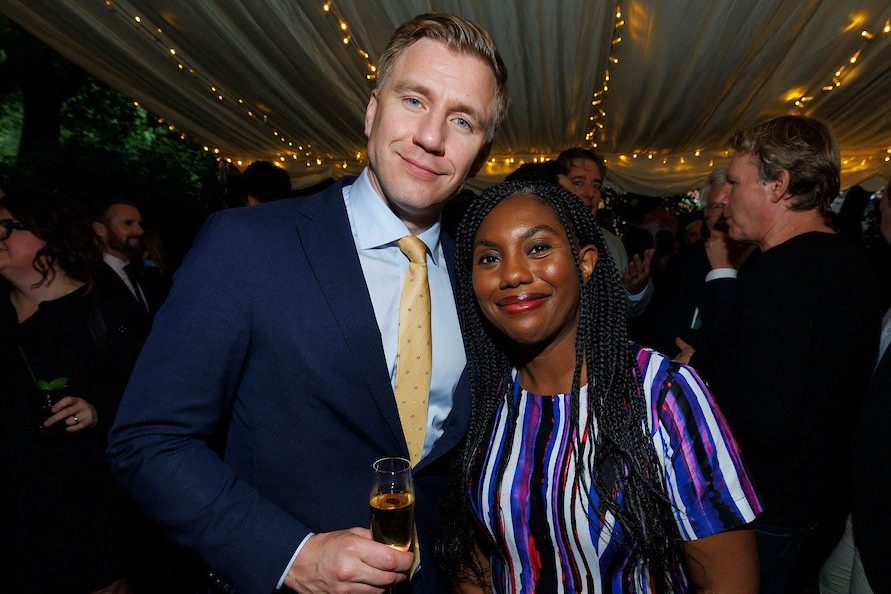
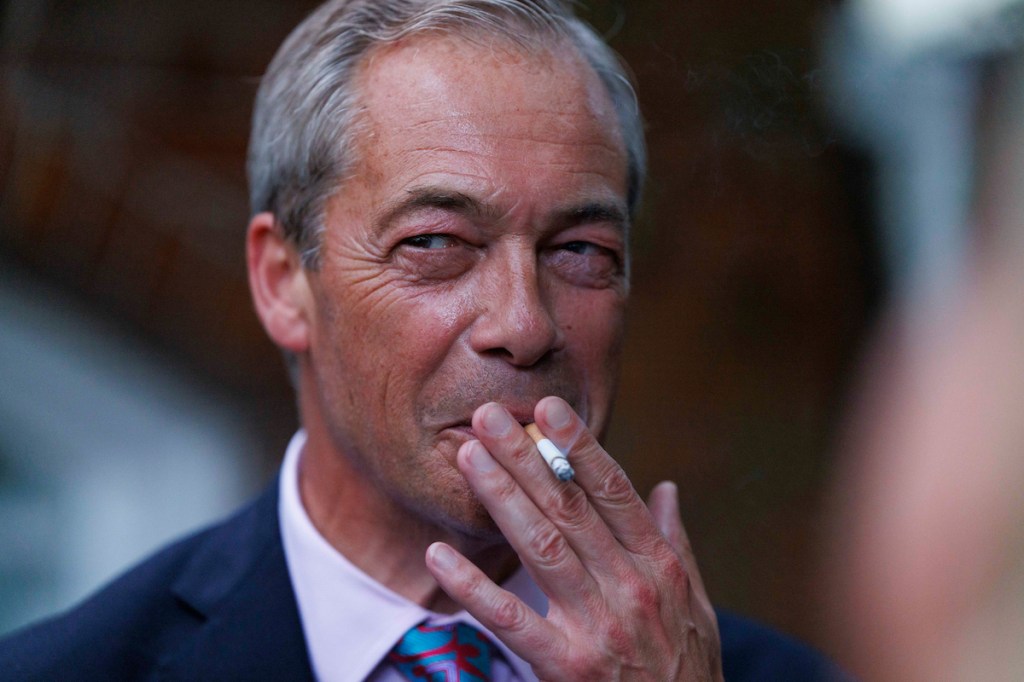
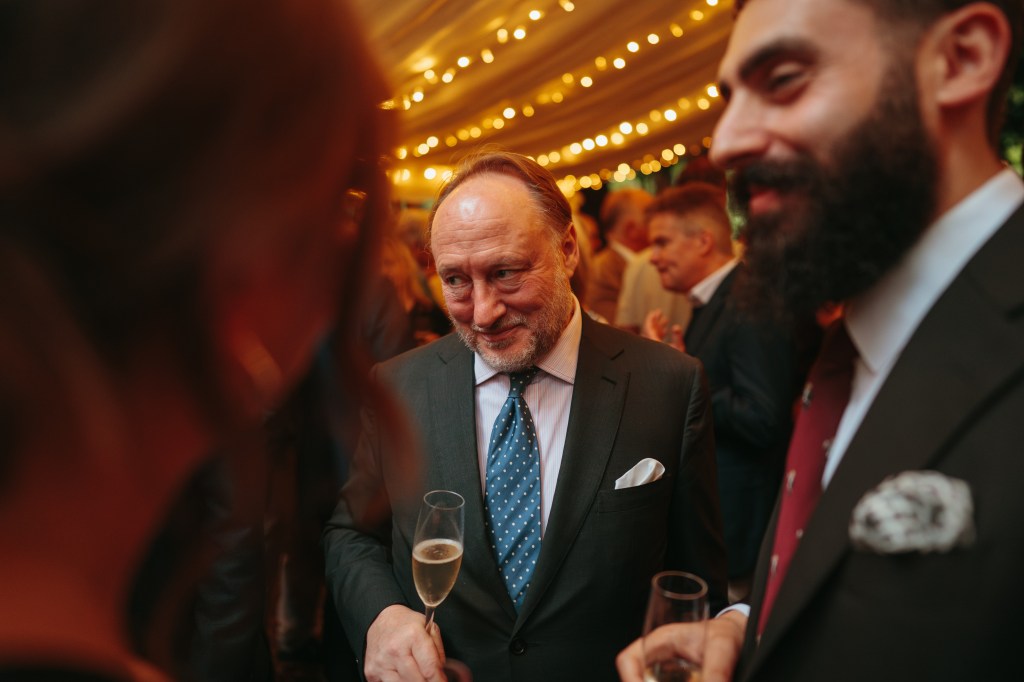
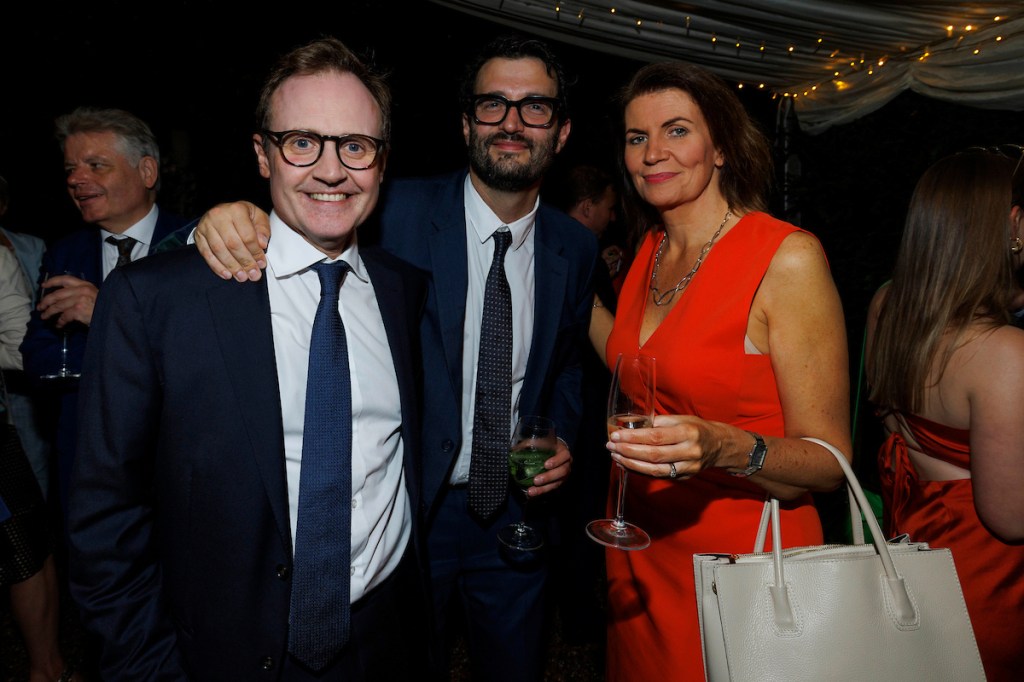
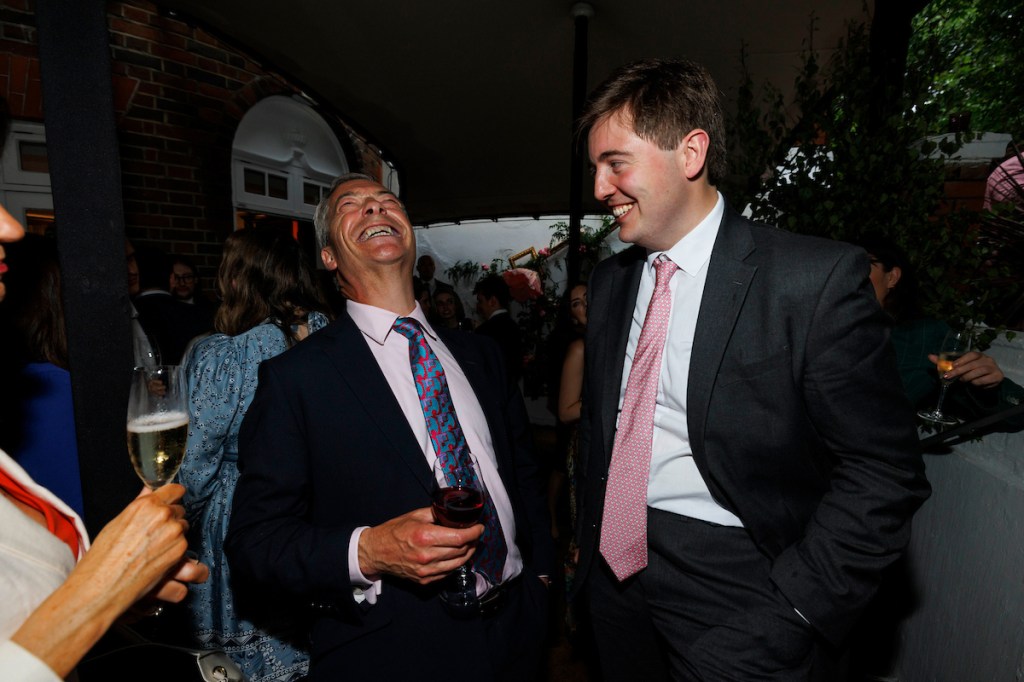
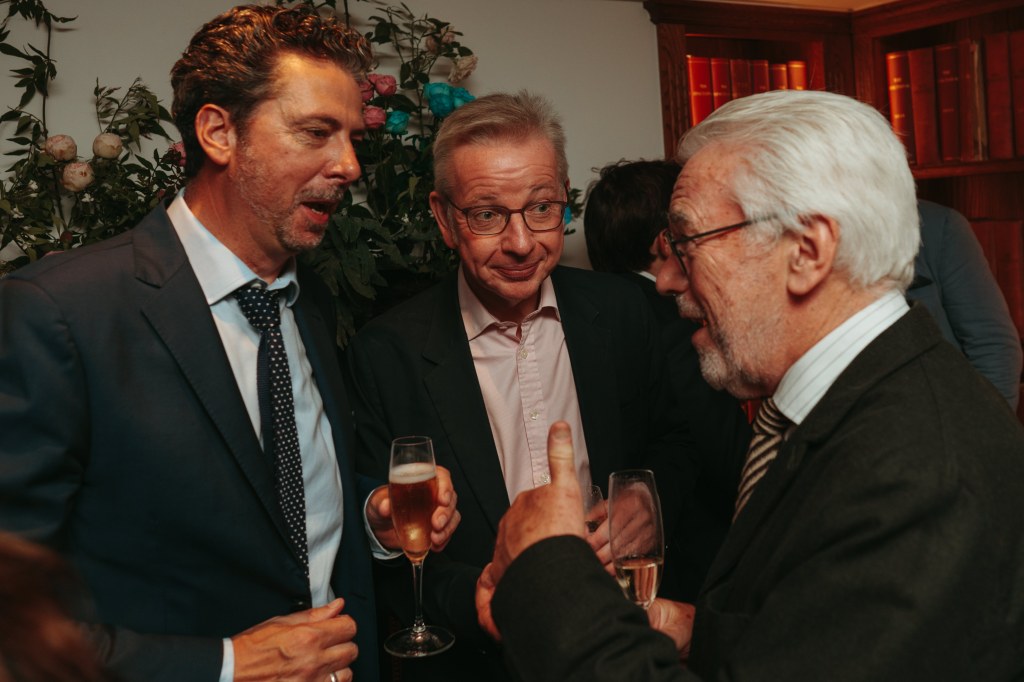

Emmanuel Macron is cornered
They’re playing with a Rubik’s Cube in Paris trying to cobble together a government. An Italian-job technocratic government? A national government of all talents? A wonky coalition in the hope that something turns up? Perhaps France might discover, like Belgium, that it does better with no government at all.
Emmanuel Macron, who has provoked this political nervous breakdown, normally rushes onto television to treat French voters to his subtle thoughts, and perhaps he will break his silence and confide in us. His prolonged silence has nevertheless been telling. He’s cornered.
Why he did this is inexplicable. He’s become the chained duck
Obviously by any rational criteria of job performance Macron is guilty of gross misconduct and should be escorted out of the building by security. It’s more complicated than that. Even though he is the architect of this capharnaüm the constitutional process of replacing him would add even more instability to the political entropy.
Paris is divided in three parts and has a strong resemblance to a circus, with an unruly crowd at the perimeter. There’s the Big Top of the Assemblée National, scene of both immediate battles as well as a stage for prospective presidential candidates to strut in the run-up to 2027, or whenever the next presidential election might be.
Glowering across the contaminated Seine is Macron’s Elysée Palace, where he is hunkered down with Brigitte and advisers who no longer trust him and are leaking like a tamis. YouTube has become a festival of Downfall parodies of Macron raging in his bunker.
And then there are the 10,000 or so people of the Paris blob – the smug leftist journalists, academics, subsidariat, well-schooled snobs – who once thought themselves untouchable but are now confronted by the spectre of barbarians at the gate and fear of another orgy of civil disorder.
Macron had three years remaining on his second term when he triggered this election, which has lost him his relative parliamentary majority, his own credibility and the credit of France. Why he did this is inexplicable. He’s become the chained duck.
Not to insult him, but to attempt to explain him, is he losing control of himself? He ticks every box in the Narcissistic Personality Disorder diagnosis. His emotional intelligence is net zero and voters have grown to despise him. Elections have become a referendum on him and he keeps losing.
One secret in plumbing the depths of important men is to chercher la femme. Macron married his drama teacher 24 years his senior and performance remains crucial to his personality. He can be very charming in a small group, where it’s clear he is the sovereign. But in public he is clumsy and sometimes outrageous. He is increasingly resembling a cosplaying drama student who loves to dress up.
At the very start of his presidency, he had himself photographed after his inauguration. He was immaculate in a beautifully cut suit, his Legion d’Honneur illuminated, solemnly proceeding through the Hall of Mirrors at Versailles, flanked by the Republican Guard in their extravagant dress uniforms, with drawn swords. It was beautifully photographed, and an extraordinary, boastful image. The French had elected a king, an absolute monarch.
Soon after, after brutally sacking the chief of the military to show he was in charge, he moved to establish his authority as commander in chief by visiting a French nuclear submarine and dressing up like a naval officer in a military tunic. A grand spectacle. Arrival in helicopter.
More recently he took to a khaki sweatshirt to channel Volodymyr Zelensky. Macron the warrior. A few weeks ago it was his Sylvester Stallone tribute, Emmanuel ‘Rocky’ Balboa Macron, working out with a punch bag in a gym in Paris. The photograph was taken by the official Elysée photographer and the bulgy biceps are rumoured to have been photoshopped in post-production. The stunt is thought to have been Brigitte’s idea. Boxing fans were nevertheless unimpressed by his jab.
And then, last week, in the most provocative gesture of them all, he dressed up like Tom Cruise. The very day after the first round of the National Assembly election, he was parading before the paps in a stylish leather jacket and baseball cap. The Top Gun. Lieutenant Emmanuel ‘Maverick’ Macron. Brigitte wore Yves Saint Laurent.
All the world’s a stage for Macron but voters, from the left and right, aren’t buying it. And even the centre is having its doubts.
Narcissism and betrayal are closely connected and a willingness to overlook others in pursuit of self is a long-established characteristic of the president’s nature.
As a young banker at Rothschild in Paris there were already disturbing signals of an ambition with no limits to its ruthlessness, a friend tells me who was there. Macron was more of a courtier than a deal-maker, very close to David Rothschild, and was given credit for the achievements of others. He was never hesitant to blame others for setbacks, avoiding taking responsibility himself.
Macron left the bank and became an Inspector of Finance, in the highest echelon of the French civil service. He ingratiated himself with the then- president François Hollande and became a non-parliamentary minister of finance. This was before stabbing Hollande in the back and stealing the presidency himself.
Now there is his ultimate betrayal with this election. He’s thrown away everything in a fit of petulance.
And it’s not over. After the election, nothing is settled and there are dangerous currents.
Macron invited Jean-Luc Mélenchon into his tent to stop Marine Le Pen’s National Rally and Mélenchon is refusing to leave. If he gets anything of what he wants, cue an exodus of French yacht people heading for exile in South Kensington.
Andrew Neil and I both immediately figured out on Sunday that the unappreciated winner in the election was Marine Le Pen, whose third-place finish was perfectly placed. She fought a competent campaign and her voters aren’t blaming her for failure. She won 37 per cent of the vote and increased the number of her seats. Best, not achieving any kind of majority, as had been predicted, has done her a favour because none of what is now unfolding is her fault.
Her protégé Jordan Bardella did well, too, broadening the reach of the party towards the young. He’s increased the size of her group in parliament by 50 per cent. She’s still in pole position for the 2027 presidential where the electoral calculus might be slightly more favourable. She’ll be singing in her shower.
Badenoch attacks Sunak over election decisions
The Tories faced a difficult election campaign and things aren’t much improving for the party. Now it transpires that Kemi Badenoch used the group’s first shadow cabinet meeting to hit out at ex-PM Rishi Sunak, describing his decision to call an early election as bordering on ‘unconstitutional’. Talk about trouble in paradise…
The shadow housing secretary slammed Sunak for telling an inner circle of the snap election before he informed his cabinet of the plans, blasting his former aide Craig Williams as a ‘buffoon’. And Badenoch didn’t stop there. Going on, the shadow cabinet minister spoke of the former prime minister’s ‘disastrous’ decision to leave D-day commemorations early, blaming Sunak’s choices for the unsuccessful elections of former MPs like Penny Mordaunt. The Tory leadership hopeful turned her attention to other colleagues too – commenting that former home secretary Suella Braverman seemed to be having a ‘very public’ nervous breakdown. Ouch.
While it is thought Badenoch was speaking on behalf of colleagues who lost their seats, the Times reports that not everyone was thrilled by her intervention. James Cleverly, the shadow home secretary, has warned his party not to descend into ‘bitter in-fighting and finger-pointing’, adding:
In recent years we lost our well-deserved reputation for competence and good government. We were too often preoccupied with infighting. We were too often divided. Our standards slipped and with it went our focus on delivery. That cannot happen again. The British people deserve better. We must now rediscover that competence to become an effective opposition and give ourselves the best possible chance of returning to government at the next election.
Strong stuff. As Sunak prepares to step down as Tory leader, a number of his colleagues are considering making their own bids. No one has officially announced yet, but already things haven’t got off to the most amicable start. Braverman has already hit out at Robert Jenrick as a ‘big, centrist Rishi supporter’ while Badenoch’s intervention has ruffled feathers. Will a contest continue in this vein? Stay tuned…
A Kamala Harris-Gretchen Whitmer ticket could help Democrats avoid a landslide
The mood among Washington Democrats is grim. Understanding that Joe Biden is headed toward defeat, they’ve also come to the conclusion that there’s nothing they can do about it — that unless Biden willingly steps aside, their side is doomed to failure. Three senators — including Jon Tester and Sherrod Brown, fighting to hold on in competitive elections this fall — said this out loud to their colleagues behind closed doors. The third, Michael Bennet of Colorado, was willing to say it publicly on CNN, even invoking the prospect of a “landslide” that results in Republicans winning the Senate and the House. Even Nancy Pelosi seemed skeptical of Biden’s prospects on Morning Joe, where she said, “It’s up to the president to decide if he is going to run. We’re all encouraging him to make that decision. Because time is running short.”
The Biden White House’s frame of this situation is that it is “Washington elites” who are pushing him out. In fact, the opposite is true — as numerous commentators have pointed out, the DC elites are late to come to this conclusion. It’s just that, prior to the debate, virtually none of the state activists or leaders were willing to raise the voice of concern lest they be labeled a traitor to the cause of “defending democracy” or somesuch. As one Democratic state party chair admitted to NBC: “I wish I was more brave.”
Now, after nearly two weeks of this story dominating all news, even with Democrat officials publicly voicing opposition, even with the heights of media like the New York Times calling for Biden to step aside, Washington Democrats think they’re trapped with Joe: destined to lose, with no way out of their predicament.
That’s the vibes talking, because this just isn’t the case. It’s also totally at odds with the lesson they and the media spent teaching their voting base for the past several years — that this is a win-at-all-costs election about whether democracy survives or not. If you really believe that fanciful argument, you should be ready to pull out all the stops, including forcing Joe Biden out, in order to win.
Nate Silver writes at length about this in his latest newsletter, and he makes three key points that shouldn’t escape notice. First, Joe Biden was already tracking toward losing this election before the debate debacle. Gaslighting from the likes of Stephen Colbert aside, it’s one of the reasons Biden’s team demanded such an early debate, to achieve a reset. Second, that nothing the Biden White House has done since the debate to make attempts to clean things up has worked, not with the media, not with donors and not with voters. And third, there is no legal requirement for delegates to the Democratic convention to cast their votes for Biden — in fact, they can invoke the “conscience clause” of their party bylaws to oppose Biden. This doesn’t mean that they will do it, or even need to — the point is, they can conceivably make that threat. If Biden wants to go nuclear, they can, too.
There’s another point I’d add to this, which should be obvious to any observer. We’re only beginning to see the fallout from this debate and the following rolling disaster show up in the polling data in swing states across the country. (And not even swing states — the lead headline in Politico today is that Biden could be in trouble in New York.) Those numbers are going to keep rolling in, and they’re likely to get worse — not just because the Biden campaign has no functional strategy for getting back on their feet, but because we’ll almost assuredly see a convention bounce from the RNC next week on top of it.
So what’s the alternative for Democrats? The fantastical suggestions of a convention blitz of competition between candidates isn’t realistic. There is only one alternative: pushing Biden aside for Kamala Harris. Beyond avoiding a host of legal and fundraising complications, she now polls better than Biden against Donald Trump. And for all the concerns about her foibles, delegates and party leaders can make the case that whether Biden really wanted to be a transitional president or not, he was going to be if he achieved re-election. No one thought that he would make it another four years, so cut out the farce and vote for the person who was going to be president by the end of the term anyway.
Democrats were already running behind in 2024 before Joe fell apart. The aim at this point should be to erase the concerns of a landslide election and to protect their hold on the Senate. Achieving this with Harris is at this point much more realistic than achieving it with Biden.
There’s one more step to consider. It wasn’t lost on many of Biden’s allies that perhaps his worst answer to any question on debate night was to a softball question about the issue that has dominated and motivated Democratic wins over the past two years — abortion. As someone who was no rabid pro-abortion advocate until it became necessary for his political career, Joe’s just not comfortable talking about the issue.
Donald Trump wants to make the 2024 election about the economy and immigration, and all his finalists for his vice presidential pick look to be men. If Democrats want to change the issue set for this election to abortion and guns and diversity, if they want to hold on to suburban women and compete in the blue wall states again, then a Kamala Harris-Gretchen Whitmer ticket could achieve just that. It might not be enough to beat Trump, but it could avoid the landslide that Democrats fear today.
How will Starmer keep his backbenchers busy?
One of Keir Starmer’s very nice problems to have is that his majority is so big and many of his new MPs so experienced that he needs to work out how to keep them occupied. The Prime Minister gave a partial answer to that last night, appointing a number of figures who have only just entered parliament to the government.
This would be remarkable were it not for the fact that those new MPs really have got a lot of experience in government from previous jobs. Kirsty McNeill was made a parliamentary under-secretary of state in the Scotland Office – the most junior ministerial job. She worked for Gordon Brown in Downing Street, and the former prime minister will have made a strong argument for her to join the government this week. Her experience at executive level in government means she is better equipped than most MPs who’ve been in the role for a good few years.
A number of the ministers appointed over the past few days were also ‘retreads’
Similarly, Georgia Gould is a bright shiny new MP, but an old hand in the world of government: local government, that is. As leader of Camden Council, she has been making bigger decisions than most backbenchers ever get to take. Three other newly-elected MPs – Sarah Sackman, Miatta Fahnbulleh and Alistair Carns – also make the ministerial ladder, but have all had significant experience.
A number of the ministers appointed over the past few days were also ‘retreads’ – MPs who’d previously lost a seat but had returned to parliament at this election. They include Emma Reynolds, who was a frontbencher under Ed Miliband. She lost in 2019, came back last week, and is now in the Work and Pensions department.
And then there’s the return of Jess Phillips, who resigned from the frontbench over Gaza and who nearly lost her seat to an independent Gaza campaigner. She was never expected to stay away from government for very long if Labour did win the election, and is back in the Home Office, her home turf.
Starmer can’t, though, appoint all his impressive new MPs to the front bench. In a large governing party, MPs tend to fall into factions so they have a greater feeling of connection. He’ll need to ensure that those groups are kept occupied with activities that help him, rather than get in the way of governing.
When will Trump announce his VP pick? The three options
With the Republican National Convention just around the corner, Cockburn sees only three possible options when it comes to Donald Trump announcing his VP pick. And according to the former president in an interview with Sean Hannity Monday night, he’d “love to do it during the convention,” but “my people say that’s a little complicated.”
Trump is hosting a rally in Pennsylvania on Saturday night. With the RNC on Monday in Milwaukee, this could be prime time for Trump to make the VP announcement. Because his “people say it’s a little complicated” to do it during the convention, this would give the party a day or so to get their ducks in a row. “You know in the old days they would announce the vice president during the convention. Today with modern-day technology you can’t do things that you could’ve done fifty years ago very easily,” Trump told Hannity. “But probably a little before the convention, but not much.” Cockburn is betting on this rally for the announcement.
But, the former president did tell Hannity that he’d “love to do it during the convention. I think it’d be a very interesting build-up and important for the convention, it would make it even more exciting.” The RNC is certainly the deadline for deciding on a vice president nominee, so news will be out at least by Monday evening. And, since Trump is all about riling up the news and making big splashes, the timing of this announcement would reflect his usual ruffian style. Cockburn approves.
Good news is, “it’s happening very soon.” And, as the Trump campaign wrote in an email to supporters, “I want YOU to select my vice president.” The email amped up Trump’s ‘I’m no politician’ charm: “DO NOT LISTEN to the liars in the FAKE NEWS media saying they know who my pick will be. They’re MORONS! I wouldn’t even think of telling them before I got a chance to talk to YOU.” The email linked to a poll where you can write who you think the vice president should be and what topics are most important to you — very cute.
As a third and final way for Trump to announce his pick, the campaign might just drop a video online, perhaps on Truth Social. Might as well lean into the “modern-day technology.” Posting on Trump’s “we the people” social media platform would echo the message of his email — “I wouldn’t even think of telling them before I got a chance to talk to YOU.”
The suspense is sure to leave Republicans everywhere in a kind of half-interested anticipation. Keep your eyes and ears peeled.
Can Robert Jenrick save the Tories?
At the 2019 general election, the Tories won eight seats out of eleven in Nottinghamshire, but now the political map of the county is dominated by red. Only two of those 2019 Conservatives survived last week’s brutal cull. Both did so by running against Rishi Sunak’s version of Toryism rather than for it. Lee Anderson, having had the Tory whip removed by Sunak, got re-elected in Ashfield in the colours of Reform. Meanwhile, in nearby Newark, Robert Jenrick defied MRP surveys which predicted he was a goner by withstanding a strong Labour challenge and hanging on with a majority of more than 3,000.
Jenrick was teased about his noticeable weight loss
Jenrick was able to do so because the Reform vote share was significantly smaller in his seat than in neighbouring ones. And that didn’t happen by accident.
When he resigned as immigration minister last December to free himself to fight for tougher policies on that issue, I wrote in these pages that it marked a significant moment in Tory politics: an astute, able and ambitious MP had made a calculation about the long-term future.
Vindicated by the outcome of his party’s gruesome contact with the electorate last week, Jenrick now steps into that future with his authority enhanced. He is very probably in a duel with Kemi Badenoch to be the right-wing candidate who makes it to the final round of the impending Tory leadership contest. It seems unlikely the Right is sufficiently dominant in the rump of 121 remaining MPs to get both in front of the membership, but very likely that whichever of them makes the cut will go on to win the race.
Badenoch loyally stayed with Team Rishi till the end, limiting her opportunities to differentiate herself from The Biggest Loser but also becoming seen as the right-winger that the Tory Left thinks it could live with. Jenrick, by contrast, used his freedom on the back benches and a column in the Daily Telegraph to set out an entire new prospectus for his party.
He is clear that the Tories must now campaign to leave the European Convention on Human Rights so border control can be restored, to return rigour and sternness to the criminal justice system – and most of all to radically reduce the overall volume of legal immigration.
On this final point, he has shown a further measure of political courage by already extending the Overton window of politics rightwards. Nobody has done more than Jenrick over the last six months to legitimise debate around the different impacts of immigration from different countries.
He has done this by deploying data, along with his friend Neil O’Brien – another East Midlands MP who scraped home last week – about differential outcomes by country of origin when it comes to metrics such as benefits dependency, tax contributions and social housing take-up.
And unlike Suella Braverman, his former boss at the Home Office and Cambridge contemporary from back in the day, his political method is to make his points in carefully calibrated language that is hard for opponents to depict as extremist.
When he was a frontbencher, Jenrick was rated as one of the best communicators at the government’s disposal and a safe bet to put on the Today programme on a sticky wicket.
Jenrick’s star has been in the ascendant throughout this year
It was obvious from the moment he resigned – soon after James Cleverly was appointed Home Secretary over his head upon the sacking of Braverman – that a leadership bid would ultimately follow. He was teased about the giveaways of noticeable weight loss and a new tough-guy haircut by Camilla Tominey on her Sunday morning GB News show in January and no denial ensued.
In right-wing social media circles, Jenrick’s star has been in the ascendant throughout this year even as Badenoch’s has dimmed a little amid suggestions – probably groundless – that she is on the fringes of a centrist cabal deemed to have run the party into the ground.
Yet Badenoch is undeniably compelling where Jenrick is still working his way up from merely being plausible. In his early years in Parliament, he was seen as so much a Conservative from Cameronian central casting that he was given the nickname Robert Generic.
Suddenly he is the well-schooled fundamentalist of traditional Toryism, self-billed as ‘somebody who believes in secure borders, in our sovereignty, in low taxes, in the family, in strong defence.’
Already pitching as the man who can ward off the Light Blue peril of Reform, he has issued a rejoinder to Nigel Farage’s wounding taunt that the Tories are a broad church with no religion, saying of his party: ‘There is a long history of the Conservative Party being a big tent, but it’s got to be a strong tent. It’s got to be a broad church with a creed, something we can unite around.’
He knows that someone to unite around is just as important. And he aims to give Kemi a run for her money.
Spare a thought for our departing MPs
The MPs who lost their seats spent yesterday clearing out their offices. Their passes stop working later this week, and then they have a few months to wind up their offices and constituency work before truly becoming ex MPs. It is a brutal experience, not least because Westminster is buzzing with newly-elected members. There is always a risk that someone congratulates a member they think has come back as a victorious MP – only to find out they are in fact on their way to pack their working life into cardboard boxes and make their staff redundant.
Before an election, some MPs choose to clear out their offices early, just in case they’re not coming back. But in this campaign, there were a good number of Conservatives who only had an academic understanding that their party was going to lose seats: they didn’t realise that they would be among the numbers being shown the door by the electorate.
Losing your seat is, as Jeremy Hunt said last week, part of the magic of democracy. Slightly easier for him to say, perhaps, given he held onto his but he nonetheless had to move his family out of Downing Street where they had been living while he was chancellor. But I understand that he actually wrote that line before he knew he would hold his seat: he could have easily adapted it to a scenario where he was conceding to his opponents. He was at least prepared for that outcome. Many of his colleagues weren’t, and even though they knew the risks when they came into Westminster, the blow of losing your job is still as heavy for an MP as it is for anyone else – especially given it happens live on TV with a lot of people cheering your victorious opponent.
The parties themselves have a duty of care to their MPs. But how much support they offer often depends on how organised the party machine is – and the Tory machine is very far from that description at present. On 5 July, party chairman Rich Holden emailed colleagues who’d lost their seats to say ‘our priority over the next few weeks is your wellbeing and to provide support where we can as you close your campaign and transition to what you decide to do next’. This included an offer from Conservative Campaign Headquarters’ HR team to speak to any staffers and pointers to the services offered by parliament.
Those services have improved greatly this time around. Charles Walker stepped down at the election as Tory MP for Broxbourne, and was chair of the Administration select committee. He and his committee had been deeply worried about the way ex-MPs have been treated in the past, pointing to a lack of career options and help with the transition. This time around, he has been working, along with the clerks and a team of volunteers, on what he calls a ‘transformative’ system for moving former MPs back into civilian life.
There is a departing members area where ‘Non-Returned Members’, as they are delicately known, are given advice on HR, security, pensions and their health and wellbeing. They and their staff have 12 months of access to a support service offering counselling, debt and financial advice. There is also a career transition scheme being delivered by Right Management Ltd which will offer them career planning, coaching and CV writing. After previous elections, unseated MPs have walked into the local job centres because they didn’t know where else to go. Some of them will do that this time around, too, but at least their former employer now offers them some help for moving on. Walker says: ‘I’m very, very proud of the way the House staff are delivering this. My clerk on the Administration committee put in a thirteen hour shift to help ex-MPs yesterday.’
There is a reason that this sort of support matters to the rest of us. Being an MP is not an easy life, and it never will be. But the increasing volatility of politics coupled with the fact that employers now often view ex-MPs with some suspicion (they are seen as a deflator on boards) means the whole venture is quite unattractive. Knowing they will have a reasonable landing on the way out is a really important factor to those considering going into parliament – and we need the very best to have a reason to do that.
Watch departing MP Steve Baker give his verdict on SpectatorTV:
In praise of age-gap relationships
Anne Hathaway’s latest film, The Idea of You, has become Amazon’s most-streamed rom com, causing me to reflect that Hollywood’s young man/older woman scenario has changed for the better since The Graduate. Though everyone was mad for it at the time, was there ever a grimmer film about relationships? We’re meant to empathise with the over-privileged, over-grown, over-thinking spoilt brat of a hero – especially when he becomes the ‘prey’ of the much older Mrs Robinson – but that the toy boy is played by the 29-year-old Dustin Hoffman and the cougar by the 35-year-old (and far more attractive) Anne Bancroft merely highlights the misogyny of the enterprise.
I used to be mistaken for my husband’s mum in my forties, which always amused rather than bothered me
Sadly, in real life such unions are still treated as somewhat freakish; witness the criticism this week of the attractive 48-year-old singer and actress Kym Marsh, who has taken up with 29-year-old Samuel Thomas. They met while starring in 101 Dalmatians: The Musical; surely Cruella de Vil herself would not be more cruelly trolled for seeking to make puppies into a coat than Miss Marsh has for making a man the same age as her son into her lover. It’s a cliché, but there is far less kerfuffle when an old fellow marries a young lady; see the 24-year age gap between the (perfectly matched) Boris and Carrie Johnson.
When I got together with my third husband, Mr Raven, nearly 30 years ago, it was considered unwholesome on two counts; one, he was my girlfriend’s younger brother and two, he was 13 years younger than me. Gossip got back to me through helpful friends about how ‘weird’ our relationship was considered by people who had never met either one of us. But most of my friends were either jaded Bohemian contemporaries or much younger than me (my best female friend at the time was a teenager, who I sometimes used to take to the Groucho Club for lunch wearing her school uniform) so it wasn’t like I was outraging the suburban school-run set.
What my friends quickly deduced was that Daniel seemed somewhat more of a grown-up than I did. I was flighty and excitable; he was grounded and equable. When one mate began to call him ‘Dad’ I picked up the habit too, leading to an amusing incident whereby I remarked loudly to a friend in front of the Metropole Hotel on a bustling Bank Holiday ‘That’s where I took Dad’s virginity!’ Cue outraged parents covering their children’s innocent ears and pulling them hastily away from this time-travelling pervert.
He was the best step-father imaginable to my poor son Jack, finding time for him when everyone else – including myself – had turned their backs on him due to the mental illness that made him so difficult to be around and which eventually killed him through suicide. In return, I’ve done everything I can to amuse him when death and illness have stalked his family. It’s not a conventional marriage – we don’t live together, have no friends in common and our meetings take place in pubs, bars and restaurants – but I had two conventional marriages before, and added together they were still only half the length of this one.
I’d never be so silly as to declare that all marriages with an age gap work out well, any more than I would that all marriages between people of the same age work out well; of the 42 per cent of marriages which end in divorce, the vast majority are between people in the same age group. But I do wonder if I would still feel as young as I do if I was married to a man of my own age. It used to be the received wisdom that women ‘went off’ early – like milk – whereas men just kept getting better and better, like fine wine. I think that this myth has been effectively busted; there’s no female equivalent of Victor Meldrew and though the creators of Grumpy Old Men thought up a female equivalent in order to keep the franchise going, it never had the same cultural resonance or personal recognition. Though Eamonn Holmes and Ruth Langsford are both 64, she seems immeasurably more youthful and vital than him; Langsford’s friend Ulrika Jonsson was being blunt but reasonable when she wrote: ‘Eamonn has become a leading member of the Grumpy Old Men’s club over the years and he’s a proper curmudgeon. It could just be that all his moaning got on Ruth’s nerves. There she is, wanting to crack on with life, and she’s got an old misery on two walking sticks dragging her down. She’s smart, empathetic and full of energy – any man would be lucky to have her.’ It’s outrageous to think that Joan Collins was told by a Hollywood studio that her contract would end at 27, after which she would be past her prime; she went on to pose for a 12-page Playboy layout at the age of 50 and marry a man 32 years younger than her when she was 70.
I used to be mistaken for my husband’s mum in my forties, which always amused rather than bothered me, but now he’s 52 and I’m 65 (we were 23 and 36 when we met) this doesn’t happen. We probably haven’t taken the best care of ourselves, and with our missing teeth and drunken ways probably resemble a pair of Skid Row compadres rather than milf and toy boy, as I’m sure we once did. But as long as we have a laugh – which we invariably do – the age gap is neither here nor there. I don’t call him Dad anymore, which is probably a sign that I’ve grown up somewhat – but not too much, I hope. I’ve brought him out of his shell a little and he’s calmed me down a bit, but nothing too radical. I don’t go for all this ‘You complete me’ rubbish – who wants to be with half a person? I was already happy when I met him, but Mr Raven has made me happier, and I hope I’ve done the same for him. Because at the end of the day, the ability to ease someone’s troubles in life counts for a whole lot more than some numbers on a page.
Real fans will be cheering the Netherlands
Ian Chappell, the flinty Australian captain, has said that after giving cricket to the world the English did nothing further to develop the game. That original gift, it might be argued, was a fairly significant bequest, but Chappell could point to postwar history. In his lifetime, cricket has been shaped by Australians, West Indians, and Indians.
Oh, the ghastliness of English football! The dim players, detached from the world in their grim mansions
It is harder to challenge the view that the English, who codified the laws of Association Football in 1863, have spent the last century resting on their oars. The national team has won the World Cup once, in 1966, when the country served as host, and has never won the European Championship, though that may change this week. Should Gareth Southgate’s players beat the Netherlands on Wednesday they will play either Spain or France in the final, in Berlin on Sunday.
Their progress so far has been blessed with good fortune. In the group stage they beat Serbia by a single goal, drew 1-1 with Denmark, who should have won, and shared a goalless snore-draw with mighty Slovenia. A grubby 2-1 win after extra time against Slovakia earned a quarter-final with Switzerland, when five successful penalty kicks proved conclusive. Not that such plain fare has bothered the cheerleaders in the television studio, where panellists were seen bouncing around during the Swiss match as though Mafeking had been relieved.
Oh, the ghastliness of English football! The dim players, detached from the world in their grim mansions. Their wives and girlfriends, dolled up for a night in Alderley Edge. And those delightful fans, forever roaring and brawling, high on booze, cocaine, and a self-importance untainted by decades of mediocrity.
Nor should we overlook the sycophantic wittering of journalists and the expertise of illiterate ex-pros who inflate a simple game with dressing-room jargon. This tournament’s gold medal for imbecility goes to the reporter who told readers that Weimar was miles away from ‘civilisation’. That’s right, the city of Goethe, Schiller, and Liszt. How lucky they are, those culture-starved Saxons and Rhinelanders, to receive our ambassadors, with their ballads of the RAF downing German bombers.
The fact is, for all the riches of the Premier League, this land has never been a first-rank footballing nation. England has produced only six genuinely great players: Tom Finney, Stanley Matthews, Bobby Moore, Gordon Banks, Bobby Charlton, and Jimmy Greaves, though Duncan Edwards and Roger Byrne, who perished in the Munich air crash of February 1958, would have graduated to that rank.
Since the first World Cup in 1930 (England opted not to take part until 1950), football has been enriched in its highest moments by continental Europeans and South Americans. One of the greatest teams represented Holland in 1974, when an XI lit up by Johan Cruyff, Johan Neeskens and Wim van Hanegem lost a World Cup final to West Germany in Munich. Four years later the Dutch lost to another host, Argentina, in Buenos Aires.
Unlucky twice, yet like the Hungarians, who lost a World Cup final to the Germans in 1954, those dazzling Hollanders changed the game in a way no Englishmen have done. In 1988 another superb Dutch team won the European Championship, spanking England along the way. They have since lost another World Cup final, in 2010, but for many people with a sense of history the men in orange shirts occupy an honoured place in football folklore.
There are some gifted players in this England side but they have been held back by the coach’s timidity. As an old hand in the Old Trafford press box once said of Manchester United’s earnest manager Dave Sexton, Mr Southgate’s idea of excitement ‘is to open a box of After Eight mints at 7.45’.
Perhaps the most gruesome of many dismal sights in this bloated championship was the Prince of Wales on his feet during the Swiss match, yelping and clenching his fists in the approved manner, to show he is one of the chaps, really. Ich dien, sir. ‘I serve’. Not ‘I join in with the oiks’. ‘We keep finding ways to win’, those tongue-tied players have been trained to say. Enough! Summon the spirit of the great Cruyff, you Hollanders, and bring down the curtain on this English farce.
The melancholy of high summer
We are having a glorious July where I live in Poland. There have been pleasantly warm days. The birds are singing. The beer is cool. So, why does a sense of melancholy keep snaking around my consciousness? Well, for various reasons. I can’t claim to be the world’s most cheerful man. But one reason is that we have passed the summer solstice – the longest day of the year.
I find myself wondering how on Earth it is July when March feels so recent
However warm and bright it is, the days will soon grow colder and darker. The best is behind us. The worst lies ahead. Today we are enjoying the sunshine in our shorts but tomorrow we will be shivering in the dark at 5 p.m. Irrational? Of course. We should enjoy the time we have instead of feeling gloomy about the times to come. ‘Tis wealth enough of joy for me / In summer time to simply be,’ wrote Paul Laurence Dunbar. It should be so.
But knowing that this is true is not the same as feeling it. Moods are hard to reason with. For most of the time, to be clear, I enjoy the sun as much as anybody. Yet the gloom still sneaks in, and I cannot tame it any more than I could tame a black mamba.
I find myself wondering how on Earth it is July when March feels so recent. Did I hit my head and sleep through the past four months? What the hell have I been doing? If I really think about it, I can remember parties, and walks, and runs, and pints of Tyskie, but the memories do not feel intense enough to justify the passing of time. They feel like the products of a long weekend. Think of what I could have done…
I get home at 10 p.m. and think that I should go out again. It’s still warm! It isn’t completely dark yet! What should I be doing? Anything! Rage, rage against the dying of the light.
This is partly a result of ageing. Approaching my mid-thirties, I can’t help thinking about opportunities that have been wasted, and opportunities for which time is running out. Youth, like summer, once felt endless. Now it feels all too short.
Again, I know that this is an unhelpful way to think – a paralysing force, potentially, that keeps one trapped in angst. If Frank Sinatra had dwelled on his regrets then he might not have had the time to laugh, and love, and cry, and do things his way. Yet knowing this is not the same as feeling it. Gloom cannot be lectured away.
I’m not sad about the end of summer, which hasn’t happened yet, but about the end of an idealised summer – one that is rich, active, and idyllic. The real summer feels less satisfying because it doesn’t match the summer in my head. Sometimes, learning to appreciate life means learning not to overthink. It means taking a moment to see the sunlight dance on a lake or to hear crickets chirping as night falls. I should stop thinking about summer and start experiencing it. This might not completely comfort me when in the total black of a winter morning, but it’s something.