-
AAPL
213.43 (+0.29%)
-
BARC-LN
1205.7 (-1.46%)
-
NKE
94.05 (+0.39%)
-
CVX
152.67 (-1.00%)
-
CRM
230.27 (-2.34%)
-
INTC
30.5 (-0.87%)
-
DIS
100.16 (-0.67%)
-
DOW
55.79 (-0.82%)
The Chinese takeover of Britain’s public schools
Roedean is now known as ‘Beijing High’. Cheltenham Ladies’ College is ‘Hong Kong College’. In the country’s most elite boarding schools, pupils say that they are one of just a handful of English children. Others note that Chinese has become the dominant language in hallways and dormitories.
Many English parents can no longer afford a boarding school education for their children. And the pressure of recently introduced VAT on fees, as well as above-inflation rises year on year, means the number able to cough up will dwindle further. By contrast, China and Hong Kong’s growing economy and cultural obsession with education provides a surfeit of parents with the cash needed to secure the educational prospects of their children.
More than 30 independent schools and their brands have been snapped up by Beijing investors
There are 11,000 Chinese pupils at British independent schools. At Harrow, 28 per cent arrive from overseas, climbing to 40 per cent at Roedean. The parenting forum Mums-net is awash with complaints that the ‘inter-national’ make-up of English public schools has ‘diluted’ the cultural value of the education one might expect at these institutions.
None of this is a coincidence. Admissions teams have made every effort to attract eastern money. Harrow, among others, has appointed designated agents through ‘Academic Asia’ and the ‘UK Boarding Schools Admissions Service’ to simplify overseas applications and recruit from Hong Kong and China. Chinese applicants to Shrewsbury School, named independent school of the year in 2020, can contact an official representative on WeChat – a Chinese–only instant messaging, social media and payment app that operates under ChineseCommunist party oversight.
The classroom demographic isn’t the only thing changing at these schools. Over the past decade, more than 30 independent schools and their brands have been purchased by Chinese investors. KSI Education, a company which invests in British private schools and is bankrolled by China First Capital, has already bought Kingsley School in Devon, Heathfield Knoll in Worcestershire and Greene’s College in Oxford. It is bargain-hunting: snapping up smaller boarding schools struggling after the pandemic and in a political climate hostile to paid-for education.
Post-investment, these schools often benefit from major infrastructure projects – a new computing centre or music lab – which helps sell them to a Chinese audience. Just a month after Malvern St James, a girls’ school in Worcestershire, was purchased by Galaxy Global Education Group (another China–backed company building up a portfolio of independent schools), it was announced that they would be taking boys from September. Explaining the decision, the headmaster noted that ‘the overseas international boarding market’ exhibits a ‘preference towards co-education’. China has little to no culture of single-sex education. Historically, affluent families send their sons abroad for education rather than their daughters, and have a strong preference for placing siblings in the same school, which significantly reduces the appeal of all-girls’ boarding.
In Norfolk, Thetford Grammar School, recently brought under Chinese ownership, is similarly focused on the overseas model. According to the Independent Schools Inspectorate report, its boarding house for senior students accommodates pupils who are ‘almost all from overseas’.
China is still not deemed by the UK government to be an enhanced threat to national security. Consequently, there have been few efforts to hamper a gradual Beijing takeover of our oldest educational institutions.
Some in government fear that we’re witnessing ‘ideological warfare’, as China attempts to raise children who will ‘grow up and be helpful to the Communist party’, but there is little legislation limiting foreign investment in schools. Indeed, the Education Secretary Bridget Phillipson’s continued efforts to cripple independent schools is playing into the hands of Chinese investors uninterested in catering for the UK market. As overtaxed parents remove their children, the schools start to struggle, which lowers the price of influence for Chinese investors.
Labour is aware of this. Phil Brickell, an MP on the foreign affairs committee, claims that our ‘world-leading education system is an obvious target for influence’ and ‘should be protected accordingly’. Venture Education, a Beijing-based market intelligence consultancy, has admitted that Chinese capital is being used to ‘buy distressed schools and either try to fill them with Chinese students or use the brand in China’.
Would these schools be prepared to hold talks from those who support Taiwanese independence?
In some cases, British schools are doing China’s work for them. Realising the market value of their brand in the East, many of our public schools have set up Chinese schools under their name.
British independent schools now operate 115 overseas campuses, 44 of which are in China. In Beijing, Shanghai and Suzhou students can attend ‘Dulwich College International’, run in partnership with the UK school. Wellington College and Harrow have sold their name and crest to education companies operating a series of licensed schools across China (the English school does provide some governance). Thousands of Chinese students at these institutions subsidise struggling financial operations in Britain. Just a few years after founding overseas counterparts, many institutions find that profits in China vastly outstrip the money they make back home.
However, this arrangement requires more than simply carrying over the curriculum to China. The liberalism taught at many of our schools isn’t popular with the CCP. Chinese schools are not autonomous. They operate under national and provincial regulations. All foreign-run schools must be in partnership with a Chinese entity, which will have a CCP-appointed liaison or supervisor.
While schools can offer western IGCSE and IB (International Baccalaureate) programmes, they also must teach Chinese history (as deemed correct by the government) and the Chinese national curriculum (for all Chinese pupils), and avoid political education. China’s sovereignty over Taiwan and Tibet, for example, must be accepted as fact by the English public schools wishing to operate in the country.
For some, this relationship has proven untenable. Westminster School, which had planned to build six new schools in China before 2028, cancelled the arrangement in response to new rules preventing private schools from using foreign curriculums and textbooks. Westminster took the decision after building a school in Chengdu for 2,000 pupils – a project that could have brought in far more money than its London campus.
In response to the cancellation, the former security minister Tom Tugendhat said: ‘The sad reality is that the space for cultural exchange is narrowing in Xi’s China.’ Had it taken place, the project would have been overseen by Hong Kong Melodious Education Technology Group, with oversight from a party secretary and businessman involved in China’s Tibet administration.
While Westminster concluded that the outpost in Chengdu was incompatible with its principles, the majority of public schools pursuing the overseas model have not been so sceptical. Most are quite happy to get into bed with compulsory Chinese legal entities, allowing the government to dictate curriculum and policies through compliance officers and Chinese ownership of much of the capital involved.
Only a fool would believe that these operations don’t affect teaching at home. For many public schools, a licensing arrangement in China is their only means of staying afloat in Britain. In these cases, ongoing support of the CCP is a requirement for these schools’ survival.
Elite education in Britain now bows to a Chinese market. Would these schools be prepared to hold talks from those who support Taiwanese independence? What pressure would a teacher wishing to discuss Uighur oppression find themselves under? It is not unreasonable to assume that a head teacher who spends their time speaking on panels about how Chinese parents can access the UK independent schools market will be compromised when it comes to criticism of China’s conduct on the world stage.
And the great irony? The popularity of English boarding schools in China and Hong Kong comes from a perception of their unique British character. Parents speak of wanting their children inducted into high society – taught to play cricket, read the classics and dress for dinner. But as they increasingly find they are sending their children to a China away from China, more and more are pulling them back out or declining offers altogether – leaving space for another influx of Chinese students.
Watch the latest of Lara Brown on The Edition:
Why EU farmers would object to a South American trade deal
It was a weekend of mixed emotions for the European Union. There was the news from Donald Trump that he will impose a 10 percent tariff on eight European countries in retaliation for their opposition to his plans to take control of Greenland. But on a brighter note, the EU finally signed the Mercosur trade agreement with several South American countries. The European Commission hailed it as the creation of ‘a free-trade zone of roughly 700 million people’, one which they promise will save EU companies more than €4 billion a year in customs duties.
Ursula von der Leyen, the Commission president, said: ‘We choose fair trade over tariffs, we chose a productive long-term partnership over isolation.’
The prospect of a trade war between the US and EU may convince MEPs to ratify this deal
The Federation of German Industries praised the deal as a strong signal for free trade, delighted with what it will mean for the automotive industry, mechanical engineering and the pharmaceutical sector. Currently, car exports to Mercosur countries are subject to a 35 percent tariff.
The response in France wasn’t quite as ecstatic. Jordan Bardella, president of the National Rally, called the deal an ‘extremely dark day for French agriculture’ and pointed the finger of blame at Emmanuel Macron. The fact that it had been signed in the face of French opposition, said Bardella, ‘symbolizes a series of failures and abandonments on the part of a President of the Republic who is incapable of defending the higher interests of the nation’.
This view is shared by farmers. More than 5,000 of them and 750 tractors invaded Strasbourg on Tuesday and there were clashes with riot police outside the European parliament. Regardless of whether MEPs voted on Wednesday to refer the Mercosur deal to the European Court of Justice, the farmers will keep the pressure on Paris and Brussels.
It has not gone unnoticed by them that Macron is taking a tougher line defending Europe against Trump than he did in sticking up for their interests with this deal. Most of them believe their President is indifferent to their plight, and that soon South American meat will flood into Europe. Beef imports will be limited to 99,000 tons a year and poultry to 180,000 tons, but that isn’t really the point for the farmers. It’s the fact that South American competitors aren’t subjected to the same stringent regulations on animal welfare and the use of pesticides as they are.
Farmers believe that the Mercosur deal will be the final nail in their coffin. There were 1.6 million farms in France in 1970; today there are around 450,000, and the despair within the industry has never been greater. A farmer commits suicide every two days in France, a phenomenon that is also present in other European countries. Last year an elderly farmer took his own life half a mile from where I live in Burgundy. His brother, who continues to farm the land with the help of a manager, gave a resigned shrug when I asked him recently what he thought of the Mercosur deal. All these decisions, he told me, are made by politicians who know nothing of farming.
Politicians such as Annie Genevard, France’s minister of agriculture, was a teacher until she entered politics three decades ago. ‘Annie Genevard is not “our” minister of agriculture,’ said a spokesman for one farming union earlier this month. ‘We would never choose someone so incompetent.’
The same goes for Macron, who is held in contempt by most farmers. ‘Trump, come and get Macron, we don’t want him any more,’ declared a banner on one tractor, soon after American special forces had kidnapped Nicolas Maduro from Venezuela. The French President is talking tough, declaring on X last week that ‘the signing of the agreement does not mark the end of the story’. But very few farmers have any faith in their President to come to their aid. Instead, they are likely to take matters into their own hands, as they have already started to do.
Last week farmers set up roadblocks outside the ports of Cherbourg and Le Havre and stopped container lorries in what they described as a ‘sorting’ operation. ‘The idea is to check the containers arriving in Cherbourg,’ said one of the farmers. Any meat found coming from South America was to be offered to a homeless charity. ‘If they don’t want it, it will be thrown away,’ explained the farmer. ‘We cannot accept food made from products containing anti-biotics or growth hormones.’
Operations like this will intensify if the Mercosur deal is ratified by the EU parliament this week, and they will place the French government in an awkward position. The farmers have overwhelming public support – local governments and even some of the big distributors have pledged not to accept South American meat – and it would be political suicide for any party to side with Brussels. Local elections are in March and next year there are the presidential and parliamentary elections. France’s relationship with Brussels will be at the forefront of these campaigns.
The imminent prospect of another trade deal being signed by the EU, this time with India, will deepen hostility towards Brussels. A poll in 2024 revealed that 70 percent of French people have a poor opinion of the EU and how it functions, though only 38 percent wished to follow Britain out of the bloc. At the moment not many politicians mention the F-word, but the Mercosur deal may well give Frexit some serious momentum.
The real reason Farage wants Kemi gone
The invitation came from Ewan Venters, a Scot who currently steers the Paul Smith brand, and the venue was Angela Hartnett’s Cafe Murano in Marylebone. Would I like to come to a ‘small, intimate’ dinner (which usually means a small multitude) to meet Anas Sarwar, the leader of the Labour party in Scotland, who obviously has his sights on Bute House come May? The aim was to understand more about the issues which affect the Union and the evening was reasonably subject to the Chatham House rule, although the meal was basically just to reassure us all that Sarwar thinks our unbeloved Prime Minister is a blithering idiot. Sarwar knows that if the Scottish election becomes a referendum on Sir Keir, he loses. He was pushing at an open door, and as he made his way around the table we each in turn told him that while he might want to distance himself from Keir Starmer, we were mainly occupied with finding ways in which to distance Keir Starmer from his job.
I’ve just set up a new all-male book club. Membership includes a profane film director, a Solomonic farmer, a wily documentarian and four extremely grumpy authors. Last month’s book was David Szalay’s Booker-winning Flesh, which my wife recommended and which is supposedly about male alienation and the hollow inner life of the contemporary man. I enjoyed it immensely, but I thought the protagonist just sounded like every man I’ve ever met.
It’s well-known that Nigel Farage has no time for Kemi Badenoch. He finds her strident, bossy, ill-disciplined and ultimately weak. (There is no one in the country who thinks Kemi Badenoch will ever be PM, not even Kemi Badenoch.) And yet he wants her gone. Why? Because he knows that in order to win the next general election, Reform will probably have to form a coalition with the Tories. And the person Nigel apparently wants to lead them is James Cleverly, the bumptious, clubbable Brexiteer whom Farage is convinced can hold on to the south while he deals with the mob up north. While this may sound dreadfully fanciful, I could see it happening, in the same way I can see Labour forming a similar pantomime horse with the Lib Dems and the Greens, along with anyone else hanging around the polling stations come the summer of 2029. However, while Farage likes Cleverly, he doesn’t like him that much. The last time I interviewed him he said: ‘Politicians? Let’s face it, they’re all wankers, the lot of them.’ It’s funny, then, that his enthusiastic welcoming of Tory castoffs and traitors – Robert Jenrick, Nadhim Zahawi and Andrew Rosindell – is becoming his defining characteristic.
A few days after meeting Anas Sarwar, I was seated next to a charming senior civil servant at dinner. After 20 minutes of arguing about the performance of various cabinet members (he put up an implausible defence of his former boss Jonathan Reynolds, someone who I don’t think has ever worked in the private sector), he let slip a depressingly believable titbit. ‘The first day we met them after the election, one minister looked very earnestly at me and said, with a totally straight face: “So, what should we do now?” I told him that it didn’t really work like that, and that traditionally we tried to do what the incoming government told us to. Which is probably why we are where we are.’
I’ve finally succumbed to hearing aids. Mine are driven by AI, apparently, and make me feel like a robot. They’ve helped enormously with my tinnitus. The world no longer sounds as though it’s being enveloped by a massive brood of psychotic cicadas. Although, whenever my mobile rings, it rings in my ears and so I now walk around my office talking into thin air as though I were an air traffic controller. I should have got them three years ago, but as I had just become editor-in-chief of the Evening Standard, I didn’t fancy being the only aurally assisted person at our brightly lit morning conference, surrounded by 30 inquisitive hacks looking suspiciously behind my ears. Vanity, eh? Perhaps I should write a novel about male alienation and the hollow inner life of the contemporary man.
The allure of Reform
Kemi Badenoch’s travails with Nigel Farage’s Reform UK party have taken me back to the politics of the 1980s and the Social Democratic party’s challenge to Labour at the time. Like Reform now, the SDP sought to replace one of the main incumbent parties of British politics, but the SDP’s case went beyond finishing off Labour. Like Farage now, they argued that the whole two-party system was ailing, that neither was capable of providing a political home for millions of voters who felt unrepresented by them, and that each was, in their own way, so stuck in their furrows that only a new party could give Britain the leadership it needed.
The project did not end in success despite this initial message at one point commanding 50 per cent in the polls. So what are the lessons for Reform from the experience of the SDP in the 1980s?
Farage might reflect on how, as the SDP gained ground, the party’s appeal brought Labour to its senses
One difference is that the SDP had a deep bench of competence and ability which Reform cannot boast – but, nonetheless, a similar tailwind exists for Reform in the failure in government of the party they are seeking to replace.
Labour’s preceding decade was one of low investment and productivity accompanied by rising taxation and barely controlled public spending, culminating in the hugely unpopular trade union Winter of Discontent. Indeed, Labour’s premier at the time, James Callaghan, signalled a dramatic clean break from postwar Keynesian economic thinking when he said it was no longer possible for Britain to spend its way out of recession.
Farage has so far offered nothing like as acute a diagnosis of Britain’s economic predicament but, as with the SDP, he does have a decade of failed (Tory) government to draw on. He will overlook his own role in the main cause of Britain’s turmoil – Brexit– but no doubt he will be unrelenting in his condemnation of the Tory government’s indecision and policy confusion that followed it. This will be grist to Keir Starmer’s mill, and Labour will welcome this growing bitterness and division on the right as a relief from their own troubles.
Farage will do everything he can to deepen public disapproval of the Conservatives, just as the SDP had to vindicate their own replacement of Labour by pointing to the damage done by economic mismanagement, union power and the subsequent lurch left.
How far Farage succeeds in using the Tories’ record to undermine them will depend on Badenoch’s guile in distancing herself from the government in which she served, and on whether she is successful in devising a markedly different Conservative prospectus for the future.
She has to do this in relation to the economy more than in any other area of policy. Economic performance is becoming the litmus test of Starmer’s government and, on current indicators, economic recovery and public trust are looking hard to win back. But this will not automatically create advantage for the Tories unless the public is convinced they have a viable set of alternative policies to reignite Britain’s animal spirits so as to revive business and investor confidence.
Farage faces a further risk in his attempt to displace the Tories, and this is an image of extremism and divisiveness in the eyes of voters which the SDP patently did not have. In emulating Donald Trump’s populist campaign handbook, Farage has been careful to distance himself from what the public see as the US President’s excesses, for example the cruel language and police actions associated with the deportations of illegal immigrants and his threats over Greenland. Regardless, many voters see Reform as being well to the right of the Conservatives, and there are swaths of right-leaning voters who might be tempted by Reform but for whom the risk may seem too great.
This raises fundamental questions for Farage’s chosen path. If he is seen as someone who genuinely wants to disrupt a political system that a majority of the electorate believe is not delivering for them, and has effective ideas to do so, he could become a winner. Millions of voters on left and right feel let down, angry and in need of an alternative way forward for the country and their families. Business as usual no longer works for them. Politicians skirting around issues alienate them. Therein lies Farage’s appeal. But there is a difference between being viewed as a disruptor and being seen as an extremist.
Badenoch’s hope will be that Farage is seen as an extremist as well as a one-man band with few new ideas. This leads to another important lesson for Reform. The SDP won the confidence of the ‘small c’ conservative middle class who just want to see things run competently. As much as people might want disruption and major overhaul of a broken ‘business as usual’, they don’t want clowns in charge. Reform will need to demonstrate that they are recruiting substance, talent and ministerial experience, and are not just a repository of useless Tory has-beens.
Farage might also reflect on how, as the SDP gained ground, the party’s appeal brought Labour to its senses. As Labour’s campaign director at the time, I didn’t hesitate to use the SDP threat as a stick with which to beat my own party when it was resistant to change. Discredited policies of nationalisation, hostility to the EU, sky-high levels of public spending and taxation were jettisoned. It was not enough to win an immediate election but it was sufficient to stymie the SDP’s appeal. There did not seem to be the same need for it any more.
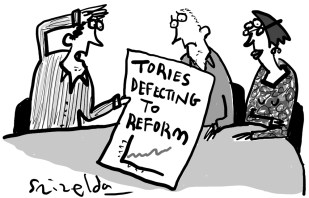
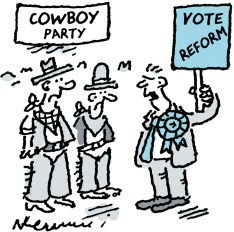
So will Reform have the same galvanising effect on Badenoch’s Conservatives and enable them to win back support? She will need to present not just a more credible economic alternative to Labour but a safer alternative to Reform, demonstrating that she has learned from the mistakes of the last government and contrasting her party with Reform’s lack of moderation.
Disruption is one thing – madcap divisiveness is another. Will Farage succeed in navigating between the two? On such questions, along with the perception of basic competence, will rest many voters’ choice between the two parties on the right – and, in turn, the decision about whether they want one of them to replace Labour.
The true villains of our TV crime dramas? The creators
Idly watching the first episode of a TV crime drama series recently, I found myself in a slightly troubled frame of mind. We were already 35 minutes in and no probable villain had shown their face. We had seen black people, Chinese people, lesbians, the disabled, the impoverished and powerless, Muslims, the young and idealistic… yikes, I thought to myself, it simply can’t be any of them, can it? Surely not. And then, as if the scriptwriter had heard my private worries, for lo, a very rich, marble-mouthed white woman emerged and was shown being beastly to some young and idealistic people and I thought: bingo! We have our villain. There is no need to watch the remaining five episodes. She did it, the rich cow. The only slight surprise is that it was a woman rather than a bloke.
You may have had a similar experience lately, if you watch television. I watch quite a lot these days because for a while I’m doing the TV review for the Sunday Times. It is sometimes like being sandblasted by freeze-dried pellets of rhino excrement. Anyway, you will have found that if you are watching a drama, especially a crime drama, almost all of the following will occur.
You will be introduced to a world which bears no resemblance whatsoever to the real world
First, the principal character, the good person, the star, will not be a white male. It will almost certainly be a woman and quite probably a woman who is also a person of color. And more than likely batting for the other side, if you will excuse my rather dated allusion to homosexuality. Further, you will probably find she has a boss who is also female and probably a person of color, too. And then, when you look around at the rest of the cast, you will find that the head of MI5 is a black woman, the prime minister is an Asian woman and the president of the USA is either a black man or a black woman. If the pope was in this show that role would almost certainly go to a woman and quite possibly one who was at the very least bi-curious and with cerebral palsy. You will also note that when it comes to a fight, the female star is far stronger and quicker than the men who assail her.
For sure, in this show you have begun to watch you will see some straight white men. But they are probably utter dunderheads, forever being shown up by junior employees who are female or of color or more likely both. Either that or they are agents of limitless malevolence. Keep your eye on them, because they will almost certainly turn out to have committed the crime, whatever it is.
The other certainty is that if there is a Muslim character, and there almost certainly will be a Muslim character, they will be the most peaceable human being who ever walked this Earth, bearing nothing but glad tidings and benevolence to those with whom he or she comes into contact, inshallah.
Of course there will be other straight white folk milling around – but if they are poor and put-upon you can bet your life that at most they may play a minor role in crime, having been forced to do so by the exigencies of the capitalist system and the predatory white males who make their lives a living hell. They are, then, morally not guilty.
In short, you will be introduced to a world which in every aspect bears no resemblance whatsoever to the real world, the one in which you live. A world in which women are physically stronger than men and better at everything, in which people of color are always much nicer than white folks, and ‘queer’ people of color exponentially nicer. A world in which all crime is committed by the rich people. Frankly, if the show depicted a central London phone-snatch theft it would almost certainly be carried out by a middle-aged, middle-class white bloke called Oliver or Jacob riding a Brompton. ‘Hey, old chap, I’m afraid I’m going to have to take your bally smartphone!’ And the victim would be a 16-year-old lad of Somalian extraction.
Now, all this might irritate you, much as it irritates me. But it is not the crucial point. The crucial point is that as a consequence you will know exactly who has committed whatever crime it is that constitutes the fulcrum for this show. You will know them by the color of their skin, their sexual preferences, their sex and their affluence. And this, to me, rather negates the point of a crime mystery drama. There is no mystery. It is all a little like that ITV series Liar in which the audience was enjoined to judge who was telling the truth, a woman alleging rape or the man who had denied the crime. And then the stupid TV producers declared that it couldn’t possibly be the woman who was lying, they couldn’t show that.
The actress Sophie Turner recently addressed this whole issue, but seemed very happy with it. All the villains in films these days were ‘rich people’, she said, and this was better because it was ‘less racist’. She did not mean this ironically, sadly.
Our scriptwriters and producers almost exclusively adhere to a post-Marxist view of the world in which the oppressor, and therefore the guilty party, is someone like you. Either that or they are terrified to portray anything which diverges from this template for fear of being canceled. I don’t really care that this makes their programs unrealistic and at times patently absurd – TV is like that; it is a cretin’s medium. But I do care that they make the programs unwatchable because we know in advance exactly what will happen.
The House of Lords’ Valkyries fighting for assisted suicide
It seems counter-intuitive to say that the House of Lords is more representative than the House of Commons. Yet in the extended reading of the assisted suicide bill, it is clear the Upper House is surprisingly reflective of the reality of the nation.
Nominally, the bill is being piloted by Lord Falconer, the formerly cuddly ex-housemate of Tony Blair. Falconer has consistently sought to water down amendments and concessions secured during the Commons debate. During last week’s Lords debate, he cited ‘somebody called Sarah Cox’ – who just happens to be the former president of the Association for Palliative Medicine (APM) and gave evidence to the bill committee last year. This didn’t prevent Lord Falconer from misrepresenting her testimony, prompting a complaint from the APM. To him, the expertise or opinions of his opponents are irrelevant compared to his own moral certainty.
They seem unable to understand what a life lived without control over every aspect of it might be like
Falconer, for all his efforts, is not the only player in the Lords battle. Indeed, he is increasingly proving a hindrance to the bill’s cause as he delivers dystopian lines worthy of Swift’s Modest Proposal. Last week he explained, matter-of-factly, that poverty could be a legitimate reason to seek an assisted suicide. ‘Financial considerations might well apply,’ he said. ‘There is only a limited amount of money to go around.’
Meanwhile a second fight in the Lords is raging between two trios of women. And so, I repeat, it is fascinating how the Lords is more representative of reality.
On one side, Falconer’s, are three Baronesses: Jay, Hayter and Blackstone. Baroness Hayter is a vice-president of the Fabian Society, while Baroness Blackstone, a former university administrator, previously served as its chairman. Baroness Jay is a longtime Labour peer and the daughter of Jim Callaghan.
In short, these are privileged, well-connected women who have breezed through the gilded hallways of public life with minimal experience of not getting their own way. They play a significant role in the pro-assisted suicide campaign in the Lords; endlessly interrupting, chiding opponents to see the bill through. Imagine the opening scene of Macbeth if it were set in a lesser lecture room at the LSE.
These three peeresses are adamant in their belief that they are the great standard bearers not just for a zombie-like 20th-century progressivism, but also for the general public. As so often with those who think they ‘speak for the people’, the truth is a little different. The three titles taken by these baronesses are Paddington, Stoke Newington and Kentish Town, districts which have a sum total of six and a bit miles between them. It is very clear which particular subset of the nation these peers represent.
Given this shared background, they sometimes seem unable to understand what a life lived without absolute control over every aspect of it might be like. At best, they appear to believe that such lives should be subject to their ideas of improvements, to bring them closer to the platonic ideal of Stoke Newington, but if such a course proves impossible, other alternatives are available. It is, by the logic of the North London Valkyries, better to be dead than not in absolute control.
Up against them is a very different trio of women: Baronesses Finlay, O’Loan and Grey-Thompson. They represent different regions; Finlay is from Wales, O’Loan is a Northern Irish peer, while Grey-Thompson lives in Stockton-on-Tees. These opposing peers had serious jobs, away from the blob-adjacent, stakeholder state. Finlay was a professor of palliative medicine, O’Loan inspected police in Northern Ireland and Grey-Thompson was a Paralympic champion, for whom the debate over the bill’s threat to the vulnerable is not merely abstract.
In contrast to the North Circular trio, who take the Labour whip, the trio opposing them are crossbenchers, peers who vote and speak more freely. They bring up viewpoints, factual issues and procedural questions that are of visible irritation to the peers determined to hector and lecture the bill into law. Their questions and contributions have sometimes prompted their opponents to attempt to hasten proceedings and block them from speaking. Baroness Hayter has tried, in Orwellian fashion, to rewrite the definition of suicide altogether, arguing that it should not apply to those who might end their lives by assisted suicide, simply because they are nearing the end of their lives. She once memorably referred to the debate as ‘not a life or death issue’.
Unlike Jay, Hayter and Blackstone, who sometimes express an audible frustration at their Lordships’ refusal simply to roll over to their demands, the opposing three speak in a calm and considered way, always with the safety of the vulnerable at the centre of their questions. They frequently pose difficult questions the bill’s supporters can’t – or won’t – answer, about practicality, funding and safety, not just the principle of choice. This tactic, it seems, only makes the bill’s supporters angrier. Baroness Jay recently snapped and dismissed her opponents’ scrutiny and tabled amendments as ‘time-wasting’.
It’s not just two visions of the nature of life and death which are put forward by these opposing trios of women, but two visions of the Upper House and of the nation. The experienced and compassionate voices of the United Kingdom vs a cabal of apparatchiks from a few neighbouring postcodes in an out-of-touch capital. Truly, it couldn’t be more representative if it tried.
‘Pray your boilers don’t fail’: the Church of England is in the grip of eco-zealots
It came to pass in 2020 that a decree went out from the General Synod that all the Church of England must be carbon net-zero by 2030. And this ruling was first made when Justin Welby was Archbishop of Canterbury. And all went to have a good hard look at their church heating systems, every one into his own vestry cupboard…
How easy it is to issue a decree from on high; and how hard it is for the people on the ground to have to deal with its consequences.
The miscreants now have to rip out the new gas boilers and replace them with an eco alternative
One of many consequences of that arbitrary round-number target – and it’s a microcosm of the centralised C of E’s attitude towards its parish churches – was that three months ago the vicar and churchwardens of Christ Church, Chineham, in the diocese of Winchester, received a consistory court ruling from the chancellor of the diocese, Cain Ormondroyd, which came across as an absolute bollocking. It was as if they were a group of mis-behaving prefects summoned to the headmaster’s study. The ruling was along the lines of: ‘You’ve let God down, you’ve let the diocese down – and you’ve let yourselves down.’ The Chineham ‘Petitioners’ (as they were referred to in the ruling) are now beginning their long-drawn-out punishment.
Their offence was that, after enduring a freezing winter of coughing, sneezing, dwindling congregations and demoralised volunteers while they waited for the hopelessly slow Diocesan Advisory Committee to respond to their request for advice on which kind of heating system they should install to replace their failed gas boiler, they’d dared to take matters into their own hands. Having taken advice from energy providers about the possibility of installing either heat-pumps or a bio-LPG fuel system, they’d concluded that both options were impractical and far too expensive. The most viable solution for the time being was to replace the broken gas boiler with new, more efficient gas boilers.
The work had begun by the time the Diocesan Advisory Committee got around to objecting to replacement gas boilers, a year after the request. The committee also never once visited the site to see for themselves the impracticability of their preferred bio-LPG option, which would have required the felling of trees or the taking up of a large chunk of the church’s outdoor space.
‘The case,’ wrote the chancellor in his lofty ruling, ‘presents a cautionary tale in respect of the difficulties that can arise when proper consideration is not given at an early stage to the Church Buildings Council’s net-zero guidance. The Petitioners compounded the difficulties by deliberately proceeding with works which they knew to be unauthorised. The combined result is most unfortunate.’
The result is, in fact, that Christ Church, Chineham, is a heated, well-attended church again, to the relief of all who worship there. But the ‘unfortunate’ situation to which the chancellor referred is that the miscreants will be forced to rip out those new gas boilers and replace them with an eco alternative.
Like a headmaster who decides to show a spot of leniency at the last minute and not expel the prefects on the spot, the chancellor decreed that, as another winter was on its way, ‘I am minded to grant a faculty for the gas boilers to remain for three years’ with the condition ‘that any carbon emissions from the operation of the gas boilers be offset’.
I contacted the vicar, the Revd Jonathan Clark, to ask him how the church was dealing with this ruling, while the clock ticks down to the moment in 32 months’ time when the new boilers must be ripped out. He responded that he didn’t have time to speak to me, as ‘this affair has already taken far too much attention away from our core mission’.
What a time-consuming distraction it must have been! He’s trying to run a church, for goodness’ sake. His first duty is to his parishioners’ spiritual needs. The people who help him are unpaid volunteers, who give hours of their time to the C of E, an increasingly thankless task. They’re the ones who get clobbered for their trouble. Clark referred me to a letter he wrote to the Church Times in November, in which he advised churches, first, ‘to pray earnestly that your existing boilers don’t fail’, and then said to the General Synod: ‘We support the drive to net-zero carbon, but was this the kind of result intended in your formal drive to it?’
Parishes across the country are experiencing much the same thing. To comply with the C of E’s ‘Routemap’ for the ‘journey to net zero’ churches must apply for official permission from the diocese before installing a ‘like-for-like’ gas boiler. They must provide all kinds of documentation to explain why they are asking to go against approved practice. Dozens of churches are left without heating for months, sometimes years, during the agonisingly slow decision-making process, in which time damp damages the interiors and makes the parishioners ill.

Most of us are familiar with all sides of the net-zero argument. We’ve read journalists telling us to buck up, stop complaining and install heat pumps. We’ve also kept abreast of climate-emergency sceptics, who question apocalyptic global-warming models and remind us that renewable energy is intermittent. They point out rare-earth metals for EV batteries are often mined by child labour in the Democratic Republic of Congo and Ed Miliband’s obsessive push for net-zero targets is going to immiserate Britain.
There are many facets to ‘the science’ and to the economics. But the Church is in the grip of eco-zealots, who pour shame on parishes if they dare to resist a heat pump. Each diocese has its ‘net-zero carbon engagement officer’, or sometimes ‘creation care engagement officer’, paid higher salaries than parish priests. They’re employed to be zealous.
The Church Commissioners have committed £190 million for grants to support the net-zero project. That money would have been enough to provide an extra ten parish priests in each of the C of E’s 42 dioceses for the next decade.
The C of E’s loss of a sense of proportion on this subject is encapsulated by the fact that, in the timetable for next month’s General Synod, the issue of ‘Lowest income communities funding’ has been relegated to ‘Contingency business’ (i.e. ‘we’ll discuss it if we have time at the end’), while a full hour on the afternoon of 12 February has been allotted to a motion to ‘promote the use of local, seasonal flowers and foliage and discourage the use of floral foam’.
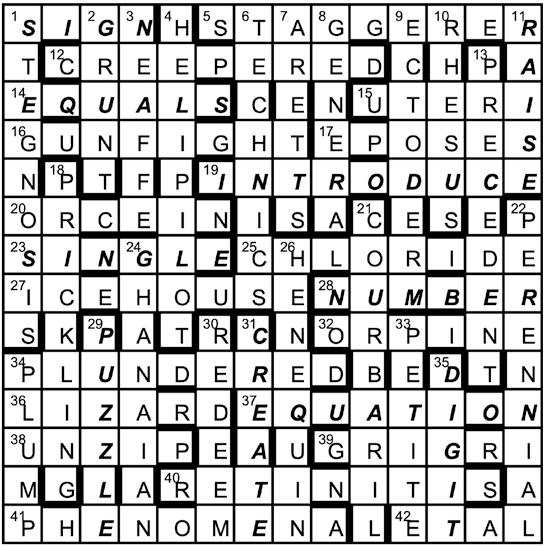
2733: Balancing Act – solution
To CREATE an EQUATION from the PUZZLE NUMBER, INTRODUCE an EQUALS SIGN and RAISE a SINGLE DIGIT. By following this instruction, 2733 becomes 27=33.
First prize Jo Anson, Birmingham
Runners-up Ian Skillen, Cambuslang, Glasgow; Hugh Schofield, Bois-le-roi, France
2736: Jammy
The unclued lights consist of three associations with each of the three syllables of 40 Across.
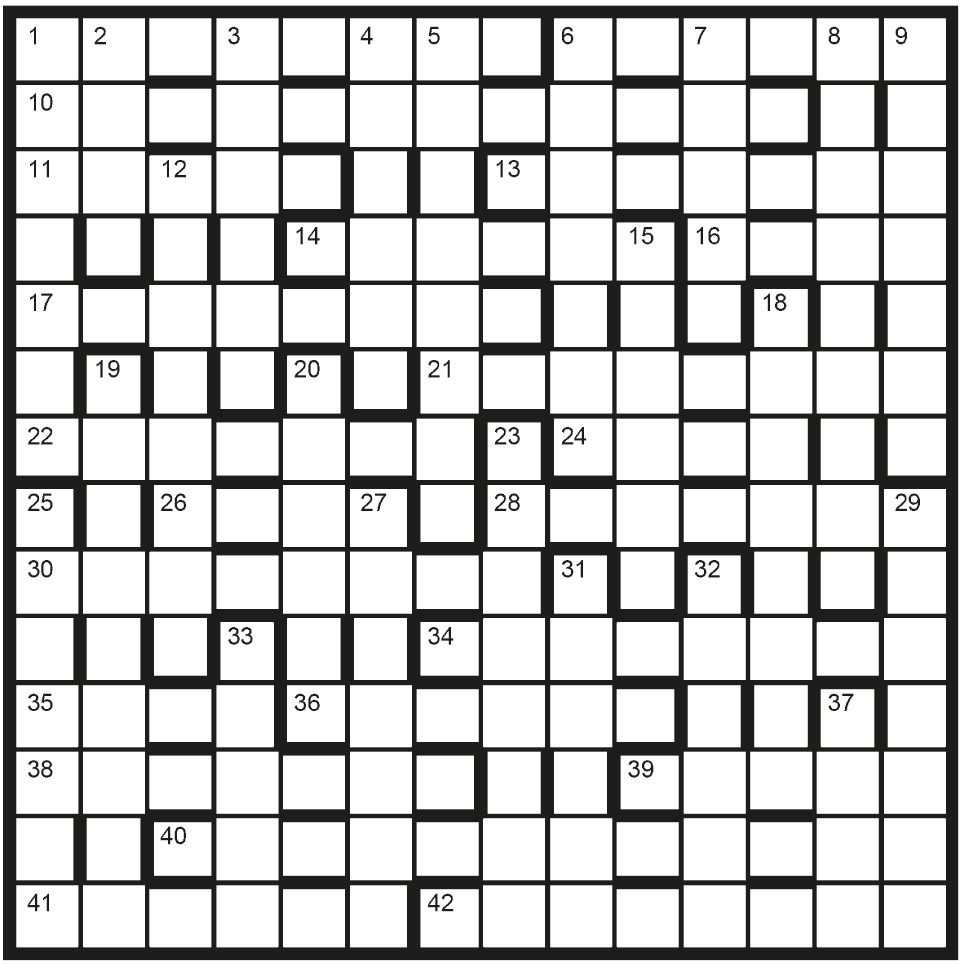
Across
10 Numb, injured with a manacle; his help on the way? (12)
11 Sample a nation, taking the south to heart (5)
13 I rebuke nurse, failing to keep books (7)
16 Prowl around, Rector, during endless gospel (4)
17 Swineherd always gets a day to celebrate (8)
21 Force to translate Cicero? No (8)
22 Bend back always, turning to grab dog (7)
26 One parrot may pick up sticks here? (4)
28 On purpose, learned to be upright (7)
30 One month Fieldfare nearly turned away pairs of quartets (8)
34 With amplifier, silly choir like the sound of blowing into bottle (8)
35 March girl back to college for moulding (4)
36 In Chile, a shifting of the sun (6)
38 Ancient sort of light excellent in gorge (7)
39 Once endure a clumsy churl (5)
41 Poet initially doubled sleeping-sickness risk from this? (6)
42 Cause of this sickness is rising (3,5)
Down
1 PM dismissing first person who devises a plot (7)
2 A thigh raised for nurse (4)
3 November is the last of it, in two senses (6)
4 Madrigal, antique, conveying elegant style (6)
5 Deprived of gun, criminal sprinted (8)
6 I renounce greener moves (7)
8 Maintain one’s submitted to Rome mostly mediaeval theology (9)
9 Having fun hunting songbirds? (7)
12 Wisdom where lots of old people’s homes are? (8)
18 Payment to cover one girl working delicate tracery (8)
19 After one Scots school year start to loathe American dramatist (9)
23 Soil from Epsom regularly put round tree? On the contrary (8)
27 How we are after war: dead! (2,5)
29 Old cars? Charlie’s taken by E-types (7)
31 Pop a question, a bit obscure (6)
33 Spring very advanced last month (5)
37 Players not allowed to speak (4)
Download a printable version here.
A first prize of a £30 John Lewis voucher and two runners-up prizes of £20 vouchers for the first correct solutions opened on 9 February. Please scan or photograph entries and email them (including the crossword number in the subject field) to crosswords@spectator.co.uk, or post to: Crossword 2736, The Spectator, 22 Old Queen Street, London SW1H 9HP. Please allow six weeks for prize delivery.
Spectator Competition: Dear John
For Competition 3443 you were invited to submit a dear John letter in the style of a well-known writer.
The brief stipulated 16 lines but you submitted both verse and prose and I allowed both. I very much enjoyed Sue Pickard’s Bram Stoker: ‘My dear Count, I can barely summon the energy to write this letter as my haemoglobin levels are so low but write it I must…’. And Alan Millard’s Oscar Wilde: ‘The truth is that I have met someone who loves me almost as much as I love myself…’. I was also sorry not to have room for Andrew Simpson’s fruity D.H. Lawrence, Bill Greenwell’s T.S. Eliot, Richard Warren’s Andrew Marvell and George Simmers’s Leopold von Sacher-Masoch.
The £25 John Lewis vouchers go to the authors of those entries printed below.
You walk in beauty like the night,
but it’s a little dark in here,
and I prefer a shade more bright
to cheer me up this time of year.
Though I’ve adored your raven tresses
and your softly mellow face,
I’d like to have some fun with Bess’s
golden hair. And Lady Grace.
I’m also partial to more tawny
locks, especially when they
are coupled with firm chins and brawny
arms to keep the cold at bay.
I might give you another ring
when Helios returns in spring.
Mary McLean/Byron
Dear John, You might recall my heart
Was like a singing bird. Alas,
It’s muted now; its empty nest
Is only scraps of dead-brown grass.
No rainbows grace my clouded skies,
The sea is colourless, at best.
My heart is far from what it was,
And I won’t bore you with the rest.
The watered shoot sits in a swamp.
Our gold and purple crazy times
Are bleached to wint’ry tones, and they
Are redolent of northern climes.
But let’s drop metaphors and be
As blunt as ex-es. Here’s to say,
With no embroidery, goodbye.
I’ll find another bird. And tree.
D.A. Prince/Christina Rossetti
Let me now to the marriage of two minds
Admit impediments; love is not love
Whose progress steadfastly doth downhill grind,
Conspiring with the remover to remove.
A values misalignment kills the ‘we’,
Our new love’s vows are quietly undone,
And mismatched energies, for all to see,
Doth dampen hopes that shone like summer’s sun.
’Tis neither thee nor I that is at fault,
But like a seesaw weighted at one end,
The balance tip’d, the outcome hard to halt –
A fault no effort ever yet could mend.
Sadly, I send this scroll by WhatsApp text
And wish you well whoe’er may be your next.
Ralph Goldswain/Shakespeare
Dear Joan,
I was thinkin of how you larffed about me sayin I don’t like girls, wot with our Natral History studies, in the shrubbbry and then Ginger says he is the Leder of the Outlaws cos all I think about is love and how they all most lost the fite with the Hubert Lane-ites cos you and I were doin Natral History, and so this is FareWell as We Past This Way But Wunce. And Jumble has manje.
Also, since Mr Bott died from Kallisthenics and Violet Elizabeth had Mrs Bott taken away cos of her vapers she has neded a matyure man of bisness to hassist her with money and stuff, speshully now she has bought Ol Moss’s sweethshop. So you mite just see me walkin around with her but just cos of bisness. We can still meet in the shrubbbry but more casional.
Yours sinseerely
William Brown
Nick Syrett/Richmal Crompton
Dearest,
You will excuse my recording at first that it is with more than a chequered melange of feelings that I raise my pen to address you, plangently aware that the slipperiness of language lies in wait to ‘hijack’ the best of intentions, but there are moments when candour must be allowed free rein, whatever the upshot. In short, I have relocated to Rye, a pleasant Sussex village offering relief from the ‘racy’ and clamorous life of the capital where I shall be able to resume the ‘vie professionelle’ of an artist without undue distraction.
Permit me to realise that I am acquainted with you well enough to judge that you would not relish a long, rough journey over more than bumpy – indeed, bone-jarring – roads, which would be a sacrifice that I cannot permit. Few things are permanent in this life but I must sadly make our parting one.
Basil Ransome-Davies/Henry James
Dear John
It’s not me, it’s you. Can’t do this any more. Whatever this is. It’s complicated. Not the right word. Maybe it is. Feel like I don’t really know how I feel. I love you. Don’t love you. Both. Neither. There’s no one else. Not in that way. Well. So. It’s just… Remember that time in Trieste? Me saying how I thought monogamy was a prefabricated cultural dynamic designed to perpetuate patriarchal hegemony. You saying, ‘Wait, Arsenal have scored!’ Me saying, ‘Sod frigging Arsenal, I’m trying to…’ Me flinging that focaccia at you. You just eating it then we had sex? Eight times? That’s exactly what I mean! Don’t you even get it? My frigging focaccia! Depressed even thinking about it. Feel like you’ve no comprehension what it’s like. To feel like you’re feeling something so bloody intensely and to have absolutely no idea what it is you’re feeling. So.
David Silverman/Sally Rooney
No. 3436: Love is…
You are invited to submit a poem whose first line is ‘O my love is like [fill in the gap]’ and continue for up to a further 16 lines. Email entries to competition@spectator.co.uk by midday on 4 February.
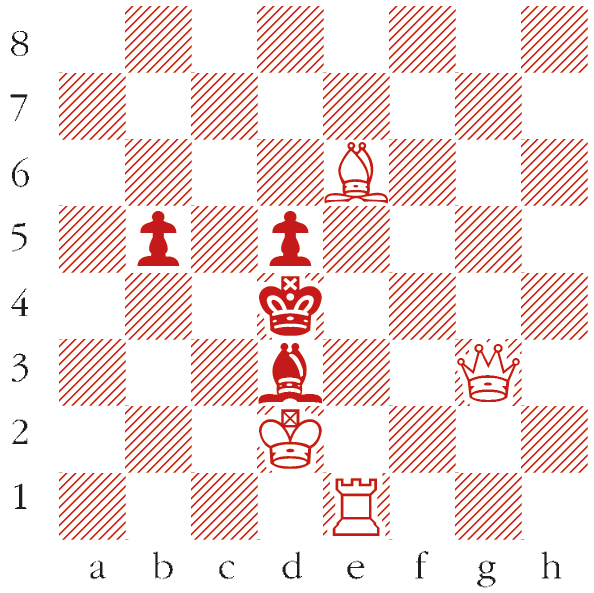
No. 883
White to play and mate in two moves. Composed by Sam Loyd, The Musical World, 1858. Email answers to chess@spectator.co.uk by Monday 26 January. There is a prize of a £20 John Lewis voucher for the first correct answer out of a hat. Please include a postal address and allow six weeks for prize delivery.
Last week’s solution 1… e3!! 2 Bxc6 e2 wins, e.g. 3 Bxd7 e1=Q+ 4 Kc2 Re2+ 5 Kd3 Re3+ etc
Last week’s winner Revd Robin Burgess, London W5
Am I a libertarian after all?
I have never been the greatest fan of libertarianism as a political ideology. Libertarians seem to me to be the bisexuals of politics – they want a bit of everything.
But even I felt a slight twinge of libertarian sentiment this week when I read some remarks by our Home Secretary, Shabana Mahmood. The Labour minister had told MPs that artificial intelligence is an ‘incredibly powerful tool that can and should be used by our police forces’, though she added that it must be regulated in a way that is ‘always accurate’. I have never before read the words ‘police’ and ‘always accurate’ in the same sentence, so the novelty grabbed my attention.
The problem is not the CCTV but – to use a technical term – that the police cannot be arsed
But it was what Mahmood was quoted as saying last month in an interview with Sir Tony Blair that really stood out. She had once again sung the virtues of AI and technology, explaining that they can be ‘transformative to the whole of the law and order space’.
She then said this: ‘When I was in Justice, my ultimate vision for that part of the criminal justice system was to achieve, by means of AI and technology, what Jeremy Bentham tried to do with his Panopticon. That is that the eyes of the state can be on you at all times.’
The moment I read that I suffered my unexpected libertarian shudder. I do not want anyone in government – whether in Justice or the Home Office – talking about the eyes of the state being on me at all times. Then to my great relief I realised that what I had suffered was not a libertarian instinct at all. It was instead an instinct born out of basic understanding of the utter incompetence and indolence of the state.
We already live in one of the most heavily surveilled societies in the world. In London alone there are reckoned to be more than 100,000 public CCTV cameras. If you add the number of privately owned cameras you get around a million cameras focused on London and Londoners.
What does that get us? Allow me to relate my own experience the one time I had my wallet stolen in the capital. It was taken from my pocket in a public place which was heavily surveilled. In the immediate aftermath, the thief managed to use my card in a number of shops and a bank – and if there is one place that should be monitored you would have thought it would be the one where money is kept.
I got in touch with the police and told them about the theft, including the date and time the culprit had gone to collect my hard-earned money. When I did, eventually, hear back from them, the police informed me that they were not pursuing the crime. After all, why would they? It wasn’t as though the criminal would be likely to offend again, or that there are any good reasons for pickpockets to be pursued and arrested.
I raised this with a couple of friends this week after reading Mahmood’s remarks. One immediately piped up that her car had been stolen last year from outside her home. Her private security cameras had picked up a very clear image of the thief, and she had sent the picture to her local force. They told her that they would not be pursuing the case. Another friend had the same thing, but with a home burglary. Once again, she had got a very good image of the burglar, but officers were not interested.
Speak to almost anyone in the UK who has been a victim of crime and you will be rewarded with similar demoralising stories. London has one of the highest levels of mobile phone theft of any major city in the developed world. The gangs who swipe these phones from the hands of unsuspecting tourists or Londoners often commit their crimes in broad daylight.
I know several people whose phones have been pinched from them in Parliament Square. You might expect Westminster to be the most surveilled part of our heavily surveilled capital. But once more the police seem to have no interest in scouring the assorted CCTV footage and getting, say, the number plate on the motorbikes that the criminals sit on as they do their swipe. Again, the police say ‘no’.
One common excuse is that the cameras in the area were not working. ‘What – none of them?’ you might ask. By this point you would be forgiven for concluding that the problem is not in fact a complete and constant blackout on the capital’s CCTV cameras, but – to use a technical term – that the police cannot be arsed. It must be boring work to go through CCTV footage in order to track down criminals. Such a task could interrupt a morning’s crisp-eating while scrolling through X at the police station. And if you think that a member of the public providing the police with an image of a thief in the act should be evidence enough, then once more you just have to remember that they cannot be arsed.
The eyes of the state are already on us at all times, certainly when you are out in any major city. That is why, when the police actually want to catch a criminal, they can do so and we are treated to images of the culprit in our newspapers and on our TV screens. But these are rare occasions.
One thing we can all agree on is that if you do want to get the police to your house, all you need to say is that the person on your CCTV camera is suspected of saying rude things on social media about some minority groups. Then officers will come over and you will get grief counsellors and all the rest of it.
In the meantime Mahmood will, perforce, have to dream on. Even if the eyes of the state were on us at all times, we must remember that the state is having a siesta.
Cocklebarrow gives Cheltenham a run for its money
The second-best day of the year is finally here. Obviously, nothing beats the opening day of the Cheltenham Festival – and it will be even better this year when Mambo-numberfive wins the Arkle – but Cocklebarrow Races in the Cotswolds are a short-head runner up.
You can rely on the weather to be foul: if there isn’t mud up to your knees, the ground will be frozen solid. But the dogs love it and as your car sinks up to its axle, you have plenty of time to be proud to be British – while you wait for the tractor to pull you out.
An extraordinary amount of planning by our volunteer committee goes into the day. Our honourable secretary (from here on, referred to as ‘H Sec’) is bullied mercilessly by regional point-to-point managers who come from the Donald Trump school of diplomacy.
You have plenty of time to be proud to be British – while you wait for the tractor to pull you out
The head of events [HoE] has a very successful business but ends up in therapy after trying to keep the peace among our sponsors. We have a human resources [HR] bod to make sure we don’t get too thirsty. And our site manager [SM] has a Glastonbury-scale mess to clear up after we’ve all buggered off.
Preparations in my household are well under way – my wife and daughter have been rolling their eyes for weeks. So here are the minutes, all entirely accurate of course, of our final preparatory meeting. Just to show you what a slick operation this really is.
Annual Cocklebarrow Races Executive Committee Meeting [confidential]
H SEC: Apologies for absence?
CHARLIE BROOKS: Well, quite a lot of absences but no apologies.
H SEC: OK… Item one: the date of the point-to-point is 25 January.
HOE: Are you sure you’ve got the right date this year? Remember what happened last year? [H Sec remained silent.]
HR: Anyone for a sharpener?
H SEC: Item two: any celebrities coming?
CB: Clarkson doesn’t like horses, his girlfriend Lisa’s too tall, Kaleb’s too famous and Gerald doesn’t travel far from Chadlington.
HOE: Anyone else?
CB: Jilly is sadly reunited with all her favourite dogs in the sky, Claudia doesn’t like grass, and I don’t think Claire likes mud much. And James Blunt probably won’t come because they kept asking him for ID in the beer tent last year. Nigel’s in Clacton and Nicky [Haslam] doesn’t like exteriors. And the other Nicky [Henderson] has gone skiing. That I would like to watch. Kemi’s up for it – she loves a point-to-point. And Christian and Geri are hoping to have three runners.
SM: Could we have more bins in the horsebox area? Last year someone left the remains of a Chinese takeaway, an alarm clock and an old radio next to the dope testing van.
CB: And Lord Ashton of Hyde is coming.
H SEC: Is he a celebrity?
CB: Has Rose Kennedy got a black dress? He’s the flipping most important lord in the House of Lords, for heaven’s sake – and he’s the King’s ‘Master of the Horse’ – which is why our big race is named after him.
CB: I’ll just pop and get another round.
H SEC: Speaking of which, item three: excessive drinking.
HOE: Yes, well we’ve tried to crack down on that. The kids are fine, it’s the parents who are the problem. [Officially noted by H Sec].
H SEC: Item five: the loos. I think they were a great success last year.
HR: Absolutely. Terrific.
HOE: Well, we did have some complaints. The young farmers, you know… and they don’t lock the doors.
CB: Perhaps we could put signs up saying ‘Please knock before entering’?
HOE: Well, that might work for the arable farmers, but the livestock guys might take that as an invitation, not a deterrent.
HR: Well, on that note I think everyone could do with a top-up.
H SEC: Item six: the skip.
HOE: Yes, bit of a problem with that last year. People were climbing into it and then jumping off it on to the bouncy castle.
H SEC: Well in that case, someone needs to keep an eye on the kids.
HOE: It wasn’t the kids.
H SEC: Item six: sponsors.
CB: Good news on that front. Howdens are our new headline sponsor. And as they do at Ascot, loads of them are going to come. And they’re building a pub inside the marquee.
HR: Damn good kitchens.
CB: They do insurance, mate.
HR: Bloody clever. Kitchens and insurance. How do they find the time? Right. I think we can squeeze one more in.
H SEC: Item seven: barrow full of booze. This was very popular last year, so I think we need a bigger wheelbarrow.
HR: I’ll drink to that.
H SEC: Item eight: the male jockeys complained last year that there wasn’t enough food and the lady jockeys kept walking into their changing area with no clothes on.
CB: Well, that’s ridiculous. They’re meant to be on a diet. Why do we give them anything to eat?
H SEC: What about the lady jockeys?
CB: We could ask someone to sponsor a ‘best turned out’ prize?
HR: Anyone fancy one for the ditch?
H SEC: Item nine: the weather. The forecast is terrible. We’re going to get an inch of rain in the morning a gale force wind over lunch and then it’s going to freeze like hell.
HOE: I think we should get some camels as well as the bicycles in case the horses are frozen off.
CB: And confirm the picnics go ahead even if the horses don’t.
HR: Can someone remind me why we have this point-to-point at the end of January?
H SEC: Because that’s the best date for the Tudor Hall girls. Apparently Eton has asked parents not to bring their kids back until Monday morning if they’re coming to the point-to-point.
HR: Ah yes. Can’t move it then. Bloody nuisance that it falls in dry January.
CB: D’you think that’s a big deterrent to our crowd?
HR: Good god no. Bloody common, dry January. Must have been on Nicky Haslam’s tea towel this Christmas.
H SEC: Item ten: security. Any ideas?
HOE: The poacher, who goes round shooting all the foxes with his rifle now that we’re not allowed to hunt them, has offered to sleep in the beer tent if we give him a bottle of whisky and £100. Only problem is I’m not sure he’s got a licence for it.
SM: Can we please make sure he has a bin.
H SEC: Item 11: alternative entertainment?
HOE: How about catching a greased pig?
CB: I’m not sure we can do that any more.
HOE: OK. Naked tug of war? Or a wellies and undies race?
CB: Yup, I think that’s fine. Inside or outside the marquee?
SM: If we’re having naked tug of war, we will definitely need more bins.
H SEC: Any other business?
HOE: Becky and Twiggy are having a bash the night before and were wondering if we could lay on a horse box so they can all push on through?
HR: Genius. Then we can get properly stuck in.
H SEC: Can I remind everyone that we’re trying to run a race meeting.
[Everyone joined HR in the bar.]
But trust me, this Sunday at Cocklebarrow will be a totally fantastic, doggy, family day out.
The poisonous truth about British universities
This week it became clear that almost none of the adults whose job it is to teach students the truth are much inclined to do it. Even the doziest vice-chancellor must by now have twigged that gender ideology is dangerous bunk and that it lures in the most vulnerable – yet still they can’t bring themselves to speak out. This goes not just for academics, but for politicians in the education business too.
For anyone minded to understand how poisonous the atmosphere in universities is, the story of poor Professor David Gordon is horribly instructive. His ordeal began more than a year ago when he invited another professor, Alice Sullivan, to give a talk to his students at the University of Bristol. Sullivan is a professor of sociology and a quantitative data scientist at University College London, and the author of an excellent review, commissioned by the last government, into the damage done when official bodies misreport data and conflate gender with biological sex. Sullivan’s just the sort of woman you’d want your daft teens to learn from, to dent their certainties, to make them think.
Research is being skewed, students are being misled, staff are self-censoring and scared
This is not how Bristol University’s LGBTQI+ staff network saw it, though. It reacted to the news of Sullivan’s talk in very much the same way Shelley Duvall reacted to the sight of Jack Nicholson with an axe in The Shining. Allowing Sullivan to speak to students about gender would, it said, cause ‘real and enduring harm’.
Professor Gordon composed a polite reply to the BU LGBTQI+ network explaining why he believed that students would benefit from the talk, but his manager (enter the villain) intervened. ‘Leave further communications on this with me,’ she said. Professor Gordon sent his reply anyway – ‘because academic freedom and freedom of speech are written into the university’s charter, because I’d organised the event and because my LGBTQ+ colleagues expected an answer,’ he told the Telegraph. And this was his apparent crime, for which he’s been suspended since 2024, unable to teach or to talk to students: he disagreed with management.
If only there was some official body academics could turn to when the brainwashed Stepford students start to circle or when management goes rogue. But hot on the heels of the sorry tale of Professor Gordon came news that the long-promised complaints system for academics anxious about being hounded or cancelled has itself been cancelled – or at least put on hold. The government wants more time to mull over the wisdom of the scheme, it says.
Some 370 academics have this week written to the Education Secretary Bridget Phillipson explaining how urgently the scheme is needed. For all that people like to think that woke is over, or that the trans madness is dying down in the wake of the Scottish nurse Sandie Peggie’s victory, it’s still the case that a quarter of British academics say they fear they could be physically attacked for addressing subjects such as trans ideology. Research is being skewed, students are being misled, staff are self-censoring and scared.
And look at Professor Gordon: they’re right to be scared. It’s not like university management has anyone’s back. Quite the opposite. In the countryside where I grew up, gamekeepers would sometimes hang the corpses of foxes and crows along the top of a barbed-wire fence as a warning to other predators: don’t mess with the boss. A ‘game-keeper’s gibbet’, it was called. ‘Management’s gibbet’, we could call the line of academics strung up like Professor Gordon, twisting in the wind. Beware oh students, this is what awaits you in just a short while in the world of work: Karen-like line managers; HR women with that haunted turncoat look. Think: who here is really on your side?
‘The complaint system has been kicked into the long grass,’ a source told the Daily Telegraph. Well, it’s getting pretty crowded in Phillipson’s long grass. Also slowly decaying in the weeds is the guidance so many desperate teachers, doctors and academics have been waiting for, which will finally make it clear to businesses and all public bodies that as a result of last year’s excellent Supreme Court ruling, sex under the Equality Act means biological sex. Once the guidance is published, schools, hospitals and universities will be able to go about their normal business teaching pupils actual reality about biological sex and keeping men in dresses from barging into the single-sex places designed to keep women safe. Management will no longer feel free to use such tactics to out their enemies. Once the guidance is published…
Not at all in the long grass, but on the nicely paved path to quick implementation, is the government’s plan to employ a senior civil servant to ‘lead on trans equality’, with a special remit to look at the implications of the Supreme Court judgment, and to ‘ensure that we are able to take steps to improve outcomes for trans people in the UK’. The job advertisement posted by the Cabinet Office said the successful applicant would earn between £57,204 and £68,558 and lead on some of the government’s ‘top priorities’, which clearly don’t include any return to reality on the subject of sex, or the saving of young minds from gender madness.
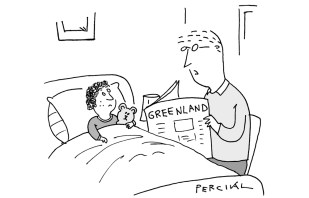
The only glow I can see on the dark horizon is that there are a few excellent students who have managed to see though the ideological fog for themselves. Thea Sewell, a 20-year-old at Christ’s College, Cambridge, was ostracised by her peers just for owning and reading a gender critical book, Helen Joyce’s Trans. She has now set up the Cambridge Women’s Society so that like-minded young women can think and speak freely. My great hope – and it’s a long shot – is that a student or two at Bristol University might see the light too, and set up something similar. Perhaps they could even champion the cause of poor Professor Gordon, who has lost so much trying to help them.
Young contender
The January 2026 Fide junior rankings tell a remarkable story: at the top sits Gukesh Dommaraju from India, who in 2024 became the youngest world champion in history. Still just 19 years old, he will defend the title later this year. The real shock is that the second-place spot now belongs to a 14-year-old: Yagiz Kaan Erdogmus from Turkey, recently described by Magnus Carlsen himself as the best 14-year-old the world has ever seen. Having been coached by the Azeri grandmaster Shakhriyar Mamedyarov, who peaked at world no. 2, Erdogmus is already adept at fighting against world-class opposition. When he faced the elite veteran Peter Svidler in a ‘Clash of Generations’ match held in Marseille in July 2025, Erdogmus was a clear underdog on paper. Nevertheless, he won the classical (slow) match 4-2, though it must be said that Svidler took revenge by winning the blitz match which followed by 10-2. The brisk demolition shown below, from the classical match, is astonishing given Svidler’s renown as an expert in the Grünfeld defence (defined by the move 3…d5).
An even fiercer challenge awaited Erdogmus in December, when he faced France’s top player Maxime Vachier-Lagrave in Monte Carlo. Again the teenager rose to the occasion, winning 3.5-2.5. As I write, both Gukesh and Erdogmus are competing at the traditional Tata Steel tournament in Wijk aan Zee in the Netherlands, the first elite classical event of the year.
Yagiz Kaan Erdogmus–Peter Svidler
Clash of Generations, Marseilles, July 2025
1 d4 Nf6 2 c4 g6 3 Nc3 d5 4 Bg5 Ne4 5 cxd5 A rare but intriguing idea. 5 Bh4 is more common. Nxg5 6 h4 Ne4 7 Nxe4 Qxd5 8 Nc3 Qd8 9 h5 Bg7 10 Nf3 c5 11 d5 e6 12 Qa4+ Bd7 13 Qf4 O-O 14 O-O-O An excellent decision. Allowing the Bg7 to bear down on White’s king is worrisome, but Erdogmus correctly judges that his rapid mobilisation more than compensates. exd5 15 Nxd5 Nc6 16 e3 h6 17 hxg6 fxg6 18 Qg3 Bf5 18…Be8 was more stubborn, to meet 19 Bc4 with Bf7. 19 Bc4 Kh8 20 Ng5! Qe8
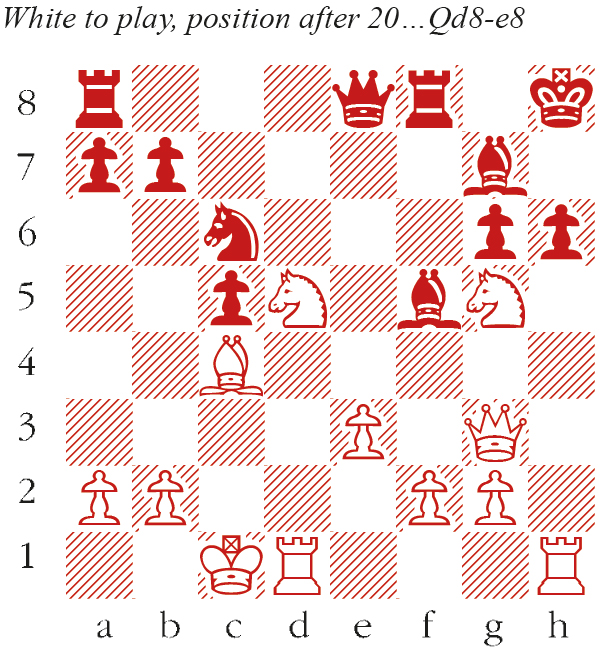
21 Rxh6+!! Bxh6 22 Rh1 Black resigns, since 22…Kg7 23 Rxh6 is devastating, e.g. 23…Kxh6 24 Qh4+ Kg7 25 Qh7 mate, or 23…Rh8 24 Rxh8 Qxh8 25 Qc7+ Kh6 26 Nf7+ wins.
No less impressive is his play under pressure. In the position below, Vachier-Lagrave has dangerous threats, and 15…Ne5 loses to 16 Qh5+. Erdogmus calmly defused the situation.
Vachier-Lagrave–Erdogmus
Clash of Generations 2, Monaco, Dec 2025
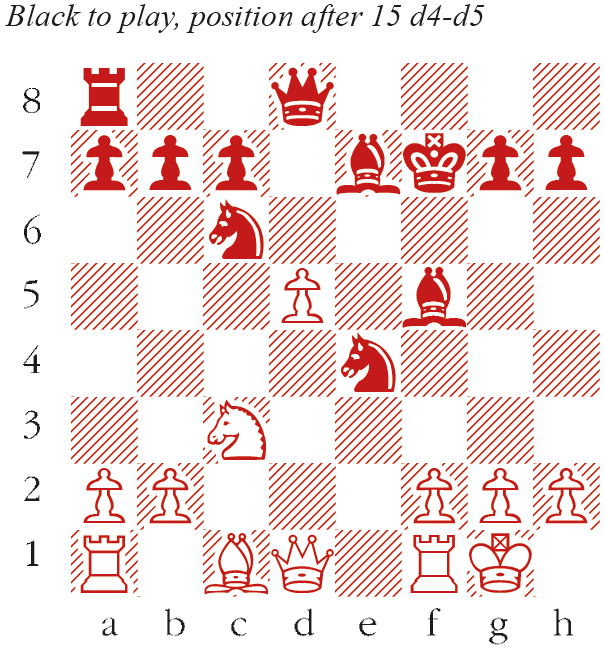
15…Nxc3 16 bxc3 Bf6! 17 dxc6 Qxd1 18 Rxd1 Bxc3 19 cxb7 Rb8 20 Be3 Bxa1 21 Rxa1 Draw agreed
My house is devouring me (and my relationship)
The panic of another season bore down on me as the builder boyfriend painted the breakfast room with the green paint I’d chosen. But he couldn’t paint fast enough for my liking and we started to have the most terrible rows. Despite us being fully booked last summer, I had come to the view that the whole thing wasn’t viable and we were bound to go under. I started looking up estate agents who market big old piles in Ireland to stupid people in America.
This house is like a monster devouring my money faster than I can feed it. I fed the beast by filling the oil tank to the brim at Christmas and it was a quarter gone by the new year.
The plumber turned up one night to tell us he really was going to come and finish the third bathroom he had walked away from after taking so much cash from me that I lost track of how much he had swindled by not finishing. In any case, he wants more money to finish it.
He said he would be with us the second week in January. And then he didn’t come. Of course he didn’t. So we have the same two B&B rooms, not three for the summer ahead. We are not expanding as planned, and with all the maintenance piled up from last season needing to be done before the first guests arrive in two weeks, it feels like we are going backwards. At this rate, the place will be less finished than last summer.
Trying to get anyone to do anything in Ireland is impossible, I see that now. I cannot skirt around it to be diplomatic. It’s just how it is and there’s no point pretending to myself or anyone else that it is not a nightmare. The BB has to do everything himself. No one ever turns up, no matter how much they say they are going to with a winsome smile and a flourish of blarney. They don’t come.
This house is like a monster devouring my money faster than I can feed it
Rightmove and its Irish equivalent, the aptly entitled ‘Daft.ie’, is chock full of big beautiful houses given up on because their owners are having to do everything single-handed at a snail’s pace, so the place deteriorates faster than they can hold it together.
I chose the Farrow & Ball shade of green I wanted in the hardware store, and after stripping the old wallpaper and spending days sanding the walls of the big formal dining room we use as a guest breakfast room, the BB painted a wall in the new green. I walked in and declared I really hated it.
It was the same when he finished painting the hallway pale yellow, over the deep peacock blue we had it last year. The second he finished, I stood there and said it was all wrong. Too much light. Walls too bare and blank looking. The blue was better.
He said he didn’t care that I didn’t like the yellow, and he said he didn’t care that I didn’t like the green. He had to go and put the towel rail back on the wall of the en suite in room four. Someone pulled it off by using it as a grab rail. And he disappeared upstairs.
Standing in the dining room, the ‘Saxon green’ walls closed in around me. ‘It’s like being inside a bowl of pea soup,’ I said, to no one. The sensation was all the more horrifying because the house has taken on human qualities, hostile and aggressive.
I am in the belly of the beast, and now the inside of the beast is bright green, as though it has absolutely gorged itself on mushy peas. This house is devouring me with a side order of peas, and there is nothing I can do about it.
For the next few days, the BB sanded and painted, and we argued and bickered about how we couldn’t possibly break even at the end of this season with two rooms only – so he better learn how to fit push-fit plumbing and do the new bathroom himself, as well as redecorate two more bedrooms – until one night it all came to a terrible head.
We’d rowed so much he was in one bedroom with the dogs and I was in another. Then, at 4 a.m., he flung open his door and the dogs leapt down the stairs barking their heads off and woke me from a deep sleep.
‘What the hell is going on?’ I yelled, as he came back up with the dogs after taking them out in the garden.
‘I didn’t do anything!’ he yelled.
‘What do you mean you didn’t do anything!’ I yelled. ‘The dogs have just barked the house down! What if we’d had guests?’
‘No they didn’t!’ he yelled.
‘How can you deny it? It just happened!’ I yelled.
‘It wasn’t both dogs barking!’ he yelled. ‘It was only Poppy! Dave didn’t bark!’
‘Are you insane?’ I yelled. I told him to put the darn dogs in the kitchen. This dog-on-the-bed row has gone on long enough. Whether we’re in the same bed or separate ones, the dogs are more important to him than me, clearly.
‘Dave gets frightened downstairs if the wind blows,’ he said, and went back to bed with the dogs.
I went back to bed but I couldn’t sleep. So I got up and slammed my door three times to wake him back up.
‘What the hell?’ he said, coming out of his room and standing in my doorway. I burst into tears, told him I couldn’t take it any more. I didn’t know what ‘it’ was. No idea. He stormed back to the other room. ‘Living with you is a nightmare that never ends!’ he yelled, and with such feeling it was really impressive. It made me feel much better.
‘Good,’ I thought, as I curled back up in bed. Good, I’m glad it never ends for you, because it never ends for me either. So we’re even.
Trump sees the EU for the bully it is
There has always been a touch of the actor about Emmanuel Macron, and the President of France was at his theatrical best at Davos on Tuesday. Sporting a pair of aviator sunglasses to conceal a broken blood vessel in his eye, Macron played the part of a man unjustly treated.
Not just him, but all of Europe. “We do prefer respect to bullies,” concluded Macron in his address to the World Economic Forum. “We do prefer science to plotism, and we do prefer rule of law to brutality. You are welcome in Europe and you are more than welcome to France.”
Macron didn’t mention Donald Trump by name but the audience understood that he was the big bad bully the French President had in mind.
It’s a role that Macron has himself played in the past, as well as some of his predecessors in the Elysee Palace. In 2008, for example, Ireland voted against the EU treaty, which was designed to overhaul the bloc’s institutions. The then-president of France, Nicolas Sarkozy, declared that “the Irish will have to vote again.”
As the Guardian remarked at the time: “What part of Ireland’s ‘no’ does the EU not understand?” So the Irish were forced to vote again and fortunately – for the EU, at least – they voted the correct way second time around.
The French people had also voted “non” to the EU Treaty in a 2005 referendum, a result that wasn’t to Sarkozy’s liking. So he and the French parliament decided the best thing to do was say yes to the treaty, and to hell with what the majority wanted.
Little old Ireland was small enough to bully back into line but Britain was too big to be told to vote again when the people chose to leave the EU in 2016. Nonetheless, Brussels deployed aggressive tactics from the outset in Brexit negotiations.
In 2017, British prime minister Theresa May issued a remarkable statement, one which wasn’t in keeping with her courteous Euro-friendly nature. “Threats against Britain have been issued by European politicians and officials,” said May. She then suggested that these threats had been timed to coincide with the upcoming general election in an attempt to influence the vote. May added that some people “do not want these talks to succeed… do not want Britain to prosper.”
Step forward, Emmanuel Macron. According to Boris Johnson, who succeeded Theresa May as prime minister of Britain, the French president was a “positive nuisance” during Brexit negotiations because he was determined to “punish” Britain for their temerity in voting to leave.
One way Macron made a nuisance of himself was in 2021 when France and Britain fell out over fishing rights in the English Channel. France threatened to cut power to the Channel Island of Jersey, a British Crown Dependency 14 miles off the French coast. The British government accused France of “a campaign of bullying and intimidation.”
Similar tactics were deployed by the EU in 2022 in the run-up to Italy’s general election. During a visit to Princeton University, EU Commission President Ursula von der Leyen was asked if she feared a victory for the conservative candidate Giorgia Meloni. “We’ll see,” replied von der Leyen. “If things go in a difficult direction… we have tools.” Matteo Salvini, now Meloni’s deputy PM, called the remark “a disgusting and arrogant threat.”
The EU’s “tools” were in the news again this time last year. In a television interview France’s former EU commissioner, Thierry Breton, implied Brussels has ways and means to change the direction of elections: “We did it in Romania and we will obviously do it in Germany if necessary.” That remark was referenced by Vice President J.D. Vance in his now-infamous speech at the Munich Security Conference last February. “These cavalier statements are shocking to American ears,” said Vance.
Macron mentioned “tools” in his speech at Davos on Tuesday. “Europe has very strong tools now, and we have to use them when we are not respected,” he said. “And when the rules of the game are not respected.”
Brussels is a classic bully in that it pushes around the weak but runs from the strong. It will threaten African countries – such as Uganda and Nigeria – on LGBTQ rights, as it will Hungary and Poland, but it says nothing on the same subject to rich Arab States or North African countries it sees as necessary partners.
Macron may be struggling with his sight at the moment, but Trump isn’t. He sees the EU for what it is: a weak, blustering bully which has finally met its match.
The secret life of my friend Evelyn
Provence
It’s difficult to believe that Evelyn will be 90 in a few months’ time. I’ve known her for more than ten years and, because she can converse on most subjects, I look forward to seeing her when she visits. A retired British archaeologist who ran departments in some of the best universities for most of her life, Evelyn still travels ten months of the year. She is also more knowledgeable about geopolitics than most, and a formidable political debater who can sometimes be prone to anger during discussions. I like to thrash things out too, but quietly. I can’t bear shouting. If things start to get shrill, I leave the room.
The passing years haven’t diminished Evelyn physically or mentally. She can still rush about airports and ancient sites, and reads several newspapers cover to cover daily. But she doesn’t get het up as often as she did before. Even at the mention of the ‘T’ word.
I had a nasty bout of pneumonia over the holidays and ended up at A&E via a GP surgery on Christmas Eve. Because I was still tired and coughing, I was hoping, when I went to a friend’s house for Sunday lunch with Evelyn, that all would be restful. Then Donald Trump ordered the abduction of Nicolas Maduro. After the initial hugs and clinks of glasses we talked about our Christmases. Theirs had been quiet while mine, apart from a few happy hours in the late afternoon and evening of Christmas Day, had been febrile and painful. In the early hours of Christmas Eve, I’d watched geckos crawl up the walls, then vanish. After a pause, someone mentioned Venezuela. ‘Let’s not.’ We didn’t.
I can’t bear shouting. If things start to get shrill, I leave the room
Over confit de canard we asked about Evelyn’s 90th birthday plans. Perhaps it was her great age and the fact I’d been very ill, but somehow the subject turned to lovers. ‘Have you ever had an affair, Evelyn?’ Thanatos left the room. She hesitated, smiled and looked dreamily out of the window at some goldfinches. My friend and I exchanged glances. ‘That’s a “yes” then…’
By the mid 1970s, Evelyn told us, her first marriage was all but over. She was offered a prestigious scholarship to open a satellite school of archaeology in southern Europe and travelled to Giza as part of a survey of similar extant projects. There she met and struck up a friendship with a fellow archaeologist, Paul. One evening they set off for the Great Pyramid to watch the sun go down. The site was already closed for the day but, explaining their professional interest, they got past the guards and began to climb. Halfway up they found the perfect viewing point and sat down. As the fiery sun slipped lower in the sky, then dropped below the red horizon, they shared Paul’s silver hip flask of whisky and embraced. Unwilling to relinquish the moment and slightly drunk, they stayed as darkness fell. Engrossed in each other, they didn’t notice movement below. Suddenly, a mighty searchlight began roving the pyramid, illuminating it for a group of evening tourists, and the couple were caught in full beam. Fearing arrest, they clambered down as quickly as they could away from the light and the guards and ran towards the second queen’s pyramid, which afforded cover – and hid. There, on the dust of ages, they consummated their relationship. But the silver hip flask got left behind and was lost forever. ‘The strange thing is, we didn’t get stung by scorpions or caught.’ Ever the romantic, I said: ‘Perhaps the old queen was protecting you.’ ‘Oh what’s that poem? You know the one,’ she said and began reciting: ‘“The Grave’s a fine and private place,/ But none I think do there embrace…” We thought that was funny and beautiful.’ I knew the lines but it took my phone to find ‘To his Coy Mistress’ by Andrew Marvell.
Suddenly, a mighty searchlight began roving the pyramid and the couple were caught in full beam
Those Metaphysical poets. I’ve long thought that the better schools, colleges and universities must offer young men a semester on how to impress gullible women. They study the works of Shakespeare, Donne, Marvell, Yeats, Eliot, Dylan Thomas and, in Scotland, Burns, so they can punctuate an evening with a few well-chosen lines. For a week they contemplate the night sky so that outside the pub they can, with confidence, come up behind you, put a hand on your shoulder, press their face close to yours, and pointing vaguely upwards say ‘Look, there’s Venus…’, before spinning you round and gazing into your eyes. Both of the great loves of my life did this and a few hopefuls tried.
Later, on the sofa with tea, the conversation reverted to cataract surgery and hearing aids. That evening, I sent a message to my friend thanking her for lunch. She sent one back: ‘Evelyn’s a dark horse, isn’t she?’
The Battle for Britain | 24 January 2026
The rise of toxic femininity
At the end of last year, the government announced a programme designed to tackle the radicalisation of young men in schools. Teachers will be trained in how to spot misogyny in the classroom and children deemed to be at fault sent on ‘toxic masculinity’ courses – an attempt to ‘re-educate’ white working-class boys that’s guaranteed to spawn 1,000 memes. It was billed as a key component of the government’s strategy to halve violence against women and girls by 2035. Don’t worry about the grooming gangs – the real predators are the knuckle-dragging teenagers, as per Adolescence, which was festooned with Golden Globes by the Hollywood Foreign Press Association last week.
But does Britain really have a problem with young men drifting into the arms of dangerous, far-right influencers such as Andrew Tate and Tommy Robinson? The survey data suggests that a far bigger issue is young women being radicalised by the far-left. We’re all familiar with the dinner party talking point that men and women’s political views are becoming increasingly divergent. But the reason for this is not, as is commonly supposed, because men are turning right.
According to an analysis by the FT, in the 1990s the political ideology of 18- to 29-year-old men and women was more or less the same, with both, on average, mildly liberal. Fast-forward to 2024 and men had become a little bit more liberal – not more conservative – while women had become significantly more so. That is to say, vast swaths of young women have become advocates of the ‘omnicause’ – trans rights, climate justice, open borders, anti-racism and the plight of the Palestinians. The intersectional hierarchy of oppression – and fighting ‘white supremacy’ – is their lodestar.
The same pattern is observable in France, Germany, Canada, Australia, New Zealand and the United States, with young men’s views barely changing over the past 25 years and women veering sharply to the left. Admittedly, they tend to return to the centre when they get married and have kids, but that’s happening less and less, because woke women don’t want to date non-woke men. As a rule, the more divergent men and women’s political ideology is, the worse the fertility crisis, with South Korea scoring high (or rather low) on both metrics. China isn’t far behind, with the lowest birth rate on record.
What accounts for the radicalisation of young women? The consensus among social scientists is that it has something to do with the rise of social media, which is also a cause of their deteriorating mental health – and the two may be connected. When it comes to the five big personality dimensions, women score on average higher than men for ‘agreeableness’ and ‘neuroticism’, and that desire to fit in and fear of social rejection makes them more likely to go along with the prevailing ideological orthodoxy – which on social media is left-wing. George Orwell cottoned on to this, which is why he made young women some of the most zealous party members in Nineteen Eighty-Four. We saw the same thing during China’s Cultural Revolution.
Vast swaths of young women have become passionate advocates of the ‘omnicause’
Apart from the downward pressure on birth rates, are there other reasons to be concerned about ‘toxic femininity’? Yes, according to the conservative commentator Helen Andrews, who warned in an essay for Compact that as institutions and professions become majority-female, they are infected by radical progressive ideology and part company with those values that made them successful. The most obvious casualties are universities, which now prioritise social justice over the pursuit of truth, but it has also had a negative effect on journalism, where the line between reporting and political activism has become blurred. Yet the area Andrews is most worried about is the feminisation of the law, with favoured groups being allowed to evade punishment and disfavoured groups being vigorously penalised. This ‘two tier’ justice will have catastrophic consequences as men lose confidence in the system.
Can anything be done to arrest this trend? The FT cautions against optimism, pointing out that the ideological gap is growing, with men beginning to shift rightwards. Our best hope might be to focus on adolescent girls, with teachers trained to spot misandry and sufferers being shipped off to play darts and given a crash course in banter.
But what chance is there of the government getting behind an initiative like that? I fear we’re doomed to live in an increasingly totalitarian society, with the only consolation being the human race will die out within a couple of generations.