-
AAPL
213.43 (+0.29%)
-
BARC-LN
1205.7 (-1.46%)
-
NKE
94.05 (+0.39%)
-
CVX
152.67 (-1.00%)
-
CRM
230.27 (-2.34%)
-
INTC
30.5 (-0.87%)
-
DIS
100.16 (-0.67%)
-
DOW
55.79 (-0.82%)
Who will wish they chose a different running mate?
Welcome to Thunderdome. Kamala Harris’s selection of Tim “MSNBC Dad” Walz as her running mate came as a surprise to many in the Acela-corridor set who had expected her to pick the rising talent, Josh Shapiro of Pennsylvania, a far more centrist choice in a critical swing state viewed by many members of the Democratic elite as the future of the party. But as it turns out, Harris had concerns — according to the Wall Street Journal, that included Shapiro’s contentious relationship with teachers’ unions, his criticism of antisemitic campus protesters and concerns he wouldn’t fit a “supporting role” on the campaign, The choice of Walz came down to a belief that his leftist views won’t matter because the vice president was already going to be labeled as far-left, and what one campaign source called a “gut feeling.”
Perhaps the Harris campaign should have remembered that guts make terrible brains. The choice of Walz may well be looked back on as a huge unforced error, handing the uneven Trump-Vance campaign an obvious line of attack at just the moment they needed it. It’s not just Walz’s far-left views; it’s that he presided over one of the worst events of the past decade in the post-George Floyd riots that still burn so bright in the minds of Americans. The media can spin opposition to Walz as being about free school lunches as much as they want, once again fulfilling Kamala’s role as Selina Meyers trying to turn J.D. Vance into Jonah Ryan, but that’s not what people are going to be talking about. They’re going to be talking about the economy, immigration and security — three issues where Walz’s record presents a major liability.
Of course, Walz has experienced the kind of hero’s welcome from the same media luminaries that spent the last several weeks beating J.D. Vance into a pulp as a weird extremist. We’ll see how long they can sustain that (answer: indefinitely — and despite all competing facts). But now that we have both choices made, we should step back and evaluate the likelihood that either one is viewed with regret after the 2024 election.
We’re told vice-presidential selections don’t matter except as negatives — and typically they don’t. Walz was chosen because he would cement Harris’s support among the activist left and wouldn’t be an uppity you-know-what, while Vance was chosen to run against Scranton Joe, as a loyal foot soldier for Trump with a compelling life story who cemented the pro-worker cultural populism of this Republican Party. If this was going to be a race between Trump and Biden, naming a nerdy loyalist who pleased nationalist conservatives was a fine move to make — especially because Trump was already winning.
That’s why at this juncture, it seems a lot more likely that Trump will come to regret his choice than Harris.
To say Vance’s performance since he was selected has been a disappointment is putting it mildly. His convention speech was boring, he’s been on gaffe clean-up ever since and his polling boost post-selection was non-existent. What’s more, his particular brand of conservatism is exactly what Harris-Walz want to run against, not the Trump record on economy, the border and security. Vance gave Democrats and their media cheerleaders an opportunity to change the subject, providing a perfect narrative fit for the new Democratic campaign message. They seized it with the eagerness of Augustus Gloop housing a chocolate bar.
The world where Vance made sense as a choice disappeared the minute Joe Biden was knifed by his fellow Democrats in favor of Harris. The media manufactured version of her — innocent of anything bad under Joe Biden, a key participant in every success — is rolling at full steam. Her appeal to union voters is more to the masked teacher than the Rust Belt union hall worker, but the media loves that. Hard hat workers are meant to be seen, not heard.
Trump is more attuned to media storylines and to how his personnel selections are received by his crowds and voters than any other politician. Vance has been getting beat up without showing a strong capability to fight back — and while Trump’s supporters don’t hate Vance, they increasingly view him as a drag on the ticket, not an asset. The next few weeks will show if he can get any better at fighting for the ticket, else Vance finds himself sitting across from Trump at the boardroom table as he asks his new Apprentice winner why he’s bungling his big opportunity. Everyone told me you’re a smart guy, so why aren’t you better at this?
That’s why there is a non-zero possibility that Donald Trump could decide to move on from J.D. Vance in the aftermath of the upcoming Democratic National Convention.
As of this morning, Trump is losing this race — and he knows it. He’s losing it narrowly, but he’s still losing. The idea may seem far-fetched, but in a cycle as crazy as 2024, another twist can’t be ruled out before November. And Trump may be the only candidate in modern history who would make such a surprising move, intent on resetting the storyline of the cycle once again.
You can argue this is unfair, but so is not taking any questions or doing any interviews and all the other things the Harris campaign can expect to do in their sprint run to the November finish. The media only need to sustain this false version of Kamala for about another ninety days — and they absolutely can, even faced with the possibility of an economic recession and a potential war in the Middle East. They’re that shameless.
Trump knows this — and it’s why the flailing of the past week seems to be such a break with the discipline he showed as Joe Biden fell apart. Trump approaches politics much the same way as the old coaches he admires the most. He doesn’t like massive changes in the rules or the field of play, because he knew how to win under the old rules of the game. Major changes can be exploited by your opponents and undermine your plan of attack. We saw this with the Covid election changes and his reaction to the Dobbs ruling; now we’re seeing it on stage with inability to figure out how to attack Harris — falling instead back on old gripes against Brian Kemp, as if that moves the needle.
When old coaches are nearing the end of their run, they can give up, get desperate or try one more move to win before they step away. This is Trump’s last campaign, and it is now a desperate attempt not just to win but to stave off a life of endless lawfare and potential ruin. He can’t risk losing it all while he waits around for J.D. Vance to figure out the playbook. He need only look to his old pal Bill Belichick’s final tour in New England to see the danger of sticking with the political equivalent of Mac Jones. If a highly touted choice turns out to be an immobile statue in the pocket, throwing pick after pick, a head coach has to make a change — writing off this season is something Trump can’t afford to do.
The political world changed the day Joe Biden stepped aside. Trump may need to change it again to get his momentum back. Republican voters won’t be mad about it, understanding that he needs to do whatever he has to do. Their mantra in 2024 is the same as his: just win, baby.
Walz won’t fool rural America
Jenna Stocker of Minnesota writes on why Walz’s appeal isn’t what the media claims:
Walz sells himself as the “aw, shucks” guy. He has the look and feel of an average Minnesotan, outfitted in a plaid flannel shirt and a wide smile. Heck, if he claimed to be the human cousin of Paul Bunyan, we might believe him. Walz also seems to do the work bridging the gap between the working class and rural greater Minnesota with his demeanor and background — and the elitist urban core Twin Cities with his policies and progressive politics.
He’s a long-time union guy, not just because of his teaching background. Like the late Senator Paul Wellstone, he has working-class white guy vibes, which appeals to trade union members who might be apprehensive about voting for a woman who looks goofy in a hard hat. He sent out relief checks to essential workers like nurses and grocery clerks who kept the state (sort of) running during the Covid-19 pandemic. He served in both the Nebraska and Minnesota National Guard. He was a high-school football coach. He’s often seen motoring around in his vintage 1979 International Harvester Scout II, the kind of personal tidbits that endear him to an average Minnesotan. He seems to be one of them — just don’t think about it too hard.
And maybe that’s what the Harris campaign saw in Walz — if they didn’t think about it too hard. But part of being “Minnesota Nice” — besides forging it through the aforementioned suffering — is having a healthy dose of standoffishness and hardheadedness. That’s the Minnesota variety of folksiness that makes us good neighbors. So, even though Walz looks the part of an average deer hunter who never misses an official fishing opener (spoiler alert: he does), he doesn’t fool the real farmers and residents outside the urban core.
Back in 2017, Walz made an appeal to the pretentious city-dwellers who perpetually look down on the country bumpkins whose relatives likely settled here in the nineteenth century and have since been sacrificed by Walz and his colleagues in the state legislature in the name of racial reckoning that started with the death of George Floyd in 2020 and continues with the recent redesign of the Minnesota state flag.
“Red and blue and there’s all that red across there. And Democrats go into depression over it. It’s mostly rocks and cows that are in that red area,” Walz told the Minneapolis audience, referring to the state’s electoral county map. Fast-forward to the race for governor in 2022, and Walz seems vindicated in his remarks, with the disparaged country folk not forgetting his attitude, but neither did the urban elites. Walz was defeated in nearly every county outside the Twin Cities, Duluth and Rochester — the state’s city centers. But very blue, very urban Minneapolis/St. Paul’s core was all that mattered in the election.
So how does Walz push through a progressive agenda and still carry on the facade of “One Minnesota?” He takes advantage of our Minnesota Nice disposition and shames us into compliance: speaking about the state’s racial inequities by appealing to white guilt, how any condition on abortion is a war against women or how opposition to gender-affirming surgery is an attack on kids. Who wants to be seen as a racist, woman-hating kid denier as long as you don’t think about the real consequences too hard? And if there is any state that wants to be seen as the “good little student” to Walz’s blowhard, scolding teacher, it’s Minnesota.
More on the risks associated with the Walz pick here.
The growing partisan divide on families
The WSJ attempts to outline the divide:
Polling shows a sharp partisan divide on attitudes about family. An April survey of 8,709 adults from the nonpartisan Pew Research Center found that 59 percent of Trump’s supporters say society is better off if people give priority to marriage and family, compared with 19 percent of President Biden’s backers. In the April survey, 47 percent of Trump supporters said the country’s falling birthrate is a bad thing, compared with 23 percent of Biden supporters.
Polling also shows a growing split between young men and young women. More than half of the 2,022 young men surveyed last year by Equimundo, which advocates for gender equality, said they deserved to know where their wives or girlfriends were at all times, up from 46 percent in 2017. Respondents were also more likely to say a man should always have the final say about decisions in his relationships or marriage than in 2017, rising from 34 percent to 41 percent.
The Hunter Biden scandal is getting worse
When Joe Biden was finally knifed by his fellow Democrats who had spent the prior months defending him to the hilt, one of the predictions I made was that we’d learn more negative details not just about Joe, but about his son Hunter in the aftermath — there being no more reason to protect the presidential scion from the consequences of his rabidly illegal actions. Well, that’s turned out to be true — not just with new leaks about the response to the White House cocaine incident, which is what I had in mind at the time, but now this:
Prosecutors in special counsel David Weiss’s office are accusing Hunter Biden of accepting payments from a Romanian businessman who was attempting to “influence US government agencies,” while his father Joe Biden was vice president.
If true, the allegation would mark the closest prosecutors have come to tying President Joe Biden to his son’s overseas business endeavors — a matter congressional Republicans have spent years scrutinizing.
The special counsel’s claim, in a court filing Wednesday in the younger Biden’s federal tax case, stems from Hunter Biden’s work on behalf of Gabriel Popoviciu, a wealthy Romanian who prosecutors say hired the president’s son for legal work in late 2015. Popoviciu was at the time facing corruption charges in his home country.
At Hunter Biden’s upcoming tax trial, “the government will introduce the evidence… that [Hunter Biden] and Business Associate 1 received compensation from a foreign principal who was attempting to influence US policy and public opinion and cause the United States to investigate the Romanian investigation of [Popoviciu] in Romania,” prosecutors wrote in Wednesday’s filing.
According to prosecutors, Hunter Biden and his business associate “were concerned that lobbying work might cause political ramifications for the defendant’s father,” so the deal was structured in a way that “concealed the true nature of the work he was performing.”
Only now can it be told, of course.
One more thing
There’s a silly little item in the Hollywood Reporter (day ends in “Y”) about an effort to politically activate fans of Bravo’s Real Housewives franchise on behalf of Kamala Harris, promoting the lazy Instagram with fewer than 10k followers of race-baiting radical leftist organizer, Nelini Stamp. (If you want to know what she’s about, she led efforts to harass Chuck Schumer for being insufficiently anti-Trump.) The great irony of this piece is that it’s no little industry secret that a significant portion of the Real Housewives, who the target audience for this effort obsess about incessantly, are themselves dirty, awful Republicans. Let’s hope it’s not one or more of Stamp’s favorites. Quelle horreur!
Southport hero calls on Starmer to address immigration fears
Following the tragic Southport stabbings last Monday, the BBC Today programme has interviewed the man who attempted to stop the attacker in his tracks – and was knifed in the leg as a result. Jonathan Hayes spoke about his harrowing experience of coming across the knifeman and then trying to disarm him.
‘When I opened the door, he stood there. He had the hoodie on. Most of his face was concealed,’ he told the Beeb. ‘We locked eyes on each other, and he looked pretty menacing.’ Hayes said he was ‘grateful’ to be alive after the incident, before offering up some advice on the riots to the Prime Minister.
The have-a-go-hero said he was ‘dismayed’ to hear Sir Keir Starmer’s tough talk about using the ‘full force of the law’ against demonstrators and insisted the PM needed to better understand immigration concerns:
‘I actually don’t think that the trouble on the Right has got anything at all to do with the Southport stabbings. There appears to be a strong undercurrent of discontent for some time about the levels of immigration. And this is just a catalyst or a trigger, but I don’t think it’s the root cause. I do get dismayed when I hear Keir Starmer talking about [how] the police are going to come down with the full force of the law on these people. But they are not actually talking about the root cause, and they need to start listening and understanding that. They need to address the cause rather than the symptoms.’
Wise words indeed. Although the disorder on Wednesday evening was not as full-blown as expected – with anti-fascism counter-protestors mainly turning out to the streets instead – there is no guarantee that the rioting is over. Over half of Brits think Starmer has handled the riots badly, while 70 per cent are adamant that the PM should not take a holiday next week due to the unrest. With YouGov revealing that immigration is the most important issue amongst the public for the first time since 2016, perhaps it would do Sir Keir some good to listen…
Most Brits think Sir Keir should cancel his hols over riots
Wednesday night was expected to be filled with violent riots breaking out across the country – but instead of the disorder that the police had prepared for, counter-protestors filled the streets. The new Labour government will be hoping that this is the beginning of the end of a week of disruption and that their swift justice technique is paying off. Sir Keir will be especially hopeful that the ‘far-right thuggery’ looks to be coming to a close under his watch – not least because it’s thought he still has holiday plans…
Reports emerged on Sunday that the Prime Minister would not be going away this week but Downing Street has kept tight-lipped about whether Starmer will instead take time off after Friday – or if he’ll rearrange his holiday in light of the unrest. It appears that the public are more than a little sceptical about the PM’s scheduled getaway. YouGov polling shows that a whopping 71 per cent of Brits think Starmer should not go on his hols next week – while only 14 per cent believe the Labour leader should take a break. While Labour voters are a little more sympathetic to the idea than those who backed other parties, two-thirds of the party’s supporters still don’t think now is the time for Sir Keir to jet off. How interesting…
The poll emerged comes as the one man who has been accused of stoking the past week’s riots appears to be relaxing in, er, Cyprus. Tommy Robinson – for whom an arrest warrant has been issued – seems to have taken himself abroad to a luxury all-inclusive hotel near Ayia Napa just in time to miss a court appearance – and the disorder on Britain’s streets. It’s not stopped the ex-English Defence Leaague leader from posting a series of rants online alleging that UK police were treating right-wing rioters differently from ‘far left protestors’ – with his tweets viewed some 50 million times a day. It’s alright for some…
King Charles must break his silence on the riots
After the far-right rioting of last night failed to materialise, there is hope that we have now seen the worst of the public disorder that flared up following the Southport stabbings. This is certainly what the Prime Minister will be thinking today, but his new good friend the King could well have exactly the same perspective on the situation, too.
The King initially commented on the stabbings, expressing his horror at the ‘utterly horrific’ atrocity: ‘We send our most heartfelt condolences, prayers and deepest sympathies to the families and loved ones of those who have so tragically lost their lives, and to all those affected by this truly appalling attack’. But since then, as rioting has spread all over the country that he rules, he has been conspicuously silent. Is this the right approach, or should the King have come forward and offered a strong statement of condemnation?
A written statement would be welcome, a personal address to the nation even more so
Those who are defending Charles’s apparent dithering in the face of civil unrest point to the fact that, when Britain was last engulfed in riots in 2011, his mother did not offer any public comment, waiting instead for the violence to die down before matters could resume as usual. Yet Britain in 2024 is a different place to how it was thirteen years ago, and not just because we now have a Labour government and a new King.
Back then, while social media and smartphones and the immediate rush of information undoubtedly played a part in people’s lives, they were not as all-consuming as they are today; Instagram and WhatsApp, for instance, were in their infancy, and TikTok did not even exist. The famous line about how a lie can travel halfway around the world while the truth is putting on its boots is several times as true now as it was back then.
Nobody is expecting the King to be on hand to offer public statements on every single minor news development. It would be beneath any understanding of royal dignity to turn the monarch into an all-purpose commentator, a rent-a-quote who can be called upon to add a line or two to any opportunistic writer’s story.
Yet there is also the question of whether holding oneself above everyday concerns can lead to an Olympian detachment that is a poor look for the monarchy that Charles has, implicitly, suggested he will rebrand for a new era. Both the Christmas addresses he has made so far as King have emphasised the difficulties of social cohesion and poverty in Britain. The riots have exposed these issues in the most public and glaring way; it should be down to Charles to address this very serious problem in his country.
It has been suggested that a combination of his ongoing cancer treatment and a desire not to overshadow the government’s efforts to quell the unrest have led to his silence. But he is receiving daily updates and wants to be kept informed as to what is being done about the wider issues around community cohesion and interfaith dialogue. This is all very well, and indeed commendable, but it does not go far enough. A written statement would be welcome, a personal address to the nation even more so.
Charles has, by and large, been a popular King over the past couple of years, and the news of his illness engendered a vast amount of public sympathy. It is surely now time to repay this sympathy with a clear, open and heartfelt expression of solidarity with the law-abiding and a condemnation of the violence that has taken place in his country. Continued silence will only increase republican suggestions that the King holds himself above his people, and it will be that much harder to refute such a claim in the future should he remain apparently aloof from this most pressing of situations.
Using terror laws to prosecute rioters is a mistake
Authorities encountering the kind of civil disorder that has marked the last few days in Britain are best advised to keep a cool head and quietly deploy the powers of the ordinary law to face it down. Unfortunately there are worrying signs that this is not happening. The announcement from the Director of Public Prosecutions Stephen Parkinson that the Crown Prosecution Service favours on occasion invoking terrorism laws against those co-ordinating the unrest, is a case in point.
True, in doing this the CPS would be strictly within its rights. In law, any action designed to influence the government and involving violence or serious damage to property with intent to advance a political cause is regarded as terrorism. This this clearly would cover any of the recent protests which have turned violent. But using terrorism laws would amount to a cure worse than the disease.
We have to remember that, unlike ordinary offences, state powers in cases of terrorism are drastic
For one thing, it would give those involved an over-extended idea of their own importance. Whatever the strict law may be, the disorder we have seen is not the ordinary person’s idea of terrorism, which revolves around an attack on the state, or a suggestion that violence will continue until the political demands of a particular group are met. The hoodlums who have been terrorising English cities in the last week are frightening, but they come nowhere near this. They deserve to be treated and punished as mindless thugs, no more and no less.
Secondly, the CPS’s scheme could well backfire. Juries have their own ideas of what charges are appropriate. Asked to convict a defendant of complicity in riot, violent disorder, criminal damage or something similar, they will (we hope) have sufficient common sense, if convinced that the police have the right man, to do just that. And if they do so, the penalties are more than adequate. Criminal damage carries ten years, or life if done with recklessness as to whether life is endangered (for example, setting fire to a migrant hostel); riot ten years; violent disorder five; affray, three. However, if requested to convict that same defendant of an act contrary to the terrorism legislation, then even if the requirements of the law are srictly speaking satisfied they may well object and decline to do so.
Thirdly, we have to remember that, unlike ordinary offences, state powers in cases of terrorism are drastic: they include stop and search, compulsory evacuation of homes, a duty to inform the authorities of information relating to terrorism, extended police powers of detention of suspects, and a whole host of others. This is no doubt acceptable to the public, but only with a quid pro quo: these are exceptional remedies, and should be used only for exceptional situations. If any attempt is made to use them simply to set an example to those involved in public disorder, albeit serious, the result is liable to be a further loss of confidence in the police and other authorities.
Most importantly, however, invoking anti-terrorism powers will inevitably amplify complaints that this crisis is not being dealt with honestly and even-handedly. The government has not made a good start. We have repeated allegations of two-tier policing, which are beginning to stick: critics claim that there is one law for ordinary people exemplified by the white working class, who are faced with the full force of the law, another for particular interest groups or classes of protesters whom the police are frightened to engage with directly, and whose activities are to a greater or lesser extent condoned. Robert Jenrick, the Tory leadership hopeful, said yesterday that police officers should not be ‘squeamish or selective’ in the way they do their jobs.
The use of exceptional anti-terrorism powers against those involved on the far-right side is likely to make this worse. Suppose those behind, say, intimidatory demonstrations outside migrant hostels are proceeded against in this way. This will immediately provoke comparisons not only with the counter-protesters from this round of disorder, but also with, say, Just Stop Oil militants damaging buildings or works of art, or Palestinian protesters intimidating Jews going about their ordinary business. These groups have as much of the terrorist about them as a bunch of tanked-up thugs on a spree of mayhem and looting over a vaguely-formulated grievance about immigration and the neglect of their communities. Nevertheless, few would disagree that regarding them as terrorists would be taking to the cracking of a nut not so much a sledgehammer as a nuclear bomb. If so, how can we justify treating domestic hell-raisers any differently?
Should the NHS really be spending money on child gender clinics?
The Tavistock’s notorious Gender Identity Development Service (GIDS) clinic in London – which prescribed puberty blockers to children – closed in March. Two replacement clinics have already opened in London and Liverpool. NHS England has now confirmed they will be joined by six more, starting with Bristol this coming autumn and a centre for the East of England by March 2025. The NHS is under immense pressure; should it really be spending money on these clinics?
The correct number of NHS paediatric gender clinics is not one, nor two and certainly not eight; it is zero
The waiting list for gender services is already enormous. There are currently 5,700 children in the queue for specialist gender care, including a child under the age of five. Even if the NHS opened dozens of clinics where children could be sent to discuss their gender, and perhaps seek advice about social transitioning, demand would outstrip supply.
It hasn’t always been this way. As recently as the 1980s, there were no paediatric gender clinics and no waiting lists. When GIDS opened its doors in 1989 it reportedly treated only two children in its first year of operation. But to misquote (slightly) from the 1989 movie Field of Dreams, ‘if you build it, they will come’. Indeed they did.
In this topsy-turvy world where children – or perhaps, more worryingly, their parents – think that puberty is optional and they can choose to grow up as men or women, it is possible that the provision of treatment has fuelled the demand for it. But now that puberty blockers – and presumably cross-sex hormones – are quite rightly off the table where gender dysphoric children are concerned, what treatment will be on offer in any case?
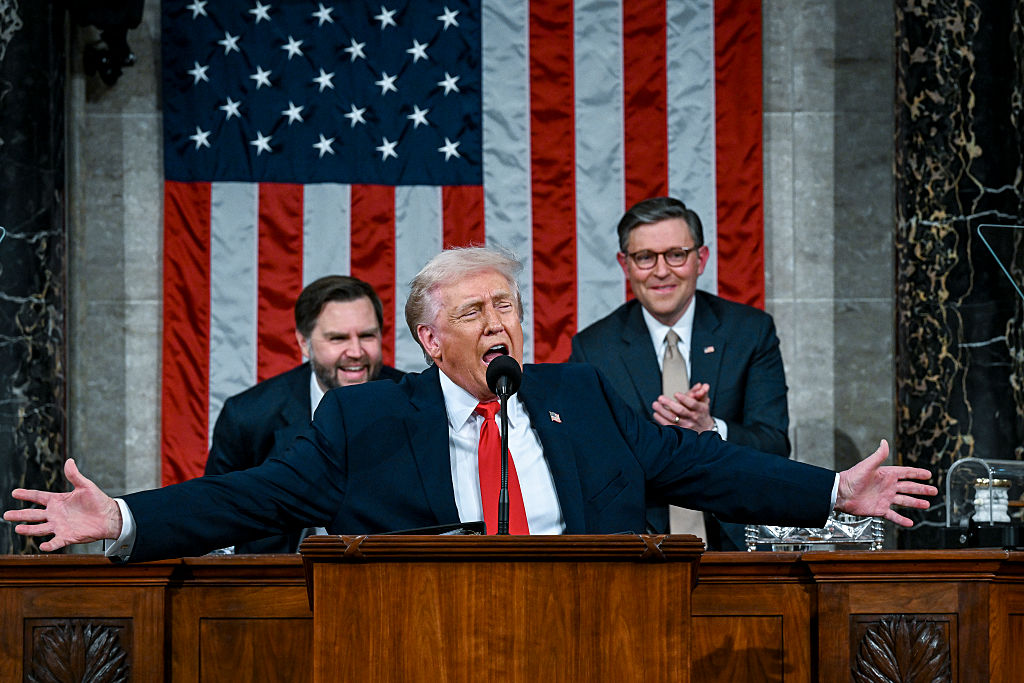
A certain mystique has built up surrounding ‘trans kids’. In previous generations, children struggling to come to terms with the reality of their sex would have been told to get over it. It seems that most of them did. In 2008, for example, it was reported that, ‘Only 2.5 per cent to 20 per cent of all cases of GID in childhood and adolescence are the initial manifestation of irreversible transsexualism’. We don’t call it Gender Identity Disorder any more. But the condition hasn’t changed – and nor have children.
Children who would otherwise have been left to grow up are instead being feted as somehow different, and with a special insight into their so-called gender identity. There may be no drugs on offer (for now), but there is a risk of setting these young people apart from the rest of their peer group. Talk of social transition and the lure of cross-sex hormones at the earliest opportunity – likely to be no later than 18-years old – will affect their mental and emotional development, if not their physical development.
The correct number of NHS paediatric gender clinics is therefore not one, nor two and certainly not eight; it is zero. If those services have nothing to offer but promises that can never really be delivered they should have no place in a publicly-funded health service. Children deserve better than a place on a waiting list to a clinic for specialist treatment to divide them from the muggles. Youngsters in psychological distress face a long wait for specialist gender care. But when they get to the front of the queue, they are likely to find that the treatment they receive does not necessarily make them any happier.
My ringside seat at the Nixon resignation melodrama
American politics seem particularly febrile in 2024. The sitting President has withdrawn from the election, days after his predecessor was shot campaigning at a rally in Pennsylvania.
But American democracy is by nature restless and tumultuous. It’s worth remembering that 50 years ago this week, Washington was in turmoil over the question of whether Richard Nixon was going to resign.
Those early days of August 1974 seem like yesterday to those of us who became swept up in them. At the time I was a 31-year-old MP, five months into my first parliamentary term as an opposition backbencher. My summer recess took me to the home of a hospitable Anglophile hostess in Georgetown. In her basement lived two presidential aides who helped to give me a ringside seat to the resignation melodrama. At its peak I was invited by them to lunch in the White House Mess, where the press secretary, Ron Ziegler, persuaded me to write a letter to the soon-to-depart president. This correspondence started a relationship which eventually led to me becoming Nixon’s biographer.
My lunch in the White House Mess took place in the days before the president resigned
The countdown to the president’s resignation began on 16 July 1973, during the Watergate hearings of the House Judiciary Committee (‘the greatest show on Earth,’ according to the historian Theodore H. White) when a staffer, Alexander Butterfield, unexpectedly disclosed that Nixon’s Oval Office contained a voice-activated taping system. This caused a sensation. ‘NIXON BUGS HIMSELF,’ screamed the headlines. They triggered a legal battle which ended with a unanimous Supreme Court ruling that the tapes were not covered by executive privilege and must be handed over to the Judiciary Committee.
One of the subpoenaed tapes recorded on 23 June 1972 became known as the ‘smoking gun’. It showed that Nixon had discussed ordering the CIA to block the FBI’s investigation into the Watergate break-in. This attempted cover-up seemed to prove that he could be found guilty of obstructing justice if he were impeached for this criminal offence in a trial before the Senate.
At the beginning of August 1974, only a small group of insiders were aware that the smoking gun tape was a bomb waiting to explode. Nixon himself knew it. He tried desperately to find escape routes that might save his presidency, reaching out to friendly Republican and southern Democrat senators who might vote against his impeachment. These overtures failed.
In his hours of pre-resignation agony, Nixon the realist was sometimes supplanted by Nixon the fantasist. His daughters begged him not to throw in the towel (just as, reportedly, Joe Biden’s son Hunter and wife Jill did in the first days of last month). For a while, Nixon seemed to be swayed by their pleas: ‘End career as a fighter,’ he scribbled defiantly on his notepad one sleepless night.
My lunch in the White House Mess took place shortly before the fighting president became the resigning president. My hosts were Frank Gannon Jnr and Diane Sawyer– who was later to become a presenter for CBS. In August 1974 they were junior staffers working in the office headed by Ziegler.
‘Sorry, it’s like a morgue in here right now,’ said Frank, as we ate our Caesar salads in an almost empty dining-room. Ziegler had joined us at our table. As one of Nixon’s closest confidants, he should have known what was going to happen, but evidently he did not, and he asked me a surprising question: ‘If the president were to resign, what do you think his future would be in the eyes of the world?’
Hesitatingly, I replied: ‘I believe the day will come when Mr Nixon will again speak out on foreign policy issues and be listened to, with respect, by audiences across the world.’
‘How profound!’ said Ziegler.
After lunch he drew me aside: ‘That profound reflection of yours,’ he said. ‘Would you mind writing it down? I would like to give it to the president.’
I was vain enough in those days to travel with my newly minted parliamentary notepaper. So I wrote a short letter of sympathy to President Nixon containing the thought I had just expressed.
Outside the White House, hatred rather than sympathy for the 37th president prevailed as the crowds kept chanting: ‘Jail to the chief!’ Inside the Oval Office, it was becoming clear that the game was up.
On 9 August Nixon gave a rambling emotional resignation address to his White House staff before boarding the helicopter that would take him to exile in California.
I watched the live broadcast of this exit in my hostess Kay Halle’s crowded drawing–room. Her mansion, 3001 Dent Place, was known to many Brits as the Halle Hilton. Her Anglophilia dated back to the 1930s, when she was engaged to Randolph Churchill, and made her home a port of call for many English journalists, who that day included Alistair Cooke and Henry Fairlie. But her drawing room that morning was mainly packed with notable US Congressmen, columnists, former Kennedy aides and prominent Democrats. Few of them could contain their enmity towards Nixon. It was an angry scene, typical of its time.
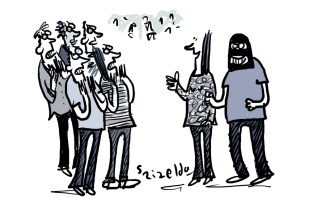
Some months later, when Ziegler was visiting London, he called to say he had something for me. I invited him to lunch in the House of Commons. ‘I gave the boss your letter when we were flying back on Air Force One to California on that day,’ he told me. ‘He wasn’t getting much in the way of fan mail, so he was really pleased. Here’s his reply.’
Nixon’s response included this sentence: ‘If you are ever passing through San Clemente, do come and see me.’ It was too good an invitation to refuse. I stayed in the compound of what was once called the Western White House, again with Diane and Frank, who had gone into exile with the ex-president to help with his memoirs.
My meeting with Nixon lasted more than two hours, and a friendship began. Fifty years on I cherish my memories of this extraordinary, talented statesman who – warts and all – is now climbing up the approval ratings of history. I doubt we will say the same about President Biden half a century from now.
The unfashionable truth about the riots
As the days slip by, the likelihood that anything will be learned from the recent rioting looks ever more remote. And with that suspicion comes the inevitable sense of déjà-vu. Because we have indeed been here before.
In 2011 England was engulfed by riots, originating in London but leading to copycat violence across the north of England. The ostensible cause that time was the shooting by police of Mark Duggan, a charming young drug dealer who was in possession of a gun. The initial unrest in Tottenham may well have started as a result of claims that police had shot an innocent man – and an innocent black man at that. But by the time Birmingham, Manchester and Liverpool were going at it, the proximate cause for the violence seemed to have been forgotten.
The economy has created more jobs, but this has not reduced the workless levels of local populations
The coalition government set up a panel to look into the causes of the violence, and as with most such government panels it was made clear from the start what the answers could not be. Indeed, after the report was released The Spectator published a minority report by Simon Marcus, one of the members of the panel, blowing the whistle on matters his fellow panel members refused to consider. These things included gang membership and ‘an epidemic of father absence’.
Equally interesting is to look at the few things that people were allowed to focus on back then. The 2011 riots happened in the aftermath of the great crash of 2008. Many government officials and wise heads in the media tried to understand the spate of lawlessness by looking at things through this lens. One of the few acceptable questions to ask about those riots regarded the correlation between deprivation and rioting. This was one of the fashionable things to fix on.
Doubtless similar fixations will emerge now. The long-defunct English Defence League and the question of social media appear to be the main focuses of permitted attention. But I decided to do some checking on the employment stats for some of the northern towns that have seen the worst rioting in the past week. I also checked the 2011 statistics and then compared the two. I should warn you in advance that if you’re easily depressed, you should look away now.
Back in 2011, the proportion on out-of-work benefits (including incapacity benefit) in Sunderland was 18 per cent; today it is 19 per cent. In 2011 the unemployment figure in Rotherham was 16 per cent; today it is 18 per cent. In Hartlepool, it was 21 per cent; today, 23 per cent. Consider just that last one. A quarter of people of working age in the area are claiming welfare for incapacity or worklessness.
If you look at the figures for the towns in which rioting has occurred in the past week, there is not one of them in which the job situation has improved in 13 years. In every one, the employment has got demonstrably worse since 2011.
Let us assume that unemployment and the resultant hopelessness were factors in the 2011 riots. Personally, I am slightly reluctant to do so, because plenty of people who have had every disadvantage in life do not decide to burn police stations. But since this was seen as one of the causes of the 2011 conflagration, why did nothing get better? Why, instead, did it get measurably worse?
One reason is that from 2011 until today, all three main parties have followed the same model on job creation. Seemingly un-able to actually improve education, incentives and job opportunities in these areas, they went for the easy route. That was to issue visas for migrants to come to the UK and to claim that the economy was growing as a result. Of course this ‘growth’ is almost entirely faked. Study after study shows that this type of migration benefits the migrant (naturally) but does almost nothing to improve the actual economy. In fact for many people it undercuts local labour and, due to increased demand for housing and limited housing stock, it makes their situation much worse.
At the time of the 2011 riots, foreign-born workers accounted for 14 per cent of the UK workforce. Today it’s 21 per cent. Employment has grown by 3.6 million since 2011, but fully 74 per cent of this is down to immigrant workers.
In these figures you see one of the inevitable failures of consecutive governments. The economy has created more jobs, but this has not reduced the workless levels of local populations. The communities who needed the work have been bypassed. ‘Left behind’ doesn’t do justice to what has happened, because it makes it sound like it happened in a fit of absentmindedness. It didn’t. It was a decision. So while 3.6 million more are in work compared with 2011, only 929,000 were born here. The job creation benefited many people, but it did not do much for Bolton, Sefton or Rotherham.

There will be plenty of discussion in the coming days about the cultural and immigration factors in these riots – as there should be. But this other cause of the unrest should not be ignored. Successive governments promised to do something to help improve the lives of people in these towns. An inclusive economic model, we were told. A dividend of Brexit, even. But they didn’t just do nothing. They did worse than nothing.
Our government has the same choice the Conservative and coalition governments had. It could focus on getting people into work and bringing work back to these areas. Or, like the governments before them, it could try to cover up the problem with immigration. As the Tory party could tell them, it is an easy and addictive fix. Does Keir Starmer have the guts to go cold turkey? Everything will depend on whether he does.
Why children have stopped reading
It’s only when you read the old stories again, to a child maybe, that you become aware of the extent to which the characters still live inside your mind, bobbing about just below the level of consciousness. I still find myself puzzling over the stories collected by the Brothers Grimm, decades after I first read them. How could Little Red Riding Hood have avoided being eaten? (We read the original, merciless version.) What should Hansel and Gretel have done?
Any good book leaves its mark, but the characters from the books you loved as a child embed themselves. They inform the way you think as an adult, which is why it’s so sad and so significant that children all over the West have stopped reading.
On the next three pages of this week’s Spectator, our writers reveal which characters from their childhood books still haunt them. Rod Liddle’s head is full of imaginary rabbits; Rory Sutherland admires Dr Seuss’s anarchic Cat in the Hat. Lionel Shriver identifies with Pippi Longstocking: ‘I always identified with characters in storybooks who don’t do as they’re told.’ This is true of most of our writers – Richmal Compton’s William Brown pops up so regularly in our poll that I now think of him as the guiding spirit of The Spectator, and I’m proud that he is.
Any good book leaves its mark, but the characters from the books you loved as a child embed themselves
Meanwhile, this summer’s ‘What Kids Are Reading’ report, a study of more than 1.2 million pupils across Britain, shows a 4.4 per cent decrease in the number of books children are reading compared with last year. A survey of UK teachers reveals that they would describe a third of their pupils as ‘weak readers’ who struggle to keep up with the curriculum. (And the curriculum really isn’t hard to keep up with.) The most recent Annual Literacy Survey from the National Literacy Trust (NLT), published in September lastyear, found an alarming 26 per cent decrease since 2005 in the number of children reading daily for fun. Less than half of our children now say they enjoy reading. A professor Keith Topping, from Dundee University, who analysed the NLT data, was quoted as saying: ‘The key takeaway is that more reading practice at an appropriate level of difficulty improves pupils’ performance.’ I’m not sure what that means, except that if people in the literacy business are using phrases like ‘key takeaway’, we have a problem.
As the art of reading fades, so, ironically, the scientific evidence demonstrating how valuable and beneficial it is to a young mind only grows. It’s not just about vocab or acquiring information; there’s now a provable link between reading and empathy. Brain scans of children absorbed in fiction show extra connections wriggling through their cerebellums as they inhabit each character. If a child is properly engrossed, then when she reads about, say, a swimmer, the same bits of her brain will start firing as if she was herself swimming. ‘Fiction is a kind of simulation, one that runs not on computers but on minds,’ says Keith Oatley, a professor who studies the psychology of fiction.
I recently read to my son a favourite book from my own childhood: Where the Red Fern Grows by the American Wilson Rawls. And as I did, I rediscovered the mental pictures I’d made as an eight-year-old, left snagged along the storyline. What was interesting to me was that the images I’d conjured were from the perspective of the hero, as if I was that boy with his dogs in the Oklahoma Ozarks. The film of the book, which we later watched, was a distant drone’s-eye view.
The NLT is excited by these brain-scan results. In its latest pro-reading campaign it urges people to read so as to boost their empathetic scores. Empathy as self-enhancement! That’s a sign of the times all right.
The NLT might also take a line from the late American philosopher Allan Bloom, who insisted that great fiction gives us an understanding not only of other people, but of ourselves. I still remember the awful realisation that I, like bad Edmund from The Lion, the Witch and the Wardrobe, might have chosen to betray my siblings for some of the White Witch’s tasty Turkish Delight. In fact I still sometimes think about how very delicious it must have been. It’s a useful thing to know about yourself and oddly reassuring to find in print. That’s real representation.
The most obvious and undeniable cause of the great reading drought is screens. How could it not be? I’ve lost count of the number of adults who’ve confessed to me that the presence of their smartphones has put paid to reading fiction completely. It’s impossible to submerge yourself in another world when the iPhone next to you tugs at you like Gollum’s ring. And if adults can’t resist, how can we expect children to?
‘Why can’t you read a book?’ I say irritably to my son while prodding away at my phone. ‘Mum,’ he says, ‘honestly!’ So I impulse-buy some fiction on Amazon to keep alive the image of myself as a reader and pile up the unread books in the hall.
Generations Z and Alpha, who’ve seen the steepest decline in reading for pleasure, report that they’re too anxious to read, which sounds daft but makes sense. The rhythms of social media are dementing. All the endless video clips are cut short before they resolve, cliffhanger style, to ensure that the kids keep scrolling. You can’t immerse yourself in another world when you’re in a permanent state of fight or flight.
Even so, I’m hopeful that, for the middle classes at least, the smartphone message is getting through. Jean Twenge and Jonathan Haidt have convincingly warned us about the dangers of social media and I predict that quite soon it will be the north London virtue-signal of choice to send your teen to school with a Nokia.
But the reading decline is not just about the screens. There’s a more pernicious and troubling cause. Last spring an American author and editor called Katherine Marsh wrote a piece in the Atlantic magazine entitled, ‘Why Kids Aren’t Falling in Love with Reading’. Marsh’s theory was that it’s the way schools are teaching literature across the West that is actually putting children off: the endless focus on analysis and the lack of enthusiasm for story.
Marsh gives the example of the way Amelia Bedelia – a popular American series for the under-tens by Peggy Parish – is taught. Amelia Bedelia is funny. She’s a hapless housekeeper who takes instructions too literally. When she’s told to draw the curtains, for instance, she gets out a pencil. But pupils don’t get a chance to enjoy Amelia’s antics. They’re told in class not to worry about the actual story or even to read the book to the end, but just to look at a single paragraph and identify the nonliteral and figurative language it contains.
‘For anyone who knows children, this is the opposite of engaging,’ writes Marsh. ‘The best way to present an abstract idea to kids is by hooking them on the story. “Nonliteral language” becomes a whole lot more interesting and comprehensible, especially to an eight-year-old, when they’ve gotten to laugh at Amelia’s antics first… Jumping into a paragraph in the middle of a book is about as appealing for most kids as cleaning their room.’
It’s not just about vocab or acquiring information – there’s a provable link between reading and empathy
Marsh’s article rang a dismal bell. My son is lucky enough to have a headmistress who values proper reading and good books above all else, but for decades I’ve heard my friends with older children complain about this test-based method – and then also complain, without connecting the thoughts, that their kids don’t read for fun. For Marsh, the terrible result of the dour, assessment-based approach to literature is that children divide fiction into boring books and ‘fun’ books. The great works of literature are boring. The Goosebumps series and The Diary of a Wimpy Kid are ‘fun’ (and if that moaning maggot is what’s embedded in our children’s minds, no wonder they’re all depressed). Marsh didn’t mention Allan Bloom in her piece, though his 1987 book The Closing of the American Mind anticipated and described the same problem to an astonishing degree. ‘When I first noticed the decline in reading during the late 1960s,’ he writes, ‘I began asking my students what books really count for them. Most of them are silent, puzzled by the question. The notion of books as company is foreign to them.’
If children don’t think of books as good company in the 21st century, it’s probably because books harangue them. So many are so tediously politicised, like the noxious (but bestselling) series Little People Big Dreams – about the lives of people such as Rosa Parks, Maya Angelou, Emmeline Pankhurst and Greta Thunberg – which aren’t stories but just mini-lectures parroting the approved line: stick it to the system, kids. Is this what children want to read, or just what their parents want to buy them? They’re not at any rate igniting a lifelong love of reading.
The old stories, the kind that we loved and that fed a desire to read more and more, were often written by authors who didn’t imagine that they were even writing for children, let alone indoctrinating them politically. ‘You have to write the book that wants to be written,’ said Madeleine L’Engle (A Wrinkle in Time). ‘And if the book will be too difficult for grown-ups then you write it for children.’ By the by, for a wonderful overview of childhood reading, I very much recommend The Haunted Wood, just out, by The Spectator’s literary editor, Sam Leith.
It’s these living books, the ones that wanted to be written, which are often approached by people in the education business with the most nervous revulsion. I have a friend whose son has been warned off both Roald Dahl and Enid Blyton on the grounds that they’re outdated. In Scotland last summer I found a Biggles book with a warning from the publisher on page one: ‘This book has been reprinted for historical interest only. It is not recommended for children.’
My son’s favourite Blyton series stars a child investigator whose nickname is Fatty because his initials are F.A.T, and because he’s fat. ‘He’s not fat!’ explained my son earnestly and proved his point by reading out loud from the publisher’s note in his new edition: ‘All references to his size have been removed from the text dated 2016 so that Fatty’s nickname refers to his initials only.’
Children pick up cues quickly. They read these little notes and they get the message: do not engage with these authors and their dangerous stories. Resist the temptation to be immersed. Just read what you have to in order to pass the test, then hurry back to screentime.
Who is your favourite character in children’s literature?
Rod Liddle
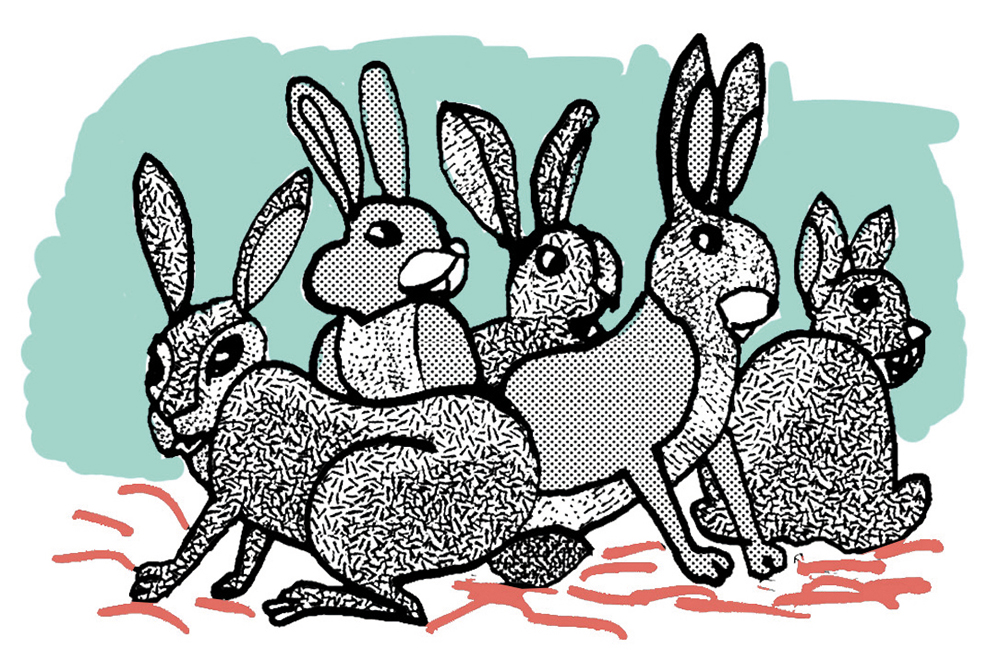
Rabbits, always rabbits. I remember at age 13 forcing my poor parents to trudge despondently across hilly downland on the borders between Berkshire and Hampshire, with me jubilantly pointing out stuff like: ‘Look, it’s the combe where Bigwig met the fox!’ and ‘I think this could be the Efrafa warren!’ For a while, Watership Down jostled uneasily with the grown-up stuff I was just beginning to enjoy – Jack Kerouac, James Thurber, Ray Bradbury – but it still held a big claim on me and does today. Better than On the Road, isn’t it? Watership Down also took me back from the awkwardness of puberty to the safety zone of post-toddlerdom and, of course, Brer Rabbit. I was seven before I got out of my Brer Rabbit obsession – you could keep Enid Blyton’s Famous Five, but I couldn’t get enough of her purloined Deep South rabbit stories. You can never have enough rabbits. One evening a couple of months ago, I watched the rabbits in my garden browsing nervily and said to my now grown-up daughter: ‘Look, they’re out for silflay.’ She grinned, slightly embarrassed. Watership Down has stayed with her, too.
Rory Sutherland
Look, I don’t know why we are even debating this. It has to be Dr Seuss’s Cat in the Hat. If it has any precedent, it must be Saki’s short-story The Storyteller, in which a lone traveller silences a train compartment containing a prim aunt and a gaggle of unruly children by telling them a wonderfully amoral and ‘improper’ story in which a terribly good girl called Bertha is rewarded for her goodness by being eaten by a wolf.
The Cat in the Hat came out in 1957. Schools were reluctant to buy it, because of its irresponsible protagonist. Unsurprisingly it was an instant hit with the children themselves. At a time when most children’s characters were insipid and used as vehicles for moralising messages, the Cat in the Hat was a badass. Indeed he was the first children’s character who might plausibly be described as ‘cool’. He even has his own entourage, in the form of two sidekicks called Thing One and Thing Two. And he wears nothing except a comedy top hat and a bow tie. It’s the kind of raffish outfit an Englishman might try on in an unsuccessful attempt to seduce his wife after a few too many pints, but the Cat somehow carries it off convincingly.
Interestingly, I have since discovered that there is a Freudian interpretation of TCitH. The Cat represents the Id, and the tediously responsible fish represents the Superego. The children (the Ego) are hence forced to mediate between the two conflicting forces. Even Dr Seuss himself was happy to give the story a deeper meaning. In an interview, he once said: ‘The Cat in the Hat is a revolt against authority, but it’s ameliorated by the fact that the Cat cleans up everything at the end. It’s revolutionary in that it goes as far as Kerensky and then stops. It doesn’t go quite as far as Lenin.’
I would favour another explanation involving the fragile balance between the Dionysian and the Apollonian. The book is in many ways a worthy precursor to Iain McGilchrist’s The Master and His Emissary.
Matthew Parris
I read Animal Farm when I was about nine, pulling it from a shelf, not realising it was an allegory, and supposing it was just a story about animals who took over the farm – and I loved animals. It was a page-turner for a small boy: strong narrative and lovely simple prose. After a couple of chapters, I supported the pigs. It struck me that equality would not work, authority was required, and somebody had to get a grip. This helped form my political views in a way George Orwell might not have intended. I recommend the book to other little boys and girls.
Lionel Shriver
I always identified with characters in story-books who don’t do as they’re told. I loved the Curious George series, because the monkey was mischievous and always getting into trouble. The children in The Cat in the Hat make a total mess of their house and get away with it. I liked characters who are rebellious. I also identified with characters who are fiercely independent (Pippi Longstocking) and who have rich inner lives to which adults are oblivious, such as the boy in Where the Wild Things Are. The children in C.S. Lewis’s Narnia series live in a secret, complex parallel world on the other side of the wardrobe that the grown-ups know nothing about, and in this other world the children function as powerful moral agents who affect crucial outcomes, not as helpless, dependent little kids. I would have hated the goody-goody progressive books that nowadays try to get children to recycle and fear climate change. I was impatient with being a child and yearned to assert myself. I’d have recognised condescending propaganda from a mile away.
Quentin Letts
Nowadays we are supposed to hail darkest Peru’s Paddington as an immigrant but I lay no claim to any virtue when saying he was my favourite figure in children’s fiction. I liked him simply for his marmalade sandwiches – a great weakness of mine – and for being politely bloody-minded. When we went on family holidays and border officials or Spanish waiters invariably gave my very English father some gyp, I would punish them a ‘Paddington stare’. These were satisfying to administer and, one liked to think, unsettling to the recipients. But surprisingly tiring if you do them properly.
Melissa Kite
Katy Carr planned to do a great many wonderful things, and in the end did none of them, but something quite different. What Katy Did by Susan Coolidge is a story of redemption, about how life rarely turns out the way you planned. If there are any iron-willed, defiant young girls out there who get into trouble a lot, Katy Carr will be your heroine. When she falls off the swing after refusing to obey her aunt telling her she shouldn’t use it, her life spirals into despair. The turning point is finding a female role model who is both tough and feminine. I love that this story tells us that in our darkest moments, in territory that feels completely uncharted, in situations we cannot believe we can turn around, we may still find someone who has gone ahead of us, who can show us the way.
Toby Young
Oddly, I really liked the Jennings books. As a boy educated in the state sector, the world of public schools was glamorous and exciting to me. I suppose it’s a bit like the Harry Potter books for state-educated millennials. Jennings was a more wholesome version of William Brown – a cross between William and Emil from Emil and the Detectives, which I also loved. He wasn’t a goody two shoes, more of a muscular Christian in the finest English public school tradition. Today, William would be a presenter on GB News, whereas Jennings would be a Lieutenant Colonel in the SAS. I’ve tried to interest my own children in the books I loved as a child but with no success. They look at me as if I’m asking them to send a fax – books are so outside their frame of reference it just doesn’t compute.
Julie Burchill
Without doubt it would be the junior ballerinas who featured in the Wells books by Lorna Hill. Before I grew to be 5ft 10in at the age of 14, I always supposed I would be a ballet dancer, and took lessons three times a week from the age of five: I was very good. The dedication of these girls to their craft is still an excellent example to all young women.
Lara Prendergast
I was a goody-goody as a child but longed to be as rebellious as Eloise, the little girl from Kay Thompson’s series who lives in the Plaza in New York. She has no time for authority and is forever winding up everyone from the bellboys to the grandes dames with their powdered hair and Chanel suits. She has few friends aside from her pug dog, Weenie, and her turtle, Skipperdee. Nanny tries her best but fails. Eloise’s mother is absent and occasionally represented by her Virginian lawyer. Eloise gives him rubber candy and ‘he is absolutely so dumb he eats it’. In many ways it is a story of childhood neglect, but Eloise never feels sorry for herself. There is too much fun to be had ordering meringue glacée, amputating her dolls’ arms with a hacksaw and teasing her French tutor. Eloise’s addiction is to room service – ‘charge it please’ – and if she taught me anything, it is that fortune favours the brat.
Bruce Anderson
I very much enjoyed Just William and G.A. Henty, but the crown goes to King Solomon’s Mines. I do not think I have ever enjoyed a book more at the time of reading. I followed it up with all the main Rider Haggards, and I hope that today’s children will have the chance to enjoy such splendid imperial fiction. One caveat; I picked up Solomon’s Mines in a friend’s house the other year and it no longer worked, at least for me. But the enchantments should still be there for the right age group.
Melanie McDonagh
There’s Dido Twite, the spirited heroine of Joan Aiken’s Black Hearts in Battersea. There’s the Psammead, the worst-tempered creature in fiction, from E. Nesbit’s Five Children and It. Or there’s Mary Poppins, that extraordinary combination of strangeness (she paints the stars on the sky) and safety we all want as children. There’s Patricia Lynch’s Brogeen, the pre-eminent leprechaun, or Bilbo Baggins, unfilmed. But the figure who has lasted best from my childhood reading is Toad of Toad Hall, who is vain, boastful, fickle, duplicitous and extravagant – and yet which of us has not known Toad? When children’s fiction is reduced to the safe and sanctioned, Toad will be for generations to come a reminder of happier times: a reprobate and a snob who is lovable because of his sins. He is one of the immortals.
Quentin Blake
The most memorable is unquestionably Mr Leakey. He is the hero of a small collection of short stories, My Friend Mr Leakey by J.B.S. Haldane. Mr Leakey is a magician, but what is attractive is that there is none of the dressing up and stars and sparkles; he is a professional magician in the way that someone might be a professional surgeon or architect. And he dresses formally and has a top hat. The difference perhaps is that at dinner he pours soup out of his top hat and his assistants are equally unusual – there is an octopus able to hold on to the ceiling and distribute the cutlery, and a small dragon in boots to bring out the hot dishes. My copy was illustrated by Leonard Rosoman – they are beautiful drawings and their elegance and formality somehow make an interesting contribution to the facile nature of the activities.
Now there is a moment of embarrassment. Many years after my first reading of Mr Leakey, when I had become a practising illustrator, I was invited to illustrate the book myself. The problem was that I very much admired Rosoman’s pictures and, as it happened, we were both teaching at the Royal College of Art at the same time. Alas, I couldn’t resist the offer. I made my drawings as different from his as possible and they were smaller and more frequent. I thoroughly enjoyed the experience.
Rachel Johnson
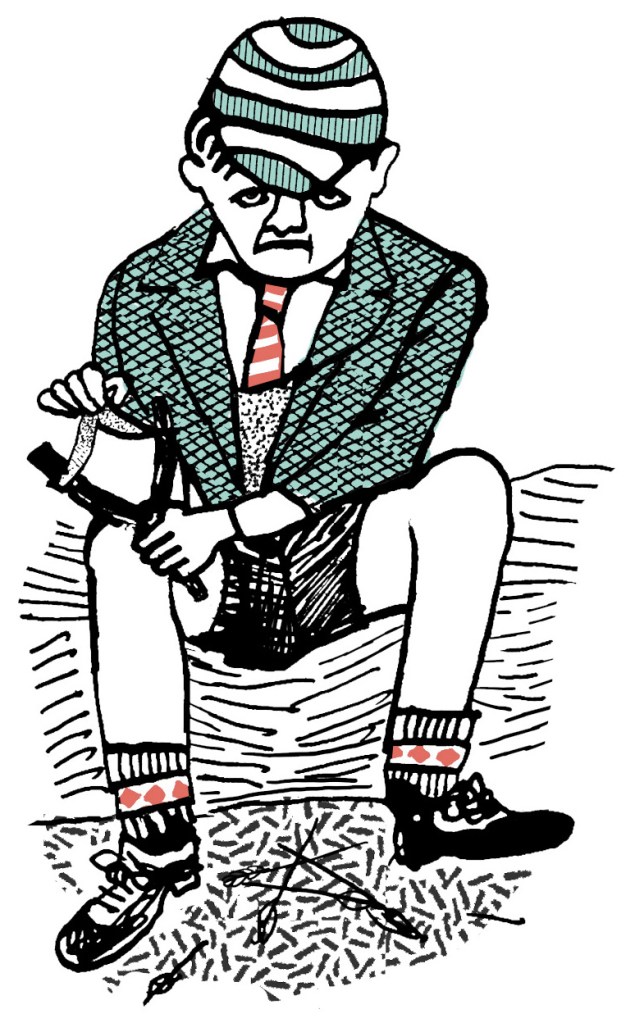
William Brown was the first character that popped into my crowded cerebellum. Wrinkled of sock, derisive of temperament, scornful of female histrionics and adult ways, devoted to his dog Jumble, he is the original and best disruptor in fiction and like P.G. Wodehouse’s, Richmal Crompton’s world never stales. And the audio books read by Martin Jarvis aren’t half bad either.
Peter Hitchens
What a pleasure it was to meet Mr Badger, in The Wind in the Willows. Not only was this a book for those who could find pleasure in winter and autumn, and frosty evenings, rather than in the boring heat of summer. It was also a book for those of us who actually aren’t all that keen on parties and crowds. Like all introverts, I had and have no difficulty in understanding extroverts. I am very happy for them. But I have always suspected that it doesn’t work the other way round. Extroverts think I must be miserable because I don’t share their pleasures. The character of Mr Badger has always been a simple way of explaining, first to other children and now to adults, that I too may be enjoying myself, even though it does not look as if I am.There are a few purple bits I’d cut out, but The Wind in the Willows is still as good a read now that I’m 72 as it was when I was ten, and Toad’s footplate escape is still one of the most thrilling passages in English story-telling, especially the moment when they realise they are being pursued.
Anthony Horowitz
It has to be Tintin. When I was trapped in a grim boarding school at the age of eight, the intrepid reporter (who never actually wrote anything) brought colour, humour, adventure, friendship and escape to my otherwise dreary life. I loved the world he inhabited, his many eccentric friends and his travels all over the world and, indeed, beyond. The Seven Crystal Balls and Prisoners of the Sun are the two masterpieces I’d recommend. They will bring joy to any modern child.
Douglas Murray
One of my favourite reads as a boy was Just William. Richmal Crompton’s world was one I wanted to live in, and felt like I occasionally visited. I was thrilled that there was a Douglas in William’s gang, though suspect I identified with the principal hero of the stories. As a family, on the long summer car journeys to the Outer Hebrides, we would listen to Martin Jarvis’s readings. I remember one time my father had to pull over because he, like all of us, was laughing too hard. I can still hear the voices Jarvis performed. And of course his Violet Elizabeth Bott is definitive. The only sadness was I remember the number of times that my friends and I tried to make liquorice water. It never was drinkable.
Mary Killen
Three generations of my family have revelled in the world of the 11-year-old schoolboy William Brown and his gang of friends, the Outlaws. Richmal Crompton’s timeless tales (more than 38 books) take place in a manageably-sized English country village full of woodland and barns to play in and social stereotypes still recognisable today – Mr and Mrs Bott, the nouveau-riche sauce magnates who have bought the Big House, their spoilt daughter Violet Elizabeth, burglars, pretentious musicians and artists, vicars… The plots are hilarious and the language unmodified for children, e.g. ‘Henry was about to dispute this view when Ginger interposed pacifically’.
Ian Rankin

As a child I didn’t read many of the ‘classics’ but I did buy a lot of boys’ comics and my favourite character was Alf Tupper, aka ‘the Tough of the Track’. He appeared in the Victor weekly comic and was a working-classhero who won his track races after polishing off a helping of fish and chips. He lived with his aunt, slept on a mattress, worked as a welder but had natural talent – and he was looked down on by the posh runners he often came up against, and by the bureaucrats who ran the competitions. With his cheap haircut and his bog-standard sports shoes, he told me that talent could win through, however lowly your background.
Susan Hill
Lewis Carroll’s Alice entered my life and burrowed deep into my imagination when I was four and has never left it. But she was born adult and timeless, a pert, inquisitive, trite little girl with an alarmingly direct manner,the only possible character to experience such adventures and encounters and, above all, conversations. She is unique. Others have tried but never come within miles of creating such a strange and rather alarming child.
Lloyd Evans
Timmy the Dog in The Famous Five by Enid Blyton. He was like a protective deity who communicated telepathically with George. And he used to save the children at the end of an adventure by pouncing on the baddies (smugglers usually). I doubt if today’s youngsters read Blyton or anything else. Probably just as well. Reading is just a second-hand version of being alive.
Philip Hensher
I loved J.P. Martin’s Uncle books. They are so hugely inventive that they are quite hard to describe. An immensely wealthy elephant of almost unspotted virtue, Uncle lives in a gigantic palace of skyscrapers, Homeward. He is surrounded by supporters, tenants, hangers-on, sycophants. His life, however, is made troublesome by a gang of enemies living opposite. I wish I could afford a set of the first editions – they are wonderfully illustrated by a young Quentin Blake, and were never printed in large numbers so they now go for a fortune.
Britain needs to join the new space race
Elon Musk’s Starship is the biggest rocket ever built. Sending it into space is hard; bringing it back to Earth, in a fit state to be reused, is even harder. The rocket booster, having just carried a craft into space, must not be allowed to crash into the Atlantic and sink to the seabed. Instead, in order for it to be swiftly relaunched, it must fall vertically – back onto a launchpad.
But as the rocket approaches touchdown, its engines have to fire towards Earth in order to slow its descent. And the colossal heat and force generated by these engines is enough to cause severe damage to the launchpad and surrounding infrastructure. That’s why Musk’s team have devised what they call ‘chopsticks’: mechanical arms with which the 469ft SpaceX launch tower will catch a falling rocket booster.
So far, the chopsticks are just prototypes. Soon, though, they will be used to try to catch a Starship booster. This innovation will help SpaceX make it cheaper than ever before, by a huge margin, to get things into space. It will unlock an exciting new era of both economic activity and adventure.
Some of this economic activity includes the manufacture of drugs and fibre-optic cables, which are best done in the ultra-low gravity one encounters outside the Earth’s atmosphere. By the end of this decade, the space economy will be worth $1 trillion, according to consultancy firm McKinsey. In subsequent decades, our ambitions will expand further. With a fair wind, we will mine asteroids, service extraterrestrial colonies and travel from one point on Earth to another via space. London to Sydney in less than two hours could become a reality.
If Keir Starmer and Rachel Reeves are serious about economic growth then they should pay attention to this vastly under-tapped market. They should be asking how the UK can best take part in this new and lucrative era of space travel. Our membership of the European Space Agency has enabled us to send astronauts such as Tim Peake to the International Space Station. But the agency’s Ariane rocket programme is far behind SpaceX’s.
Professor Adam Amara, who is chair of the UK Space Agency’s Science Programme Advisory Committee and is one of the key people behind the £1 billion Euclid satellite project, believes that Britain could be upping its game. ‘Ariane sees itself as in competition with SpaceX, but SpaceX is launching things twice a week,’ he tells me. ‘Ariane launches a few a year. I suspect SpaceX doesn’t even notice.’
The UK has the ability to act independently. Bilateral deals are in place between the UK Space Agency and countries such as Australia, which have helped create new British spaceports (i.e. sites from which rockets can be launched). Of this new generation, Spaceport Cornwall has had one (failed) launch attempt. The other spaceports are closing in on completion. The flagship is SaxaVord Spaceport, which is on the island of Unst, at the northern tip of the Shetlands.
This new generation exists because the UK space sector is already strong. Pioneers such as Sir Martin Sweeting have made this country one of the best in the world at satellite engineering. We are good at sensors, magnetometers, infrared optics – but, as Amara says, we don’t put them together in ambitious projects of our own, and we tend to outsource launches. Nevertheless, we have a high existing amount of expertise, and this advantage ought to help us outcompete our peers. ‘We just need to make it all join up so that private investment can pile in,’ says Amara.
By the end of this decade,
the space economy will
be worth $1 trillion
How to do the joining up? The astrophysicist Peter Hague has called for the British government to bring super-heavy space launch to the UK, doing so not by taking a decade or more to build a challenger to Starship, but by building a spaceport that would soon be able to accommodate it, chopsticks and all. Some members of the industry, however, have told Hague they think Britain should stick to satellite components and leave the launch to others. Are they right? ‘I think we should be able to walk and chew gum at the same time,’ Hague says.
Here’s how his plan would work. Realistically, the government would need to partner with SpaceX or its competitor Blue Origin, which is owned by Jeff Bezos. Britain would subsidise the construction of a super spaceport that would, in return, bring to our shores the business of one of those two companies. Naturally, the international exchange of rocket hardware raises regulatory eyebrows – but, conveniently enough, the UK and the US have already signed a deal that allows us to import such equipment.
What about our location? Unfortunately, we are far from the equator. This makes the UK a suboptimal place for getting things into equatorial orbit, which is where humanity tends to put space stations. (This is mostly because the Earth rotates fastest at the equator, which means that rockets, if launched eastward, effectively get flung faster.)
But there are two kinds of orbit for which the UK is well-placed. One of these is polar orbit, whereby a satellite’s regular path takes it over, or nearly over, both the North and South Poles. Because the Earth rotates laterally, this orbit allows a satellite to monitor almost every part of the planet. Polar orbit is therefore where we put satellites that are used for mapping, reconnaissance and environmental modelling. Another type of orbit, known as sun-synchronous orbit, offers similar advantages.
Altogether, Britain can corner up to 30 per cent of space activity, says Professor David Stupples, who is a specialist in satellite engineering and space-based surveillance systems. In particular, says Stupples, the UK has a good opportunity to lead the way in satellite maintenance. ‘What we’re going to do in the future is, in fact, replace solar panels, batteries, even some of the scientific instruments on board. And that will be done by a spacecraft going up to do the maintenance.’ Our service economy will have entered the space age.
If we were to build this super spaceport, where would we put it? The site would need to be remote. Space agencies don’t like to create a risk of rockets falling out of the sky and onto populated areas. This issue is one of the reasons why the two remote Scottish spaceports, of which the second will be in Sutherland, are not permitted many launches per year (SaxaVord gets 30). Large areas of land must be cordoned off, lest walkers come to harm.
Nevertheless, one can imagine SaxaVord being upgraded to a super spaceport. And if Scottish nimbys see off the proposals, there are other options. Matvey Boguslavskiy, an engineer with a background in space technology, suggests we could use the North Sea instead. This is not as fanciful an idea as it sounds. In the Gulf of Mexico, a start-up is already trying to demonstrate that you can build oil rig-like launchpads at sea. ‘You want container ships to be able to access it fairly easily,’ says Boguslavskiy. ‘You could do that in Scotland, but the North Sea is already such an industrialised area.’
There would be many other obstacles to overcome. The government might need to justify the launches with a state-backed endeavour, such as a space station. Either way, a super spaceport would make the most of the UK’s scientific advantages at a time when the space economy is entering a boom era. More profoundly, it would enable Britain to participate in some of the greatest adventures in human history. Our species will return to the moon, set foot on Mars, and perhaps even plant a Union flag in the red dust.
The Greek guide to swearing an oath
A lawyer who wished to serve on a jury but was no Christian was given permission to swear his oath in the name of a local river. He saw it as ‘his god’, as people did in the past, when the association between nature and divinity was widely taken for granted.
Consider, for example, the ancient Greek understanding of the natural world. The farmer poet Hesiod (c. 700 bc), often drawing on Hittite and Babylonian myths, provided the West with its first account of how the world was made. First there was khaos, he said (that meant, ‘emptiness, void’, cf. ‘chasm’). Then there appeared Earth, Underworld and Eros (without which nothing could be generated), Night and Day. Earth bore Heaven, Mountains, their Nymphs, and Sea; and then bedded with Heaven, bearing Kronos, first of a range of often monstrous god(desse)s. Hesiod named some 300 of them, with Zeus eventually fighting his way to emerge as top god. Unlike Genesis, therefore, a single god did not produce nature; nature produced a multitude of gods. Hesiod tells us that the goddess Tethys produced 25 rivers. Each had its patron god, and woe betide anyone annoying him.
Night itself also bore 29 abstractions, some rather disagreeable, including Death, Lies, Old Age, Resentment, Bloodshed and Starvation, ending with Oath, ‘most harmful to men when anyone intentionally swears false’. Lawyer, beware! Having sworn an oath to be guided solely by fairness and the evidence, he has invoked a power greater than himself to ensure that he stays true to his word. In the ancient world, that meant, if you violated your word, you would be subject to a curse implicit in the act of swearing, especially if at the same time you had been in contact with some sacred object – in the lawyer’s case, his finger in a glass of water taken from his river. What shape that curse took would, of course, be up to the god.
Since pagan gods are unpredictable and take no prisoners, better to err on the safe side, just in case, and stay clear of the river for a while.
Free speech stops riots
With depressing predictability, the riots have led to calls for more censorship. Historically, it was the authoritarian right who blamed outbreaks of civil disorder on too much free speech, but this knee-jerk, illiberal reaction is now more likely to be found on the left. I’m not just thinking of Paul Mason, who called for Ofcom to revoke GB News’s broadcast licence, or even Carole Cadwalladr, who tweeted: ‘This should be our Dunblane moment. Only with social media not guns.’ I’m thinking of statements by the Prime Minister and the Home Secretary.
Is Sir Keir going to urge the police to investigate his own role in ‘whipping up violence’?
In his first speech about the unrest last week, Sir Keir Starmer said: ‘And let me also say to large social media companies and those who run them… Violent disorder clearly whipped up online… That is also a crime. It’s happening on your premises. And the law must be upheld everywhere.’ A few days later, his spokesman took aim at Elon Musk for tweeting ‘civil war is inevitable’ below a video of rioters aiming fireworks at police. The spokesman said there was ‘no justification’ for Musk’s comment, adding: ‘Anyone who is whipping up violence will face the full force of the law.’
So is the former director of public prosecutions asking the police to investigate the owner of Twitter? Even if Musk was guilty of ‘whipping up violence’, I know of no such criminal offence in England and Wales. Stirring up hatred against a group on the basis of their race or religion is an offence, as is inciting someone to commit a crime. But even a Crown Prosecution Service in thrall to Sir Keir would baulk at charging Musk with either of those offences. In any event, could he be prosecuted for breaking one of our laws while 5,000 miles away? Perhaps the Prime Minister was urging Ofcom to investigate Musk’s comments using its new powers under the Online Safety Act. But that, too, seems like a long shot.
The same tone was adopted by Yvette Cooper on Monday when she was interviewed on Good Morning Britain by her husband Ed Balls. (Surely that’s more deserving of an Ofcom investigation?) ‘Social media has put rocket boosters under… some of the violence that we have seen,’ she said. ‘[Social media companies] have to take much greater responsibility for what is happening on their platforms.’
For all the talk of ‘whipping up violence’, this sounds like a case of blaming the messenger in much the same way that ‘pirate radio’ was fingered for the riots in Birmingham in 2005, and BlackBerry for the unrest in 2011. The authorities have already started arresting right-wing social-media users for stirring up racial hatred, which looks like another example of ‘two-tier policing’. After all, no such arrests were made in the wake of the Black Lives Matter protests, even though hundreds of thousands of social-media users in the UK ‘whipped up’ violence against the police by accusing them of racism. During one demonstration, which the BBC described as ‘largely peaceful’, 27 officers were injured. Social media companies were also culpable – more so than now – because they promoted pro-BLM posts and, in some cases, included a BLM logo on their platforms. But Sir Keir didn’t demand they should feel ‘the full force of the law’. On the contrary, he took the knee.
I suppose the Prime Minister could argue he wasn’t in charge back then, but that doesn’t solve the ‘two tier’ problem, because people on the left have been guilty of disseminating ‘harmful misinformation’ in the past week and I doubt they’ll have their collars felt. Last Saturday, Nick Lowles, the chief executive of Hope Not Hate, tweeted: ‘Reports are coming in of acid being thrown out of a car window at a Muslim woman in Middlesbrough. Absolutely horrendous.’ Those reports turned out to be baseless, but it’s possible they contributed to young Asian men engaging in running battles with anti-immigrant protestors in the town the following day. Indeed, you could argue that the PM’s statement blaming ‘far-right’ outsiders for organising the unrest in Southport – and singling out their attack on a mosque – contributed to the violence by Asian counter-protestors over the following days. Is Sir Keir going to urge the police to investigate his own role in ‘whipping up violence’?
To paraphrase the US Supreme Court Justice Louis Brandeis, the best remedy for harmful speech is not enforced silence, but more and better speech. It was the absence of accurate information about the Southport attacker’s identity – due to legal restrictions – that led to the feverish speculation. More censorship would make things worse, not better.
The Battle for Britain | 10 August 2024
This Olympics belongs to the female athletes
You knew it was going to be a superb Olympics from the moment Celine Dion belted out an Edith Piaf classic from the Eiffel Tower. And nothing since has disappointed – not least commentator Mark Chapman having to say things like ‘She was late with her eskimo roll’ during the incomprehensible kayak cross. But amid such a banquet of sporting greatness, what to single out? This has been a fantastic Games for women. And remember that the founder of the Olympics, Pierre de Coubertin, was opposed to the participation of female athletes, largely to preserve their dignity. Different times admittedly, but even so the 1500m became an event for women only in 1972, and the marathon only in 1984. Look what they’re achieving now.
Amid such a banquet of sporting greatness, what to
single out?
There’s Keely Hodgkinson of course, electrifying in the 800m. Hodgkinson is now one of the world’s best-known athletes, and guaranteed the considerable rewards she so deserves. Like Kelly Holmes, Sebastian Coe, Steve Cram and Steve Ovett, she should be one of the legendary British middle-distance runners whose name is always on our lips.
The mixed 4x400m relay didn’t make its Olympic debut until Tokyo three years ago. All credit to the Games for reflecting the era’s spirit of inclusivity, which may or may not have gone too far with that boxer who has an overload of testosterone. But the relay produced one of this year’s great moments. Femke Bol is a tall, willowy multiple world champion, specialising in the 400m hurdles. It was her job to anchor the Dutch team in the tipping rain on Saturday. When she took the baton, the Dutch were fourth. Bol had an inconceivable amount of work to do but surged forward on the final bend, gradually overhauling her rivals before moving past the USA’s Kaylyn Brown in the last strides. Superhuman barely does it justice.
You wouldn’t want to be watching an Olympics without needing the tissues every now and then for a heartbreaking human interest story. And so it was on the rowing lake as the British women’s quadruple sculls took gold with the final stroke of the race. Lola Anderson was in the third seat on the boat. Wonderfully articulate, charming and funny, Anderson later revealed what had been her inspiration. As a 14-year-old in 2012, she’d written in her diary of her dream of rowing at the Olympics and winning gold for Britain. Afterwards, embarrassed, she ripped out the page and threw it away. Her father Don, also a rower, found it in the bin and kept it. Seven years later he handed it back to her. He had terminal cancer and wanted her to know that even if she didn’t back herself, her family and loved ones did. Two months later he died. Now the note is Anderson’s most treasured possession. ‘I know that he’d be so, so proud,’ she said after the race. ‘I’m thinking a lot about him right now.’
Any parent who has forked out for a trampoline in the garden and likes to watch fondly as their offspring jump can now cherish some full-strength Olympic hopes, thanks to a 33-year-old from Crewe. Bryony Page picked up her remarkable trampoline gold with a jaw-dropping show, flying, spinning, tucking and bouncing, all at the height of a three-storey house. Pure acrobatics and incomprehensibly courageous. She went into the contest as world champion and now has the complete Olympic set, having won silver in Rio and bronze in Tokyo. Next she wants to fulfil her childhood dream and join the Cirque du Soleil, the stunning Canadian show. From what I have seen of them at the Albert Hall she will fit in perfectly. Book your tickets now.
Dear Mary: how do I set up two young people?
Q. I have invited some younger friends to stay with me at a family house in Spain. Among the party will be an excellent young fellow who I sense is attracted to my niece, who will also be joining us for a few days. Were I to ask if she is interested, she would think such a question ‘gross’ – but she should be, because he is an all-round star. Like so many of his age, though, he has a somewhat dithering and unconfident manner. Given that it will be too hot to dance, any thoughts about how I can help things move forward between them? They are both single.
– Name and address withheld
A. At an opportune moment, having engineered a chat, sit the pair down on a sofa and hand them your mobile preloaded with a relevant short podcast on the topic you have been discussing. Produce old-style tethered earphones for them to share, with one end in each ear, so they have to sit close to one another. The enforced proximity will clarify any latent reciprocal chemistry and facilitate a private overture for fuller intimacy.
Q. I was sitting opposite a young woman and her mother on a train and it was clear that the girl had impetigo but that neither party realised she had this infectious complaint, as they were describing it as ‘sun blisters’. I didn’t know how, without seeming patronising or grand (I can’t help my voice), to tell them she had this condition associated with poor hygiene. How could I have warned her, Mary?
– L.P., Much Wenlock, Shrop
A. You might have said, ‘I’m so sorry to interrupt but there’s been an amazing coincidence…’ and then told them that your best friend had the same rash a few weeks ago and she too thought it was sun blisters until she happened to meet a pharmacist in a checkout queue and this man had been clever enough to identify it as impetigo and tell her what treatment was needed.
Q. I have moved to the country, but due to travelling am unable to attend our local church regularly. I want to support the church, though, so whenever I do go to a service there I put in a large denomination note when the collection plate comes round, to represent missed weeks as well as that week. I am aware it could look flashy or undermining of the donations of the other congregants, but there are no envelopes and hence no way of doing it discreetly. What can I do instead?
– C.W., Hereford
A. Why not take a tip from the late H.M. Queen Elizabeth and arrive at church with a bank note ironed and folded into a small square so as to obscure its precise worth until it is unfurled later in the sacristry?
A French restaurant Glastonbury would be proud to host: Café Lapérouse reviewed
I am working my way around the restaurants of the Old War Office (OWO), now an acronym and Raffles hotel on Whitehall, because the swiftness with which the great institutions of the state have become leisure opportunities for the wrongfully rich is dark, mesmerising and, if you don’t mind too much anarchy, funny. I have reviewed the cold, painted Saison, and the lively Italian Paper Moon, which a kind reader wrote to say he loved and which I do not expect to survive. It is too joyful and well-priced for the wrongfully rich and their internal landscape of nude cashmere and paranoia. It squeaked through.
The transience of the exterior is not mirrored within. The opposite is true
Here, now, is Café Lapérouse in the courtyard. If there were more Mercedes-Benz E-Class saloons in this courtyard it would be a carpark, but it isn’t there yet. It’s pre-carpark.
I wouldn’t call Café Lapérouse a good restaurant – not quite – but it is a fascinating one, and that must do for now. It is the child of Café Lapérouse in Paris, founded in 1766 in Place de la Concorde. (The one with the bloodied heads and crazed traffic: no obvious concord. Immaculate French spin.) There are fellow branches in St Tropez, Jeddah and, soon, Miami.
Again, it is mesmerising. If Glastonbury Festival needed an upscale French restaurant – and it will get there – it would look like this. It is a small, almost circular pod with a silver roof. It looks in danger, like the E-Class saloons, of departure. Either this café is a pop-up restaurant (does it know?) or the OWO is too solid in spirit for a hotel, and it needs a spaceship disguised as a French restaurant in a pre-carpark to give it that fleeting quality that monied adulterers require: 26,000 tons of Portland stone and 25 million bricks doesn’t lean to that.
The transience of the exterior is not mirrored within. The opposite, rather, is true. Café Lapérouse is catching up. It is a flurry of Art Deco or, if you prefer, a pig’s breakfast. There are pale scallop-like chairs; palms; an alarming floral carpet; less alarming floral banquettes; a gaudy central bar with a roof of shells. This is the restaurant/lair of a divorced woman cleaving to maximalism, so heartfelt that it has the charm of a Romany caravan, or the house/shoe of the old woman (really a single mother!) in the fairy tale.
Inside this caravan/shoe not much happens: at lunchtime on a weekday, it is deserted. Whitehall is not exactly Santorini at the moment and I don’t blame the wrongfully rich for avoiding it. I wonder if the wealth curators of London – the lawyers, the log stylists, the Frieze Art Fair – now think that you can have too much inequality, it’s bad for business. Who knew?
Still, the food is immaculate. I have onion soup because good onion soup is a find in London and this one, at £19, is superb. (You can spend £140 on Dover sole for two, or £154 on beef Wellington, again for two, but we don’t. Café Lapérouse feels too whimsical for that.) My companion has the steak tartare (£29): equally pungent, sticky and rare. I’m not hungry after onion soup – who is? – but visiting a French restaurant and ignoring pudding is a crime to this page, and I sink to profiteroles for £15: again, superb, though I’m not sure they mix with soup. Then we sit and stare at nothing.
This restaurant is as swagged as an empress and as fleeting as joy. It’s an oddity, and if you want to drink soup in an oddity near declining power, it’s for you.
What is ‘thuggery’?
The word that Sir Keir Starmer, the Prime Minister, chose to describe the action of rioters was more interesting than he perhaps knew. ‘I won’t shy away from calling it what it is – far-right thuggery.’ Thuggery throve in India, was suppressed by imperial authorities and has been revived in a different form in the gangsta culture of black America. A thug was, the OED tells us, ‘a member of a society or cult of robbers and murderers in India known for strangling their victims’. The word was first noted in English usage in 1810.
Between 1826 and 1840 more than 14,000 thugs were hanged, transported, or imprisoned for life (certainly ‘the full force of the law’ in Sir Keir’s terms), largely through the efforts of William Sleeman, a district officer in central India, who was sometimes accompanied by his wife Amélie on his travels in pursuit of thugs.
The thugs were professional hereditary murderers devoted to the Hindu goddess Kali and they preyed in bands on travellers. The Hindi word thug here meant ‘robber, deceiver’, and derived from the ancient Sanskrit sthaga, ‘cunning, dishonest’. Thugs were also known as phransigars ‘stranglers’, for they were said to strangle victims with a piece of yellow or white silk knotted in one corner with a silver coin dedicated to Kali. After the murder, the body was buried in a grave dug with a sacred pickaxe dedicated to Kali. In 1836, Sleeman published Ramaseeana on the thugs and their language. The account of one man who had confessed to 700 such murders was used by Philip Meadows Taylor in writing Confessions of a Thug (1840).
Like the suppression of suttee, which Sleeman found difficult, the war against thuggee was regarded as a greatly virtuous achievement, though the OED warns that ‘many modern historians have questioned … historical accounts of Thugs and their practices’. From the 1980s in the US rap world, a thug became ‘a member of a street gang or person from a poor urban background who uses crime or violence to try to better his or her situation’. Melle Mel’s song ‘White Lines’ (1983) notes that ‘Gangsters, thugs, and smugglers are thoroughly respected.’
The inherent unfairness of the Olympics
The Olympics can hardly fail to be the greatest show on Earth. For the last two weeks, the world has been transfixed by sports which attract little interest at any other time. From beach volleyball to BMX bike racing to obscure forms of wrestling – all, briefly, seem to be vitally important, such is the prestige of winning a gold medal.
Yet at the same time there is something rotten about the modern Games. Their pretension to moral virtue is too often at odds with reality. They impose such a burden on their host cities that only a few countries in the world are capable of staging them.
The 2024 and 2028 Games were apportioned between the only two cities, Paris and Los Angeles, left standing after others, including Boston, Budapest and Rome, withdrew their bids. For a sporting event which claims to be bringing the world together, it ought to be an embarrassment that we are unlikely to see the Games hosted in a developing country again, after Rio de Janeiro struggled to cope in 2016.
There are many moments from Paris 2024 that will live on in the public imagination, not least the closest men’s 100 metres finals in history. Yet for many people one of the most memorable images will be of the Italian boxer Angela Carini falling to her knees after receiving a beating from the Algerian Imane Khelif, who last year was disqualified from the women’s world championships by the International Boxing Association after tests showed her to have male chromosomes. Carini, who lasted only 46 seconds in the ring, said she had never been hit nearly so hard in her life.
While Khelif is not a transsexual (she was brought up female) ideology seemed to win over the usual considerations for safety as the bout was allowed to go ahead. The International Olympic Committee appeared to make its judgment on the matter purely on the basis that Khelif has ‘female’ on her passport – effectively dismissing biological sex as an issue. Any country which allows its citizens to decide their legal gender will in future be allowed to send men to fight women in the Olympic boxing arena. The IOC, in other words, has allowed itself to be captured by aggressive pressure groups in western countries.
That is not the only way in which the Olympics appears to be following an agenda imposed by activists from the rich world. The Paris Games, we were told, would be the ‘most sustainable’ in history. There is nothing wrong, of course, with a host city wanting to use clean energy and minimise pollution – on the contrary, that is exactly what they should be doing. But the organisers of these Games allowed themselves to be dictated to by climate activists.
The Games impose such a burden on their host cities that only a few countries are capable of staging them
It was decreed, for instance, that 60 per cent of the food served to the athletes would be plant-based. As a result, many athletes complained that their performances were being compromised by inadequate nutrition – at which point more meat was ordered. Some teams, including Britain’s, resorted to bringing in their own food supplies and chefs. It didn’t seem to occur to the Games organisers that their strictures favoured rich countries with the resources to provision their own athletes.
The same goes for the decision not to provide the Olympic village with air conditioning – a vital necessity for comfort in densely built accommodation in summer temperatures. While teams from rich countries were able to supply their own portable air conditioning units, many from less wealthy nations were made to suffer. At least one athlete was found sleeping outdoors in a park, so oppressive was the heat in the room allotted to him.
If the Games are to survive, efforts must be made to make them more manageable. This might mean excluding some sports where Olympic gold is not the pinnacle of achievement, such as football, tennis and golf. With other sports, there should be a requirement to prove that they enjoy wide-reaching global participation. Too often it seems that the countries that throw the most money at their teams end up winning.
Consideration might also be given to spreading the Games over a longer period, or across a number of cities. This already happens with some of the sports, such as this year’s surfing competition, which was held in Tahiti – about as far from Paris as it is possible to get. But there is no reason why gymnastics, for example, has to be held in the same city as swimming. Spreading the events around would allow the Olympics to become the truly global event they aspire to be. It would enable developing countries to stage some of the action.
The IOC will also need to prevent itself from becoming the pawn of powerful lobby groups out to use the Games for their own purposes. The committee has long taken a strong line against individual participants making political gestures, yet it has shown itself to be a lot less resistant to its own organisers jumping on bandwagons.
Reinventing the ancient Olympic Games was an inspired demonstration of high 19th-century ideals. If the Games are to last to the end of this century, they are going to have to find a way of maintaining those ideals – and of becoming an event in which the entire world can compete fairly.
Portrait of the week: riots and Russia’s prisoner swap
Home
A week of riots, with violence against the police, threats to Muslims, burning of vehicles and looting (Greggs, Shoezone, Sainsbury’s Local) broke out in Liverpool, Sunderland, London, Hartlepool, Manchester, Hull, Aldershot, Stoke-on-Trent, Bristol, Bolton, Tamworth, Portsmouth, Weymouth, Leeds, Rotherham, Middlesbrough, Nottingham, Blackpool, Plymouth and Belfast. The Northern Ireland Assembly was recalled. Rioters attacked hotels where asylum-seekers were living. They threw fencing, beer kegs, glass bottles and furniture at police, wounding scores. Activity was coordinated on social media.
The anger of most rioters was directed against Muslims in general and hotels housing asylum-seekers. ‘Save our children’ was one of the chants. This in part followed a misapprehension about the person arrested after fatal stabbings in Southport last week. A judge at Liverpool Crown Court ruled that the name of the 17-year-old charged with murder in Southport, Axel Rudakubana, should be made public. His parents are from Rwanda, and he is not Muslim. Sir Keir Starmer, the Prime Minister, said in a television broadcast on Sunday: ‘I won’t shy away from calling it what it is – far-right thuggery.’ After a meeting of Cobra he said ministers and police chiefs had agreed to form a ‘standing army’ of specialist officers to deal with incidents. At Yardley in Birmingham a mob of young men of Asian background attacked the Clumsy Swan pub. Elon Musk mocked Sir Keir as ‘#TwoTierKeir’ for policing different groups differently. Sir Mark Rowley, the Metropolitan Police Commissioner, when asked by a Sky News journalist in Whitehall about two-tier policing, knocked his microphone to the ground. Malaysia and Nigeria issued warnings to travellers to Britain. In the seven days to 6 August, 797 migrants arrived in small boats.
The Bank of England cut interest rates to 5 per cent from 5.25 per cent. The stock market fell, reflecting fears about the United States economy. Britain won dozens of medals in the Olympics. Graham Thorpe, an outstanding former England batsman, died aged 55. Eluned Morgan was made First Minister of Wales. Floating mats of cyanobacteria, often called blue-green algae, returned to Lough Neagh, giving off a horrible smell.
Abroad
Russia released 16 hostages in return for eight prisoners held in the West. Among those flown to America were Evan Gershkovich, a Wall Street Journal reporter arrested in March 2023, and Paul Whelan, a former US Marine arrested in 2018. Others released to the West were Russian dissidents. Among those returned to Russia was Vadim Krasikov, a former colonel in Russia’s Federal Security Service who was serving a life sentence in Germany for the murder in 2019 of an exiled Chechen commander in a Berlin park. Ukraine received its first American-made F-16 fighter jets. Ukraine said it had destroyed the Rostov-on-Don, a Russian submarine, in Sevastopol, where it was being repaired after a Ukrainian attack last September.
America, Britain and France urged citizens to leave Lebanon. Iran had promised ‘severe’ retaliation against Israel for the death in Tehran of Ismail Haniyeh, the political head of Hamas. Hezbollah, which is supported by Iran, launched dozens of rockets against Israel and Israel struck targets in southern Lebanon. Lloyd Austin, the US Defence Secretary, revoked a pre-trial agreement made last week with men accused of plotting the 11 September 2001 attacks; it would have spared them the death penalty. Kamala Harris, the Democratic party candidate, chose Tim Walz as her running mate. A US district judge ruled that Google had acted illegally to maintain a monopoly on online searches. Mount Etna erupted.
Sheikh Hasina, the prime minister of Bangladesh, fled the country after anti-government protests. Maria Corina Machado, the Venezuelan opposition leader barred from standing in last month’s presidential election, addressed a crowd in Caracas; Antony Blinken, the US Secretary of State, said there was ‘overwhelming evidence’ the opposition won the election. In Nicaragua at least 11 priests and deacons were reported kidnapped by agents of the regime. Imane Khelif exclaimed ‘I am a woman!’ after winning a boxing medal in the Olympics; she had previously been disqualified from boxing as a woman by the Russian-dominated International Boxing Association, itself banned from the Olympics. CSH