-
AAPL
213.43 (+0.29%)
-
BARC-LN
1205.7 (-1.46%)
-
NKE
94.05 (+0.39%)
-
CVX
152.67 (-1.00%)
-
CRM
230.27 (-2.34%)
-
INTC
30.5 (-0.87%)
-
DIS
100.16 (-0.67%)
-
DOW
55.79 (-0.82%)
Is this the end for the Philippines’ Duterte family?
For the last decade, the Duterte family has been known throughout the Philippines as almost untouchable – respected, feared, and seen by many as above the law. Take Rodrigo Duterte’s brutal war on drugs when he was president of the Philippines. Despite a bloody crackdown, Duterte remained largely unchallenged both domestically and internationally during his presidency. His son, Paolo, has enjoyed similar immunity: several years ago, he was implicated in a multi-billion peso drug-smuggling operation, but got off easy – with rumours that the judicial system was rigged to protect the family.
The Duterte family has remained a powerful political dynasty in the Philippines, even after President Rodrigo Duterte left office two years ago. Their deep populist appeal and strongman style of leadership has allowed the family to cling on to power for approaching 40 years. The family’s influence has continued to grow, with all three of Rodrigo’s children currently involved in Philippine politics.
The drugs scandal engulfing the Dutertes is highly ironic
But now the shine is coming off. The Dutertes are facing allegations of having ties to allies accused of human trafficking, drug crimes, and corruption. Worse still, their long-standing rival political dynasty, the Marcos family, smell blood. The Dutertes are now at risk of falling into political oblivion.
In early July, former Philippines senator Antonio Trillanes IV filed a criminal complaint of graft against Rodrigo and his former aide, the senator Christopher ‘Bong’ Go. The allegations arose from a 2018 investigation conducted by the Philippine Centre for Investigative Journalism (PCIJ). The PCIJ claimed that firms linked to the relatives of Go had been awarded government contracts worth billions of pesos in Davao City during 2017 and 2018, the period when Duterte was in power.
Then, in late August, another bombshell dropped when a former customs intelligence officer and convicted drug trafficker Jimmy Guban came out to accuse relatives and associates of Rodrigo of being involved in a significant drug-smuggling operation. In 2017, Duterte’s son Paolo appeared before the Senate facing accusations that he was involved in smuggling about $125 million (£96 million) of methamphetamine into the Philippines over the preceding decade.
Paolo denied all wrongdoing. His father chillingly told the public at the time that if Paolo was found guilty, he would him killed. Paolo denied the charges and was never formally prosecuted. But two months ago, Guban testified before lawmakers that Paolo and the lawyer Manases Carpio – the husband of Sara Duterte-Carpio, Rodrigo’s daughter and current vice president of the country – used large magnetic lifters (devices used to lift steel plates, blocks, and other shipping equipment) to smuggle hundreds of kilograms of meth into the Philippines in 2018 – a full year after Paolo’s appearance in front of the Senate.
Adding fuel to the fire, along with two of her brothers, Durterte-Carpio herself is also under scrutiny – facing drug and corruption charges as investigations intensify into the family’s business dealings. On top of this, the family is staring down a potential indictment by the International Criminal Court (ICC) for crimes against humanity, tied to Rodrigo’s brutal war on drugs during his time in office. Thousands of extrajudicial killings occurred on his watch, and now the international community is calling for accountability.
The feud between the Marcos and Duterte families began to surface after the 2022 presidential election, when the two families were grappling for power. The feud then escalated in January this year when Rodrigo called the new President Marcos Jr a drug addict. Marcos fired back, claiming that Rodrigo himself must have been in a drug-addled state to make such an allegation. Many Filippinos were stunned.
The drugs scandal engulfing the Dutertes is highly ironic. Rodrigo rode a wave of overwhelming support to claim victory in 2016, but during his six years in power he became infamous. Under his command, death squads would ride through impoverished slums and execute suspected drug dealers and users in front of their children and wives. Bodies of young men and women were routinely found slain, riddled with bullets, in the streets.
Duterte’s apparent vitriol for crime didn’t stop at drugs. He often publicly spoke out against corruption, once claiming he had killed a corrupt official himself. ‘If you are corrupt, I will fetch you using a helicopter to Manila and I will throw you out,’ he said not long after he was elected in 2016.
These allegations over the summer have called Dutere’s entire ‘war on drugs’ into question. But it’s his family’s ties to a powerful religious ally that could end them entirely. Apollo Quiboloy, the leader of the Kingdom of Jesus Christ (KOJC) church, and one of the Philippines’ most prominent televangelists, was arrested last month, after being wanted in the US on charges of child sex trafficking. Quiboloy has close ties to Duterte: his financial backing and massive following played a crucial role in the former president’s political rise.
Quiboloy calls himself the ‘appointed Son of God’ – but that title is of little help to him now. The allegations against him involve grooming young children, some as young as 12. The US indictment has shattered Quiboloy’s status back home in the Philippines – and threaten to destroy that of the Dutertes too.
Back on 30 June 2022, Marcos Jr and Duterte-Carpio raised their hands together in front of a cheering crowd in Manila. They were celebrating the moment they had just been sworn in as President and Vice-President respectively after the Philippines general election. To many, that moment captured the essence of two dynasties coming together, a powerful political force that was the start of a new Philippines. But within a year, that alliance had turned sour – and the two allies transformed into bitter rivals.
Next May, Filipinos head to the polls for their midterm elections. With the vote looming, both the Duterte and Marcos families are scrambling to build new powerful political alliances. The results will determine the control of Congress, including the Senate and the House of Representatives. The two families will play crucial roles in passing legislation, approving budgets, and potentially investigating high-profile figures. Needless to say, the last point is now of particular interest to the Duterte family.
The coming months hold many uncertainties for the Duterte family. But if the authorities find credible evidence that proves the family’s ties to a hidden world of crime, it could all be over for one of the country’s most successful political dynasties. The Marcos family may have a long history of authoritarian leadership and sustained years of international condemnation for its dark past, but it is the Dutertes who look like they’re now on the verge of destruction.
The endless allure of the Shipping Forecast
The Shipping Forecast on Radio 4, 100 years old this October, seems to have achieved the impossible. Few people know the places it reports on when it gives the weather conditions in its 31 regions. Almost no one understands the finer points of what it’s telling them – about wind force and direction, atmospheric pressure, or visibility out at sea. Not many working people are even awake at the times it’s broadcast in the early hours. Yet you feel that if the BBC ever tried to cancel it, there would be a revolution.
Its very opacity is part of its charm, as well as the vivid but workaday metaphors it supplies us with
Few radio programmes have a more enduring place in the nation’s psyche; it’s inspired songs by Blur, Radiohead and Wire, poems by Seamus Heaney and Carol Ann Duffy, and has appeared (or been talked about) in films like Ken Loach’s Kes or Terence Davies’ Distant Voices, Still Lives. Olivia Colman, while filming The Crown, even said she periodically had it piped through on an earpiece, to maintain the correct stiff upper lip as the Queen. The Shipping Forecast, it seems, is an integral part of us, yet we don’t really know why.
Is it just the semi-mystical incantation of those names – Cromarty, Lundy, Shannon, Rockall, Malin Head – the words evocative but somehow unconnected with anything we know? Perhaps the forecast, as BBC announcer Chris Aldridge put it, is ‘something that defines us as an island nation… that binds us together when so much divides us.’ Fellow presenter Zeb Soanes described it as ‘part of the fabric of this intangible thing called Britishness. Just like red telephone boxes, Wimbledon, the chimes of Big Ben, the smell of cut grass, scones and jam’ – pretty tangible, then.
‘Sailing By’, Ronald Binge’s 1963 theme-tune to the programme, is one of the melodic mainstays of British life. With its waltz time and rising and falling woodwind arpeggio, it’s a comforting way to end – or begin – the day. On Desert Island Discs, Pulp lead singer Jarvis Cocker chose ‘Sailing By’ as one of his eight records, explaining that for him it was an ‘aid to restful sleep’, something apparently just as true for many of the forecast itself – ‘like a lullaby, almost,’ admits presenter Kathy Clugston.
On YouTube, ‘Five Hours of The Shipping Forecast on BBC Radio 4!’ has had 1.5 million hits, suggesting that while it may often deliver bad news to sailors (those ‘squalls’ and ‘gale warnings’) clearly for others it’s a bringer of peace.
Then there are those place names, with all their pictorial power. The North Sea zones ‘Dogger, Fisher, German Bight’ seem to conjure up something from Lewis Carroll’s Jabberwocky.
‘Dover, Wight, Portland, Plymouth’ sounds like the oldest, most prosperous stockbroking firm in the world. The phrase ‘North Utsira, South Utsira’ has a pleasing up and down lilt to it (even if rhythmically it’s a little reminiscent of ‘You buy some whisky drink / You buy some vodka drink’ from Chumbawamba’s ‘Tubthumping’).
We’re curious about these points on the map, and yet we don’t want to know too much: better to leave areas like ‘Viking’, ‘Rockall’ and ‘Biscay’ as places in the mind, summoning up images of the far-flung, primitive and ancient. It’s telling that in her recent BBC book The Shipping Forecast: Celebrating 100 Years, writer Meg Clothier warns the reader at one point she’s about to ‘take the magical, mystical words of the Shipping Forecast and suck all the magic, all the mystery right back out of them,’ suggesting they may wish to jump to another section.
Sadly, they may well find the magic sucked out there too. You can’t help but feel, reading Clothier’s book, that the programme, after 100 years of service, deserves rather better. No one can fault the author’s verve, scholarship or readability – we get interesting sections on the forecast’s founding father Vice-Admiral Robert Fitzroy, the bulletin’s undeniable poetry, and a poignant description of the conditions in which it may be listened to, at sea, early in the morning or late at night. But given that this is 2024 and the book has ‘BBC Radio 4’ stamped on its cover, we also get plenty about imperialism, climate change, racism, slavery, migrants, ‘male pride’ and so on, with occasional bits on the actual Shipping Forecast thrown in.
Nor, according to the book, should the late-night programme’s soothing effect allow anyone to nod off with too clear a conscience. ‘How, we must then ask ourselves,’ the author enquires at one point, in an eyewatering moral segue, ‘would Shipping Forecast sound to a young Iranian boy whose father drowned when his family crossed at Dover?’ It’s a question readers could perhaps ask of any bilingual children they meet from Tehran or Isfahan, should they catch them listening to Radio 4 FM at ten to one in the morning.
Yet most people, I suspect, find the Shipping Forecast appealing precisely because it’s one of the few programmes on Radio 4 these days that doesn’t batter them with such questions. Its very opacity, as Clothier acknowledges, is part of its charm, as well as the vivid but workaday metaphors it supplies us with.
‘Good becoming moderate or poor’ – that’s one we’re all familiar with, especially in our love affairs. ‘Variable, becoming cyclonic’ – I can think of at least two friends that applies to. ‘Visibility, moderate or good’ – most of us, surely, would settle for that as a destiny in life. And who isn’t unconsciously dreading their ‘General Synopsis’ at the end of it all?
All these things give the Shipping Forecast a resonance and power most BBC radio dramas can only dream of. The UK’s network of manned lighthouses – once so reassuring – may have gone, replaced by a soulless automation. But the Shipping Forecast remains, tying us all together.
Tiger Tiger burnt so bright
For those who never really took an interest, Tiger Tiger will be best remembered for its bomb. In a foiled June 2007 terrorist plot, a device was found outside the two-storey nightclub just off Piccadilly Circus. An ambulance crew, attending an incident nearby, discovered a car ventilating smoke, and when they peered inside, found 60 litres of petrol, several gas cylinders, and bags of nails.
Had it been possible to avoid casualties, most clubbers would have considered the bomb’s detonation to be an improvement on London’s nightlife. A rare jihadist PR coup, even.
For a quarter of a century, Tiger Tiger was street furniture, a landmark, a snaking queue that you passed on your way to better places. There but for the grace of God. The line was always a menagerie of people you met on the very worst nights out: underage girls, leery older blokes, confused tourists who had googled ‘nightclub west end’, lubricated call centre workers, oily office managers having their bi-annual fun, big groups of lads about to be ejected by the bouncers for ‘not bringing ladies’.
Any sense that the normal-waged sort might come in from the provinces to have a night in the West End is pretty much over
Inside, Tiger Tiger’s user base communed with the distilled essence of corporate West End. 18,000 square feet, five bars, a Rubik’s Cube-patterned dance floor that reverberated to Fatman Scoop, Jason Derulo and Ed Sheeran and came off on your shoes in a patina of fermenting Fosters and WKD.
‘It’s strange place, this. Doesn’t really seem to have a demographic,’ Oobah Butler reported for VICE in 2016. ‘It’s just a paddock of disparate people. Some dancing, some trying to eat their halloumi skewers in the inexplicable restaurant portion of the club, some just nursing a solitary pint.’
It’s horrifying but unsurprising that in 2021 it became known as ‘the caustic soda tequila place’, after an under-trained barman accidentally served four women industrial cleaner instead of salt with their Jose Cuervo. As of this week, though, it is no more. ‘Tiger Tiger is now closed. Thanks for all the memories’, announced a terse statement on their website.
The end, when it came, was sudden: a DJ who’d been due to play the weekend said he had to read the news online like everyone else. There are apparently plans to turn the Haymarket building, of which Tiger Tiger constitutes a couple of floors, into a 500-bed hotel. What the bomb failed to do, the price of London accommodation has finally achieved.
But while few will mourn it in the specific, it’s perhaps worth mourning Tiger Tiger as an avatar of an era now receding into history. At its zenith, it was more than one club: it was an entertainment superbrand, with branches as far off as South Africa and Magaluf. ‘We have a winning recipe,’ the marketing manager of the Cape Town franchise explained. ‘Tiger Tiger is upscale but affordable – a safe spot for students and young professionals to come and let their hair down’.
The Piccadilly original opened the year before Fabric, in 1998, and in its own way came from the same spirit. The mass market democratisation of clubbing, the peak of the superclub era. Tiger Tiger was a place for people who had no clue about A Guy Called Gerald and found the drugs stuff way too weird. It came from the same genus as the Australian-themed Walkabout bars, the great sheds of cheap booze and bad pop that once stood at Charing Cross, Embankment and Shepherd’s Bush. If you didn’t know the names of any real clubs, well, these were always open, and always reassuringly the same.
In the early 2000s, big venue nightclubbing, once something exotic, was becoming something attainable, in the same way that Topshop was bringing a stylist splash to high street fashion. Something flat-packed and obvious, and not too pricey. A fleeting world where a collared shirt was your passport to sexual success.
Little wonder that it was a culture that had its heyday in the mid-2000s, the high-water mark of a certain kind of mass consumer culture, of Heat magazine and Pop Idol, of Little Britain catchphrase-comedy and Cameron Diaz flicks. The peak of a cosy consensus culture, which was also in its last gasp. By the time of the bomb, the coming recession and Spotify were about to spin that world out of sight forever.
With Tiger Tiger now deleted, the West End becomes the preserve of two very different kinds of person. The high-end Liberty sort, who moves from The Devonshire – London’s hippest new pub, where steaks are cooked not over a charcoal grill but on ‘kiln-dried oak flakes’ – to Cirque du Soir, the vaudevillian post-concert haunt of American A-listers, housing the sort of vulgarians who’d pay £100,000 for a Midas of Armand de Brignac. And then the mass market tourist, who stalks a dilapidated Oxford Street. Confused, cold.
The missing factor is the townie. Any sense that the normal-waged sort might come in from the outer boroughs or even the provinces to have a night in the West End is pretty much over. Crossrail busted a hole in a previous generation of venues, like the Astoria, which used to bring a generation of scrubbers into its Saturday ‘Frog’ indie nights. After the closure of Madame JoJo’s, the West End fully pivoted to its Polpo era of mid-market chains masquerading as high-end restaurants. Around the same time, the advent of Tinder meant that the cocktail bar overtook the seedy club as the meat market de nos jours.
Of course, over towards the east, Shoreditch, once at the cutting edge, has reconstructed itself along more mass market principles, as the cool crowd has legged it up the Kingsland Road. These days, a night in the vicinity of Liverpool Street can come with many of the same sticky floors, bad tunes, and vibe-deracinating bouncers as a night in the West End once did.
In a sense, London is reverting to its historic trend line as an agglomeration of villages. The vibe of central as being ‘in the heart of things’ has long been the dream that the West End sold. But central is no longer a tastemaker, and it is now no longer an aggregator either. It’s an extractor.
Uruguay’s elections have become overshadowed by a referendum
Uruguayans have long been able to look across the Rio Plata to their larger and louder neighbours in Argentina and roll their eyes at the endless economic crises and political chaos. Not for much longer, perhaps. Uruguay heads to the polls today to elect its next president, but election fever has been roundly overshadowed by (if economists are to be believed) referendum also taking place today.
Analysts have described it as a possible ‘Brexit moment’
The national plebiscite has been proposed by trade unions and would radically overhaul the country’s entire pension system. The retirement age would fall by five years to 60, pension payouts would be pegged to the minimum wage, and the $23 billion private pension industry would be effectively nationalised – private savings would be transferred to a government trust. All the main election candidates oppose the change, but polls suggest that around half of Uruguayans are in favour.
Uruguay is South America’s smallest country and, in a region which has all-too-often been characterised by chaotic politics, stands out as a utopia of stability. Its citizens are, on some measures, the wealthiest on the continent. Its poverty rate is low and its politics rarely make the news. In recent years it has been most notable for having the “world’s humblest head of state in former president José Mujica, who donated 90 per cent of his salary and maintained a modest lifestyle living on his farm even while in office.
Crucially, it has one of the oldest populations in South America, making the stakes of changing the pension system enormous. There have been stark warnings that, if approved, the reforms could threaten stability. Alvaro Delgado, the conservative presidential candidate, warned that it would ‘blow up’ the country’s economic model. ‘It is clear that all our plans would have to be reconsidered,’ he said. His centre-left rival, Yamandu Orsi, who is leading in the polls, is also in opposition to the reforms. He has described the union’s proposal as ‘inconvenient’ and echoed his ally, former president Mujica, who said its approval would cause “chaos”.
While many would benefit from the lowering of the retirement age and a potential boost in payments, it would put tremendous strain on the government’s finances. The nationalisation of pension schemes could also lead to years of legal wrangling. Few countries link the level of pension payments to the minimum wage, not least because it makes increases in the latter less likely because of the higher cost it incurs.
Investors are concerned that Uruguay, long seen as a safe bet in a region where few safe bets exist, could be about to jeopardise its good reputation. A recent note from JP Morgan warned the reforms would ‘compromise medium-term fiscal sustainability” and widen the pension deficit. The announcement of the vote triggered a mini sell-off of government bonds and the worst slide in the value of the peso in more than a year. Uruguayan pension funds are also the main buyers of government debt, leaving question marks over how easily public finances could be boosted.
Analysts have described it as a possible ‘Brexit moment’ for the country, where the populace could go against the established experts warning of economic catastrophe.
However, there is a core of support for reform. Low-paid pensioners would benefit – some projections suggest the typical monthly payment would increase by 20 per cent. A lower retirement age would also benefit those set to retire in the coming years who would be able to do so five years earlier than planned, should they choose to. The unions argue that it is a way to redistribute the country’s resources more fairly. ‘The plebiscite is the people’s indignant response to a system that only works for the most powerful,’ union leader Karina Sosa said. ‘What do we want to achieve? A more egalitarian society where social security is a wealth redistribution mechanism.’
And it’s not just the older generations and unions who are in support. A 33-year-old fruit and veg seller in the capital Montevideo told Bloomberg: ‘How can it not be a just cause to increase just a little bit the pensions of those who built the country with their labour?’
But how fair is it? Just 2.2 per cent of those over the age of 65 were living in poverty in 2023. That compares to around a fifth of those under the age of 18. Progressives would argue, with some justification, that any redistribution of wealth would be better used targeting younger people.
Recent polls have shown that around half of Uruguayans support the reforms, while 40 per cent oppose them. The latter number is on the rise, but a majority will be enough for them to be approved. Investors and public finance experts around the world will be watching nervously – and hoping the public heed the warnings.
The strike on Iran marks a dramatic change in Israel’s tactics
On the night of 26 October, Israel conducted an aerial strike on Iran, marking the latest move in the ongoing tit-for-tat conflict between the two countries. The attack, which had been anticipated and was announced by the Israeli government, was in response to an earlier Iranian missile strike on Israel at the beginning of October, named Operation True Promise 2. The Iranian attack was itself a retaliation for Israel’s assassination of senior leaders within Hamas, Hezbollah, and the Iranian Revolutionary Guard over the preceding months.
Details of last night’s airstrike remain unclear, but reports suggest that Israel targeted approximately 20 Iranian military sites. Prior to it, there was speculation that Israel might expand its target list to include non-military infrastructure, particularly Iranian oil and nuclear facilities. However, it appears that these targets were not attacked, possibly due to pressure from the United States. The US had reportedly urged the Israeli government to keep the response limited in scope to avoid further escalation in the region.
It is unclear whether Iran will retaliate and continue the cycle of tit-for-tat exchanges with Israel
That said, the attack is unprecedented in many ways, marking the first time in several decades that Israel has conducted a large-scale and overt military strike against Iran, including against targets in the capital, Tehran. In contrast, Israel’s previous strike in April of this year was far more limited in scope, targeting a single air defence site near Isfahan in central Iran. According to Iranian reports, two Iranian soldiers died as the result of last night’s attack.
Importantly, during April’s strike, Israel did not publicly acknowledge the attack and Iran made efforts to conceal the damage, which helped to de-escalate tensions and stabilise the situation. This time, an Israeli Defence Forces spokesperson confirmed the airstrikes while the attack was still underway.
Early reports suggest that, among others, Iranian air defence capabilities and facilities of the Iranian Revolutionary Guard, as well as drone and missile production sites were targeted by Israel. For example, video imagery emerged showing damage to a supposed drone manufacturing facility in Shams Abad, southwest of Tehran. Additionally, satellite images confirm that a facility for producing solid-propellant rocket motors was targeted in the strike. The attack reportedly unfolded in several coordinated waves.
It is not yet known which Israeli weapon systems were used in the attack. During the strike in April, Israel employed several Rocks and/or Blue Sparrow air-launched ballistic missiles, launched from Syrian airspace. So far, no images of recovered booster sections have surfaced to confirm the use of this type of weapon system in last night’s attack.
There are unconfirmed reports that Israel employed F-35I stealth aircraft in the attack, potentially penetrating Iranian airspace. If confirmed, this would suggest that Israel not only used stand-off munitions but may have directly bombed targets from above. Such reports, if verified, would demonstrate Israel’s air dominance over Iran.
Iran deploys up to eight S-300PMU-2 fire units, which it bought from Moscow after the Iran nuclear deal was concluded in 2015. In principle, these air defence capabilities should be able to provide Iranian airspace with a reasonable level of protection. However, their performance in recent months has been underwhelming.
During the attack in April, Israel successfully destroyed the engagement radar of an S-300 fire unit, which failed to intercept the strike and defend itself. This time, another air defence system in southern Tehran may have been hit, failing to protect the capital. Unlike Iran’s missile strikes on Israel, which produced imagery of several confirmed Israeli intercepts, no video evidence has emerged showing what appear to be successful Iranian intercepts, despite claims to the contrary from Iranian officials.
Instead, several videos surfaced on social media showing anti-aircraft guns firing into the sky over Tehran. This type of uncoordinated gun-based fire is generally inaccurate and largely ineffective against most modern aerial threats. If Israeli F-35s were directly involved in the attack, they likely operated beyond the range of Iranian anti-aircraft cannons. On the other hand, if Israel used stand-off munitions like air-launched ballistic missiles instead, they would have been largely immune to such defences, as intercepting them with this type of air defence would require an exceptionally lucky shot.
It remains unclear whether Iran will retaliate and continue the cycle of tit-for-tat exchanges with Israel, especially given its struggling economy and the apparent vulnerabilities in its military. As such, Iran might choose to accept the relatively limited nature of the Israeli attack and move on. While it is unlikely that Iran would publicly rule out the possibility of retaliation, its officials have yet to make any public commitments to strike back.
Police probe alleged Labour MP assault
It’s a big week for Labour ahead of the Budget on Wednesday. So it is somewhat sub-optimal then that a viral video threatens to derail their carefully calculated media grid. In footage shot by a member of the public early this morning, Labour MP for Runcorn and Helsby Mike Amesbury appeared to threaten a man who has been knocked onto the road in Frodsham, Cheshire.
Amesbury shouted at the floored man: ‘You won’t ever threaten me again, will you? You won’t ever threaten me again.’ After others pointed out that he’s the local MP, he responded: ‘Yes I am, and you won’t threaten the MP ever again, will you?’ One onlooker quipped ‘The MP for Gobshites…’
In a statement issued to Mr S, Amesbury confirmed that he was involved in an incident ‘that took place after I felt threatened on the street following an evening out with friends’. He said that he contacted Cheshire police to report the incident and confirmed that he would cooperate with them in their inquiries. ‘I remain fully committed to working hard for the people of Runcorn and Helsby, and am determined to remain an open and accessible MP for our community.’
A spokesperson for the Labour party said:
We are aware of an incident that took place last night. We understand that Mike Amesbury MP approached Cheshire Police to report what happened this morning himself and that he will cooperate with any inquiries they have.
A spokesman for Cheshire police told Steerpike that they were probing the incident:
At 2.48am on Saturday 26 October, police were called to reports of an assault in Frodsham. A caller reported he had been assaulted by a man in Main Street. Enquiries are ongoing.
Will the Whips’ Office now get involved?
The man behind Georgia’s pro-Putin turn
‘He wasn’t my first billionaire, so I kind of knew my way around him’, a senior US diplomat who plied his trade in Georgia told me at the sidelines of the Munich Security Conference. ‘And the weirdest thing? He was starry-eyed about Nato and the West in the beginning. I remember at one meeting with a US delegation, he outright asked, “So what I” – notice the I, not we – “what I gotta do to get into Nato by 2016?” We all looked at each other, then gave him the usual line about democratic reforms and so on. He listened for a while, then interrupted, “But what do I really have to do?”’
The billionaire in question is Bidzina Ivanishvili, Georgia’s richest and most influential figure. The man who, by sheer force of his vast fortune, became a pivotal figure in Georgian politics, a de facto ruler in all but name. After making most of his fortune as one of the ‘made men’ of Russian perestroika, he returned to Georgia, first as a reclusive billionaire funding art and science (and the government itself), only to run a tour de force of an election campaign in 2012 that saw him and his party, the Georgian Dream, oust the increasingly unpopular Mikheil Saakashvili and his United National Movement. Ever since, even now he is out of government, Ivanishvili is the man who steers the country, whether formally or behind the scenes.
In the last few years, however, particularly since the Russian invasion of Ukraine, there’s been a marked shift in Ivanishvili’s approach. No longer content to rule from the shadows, he has steered Georgia, via his ruling Georgian Dream party, toward a pro-Russia stance. Mass protests erupted as his government moved to adopt a Kremlin-inspired ‘foreign agents’ law, sparking fears of a looming authoritarian turn. He has grown embittered, concludes Lincoln Mitchell, his erstwhile informal adviser turned critic.
‘Bidzina has enough of Homo Sovieticus in him that he believed Russia was going to win that war and therefore didn’t want to go all in with the West’, he told me. With Georgian Dream increasingly tilting toward Moscow, Ivanishvili’s ‘long game’ has been sparking protests and unrest as his party introduces policies that seem plucked straight from the Kremlin. But the oligarch’s goals, Mitchell warns, remain fluid, subject to his whims and grudges.
For many Georgians, today’s election feels like a referendum on the country’s future. Will it solidify Georgia’s pro-European identity or steer it further toward Moscow? And among the ranks of Ivanishvili’s allies-turned-enemies, there is one that is standing particularly tall: former prime minister Giorgi Gakharia. Standing on the frontlines of Georgia’s upcoming election with his party For Georgia, Gakharia is calling out what he sees as the creeping authoritarianism of his former boss. For him, these elections aren’t just a referendum on Ivanishvili’s leadership – they’re a defining moment for Georgia’s democratic future. I met with Gakharia to discuss the stakes of this critical election, and the long shadows cast by his former patron.
‘The choice is simple,’ he tells me, with his trademark resolute expression. ‘This is about democracy or autocracy. Our geopolitical future is at stake, and with it, our European identity.’
Since leaving Georgian Dream in 2021, Gakharia has become one of Ivanishvili’s most outspoken critics. This election, he insists, could determine whether Georgia’s EU membership aspirations are set in motion or shelved indefinitely. His departure from the ruling party was, he acknowledges, a moment of reckoning: ‘I was Ivanishvili’s most effective tool in consolidating power. That was my mistake. I deeply, deeply regret it. I owe it to the [Georgian] people to set things right.’ He also claims he was duped, personally lied to by Ivanishvili:
‘My deal with him was, when I agreed on second nomination in 2020, I had the list of structural reforms, also agreed with our American and European partners. Our deal was – if you are OK with these reforms, then I will stay. His obligation was that he would leave politics, he promised that, made public statements. We shook hands and in three weeks’ time, I began to realise I was lied to. When I understood that he left politics only to rule the country in the gray zone, I said, well, this won’t do, thank you very much, I am done and I resigned.’
But going up against Ivanishvili is fraught with personal risk. The oligarch has publicly vowed to prosecute Gakharia if his Georgian Dream party wins. Gakharia, however, remains unfazed. ‘This isn’t the first time he’s threatened me,’ he shrugs. ‘He’s done it privately before. It was: leave the country, leave politics, or else! Now he’s gone public. Largely because he is afraid. Well, I won’t be intimidated.’
Gakharia acknowledges that his time in power was marred by controversial incidents
For Gakharia, Ivanishvili’s motives have become clear over time. ‘He needs an indefinite stay in power to protect himself’, Gakharia argues. ‘And to keep control over his business empire.’ Georgian Dream, he says, increasingly echoes Moscow’s tactics of media control and political suppression, tactics that may yield short-term stability but fail to sustain a country like Georgia. Ivanishvili’s plan is to turn Georgia into his own version of Azerbaijan, Gakharia claims, but he thinks it’s wishful thinking. ‘It cannot be done’, he says. ‘Georgia doesn’t have gas and oil. Georgia has only one resource: its people.’
If elected, Gakharia’s strategy would be to avoid provoking Moscow, whose influence remains significant. Russia may not roll tanks into Tbilisi again, he says, but their indirect support of a pro-Moscow ‘gray zone’ serves Putin’s agenda well enough. He insists that his vision of a European Georgia does not mean breaking off dialogue with Russia, but placing it on the foundation of a secure partnership with the West. ‘We can’t stop talking to Russia,’ he concedes. ‘But we need to do it from a position of strength, with Nato and EU backing.’
Reflecting on his tenure, Gakharia acknowledges that his time in power was marred by controversial incidents, notably the 20 June protests, where his administration faced criticism for using excessive force. Some call him the ‘eye-gouger,’ a nickname that he got after the June clashes, when several people lost their eyes. ‘Yes, mistakes were made on a technical level, and yes, in the short term, it damaged my reputation,’ he says. ‘But ideologically, my priority was to protect the constitution and prevent the kind of street revolutions that undermine rule of law. In the long term, I believe it was critical to stop the mindset that every political disagreement should be solved on the streets.’
This campaign, Gakharia knows, is as much about Ivanishvili’s increasingly autocratic grip on Georgia as it is about salvaging what is left of the country’s rapidly dwindling ambitions of EU/Nato membership. ‘We have a rare window of opportunity to begin EU accession negotiations,’ he insists. ‘If we miss it now, we may not get another chance for decades.’ Much of Georgia’s eventual fate will also depend on the war in Ukraine. Gakharia thinks that the war will end with some sort of an agreement between democracies and autocracies, a grand arrangement, and Georgia needs to be on the right – western – side of that deal.
‘We will be a part of that deal, question is which side we will end up on. The right side, with the West, or left alone, face-to-face with Russia. We already paid for our ticket with our blood, in 2008. But our government seems intent on forfeiting it, just so that they can stay in power and continue corrupting themselves and the country with it.’
Lincoln Mitchell believes the stakes for Ivanishvili are equally high. ‘He’s unpredictable, capricious, and his grip on the government is intensely personal.’ This mercurial nature, Mitchell warns, could be Georgia’s undoing. ‘How far can they [Georgian Dream] go? As far as they need to. The violence we’ve seen so far may continue, and much like Putin or any authoritarian leader, as long as Ivanishvili thinks he can win, he will continue.’
What Fight Club got right
There are three great makers of popular man-art working in Hollywood today – Michael Mann, Christopher Nolan and David Fincher – and all three work with broadly the same materials: male identity, its associated violence, and post-industrial societies with no place for either. Mann’s neon-noir aesthetic focuses on status, whether James Caan’s safecracker in Thief, with his $150 slacks, silk shirts, and $800 suits, or Jamie Foxx in Collateral, who dreams of running his own limo firm, but only idly, having long since sunk into his reassuring routine as night-time cab driver.
Nolan’s theme is personal darkness, whether Christian Bale’s Bruce Wayne in the Dark Knight trilogy, or Al Pacino’s sleepless LAPD detective in Insomnia. Fincher is the coldly clinical student of obsession, and his all-American-boy leads – Brad Pitt in Seven, Jake Gyllenhaal in Zodiac – become so consumed by their pursuit of evil that they lose themselves and those around them. With all three directors, male antiheroes spend long enough staring into the darkness that they eventually see themselves.
In Fight Club, which is marking the 25th anniversary of its release, Fincher crams all these themes into two of the most stylish hours of moviemaking the 1990s produced. Adapted from the novel of the same name by Chuck Palahniuk, Fight Club follows Edward Norton’s narrator Jack, whose corporate job involves helping a major car manufacturer limit liability whenever one of its faulty automobiles wraps itself and an unsuspecting family around a tree. Jack is an insomniac who can attain emotional release only by sneaking into group therapy and feeding off the pain of strangers. He meets Tyler Durden (Brad Pitt), a cool, charismatic anarchist who describes himself as a soap salesman but who also works as a movie theatre projectionist, splicing single frames of porn into family flicks, and as a hotel waiter, where he adds various bodily fluids to the culinary fare. (Don’t order the creme of mushroom soup, whatever you do.)
After Jack’s apartment explodes in a fireball, he moves in with Tyler into a dank, grimy house that appears to have taken interior design tips from the toilet scene in Trainspotting. After a late-night parking lot punch-up, the pair give birth to Fight Club, an underground network of amateur boxing societies where lost and directionless men pummel one another bloody just to feel something. The first (and second) rules of Fight Club are: ‘You do not talk about Fight Club,’ but someone must be blabbing because soon attendance is swelling like a haematoma and members recognise one another around their unnamed city from the cuts and bruises that embellish their freshly invigorated faces. Tyler has bigger plans in mind, though. He is not just giving bored suits an outlet for their frustrations. He’s building an army for Project Mayhem, a campaign of corporate sabotage that culminates in a plot to blow the financial district to smithereens. The twist, which is ungimmicky and grows naturally from the story, reveals Jack to be a decidedly unreliable narrator.
Published in 1996, Fight Club became a staple of late 1990s male culture, echoing the disaffection of that generation as On the Road and Catcher in the Rye did the generation before. The novel bounced around in many an adolescent school bag and on many an undergraduate reading list. It may even have been cracked open on occasion. Fight Club landed at just the right time, as leftish sentiment found new, post-Soviet expression in smash-a-Starbucks anti-globalisation and disdain for corporations and consumers alike. Jack is the apogee of conspicuous consumption and rebel against it. Early in the movie, he scans his apartment as though flipping through the Ikea catalogue – under 30s, ask your parents – and when the unit is blown up, he mourns his prized possessions (a stereo and high-end clothing) with a sigh: ‘I was close to being complete.’
This theme is made explicit in a rallying cry Tyler delivers to the Fight Club:
Advertising has us chasing cars and clothes, working jobs we hate so we can buy shit we don’t need. We’re the middle children of history, man. No purpose or place. We have no Great War, no Great Depression. Our great war’s a spiritual war, our great depression is our lives.
It was snappy dialogue in a movie but it was also a cultural red flag that all was not well with American men.
As a piece of filmmaking, Fight Club is an intimate spectacle of violence unrepressed, a bone-crunching bromance between a desk-bound corporate soy boy and the ripped uber-mensch he longs to be. It is told with a stylistic strut that is satirical and sexy, largely thanks to career-defining performances by Norton and Pitt, but it is Fincher’s relentlessly curious camera that digs below the surface into the psychology of Gen-X male disaffection. Commentary in 1999 was less focused on Fight Club’s cinematic qualities than its perceived politics. The Chicago Sun-Times’ Roger Ebert called it ‘macho porn’ and ‘the most frankly and cheerfully fascist big-star movie since Death Wish’, a sentiment echoed by the New Yorker’s David Denby, who deemed it ‘a fascist rhapsody posing as a metaphor of liberation’.
The movie invites liberal scorn with its protagonists who fetishise physical strength, find purpose in organised violence, and conclude that ‘losing all hope was freedom’. There is an unmistakeable echo of Zarathustra’s instructions for building a race of supermen: ‘Surpass, ye higher men, the petty virtues, the petty policy, the sand-grain considerateness, the ant-hill trumpery, the pitiable comfortableness, the “happiness of the greatest number”. And rather despair than submit yourselves.’ Milling around in the subtext along with Nietzsche is a seemingly anti-feminist outlook. Fight Club is obsessed with emasculation. The punishment for attempting to obstruct Project Mayhem is castration. Jack’s favourite therapy group is a weekly gathering of testicular cancer survivors called ‘Remaining Men Together’.
The only female character of any consequence, Marla Singer (Helena Bonham Carter), is a fellow ‘tourist’ who gatecrashes support groups but her presence inhibits Jack’s ability to get satisfaction from the meetings. Women as thieves of manhood is hinted at in a bathroom conversation between Jack and Tyler about their fathers, with Tyler remarking: ‘We’re a generation of men raised by women.’ Some critics read a homoerotic sadomasochism into the basement beating sessions. They can just as easily be interpreted as a substitute for the authoritarian patriarch, a figure they were denied by social and industrial changes that put women at the head of the American family and men behind neat desks in tiny cubicles in air-conditioned offices.
Fight Club was a rare piece of pre-9/11 entertainment to signal that history had not ended
Fight Club is in a proud tradition of men’s movies that provoke hysteria among critics and the liberal intelligentsia more widely. The fear that Tyler Durden might turn young males fascist belongs to the same elite paranoia that thought Patrick Batemen would be the model for a new generation of preppy misogynists and Arthur Fleck would inspire MAGA-hatted incels to go on shooting sprees. Liberals will always freak out over movies that have something to say to men because, if the movie understands men, what it has to say will not be liberal. It doesn’t follow, however, that Ebert and Denby were right and that Fight Club is a Gen-X Triumph of the Will. As the critic James Berardinelli argues, Tyler’s followers are ‘victims of the dehumanising and desensitising power of modern-day society’ who have ‘become cogs in a wheel’ and can only ‘regain a sense of individuality’ by ‘getting in touch with the primal, barbaric instincts of pain and violence’. Reviewing the movie in Time, the late great Richard Schickel said that it spoke to ‘that illiberal, impious, inarticulate fringe that threatens the smug American centre with an anger that cannot explain itself’. These takes get closer to what the movie tries to articulate than the implication that David Fincher is secretly a Nazi. Fight Club is a diagnosis, not a manifesto.
Its diagnosis was far-sighted, teasing out ideas and cultural shifts that were unformed or contested back then but that are well-established now: tat masculinity has been left battered and bruised by constant critique, deconstruction and vilification; that therapy is too conceptually feminine to address men’s mental health; that sidelining or suppressing masculinity only elevates the worst kind of men, whether Tyler Durden or Andrew Tate. For fight clubs, read the message boards and group chats to which men’s social lives, opinions and humour have been banished. For Project Mayhem, read the rise of populists left and right and electoral insurrections against a remote elite. For the basement-dwelling malcontents of Clinton’s America, read the deplorables, alt right, groypers and very online trads of Biden’s America.
Fight Club was a rare piece of pre-9/11 entertainment to signal that history had not ended and that democratic liberal capitalism was not as secure as its advocates assumed. Its endurance, however, is not down to its prophetic themes alone. David Fincher’s mastery of the form, and his talent for making the subconscious visual, explains the movie’s longevity. He made a compelling, unsettling piece of cinema that continues to compel and unsettle today.
Not even ‘working people’ will be protected from tax hikes
Does Labour regret its decision to redefine the meaning of a ‘working person’? The original understanding of the term seemed to be working just fine, until ministers decided to make it the metric for who would and would not be subject to tax rises. Now the party finds itself in the strangest of situations: having to talk down British entrepreneurs and employers, all for the sake of muddling through a painful Budget next week.
It was just a few weeks ago that Labour was hosting its highly anticipated investment summit, trying to attract new business, and funding, to the UK. When former Google CEO Eric Schmidt told the Prime Minister he was ‘shocked’ that Labour wanted to opt for supply-side reforms and go for growth, Starmer decided to add to his dismay, noting that ‘wealth creation is the number one mission of a Labour government’.
The phrase ‘working people’ has only drawn more attention to who is about to see their tax burden rise
It’s not the first time Starmer has spoken about the importance of ‘wealth creation’ under his leadership then. Why, then, insist that the people who do this for the UK – who create jobs and opportunities and value and wealth – aren’t ‘working people’? What kind of a message does it send, not just to British investors, but investors around the world, that the more you build, the less you’re seen to be ‘working’?
Part of the problem with redefining ‘working people’ is that it risks leaving out certain workers that factions of the party inherently dislike. The aversion to landlords, for example, runs deeper the further left you go in the party. Still, it’s difficult to claim that the UK’s trillion-pound rental sector – and almost three million landlords – doesn’t have within it some ‘working people’, such those who fix up apartments and expand supply in a market that desperately needs more homes.
Labour seems to be tying the definition to levels of success: the better one does in work, the less they qualify for ‘working person’ status. This week the PM ruled out of his definition of ‘working people’ those who would use their earnings to invest in stocks and property – a claim that was then revised to include people with ‘small’ asset portfolios. The definition was then expanded through a No.10 spokesperson to include ‘those who have to rely on their pay packets and do not always have the means to write a cheque’, raising further questions about whether people with set-aside emergency funds really don’t count in the ‘working people’ category either.
There was a much clearer way for the party to set out its principle for tax hikes – one that didn’t include trying to insist that people who contribute to vital areas of the economy aren’t ‘working people’. Instead, Labour could have simply named who they want to protect from a higher tax burden: mainly people at the lower end of the income spectrum.
This would have been a simple and understandable position. It’s also not going to happen. The Chancellor has acknowledged that only the ‘key’ taxes for working people – income tax, employee National Insurance and VAT – won’t rise. Other taxes will – and (as the absurdity of the ‘working person’ debate has shown) this will affect plenty of average-salaried workers, too.
It is still not even clear if those ‘key’ taxes will really be protected. If Labour opts to increase employer NI, the costs will inevitably come out of workers’ pay packets. Meanwhile any further freeze on income tax thresholds – an extension Rachel Reeves is expected to greenlight to help find an additional £40 billion – is effectively an income tax rise for millions of workers, who will get pulled into paying higher rates of tax.
In truth, there is no good tactic for covering up tax increases – and the phrase ‘working people’ has only drawn more attention to who is about to see their tax burden rise. Drastically narrowing the definition of a ‘working person’ has simply highlighted just how many people are going to be subject to some of the changes in next week’s Budget.
Israel does not want full-scale war with Iran
Just over three weeks after Iran attacked Israel with 200 ballistic missiles, the Israeli Air Force (IAF) finally launched a retaliatory airstrike on Iranian military facilities last night. The IAF strike reportedly lasted three hours, and was carried out in three waves. It was based on impressively precise intelligence and targeted the missile manufacturing facilities where the ballistic missiles used in Iran’s attack earlier this month were made. The IAF also struck surface-to-air and surface-to-surface missile arrays.
As soon as reports of the attack emerged, the Iranian disinformation machine whirred into action. Through official channels as well as online influencers and bots, Iran denied that its facilities were successfully bombed and claimed that the attack caused only ‘limited damage’. It released videos on social media showing that it’s ‘business as usual’ in Iran. Although its air defences have proven useless against the IAF, Iran claimed that its systems managed to intercept some missiles. The Israeli Defence Forces (IDF) have claimed that none of the missiles were shot down and all hit their targets successfully.
Despite Iranian attempts to underplay the consequences of the attack, in military terms, the country's capabilities today are not what they were yesterday. It took the IAF just three hours to cripple Iran’s defensive and offensive abilities. Iran still has the ability to threaten Israel, especially using drones – a cheap and effective weapon that is difficult to intercept – but their capabilities have nevertheless been greatly diminished as a result of Israel’s attack.
Israel’s message to Iran is ‘the ball is in your court'
Although Israel's response may seem limited, it sends as strong message to the Iranian regime. The strike has proven to Iran that it cannot defend itself against Israeli attacks. Israel enjoys significant military superiority that allows its forces to travel the 1,600 kilometres, reach Iranian airspace if it needs to (some of the missiles from last night’s strikes were launched from a distance), hit targets with precision and return safely to base.
This was the first time that Israel has openly admitted to attacking Iran. Most of Israel’s actions against Iran, especially its nuclear facilities, have in the past been covert and allowed Israel to maintain deniability. This strike was vastly different, and had two main objectives: to target Iranian weapons that pose an immediate threat to Israelis, and to establish deterrence.
The strike was carefully planned. The Israeli government considered how to respond to Iran’s unprecedented attack in early October, and was under considerable American pressure to limit its response. It may have suffered a setback earlier this week, when a Pentagon official leaked highly classified information about a planned Israeli strike.
Israel avoided targeting nuclear facilities and oil sites, and limited strikes to military sites removed from civilian population centres. The nature of last night’s attack shows that Israel is not interested triggering an escalation into full-scale war with Iran. The IDF spokesman Rear Admiral Daniel Hagar said in a statement after the strike, that ‘if the regime in Iran were to make a mistake of beginning a new round of escalation, we will be obligated to respond. Our message is clear: all those who threaten the state of Israel and seek to drag the region into wider escalation, will pay a heavy price'.
A day ago, in anticipation of a retaliatory attack by Israel, the New York Times reported that the Ayatollah Khamenei has instructed the Iranian military to prepare for war against Israel. It remains to be seen what the Iranian response may be and whether Israel’s choice of targets, keeping the attack limited, will allow the Iranian regime to claim victory so it has an excuse not to act and suffer more Israeli strikes as a result. For now, Israel is on high alert in case of an Iranian attack.
Israel’s message to Iran is ‘the ball is in your court'. But the Iranian court was badly damaged last night. Iran has threatened Israel with annihilation for years, and boasted about its military might, yet it launched two large-scale attacks this year that failed to cause much damage. It’s now clear that Israel has the capabilities and the resources to hit Iran where and when it has to, and Iran has extremely limited ability to defend itself. It could mean that Iran will choose easier targets, such as international Jewish or Israeli targets, but Israel seems determined to discourage the Ayatollah from further adventures that will continue the cycle of violence.
Will Israel strike Iran again?
Israel’s major airstrike operation deep within Iranian territory last night was unprecedented, reportedly targeting over 20 military sites in a coordinated, multi-wave attack. For the first time, Israel not only conducted such a large-scale operation but also openly acknowledged it as it unfolded. According to Israeli sources, the operation achieved its objectives, dealing a decisive blow to the Iranian regime’s military infrastructure.
The entire mission returned safely to Israel, sending a clear message of the Jewish state’s total aerial superiority over Iranian defences, all while presumably avoiding or minimising civilian casualties. Yet despite these early indications of success, the full scale of the damage remains unconfirmed, and Iran’s attempts to downplay the event underscore the tension and complexity surrounding this significant moment.
Israel’s approach was both precise and restrained. Reportedly targeting missile production facilities, air defence systems, and strategic Revolutionary Guard (IRGC) installations, Israel carefully avoided nuclear and oil infrastructure to limit the risk of a large-scale escalation and to placate the US. The decision not to attack these high-value assets highlights a calculated strategy: Israel is sending a clear message to Iran that its growing regional power and threats will not be tolerated, without pushing for a full-scale confrontation. The Biden administration, in its dying days, continues to hold Israel back from full-scale action in Iran, even potentially leaking highly sensitive intelligence of its military plans and absurdly suggesting Israel 'take the win' following the Iranian regime’s initial massive direct barrage on Israel some months ago.
Iranian defences appear to have been overmatched, leaving Tehran unable to effectively intercept Israel’s highly coordinated and sophisticated strikes. This outcome is more than a tactical success; it is a potential humiliation for Iran, exposing weaknesses in its defences and signalling that even its most fortified sites remain vulnerable to Israel’s advanced capabilities. By targeting military infrastructure, Israel’s strikes should have kept the US onside, and also crucially Iranian civilians, too.
Overnight, Israel made clear that its national security cannot be overridden by external restrictions, pursuing its objectives decisively and independently. Washington’s physical involvement remains limited, though the presence of at least 100 US soldiers operating the THAAD air defence system in Israel signifies a level of commitment that should provide Tehran with food for thought about its next move.
In the past, Israel and Iran have largely avoided direct, large-scale engagements. But with Iran’s escalating missile programmes, its support for proxy forces, and its unrelenting drive for regional control, Israel views these developments as existential threats that cannot be ignored. Israel’s openly acknowledged airstrikes indicate an assertive new phase in its defensive posture, one that confronts Iranian aggression directly and unapologetically. By publicising the strikes as they unfolded and returning all aircraft safely, Israel has conveyed a message to Iran – and the world – that it is both capable and willing to defend its security, whilst responsibly listening to its allies’ calls for restraint.
In typical fashion, Iranian media is working overtime to control the narrative, downplaying the strikes and claiming only minimal damage. State-aligned outlets, including the IRGC-affiliated Tasnim News Agency, have dismissed reports of extensive damage, calling them exaggerated and labelling Israeli statements as psychological warfare. This pattern is consistent with Iran’s previous responses to strikes on its soil, as the regime seeks to maintain an image of stability and strength. But past incidents have shown that Iran’s initial reports are often misleading, aimed at suppressing domestic concern and projecting resilience.
The true extent of the damage will likely become clearer as satellite imagery becomes available. Given the precision and scale of Israel’s strikes, it is probable that Iranian military assets sustained significant losses, despite Tehran’s denials. For Israel, this downplaying by Iranian media could indicate that Iran is considering a restrained response – a containment strategy meant to avoid escalating the conflict to unmanageable levels. However, even if Iran chooses to publicly downplay the impact, the real damage to its infrastructure may take some time to repair and will likely hamper its regional influence in the interim.
The rumoured activation of air defences over the residence of Iran’s Supreme Leader in Tehran may indicate specific retaliation for a recent Hezbollah-directed drone strike on Prime Minister Benjamin Netanyahu’s private residence in Caesarea.
By targeting air defences and missile infrastructure, Israel has effectively created a window of opportunity in Iranian airspace. This raises the possibility that these strikes are merely a precursor, preparing the ground for potential future operations aimed at higher-value targets, including nuclear facilities. The Israeli Defence Forces confirmed that Israel now enjoys 'greater freedom of action in Iranian airspace' – a clear indicator that the operation has established the conditions for further engagements if necessary.
This strike raises questions about Israel’s long-term strategy. Israeli leaders have often stressed that Iran’s nuclear program is an existential threat, yet the absence of nuclear sites from the target list suggests that Israel is prioritising containment over escalation – for now. This restraint could be a strategic choice, allowing Israel to keep the nuclear option open while degrading Iran’s immediate military capabilities.
The operation’s reported name, 'Days of Repentance', is laden with symbolism. Likely a reference to Yom Kippur, Israel’s holiest day, this choice may suggest that the attack was initially planned for an earlier date and postponed for optimal conditions. The name also underscores the gravity with which Israel views its current struggle against Iran – a mission of defence, carried out with precision and restraint. It conveys Israel’s readiness to protect itself against any existential threat, even if it means taking bold, high-stakes action far beyond its borders.
For now, Iran’s response remains a critical unknown. Tehran reportedly scrambled fighter jets in western Iran, potentially preparing for an escalated response, though thus far the regime seems more focused on damage control and image management than outright retaliation. Iran’s emphasis on routine in major cities, civilian flights operating as normal, and 'business as usual' messaging all suggest a calculated attempt to downplay the Israeli strikes and avoid provoking further conflict. The presence of US forces in Israel and Washington’s warnings may also be contributing to Tehran’s caution.
Yet, Israel’s operation has likely inflicted severe damage on Iran’s infrastructure. If the operation was indeed meant to set the stage for future actions, Israel may have made headway in reshaping the security landscape, gaining a tactical advantage that it could use in the coming months.
The Israeli strikes mark a new phase in the enduring conflict between Israel and Iran, one in which Israel has taken a bold, public stance against Iran’s ambitions. Much remains unanswered for now. As satellite imagery and independent analysis emerge, Iran’s efforts to minimise the damage will be challenged. Is the clue in Israel’s name for the operation that this is just the start in 'days' of activity? For now, this operation has demonstrated that Israel will act decisively and unilaterally to secure its defence, despite heavy external pressures. In this new era, Israel’s message to Iran and the world continues to be heard clearly unmistakably: threats to its survival will be met with precision, determination, and resolve.
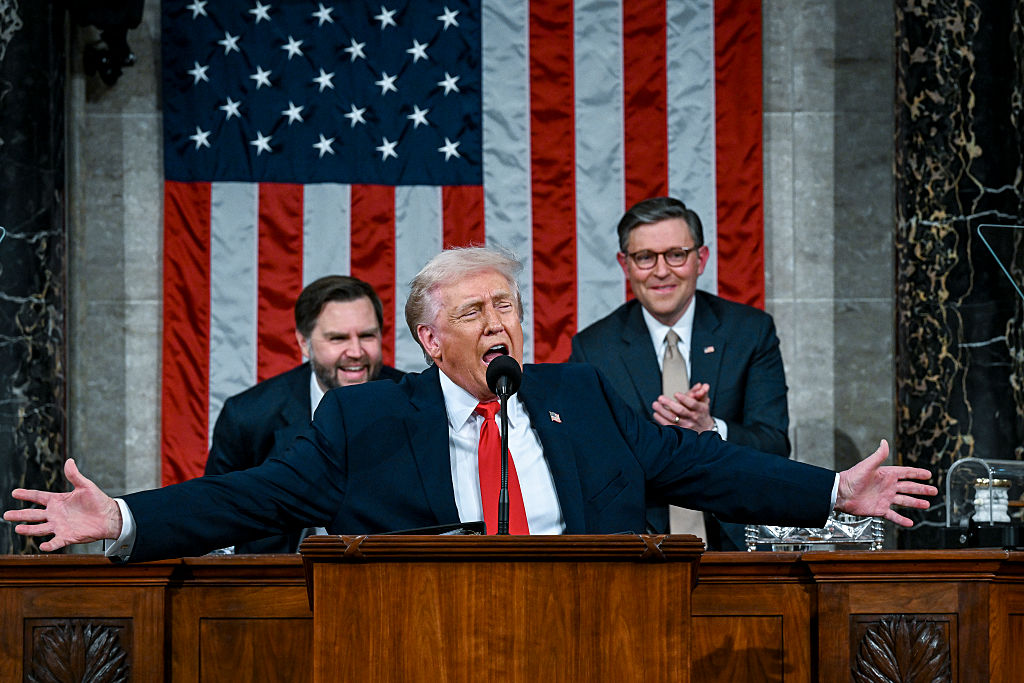
Trump runs the Joe Rogan gauntlet
Can a single podcast episode change the outcome of a presidential election, and consequently, of history? If former president Donald Trump has his way, the answer may be yes.
Trump joined Joe Rogan in Texas for just under three hours for a wide-ranging episode of the Joe Rogan Experience, the crown jewel of the podcasting universe; each episode nets millions of views, and its stats in coveted younger demographics are off the charts. If Trump was successful with the interview, he could motivate several thousand possible voters off their couches — and succeed he did.
Within hours, millions of people had tuned in across YouTube, Spotify and X. Even more watched viral clips, like when Trump called Vice President Kamala Harris a “very low IQ person [who] has a very low IQ. I’m for taking tests too. I think anybody who runs for president should take a test.”
Right off the bat, Rogan made it clear that this would be no ordinary interview, telling Trump that he doesn’t want to talk about the stuff everyone knows about. While at times, listeners could be forgiven if they forgot that Trump is just days away from facing an electorate in a contentious election in which he’s faced two assassination attempts, Rogan did press him on a series of issues, ranging from the 2020 election, which Trump suggested that he won in part because “they used Covid to cheat,” to the JFK assassination documents, which Trump said he would release.
The 45th president has been on a podcast blitz, joining Rogan’s friends Theo Von and Andrew Schulz on their shows, but it wasn’t a surefire bet that he would sit down with the UFC host, who has been a pointed critic of Trump’s in the past. In 2022, Rogan even said that he is “not a Trump supporter in any way, shape or form. I’ve had the opportunity to have him on my show more than once, I’ve said no every time.”
But on Friday, Rogan and Trump bonded over undergoing a series of relentless, and often inaccurate, media hatchet jobs. Rogan singled out the Russiagate story and the frequently misrepresented “very fine people” line — Trump helpfully added the recent “bloodbath hoax.” Rogan too has fallen victim to coordinated assaults from the media, which included a successful push for Spotify to remove several of Rogan’s earlier episodes.
The two men agreed that the media’s failures, including CBS News’s recent Kamala Harris-favorable edit of her 60 Minutes interview, opens the door for newer mediums like Rogan’s show, which he told Trump he’d have started even without his wildly successful career as a professional fighting commentator.
Fortunately for the episode’s audience, both men let bygones be bygones; Rogan kicked the episode off by riffing on the cast of characters who once loved Trump, but who turned on him once he became president: Oprah Winfrey and the cast of The View were singled out for mockery by both. Trump even suggested that he didn’t know the name of Alyssa Farah, his former staffer who has since become a fierce critic of his on TV.
However, Rogan said that “once they shot you, I was like ‘he’s got to come in here.’” Immediately after, he asked to inspect Trump’s bullet wound, as if the former president was a fighter with a bad case of cauliflower ear.
At one point, Rogan, the famed professional fighter asked Trump “how are you so healthy, is it golf?” Trump replied that “it’s genetics.” Both men now have a mutual respect for Robert F. Kennedy Jr. — and Rogan wanted to know if Trump would commit to having RFK Jr. in his administration in a meaningful way. The mutual admiration between the two men at the tops of their respective fields was evident throughout. “I think you know everything, as a student of yours,” Trump said.
Trump said yes, despite the reservations of “big pharma,” but with a caveat: he doesn’t want the younger Kennedy to have any say about “liquid gold” policies, because he is too anti-oil. “I love this idea of you teaming up with Robert Kennedy,” Rogan told Trump.
Despite Rogan’s wide-ranging knowledge base, even he came up short at times, especially when it came to the more granular areas of politics. While he was clearly well-versed on Trump’s record as president, he had never heard of Governor Glenn Youngkin, for example, upon whom Trump lavished praise.
There are under two weeks until the 2024 election is in the history books, and Trump is surely hoping that he can convert Rogan’s massive audience into Trump voters. But who is Rogan going to pull the lever for?
“You’re not a Kamala person,” Trump told Rogan. “I know you. I’ve watched you. I know you better than your wife. I’ve watched you for so many years. You’re not a Kamala person.”
Rogan didn’t quite answer, and while he bashed Harris for her embrace of the Defund the Police movement, at one point he noted that Harris was “supposed to do [my show]… and I hope she does, I will talk to her like a human being.”
“She would be lying on the floor comatose” if she did Rogan’s show, Trump said. Once he finished the episode, he jetted off to Michigan for a belated speech to an audience of his supporters.
How the French left is fuelling the small boats crisis
Three more migrants drowned off the French coast this week when their overcrowded and flimsy boat sank. In response to this latest tragedy, a French refugee organisation Utopia 56 posted a message on social media stating that ‘since July, there have been fatal incidents almost every week, causing at least 39 victims. It’s the result of the repressive policies chosen by our governments’.
Utopia 56 is one of France’s best known humanitarian organisations. My local newspaper in Burgundy recently worked with them in producing a report headlined ‘The migrants ready to die to reach England’. The introductory sentence described desperate migrants ‘fleeing bombs, repression and famine’. They came from Afghanistan, Libya, Eritrea, Yemen and Sudan.
A significant proportion of those who traverse the Mediterranean do so for economic reasons
According to official UK government figures, the four nations that have provided the most small boat passengers this year are Afghanistan, Iran, Vietnam and Turkey. Albania and Kuwait also make the top ten.
Utopia 56’s report ignored the question of why the men and women fleeing bombs and famine didn’t claim asylum in Italy, Greece, Spain, France or any other European country that they traversed en route to Calais. Bruno Retailleau, France’s Minister of the Interior, said recently that some of the migrant and asylum organisations in France must start ‘acting with the state with more coherence’. He may have had Utopia 56 in mind.
Utopia 56 are an active presence in Calais. Their staff brief the migrants on the procedure should they get into difficulty once at sea: phone 112, the French equivalent of 999. They are duty bound to transfer the call to the coastguard. If for any reason 112 don’t answer, the migrants are told to contact Utopia 56 ‘and we’ll call the coastguard to make sure they know where you are’.
Utopia 56 was formed in 2015 and usually receives a warm press in France’s mainstream media, the majority of which – print and broadcast – have a sympathetic view of migrants. In April this year, the organisation welcomed to Calais a group of far-left politicians from Jean-Luc Melenchon’s La France Insoumise. One was the MEP Manon Aubry, who declared her support for ‘the humanity of all those fleeing wars, floods and disasters…On behalf of the Left in the European parliament, we say: we will never accept a Europe of barbed wire. We will always fight for a Europe of solidarity and humanity.’
This statement ignores the fact that many of those in Calais are economic migrants – as they readily admit – who are attracted to Britain because it’s the easiest country in Europe to find work and accommodation.
At the start of this month Utopia’s founder, Yann Manzi, who describes himself as a ‘humanist’ and a ‘citizen of the world’ was interviewed by Liberation. While he criticised the people smugglers, he reserved his fiercest words for the governments of France and Britain. ‘Everyone needs to assume their responsibilities,’ said Manzi. ‘To save lives, we need to open ferry routes and allow people who so wish to apply for asylum on English soil.’
He also advocated the official furnishing of migrants with life-jackets, and the establishment of a parliamentary commission of inquiry. This would examine ‘what is happening on the northern coast, this systematic obstruction of people’s plans. We are also calling on the UK to stop subcontracting its border management to France.’ According to Manzi, what is unfolding in the Channel ‘is a crisis of welcome, not a migratory crisis.’
Utopia 56 aren’t funded by the state but other pro-migrant associations are, among them SOS Mediterranee. Since 2015 they have operated in the Mediterranean, picking up migrants off the coast of North Africa and transporting them to southern Italy. Its vessel, Ocean Viking, was impounded by the Italian government last year after repeatedly infringing a new law concerning the rescue of migrants at sea.
Among the left-wing French city councils that have donated six-figure sums to SOS Mediterranee are Lille, Paris and Marseille. In explaining why they were donating €130,000 (£108,400) to SOS Mediterranee this year, Marseille’s deputy mayor said it was to assist ‘children, women and men guilty of nothing except fleeing war, repression and ethnic violence’. As is the case with many of the migrants attempting to cross the Channel, a significant proportion of those who traverse the Mediterranean do so for economic reasons, leaving their homes in Egypt, Tunisia, Bangladesh and Morocco.
Bruno Retailleau is working on a new immigration bill, which will be tabled at the start of 2025, but the migrant associations are already using their allies in the media to sound the alarm. The NGO France terre d’asile (France, Land of Asylum), whose raison d’etre needs no explanation, receives government funding. Its president is Najat Vallaud-Belkacem, who was a member of Francois Hollande’s Socialist government a decade ago – as was Emmanuel Macron.
A director for France terre d’asile spoke recently of their ‘concern’ that their funding will be cut by Retailleau. ‘We need to stop putting blinkers on and thinking that immigration can be stopped,’ she said. ‘What matters is how we organise it, and how we ensure that everyone can live together peacefully and on an equal footing.’ That is how the left in France regards the migrant crisis: empowering and inexorable. A utopia to be embraced.
Why are Germans happy to continue paying a dog tax?
Local authorities in Germany are making more money than ever from dogs – or their owners to be precise. The very idea of charging dog owners an annual tax for keeping their pets may sound archaic to British ears but it carries on fairly unchallenged in Germany.
In 2023, Germany’s municipal authorities received a total of €421 million (£351 million) in tax from the country’s dog owners. The figure has risen by 41 per cent over the last decade. Each municipal authority sets its own fees. Having a dog in Berlin will set you back €120 (£100) a year with every additional dog costing €180 (£150). Stuttgart charges extra for breeds considered dangerous: owning a Bull Terrier or American Staffordshire Terrier costs €612 (£510) a year.
Despite there being no good reason for the dog tax, there seems to be no significant rebellion against it
If this seems a lot of money, you’re right. It comes on top of higher pet food costs, which have risen by nearly 17 per cent in 2023 alone. Vet bills have also climbed sharply since the general tariffs for what clinics are allowed to charge were increased in November 2022.
In light of the rising cost of living and the pressures this puts on pet owners, occasionally small flurries of opposition to the dog tax do occur. Earlier this year, in the small south-western town of Blaustein, for instance, the authorities had decided to raise the annual dog fee by 60 per cent, from €90 (£75) to €144 (£120). A second dog will set you back €288 (£240). This drove 100 people onto the street in protest. Anja Hagenlocher, who owns a rescue dog called Thea, said this was the first demonstration she had ever taken part in. She felt it was unfair that ‘the town’s coffers are empty and now dog owners are supposed to pay for the shortfall’.
Blaustein town council ignored the protest. A local journalist wrote that she agreed with the decision. Owning dogs herself, she felt that ‘a high dog tax is also a chance for animal welfare’. The argument isn’t new. High costs for dogs are supposed to deter people from buying or adopting pets for which they cannot afford the food and vet bills. But since there aren’t taxes on cats and other pets, this argument is unlikely to make dog owners feel better about their annual shortfall.
Some municipalities have thought about introducing a cat tax. In Leipzig in eastern Germany, a councillor from the far-left party Die Linke argued that feline damage to the local bird population should be punished in some way. The motion was denied because the tax wouldn’t have been enforceable. Cats that are allowed to roam outside aren’t easily attributable to their owners. The commission looking into the matter concluded that ‘the keeping of birds, tarantulas and other pets is also impossible to tax’ since it would be difficult to check if someone even has these housebound pets. In other words, the authorities tax dogs because they can.
Another argument that has long been used to justify the tax is that dogs defecate in public areas, which requires cleaning by the local authorities and the maintenance of additional bins. But the €421 million raised this way isn’t ringfenced and simply flows into the authorities’ general coffers.
Despite there being no good reason for the dog tax, there seems to be no significant rebellion against it. This may partially be because of the extremely high risk of getting caught. Dogs have to have to wear a visible tag with their registration number at all times. Being caught without it can incur a fee of up to €10,000 (£8,335).
But the more likely reason why people pay up is simply that the dog tax has been around for so long. Its roots can be traced back to its introduction in Britain in 1796. This was a more progressive form than the one that Germany applies today: instead of a flat rate, dogs used in sports were classed as a luxury and therefore charged at five shillings per year. Poorer people were allowed to keep one dog not used for sport tax-free. Britain kept a dog licensing system at 37 pence for each dog until 1988 when it was abolished. But even beforehand, many dog owners simply ignored the requirement since it wasn’t really enforced.
The Kingdom of Prussia was among the first German-speaking states to introduce a dog tax in 1810. It applied it as a luxury tax, the logic being that anyone who had enough money to feed a dog was also able to pay tax. Cats on the other hand were considered a necessity to keep mice and rats at bay.
Many countries have now abolished their dog taxes. Denmark did so in 1972, France in 1979 and Sweden in 1995. They were followed by Belgium, Spain, Italy, Greece and others. However, the German-speaking countries of Austria and Switzerland still charge it.
Since there is unlikely to be a widespread rebellion against a tax considered part of Germany’s state fabric, it isn’t seen as an issue worth raising by any political party. The dog tax has somehow evaded a widespread debate around the increased cost of living. As long as that remains the case, local authorities will happily count their boost in revenue and let sleeping dogs lie.
How cozy is Tim Walz with China?
The term ‘old friend of the Chinese people’ has a sentimental, almost innocent ring, but the Chinese Communist party (CCP) regards it as a job description. It is a label used to describe foreigners looked on favourably by the CCP, but it also carries obligations. ‘Old friends’ are expected to be sympathetic and further the interests of the party. ‘China will never forget their old friends,’ said President Xi Jinping when he met Henry Kissinger, the most famous holder of that title for his supposed pragmatism toward Beijing, last year.
Perhaps the most notorious ‘old friend’ was Edgar Snow, the American journalist, who was given privileged access to Mao Zedong and his fellow revolutionaries in the 1930s. He rewarded them with flattering portraits. In this respect, the term is not unrelated to ‘useful idiots’, which emerged during the Cold War with the Soviet Union and was used to describe those Westerners who allowed themselves to become dupes of communism.
To say that Walz engaged with CCP-front organisations during his association with China is a truism
The question of whether Tim Walz, the Minnesota governor and the Democrats’ vice-presidential nominee, can be regarded as an ‘old friend’ is one of the larger unanswered questions of the US election. Much about his engagement with China remains unclear. There is no doubt that his experience with the country is highly unusual among top US politicians, though his campaign now claims his number of visits was ‘closer to 15’ and not the 30 he had originally claimed.
During last week’s vice-presidential debate, Walz also said he ‘misspoke’ when he claimed he was in Hong Kong during the 1989 Tiananmen Square massacre, on route to a teaching job in the mainland. This is despite the fact that for years he has maintained that he was there at that traumatic time.
Whatever the precise number of visits, it is the nature of those visits that so distinguishes him. If Kamala Harris is elected president, Walz will become the first vice president to have lived in China since George H.W. Bush, who served as the top US diplomat in Beijing in the 1970s. But Walz’s China was very different from that of Bush, who lived the relatively cloistered life of a diplomat. Walz was a teacher in provincial China before going on to organise multiple student study tours for American students. And although vice presidents typically don’t have a lot of influence on foreign policy, Harris had little record in international affairs before she became vice president and has never been to China, which suggests that Waltz could have a larger say.
Tiananmen Tim, Wuhan Walz, Totalitarian Tim, the Great Walz of China are just some of the names thrown at Walz by his Republican critics. ‘Communist China is very happy with @GovTimWalz as Kamala’s VP pick,’ tweeted Richard Grenell, who served as ambassador to Germany and was acting director of national intelligence in the Trump administration. The Harris-Walz campaign retorted that ‘Republicans are twisting basic facts’. James Singer, a campaign spokesperson, said Walz has long stood up to the CCP and has ‘fought for human rights and democracy, and always put American jobs and manufacturing first’.
That said, it has not been an issue the Democrats are keen to talk about. It is as if they cannot quite make up their minds whether in an era of bipartisan hawkishness toward Beijing, Walz’s experience is an asset or a liability.
Walz first went to China in 1989 as a 25-year-old recent graduate to teach English and American history at a high school in the city of Foshan in Guangdong Province, next to Hong Kong. The placement was organised by the WorldTeach program, a nonprofit affiliated with Harvard. Before his debate correction, Walz had claimed a stopover in Hong Kong coincided with the 4 June Tiananmen Square massacre.
Many people at the time cancelled visits to the mainland out of revulsion at the killings of pro-democracy protesters or fear of a wider civil war. Walz said he decided to stick to his plans, later telling a 2014 congressional hearing marking the 25th anniversary of the massacre, ‘It was my belief at that time that the diplomacy was going to happen on many levels, certainly people to people, and the opportunity to be in a Chinese high school at that critical time seemed to me to be really important’. It now transpires that he did not leave his home state of Nebraska for China until August that year.
At Foshan No. 1 High School, located in one of the city’s oldest neighbourhoods, Walz taught four classes a day with about 65 students in each class. He was paid around $80 a month, double what the local teachers earned, and he was the only one to be given the added luxury of an air-conditioning unit in his school accommodation. He was reportedly nicknamed ‘Fields of China’ because of the breadth of his kindness.
There is little doubt that the experience left a deep impression on him. ‘No matter how long I live, I’ll never be treated that well again,’ he told the Star-Herald, a Nebraskan newspaper, upon his return to the US in 1990. He said going to China had been ‘one of the best things’ he had ever done, but he also said that the Chinese people had been cheated by their government for years. ‘If they had the proper leadership, there are no limits on what they could accomplish… They are such kind, generous, capable people.’
Walz went on to teach social studies at Alliance High School in western Nebraska, where he met his future wife, Gwen Whipple, an English teacher. They married on 4 June 1994, the anniversary of the Tiananmen massacre (‘There was no doubt I would remember that date,’ Walz would later say). Soon after the wedding they left with 60 students for a study trip to China, which effectively became their honeymoon. They set up a company called Educational Travel Adventures, through which student trips were organised, and continued to arrange summer visits after they moved to Mankato, Minnesota in 1996. The visits took place most years and Walz learned to speak some Chinese.
Senior Republicans claim all this is rather sinister. Senator Marco Rubio, the top Republican on the Senate Intelligence Committee, says that Walz shows how China ‘patiently grooms future American leaders’. James Comer, the Republican head of the House Oversight Committee, has suggested that the vice-presidential nominee was a target of ‘elite capture’ by the CCP. He has written to the FBI requesting information on Chinese groups that engaged with Walz and suggested that Beijing picked up the costs for a student trip organised by Walz. Comer also noted that in 2019, Governor Walz had been a keynote speaker at a meeting of the Chinese People’s Association for Friendship with Foreign Countries, a CCP-front organisation. ‘The American people deserve to fully understand how deep Governor Walz’s relationship with China goes,’ Comer says.
Senior Republicans claim all this is rather sinister
Critics have also pointed to conciliatory comments made by Walz about the CCP. ‘I don’t fall into the category that China necessarily needs to be an adversarial relationship,’ he said in a 2016 interview. ‘We’re on the same sheet of music, two of the world’s great superpowers, there’s many collaborative things we can do together.’ He has spoken of the need for dialogue and cooperation on issues such as trade and climate change. In 2019, he highlighted how high tariffs were hurting farmers and said then-President Trump needed ‘to start doing his job and end the trade war with China’.
The Harris campaign has not released information about the funding of his student trips, which took place between 1994 and 2003, but points to his record in supporting human rights in China during his 12 years in the House of Representatives from 2007 to 2019. In 2015, he was part of a rare American delegation to Tibet led by Nancy Pelosi, then the House minority leader. The following year he met the Dalai Lama, Tibet’s exiled spiritual leader and a CCP bête noire. He described the encounter as ‘life-changing’.
Walz gave strong backing to the Hong Kong Human Rights and Democracy Act, which imposed sanctions on Chinese and Hong Kong officials for human rights abuses during the city’s democracy protests, and met with Joshua Wong, a now-imprisoned student leader of the democracy movement. Earlier he co-sponsored a resolution demanding the release of Liu Xiaobo, a Chinese dissident and Nobel laureate. As a member of the Congressional-Executive Commission on China, which focuses on human rights, he criticised China’s crackdown on rights lawyers and religious groups, as well as unfair trade practices.
To say that Walz engaged with CCP-front organisations during his long association with the country is a truism: it would have been impossible not to. Chinese groups that help organise or sponsor visits, whether they are focused on business people, academics or students, could not operate without links to the party and are part of the CCP’s ‘united front’ apparatus that aims to exert influence and nurture relationships useful to the party – even down to the recruitment of spies.
Seeking influence is, of course, the stuff of all diplomacy, but what distinguishes China’s ‘united front’ efforts is their sheer size and methodical nature – and the frequently clandestine manner in which they operate. This system has been beefed up under Xi, and on the academic front includes phantom (but well-remunerated) ‘academic conferences’ as well as carefully choreographed ‘study tours’. Their currency is flattery, favours and much window-dressing, but it should have been the job of organisers such as Walz to prepare students with the critical tools to see beyond the CCP’s dog and pony shows.
What of Beijing’s view of Walz? When he became Harris’s running mate, China’s Foreign Ministry spokesperson Mao Ning avoided commenting, merely calling for ‘win-win cooperation’ with the US. Chinese state media initially avoided discussing Walz’s stance on China, only later implying that he might advance Beijing’s agenda.
‘Walz knows more about China than most US politicians and is capable of making more rational and informed decisions on US-China relations,’ wrote the China Daily, a state-owned broadsheet, adding that it hoped he ‘helps bring sanity’ to Washington’s policy toward China. This suggests the CCP too is still figuring out what his nomination means – as well as probably dusting off their files from a certain Foshan school. So far there has been no deployment of the term ‘old friend of the Chinese people’, but should it be wheeled out, that really would be the time to start worrying.
The West’s green agenda is abandoning Africa to China
In the remote Ludewa district of southern Tanzania, villagers scratch out a meagre living in harsh conditions. The roads are barely passable, clean water is hard to come by, and families live in rudimentary homes made from mud bricks. Preventable diseases like malaria, cholera, and dysentery plague the region, and health infrastructure is almost non-existent. Electricity, for most of Ludewa’s residents, is a distant dream. Yet beneath this harsh land lies enough coal to power all of Tanzania for over a century and to lift it out of poverty altogether.
While China is ready to develop Mchuchuma, the West has left the field, wary of the environmental fallout
The region’s coal reserve at Mchuchuma has been estimated to contain as much as 428 million tons. In conjunction with the neighbouring Liganga iron ore mine, it could fuel Tanzania’s energy grid, reduce reliance on costly imports, and spark the industrialisation of the country. The coal could power a 600 MW thermal plant, part of a larger project to generate electricity not only for industry but for homes across Tanzania. But despite the huge potential, the project remains stalled. After western firms were unable to secure financing for the project, a Chinese firm signed a $3 billion deal to develop the coal reserve. For the past several years, the project has been facing bureaucratic delays and regulatory gridlock, leaving the residents of Ludewa to struggle without the benefits of the coal beneath them.
While China is ready to develop Mchuchuma, the West has left the field, wary of the environmental fallout. Western investment, fearful of political backlash, has pulled out of fossil fuel projects across Africa – even as the continent’s need for energy grows more urgent.
There’s a cruel irony here: while China steps in to develop Africa’s resources, western environmentalists tut disapprovingly from afar. The West is all too happy to mine Africa for critical minerals like cobalt, nickel, and lithium – vital components of the electric cars and solar panels that will power Europe’s green future. But when it comes to Africa using its own coal to lift itself out of poverty, that’s a step too far.
The hard truth is that fossil fuels have powered every major industrial revolution, and it’s arrogance for the West to expect Africa to skip this phase of development. China didn’t miss the fossil fuel stage –look where it is now, after 40 years of unprecedented growth. The country powered its rise with coal, oil, and gas, building a thriving industrial base while the West now expects Africa to industrialise without the same tools.
But here we are. The green agenda, while aimed at saving the planet, is driving Africa into a corner. The western retreat from fossil fuels leaves projects like Mchuchuma in limbo, putting Africa at the mercy of Chinese capital.
Western environmental policies have created a global financial system that shuns coal, no matter how badly countries like Tanzania need it. This limits Tanzania’s options, forcing it into its dependency on China, which doesn’t hesitate to invest where the West retreats.
It’s not just the big projects like Mchuchuma being held back – African farmers are also bearing the brunt of western environmental policies, which are making it harder for them to access reliable energy and sustain their livelihoods. In neighbouring Kenya, Jusper Machogu, an activist sharply critical of global warming and half-baked environmental policies, has spent years warning that western climate policies are crippling African agriculture. Farmers in rural Kenya rely on diesel-powered pumps to irrigate their crops, but they’re being pushed to switch to solar panels – which, according to Machogu, can’t reliably power a farm. Machogu’s message is simple: Africa can’t run on energy solutions designed for nations that have already industrialised. What Africa needs is affordable diesel, not impractical green policies.
Without reliable access to fossil fuels, African farmers are being held back by western environmentalists more concerned with carbon footprints than with the development that Africa needs. Machogu’s point is that the policies that come out of Brussels, London, and Washington may win applause in conference halls, but they leave African farmers stuck in a cycle of low productivity and poverty.
Back in Ludewa, the consequences of these delays are all too clear. The people living in this district continue to suffer from high rates of disease, malnutrition, and lack of infrastructure. The Mchuchuma coal project, if completed, would spark the transformation of the country. Thousands of jobs would be created in both mining and steel production. Roads, schools, and hospitals would be built, funded by the taxes and profits from the project. Electricity would flow to homes that have never had it, and Ludewa could become a hub for Tanzanian industry.
But without coal, all the green energy projects in the world won’t lift East Africa out of poverty. Solar panels and wind farms might power a village, but they won’t drive the industrialisation that Tanzania needs. Africa requires baseload power – the kind that keeps factories running and infrastructure growing. Fossil fuels, like coal and natural gas, provide that reliable energy.
Tanzania’s development, and that of much of Africa, is being held back by a global narrative that places more value on green credentials than on human development. The West, having used fossil fuels to develop its own economy, is now attempting to maintain its growth with expensive renewables – an effort that Africa simply cannot replicate if it wants to industrialise. Yet, the West pressures Africa to rely solely on renewables, ignoring the reality that these cannot provide the reliable, affordable energy the continent needs.
The Mchuchuma project stands as a symbol of Africa’s potential – a project that could industrialise Tanzania and provide electricity to millions. But it also stands as a reminder of how western environmentalism is holding Africa back.
The West needs a reality check. Western climate policies are stymying growth in Africa, but they can’t hold back Africa’s ambitions forever. Nations such as China are stepping in. The Mchuchuma project shows that development will happen – with or without western involvement. If the West wants to stay relevant in Africa’s future, it must support real growth – or accept that others will take the lead.
Does Keir Starmer know what a working person is?
First, Keir Starmer struggled to define what a woman is. Now, he’s having difficulty explaining what counts as a working person. Ahead of next week’s Budget, the Prime Minister has been accused of tying himself in knots over who will be expected to carry the burden in the Budget. During the general election campaign, both Starmer and his chancellor Rachel Reeves regularly said the tax burden on ‘working people’ was too high. In the manifesto, the party pledged to protect ‘working people’ from paying more. Now ahead of a tax-raising Budget (Reeves is expected to try to raise £35 billion through tax), Starmer is under pressure to explain who exactly this refers to. Those who don’t fall into the category could find their taxes going up significantly.
The responses from the government have been mixed. Those who have so far had their working person status questioned include high earners (100k or more), business owners and the asset rich. In an interview from the Commonwealth summit in Samoa, Starmer appeared to suggest that landlords and shareholders are not ‘working people’. When asked on Sky News whether ‘someone who works but gets their income from assets as well, such as shares and property’ was a working person, the Prime Minister replied: ‘Well, they wouldn’t come within my definition. I think people watching this will know whether they’re in that group or not.’ He suggests that a working person tends to get ‘paid in a sort of monthly cheque’.
The comments have led to a backlash from landlords, entrepreneurs and more. However, since then his spokesman has suggested that people with a ‘small amount’ of shares also counted. The Chancellor has since clarified that Starmer is at least a ‘working person’ – as he gets his income from going out to work and ‘working for our country’ (even if he doesn’t always pay for his own clothes). Treasury Minister James Murray told Sky News this morning that a ‘working person is someone who goes out to work and who gets their income from work’.
Why does this matter? It comes down to whether or not this government can be accused of breaking its promises in the Budget. Starmer risks tripping up over what a working person is in a bid to argue that his government is not breaking a manifesto pledge. Already, he seems to be alienating swathes of voters who view themselves as working people who are doing their bit. The risk is that voters decide that while what he’s saying could be argued on a technical point, it is not in the spirit of what was promised during the campaign.
Democrats ramp up efforts to tie Trump to Hitler
Democrats including presidential nominee Kamala Harris and 2016 candidate Hillary Clinton are accusing their Republican opponent of being a Hitler-esque fascist. Spurred by a curiously thin report from the Atlantic claiming that former president Donald Trump disrespected the memory of a fallen soldier and praised Adolf Hitler and his generals, Harris held a press conference on Wednesday in front of her Washington, DC residence in which she warned Trump is “increasingly unhinged and unstable.” During a CNN town hall later that evening, Harris answered in the affirmative when she was asked if she believes Trump is a fascist. Meanwhile, Clinton likened the upcoming Sunday Trump rally at Madison Square Garden to an event held by Nazis at the same venue in 1939. Of course, MSG is also frequented by less divisive attractions, such as Billy Joel, the New York Knicks and Elton John.
Republicans have come out in droves against the Atlantic article, written by the notoriously dubious Jeffrey Goldberg, pointing out that the paper is owned by Laurene Powell Jobs, a longtime friend and donor to Harris and that most of the claims were attributed to a single anonymous source. General John Kelly later went public and claimed to have heard Trump’s comments about Hitler, but numerous other sources rejected the claim, including General Keith Kellogg, White House official Nick Ayers and former chief of staff Mark Meadows. Vanessa Guillén’s family lawyer and her sister also denied that Trump mistreated their family or Guillén’s memory. The Trump campaign followed up with an ad featuring an Auschwitz survivor stating that Harris comparing Trump to Hitler is the “worst thing” he’s ever heard. Speaker Mike Johnson and Senate Minority Leader Mitch McConnell argued that such rhetoric is what leads to assassination attempts against Trump.
The amped-up efforts from the Democrats come as some internally are panicking over the possibility that Harris could lose the race. Some strategists told the Hill that they are worried about the “vibes” and fear that the election is slipping away from them. The New York Post ran a similar article wherein Democrats sarcastically theorized that some of Harris’s staff were secretly working for Trump because of how poorly they’ve been managing the campaign. “Her press operation is that of a first-time congressional candidate running as a sacrificial lamb,” one Democrat asserted.
They have good reason to be concerned. The last iteration of the New York Times/Siena poll ahead of the election found worrying trends for Harris. An earlier version of the poll in October had Harris up three points over Trump; now the pair are tied. CNN data reporter Harry Enten cautioned that Trump was capable of even winning the popular vote.
-Amber Duke
On our radar
McCONNELL JUICES NEVADA Senate Minority Leader Mitch McConnell’s political action committee, Senate Leadership Fund, dumped $6.2 million into the Nevada Senate race between Republican Sam Brown and Democrat Jacky Rosen. Early vote numbers in the state have been promising for the GOP.
UNENDORSED The Washington Post and LA Times will not endorse a candidate in the presidential election for the first time in decades. Editorial staff say they were waved away from publishing endorsements of Vice President Kamala Harris at the behest of their billionaire owners, Jeff Bezos and Patrick Soon-Shiong, respectively.
MODEL ACCUSES TRUMP Former model Stacey Williams claimed in a “Survivors for Harris” campaign call that former president Donald Trump groped her in the 1990s. Williams was allegedly introduced to Trump by her boyfriend at the time: the now-deceased sex trafficker Jeffrey Epstein.
What to expect from Trump’s Joe Rogan interview
Joe Rogan is probably the only person to have interviewed Alex Jones, Luke Bryan, Elon Musk and Edward Snowden on his podcast, which is one of the largest in the world.
His next guest may be his biggest yet: former president Donald Trump taped an episode today for the Joe Rogan Experience, which is set to be released imminently.
The interview, which could come close to breaking the internet, was no guarantee even as recently as a few weeks ago. Rogan has taken some digs at Trump before, previously saying in 2022 that he is “not a Trump supporter in any way, shape or form. I’ve had the opportunity to have him on my show more than once, I’ve said no every time.”
During his interviews, Rogan touches on subjects ranging from alien life to drugs to professional fighting, and much more. Trump, who has made the rounds on podcasts ranging from Theo Von’s This Past Weekend to Bussin’ with the Boys, will be well-prepared for what it takes to sit down for around three hours with Rogan.
Both Trump and Vice President Kamala Harris are on a podcast blitz, appearing on shows that their potential voters frequent rather than making voters go to them. Over the years, Rogan has hosted politicians of both parties, including Senator Bernie Sanders, whom he voted for in 2020, and Republican representatives Wesley Hunt and Dan Crenshaw.
Trump isn’t alone in getting in on the fun; his running mate, Senator J.D. Vance, recently sat down with comedian Tim Dillon, himself a frequent Rogan guest. Harris, it seems, has rebuffed entreaties to do Rogan’s show, despite making an unusual campaign stop in Texas in the homestretch.
–Matthew Foldi
Election night in DC: soireé or flee?
Will Election Day cause America to erupt in another spasm of violence? The nation’s capital is bracing itself for the possibility. “The Election Is Looming — and These Washingtonians Are Running Scared,” declares a Politico piece, which reports how “all kinds of people are scouting conveniently timed vacations.” Businesses are set to board up on Connecticut Avenue and elsewhere downtown. Overseas, America’s soft-handed European allies are anticipating the worst (when don’t they?): the Times of London commissioned a poll showing that a quarter of Americans fear civil war after the election.
Not everyone in the city is clutching their pearls, however. Dirty Water, a sports bar on H Street NE that is under new management, has opted to walk headfirst into the political controversy. “After watching a pizza shop known for feeding the homeless be accused of racism for a hilarious dessert ad and a U St bar attacked for the audacity of including both political parties in their logo, we think it’s probably best to pass on the edgy election night graphics we had planned,” they write in an Instagram post.
“That being said, we’re rooting for Trump and we plan on spraying champagne when we win. If that’s not your vibe, we kindly suggest you take in election night somewhere less fun.”
Some patrons are less than pleased with the bars decision to get off the fence, “Lmao no serious Boston fan should ever step foot in this moldy ass place,” reads one comment. Others are more enthused: “Dirty water isn’t for dirty libs. Let’s goooo”
Do you have plans for election night? Email cockburn@thespectator.com to invite Cockburn to your party.
–Cockburn
Will this end the ridiculous charade of males in women’s sports?
I’ve long liked to think that if I was a really big girl I would transition to compete in the men’s boxing heavyweight championship. Why not, ladies? Tyson Fury earns about £100 million every time he laces up his gloves. Why not get a slice of that pie?
After all, for an extremely weird decade or so we’ve been enjoined to believe there are no physical advantages, at least not in terms of strength, speed or stamina, to being born male over female. It’s the foundational myth upon which all sorts of madness – hulking great former blokes taking on women at sports including rugby, swimming, cycling and football – has been predicated.
Why has it taken until now for someone to suggest this?
If biological men can dominate women’s sport, then why not the other way around? Why don’t biological women ever switch codes, so to speak, to beat the fellas on the their own turf?
It looks like we might now never know. The UN has just issued a report on violence against women and girls in sport that appears to want to put a stop to the bending of gender rules in sport for good. Reading it is like waking up from a particularly wild dream in which everyone seemed to have gone insane. Finally, someone – the UN Special Rapporteur Reem Alsalem, in this case – is talking perfect sense.
Alsalem doesn’t hold back. She points out that since trans women – she calls them by the old fashioned term ‘males’ – have been allowed to compete with biological women in sport, ‘over 600 female athletes in more than 400 competitions have lost more than 890 medals in 29 different sports’. She makes clear, too, that everything we’ve been told about medications to suppress testosterone in trans women, thereby ensuring they have no athletic advantages over biological women, is a load of rubbish.
She says: ‘Male athletes have specific attributes considered advantageous in certain sports, such as strength and testosterone levels that are higher than those of the average range for females, even before puberty… Pharmaceutical testosterone suppression for genetically male athletes – irrespective of how they identify – will not eliminate the set of comparative performance advantages they have already acquired.’ Quite.
It goes without saying the ridiculous debate about whether men should be allowed to compete against women in any sport, let alone contact sports, has had serious repercussions for actual women. Alsalem says: ‘When female-only sports spaces are opened to males, as documented in disciplines such as in volleyball, basketballand soccer… injuries have included knocked-out teeth, concussions resulting in neural impairment, broken legs and skull fractures.’
She cites, too, a study published in Sports Medicine that found:
Even in non-elite sport, ‘the least powerful man produced more power than the most powerful woman’ and states that, where men and women have roughly the same levels of fitness, males’ average punching power has been measured as 162 per cent greater than females.
None of this can possibly come as news to anyone who has walked about in the world with their eyes open.
The way the entire trans issue has been weaponised in recent years by those on the front lines of the culture wars strikes most people, I think, as extremely bizarre. ‘What is a woman?’ has become a staple question of any media interview with a politician, and all of us increasingly – particularly during Pride month, when even captured corporations get in on the fun – are stridently impelled to agree that trans women are indeed women.
Personally, I’ve come suspect the point of it all is just a diabolically clever and deliberate means of making the West question itself constantly, eventually causing it to suffer a nervous breakdown. Looking around, you’d have to say as a plan it’s working quite well.
Anyway, I digress. Alsalem’s report makes one particularly exciting proposal, one that surely would be a ratings smash: ‘the creation of open [sports] categories for those persons who do not wish to compete in the category of their biological sex.’ A trans-only category. Why has it taken until now for someone to suggest this? Who doesn’t want to know who is the fastest transgender person in the world, or the strongest, or the most capable of jumping very high?
One hopes after this report, the allowing of men to compete with women in physical contests, let alone to share changing rooms, will be a strange thought experiment we will tell future generations about, while shaking our heads in bewilderment. ‘Males must not compete in the female categories of sport,’ the report says.
And let that be an end to it.
I can handle Trump, Farage tells Labour
Nigel Farage was on gregarious and ebullient form at our Americano US election event in Westminster last night.
He confidently assured the audience that Donald Trump is going to win. He repeatedly mocked the British Conservative and Labour parties. And he offered his services as a sort of unofficial transatlantic point man for the ‘special relationship’.
Having claimed in Politico yesterday that he was 90 per cent sure that Trump would take back the White House, Farage upped the ante for The Spectator audience. ‘I tell you what, folks,’ he said, ‘be in no doubt on 5 November, Donald Trump is going to win. And thank God for that.’
Farage called Trump’s McDonald’s stunt last weekend ‘absolute political genius.’
‘We’re seeing the humorous side of Trump,’ he said. ‘We’re seeing the fun side of Trump. And all the while, he’s smiling. He’s going to win.’
Farage conceded that he had experienced moments of doubt about a Trump comeback in the last four years. After 6 January 2021, for instance: ‘It was a very ugly day,’ he said. ‘It wasn’t great at any level. The funny thing is, I was actually invited to be there on January the 6th, and I just thought, I don’t like the feel of this. It doesn’t make sense. I made my excuses and thank God I wasn’t there.’
‘That was bad. Look, you know Trump, of course he gets things wrong. We all get things wrong.’
Farage also suggested that Trump made a mistake in accepting a debate with Joe Biden, an event that ended up effectively knocking Biden out of the race:
The decision to accept the Biden offer to do the debate was a disastrous tactical decision. It was that debate that knocked Biden out of the race. Trump should never, ever have done that debate. And I remember, before it, you know, good friends of mine in the Republican party being absolutely furious. But of course, the trouble is, when you’re dealing with a Trump, you’re dealing with a warrior. You offer a warrior a fight, and the warrior goes in. But that was a very bad error.
But, he said, more and more voters now understand ‘two things about Trump… One, his instincts on the big stuff he generally gets right. And the other thing I’d say to you is in the last two weeks, the global public have begun to see who he really is. I know him personally. You have lunch with him, dinner with him, whatever it is, he’s got friends and family around him.’
He then challenged me, his interviewer, to an even money bet that Trump would triumph next month. I didn’t like those odds.
Glugging on his glass of red, Farage turned to domestic politics. He repeatedly lambasted the Conservative party and attacked Keir Starmer’s government over its falling out this week with the Trump campaign. ‘The reason that the Labour intervention is causing this row is that America is our most important relationship in the world,’ he said. Ever the patriot, however, he offered to ‘do whatever I can to help the relationship between Trump and the British Labour government.’
As an elected politician, Farage ruled himself out as an Ambassador to the US – though he did say: ‘If I got the job of the UK ambassador in Washington, it would have been a very good thing – you would never have seen a wine cellar like it.’
Having shunned his wager, I did take a small gamble in asking, rather rudely, if he thought Trump could remember the name of the Reform party.
‘It’s Nigel’s party,’ Farage replied, impersonating Trump. ‘It’s a great party. They’re so good.’
He then reverted back into Nigel: ‘Does it matter?’ The answer, I suppose, is no.
Watch the full interview on SpectatorTV: