-
AAPL
213.43 (+0.29%)
-
BARC-LN
1205.7 (-1.46%)
-
NKE
94.05 (+0.39%)
-
CVX
152.67 (-1.00%)
-
CRM
230.27 (-2.34%)
-
INTC
30.5 (-0.87%)
-
DIS
100.16 (-0.67%)
-
DOW
55.79 (-0.82%)
Children need protection from adult madness
The Texas Supreme Court just upheld a state law banning so-called gender-affirming care for minors, to explosive consternation from predictable quarters. Progressive commentators portray this and similar laws passed by more than a dozen Republican-controlled state legislatures as ‘anti-LGBTQIA+’. In truth, the laws are aimed not at that whole bramble of capital letters, but solely at the ‘T’.
The left claims withdrawal of puberty blockers and sex ‘reassignment’ surgery violates trans kids’ ‘rights’
Slamming these bans histrionically as ‘genocide’ (four in 15,000 patients of the Tavistock or on its waiting list committed suicide between 2010 and 2020, but according to propaganda it’s up to 50 per cent of trans kids who try to kill themselves), the American left claims withdrawal of cross-sex hormones, puberty blockers and sex ‘reassignment’ surgery for children violates the ‘rights’ of trans kids. Yet progressives never seem indignant over the gross unfairness that children can’t buy alcohol, purchase cigarettes, join the army, get a tattoo, work in factories, marry or consent to sex with an adult. Why doesn’t being prevented from snagging a packet of Marlboros violate children’s rights?
Oh, no, we must protect minors from injuring their health when they’re too young to appreciate the threats of cancer and addiction. But according to the American left, which used to decry female genital mutilation, 12-year-olds are mature enough to decide to halt the progress of puberty (potentially imperilling their brain and skeletal development), commit to a costly pharmaceutical regimen replete with irksome side effects for the rest of their lives, have healthy body parts hacked off, accept a future of sexual dysfunction and forego parenthood altogether. In the frenzy of the culture wars, Republicans have passed some clumsy legislation, but these laws are spot on. Nevertheless, Canada has issued a comical travel advisory about the ‘risks’ in certain US states for citizens who belong to that ever-extending string of upper case letters.
Gotta hand it to these doctors: ‘gender-affirming care’ is genius branding. Usefully, ‘gender’ has become a nonsense word. What could possibly be wrong with ‘affirming’? Why, the adjective exudes niceness, solace and esteem. And no physician or parent could oppose ‘care’. Yet the euphemism translates to ‘sex-denying medical experimentation’.
One witness who testified in support of the Texas bill during the legislature’s debate was Corinna Cohn – who now often goes by ‘Corrie’ – a self-identified ‘transsexual’ who was well ahead of the curve when he transitioned in 1994 at 19. He now says he is male and always has been, though he can never turn back the clock, having lopped off certain equipment. Pilloried as a quisling by trans activists, Cohn is on a national mission to stop underage transitions.
As he told Wesley Yang on the Year Zero podcast, the rage for castration and mutilation of minors is bound to ‘blow up on us’, and ‘it’s going to get worse from here’. He predicts that similar laws will soon be passed in most states, even Democratic ones. The trans phenomenon, he says, is about ‘self-perfection. It’s not to cure an illness. It’s not to cure even a mental disease. This is about helping someone who has a fantasy achieve their fantasy. It would not be ridiculous at all for us to string up guide wires from building to building and let people strap themselves on so that they can pretend to be superheroes flying from place to place.’ Cohn despairs: ‘Doing this to kids? It’s so unjust, the amount of pain, and the elimination of so many healthy futures.’ And he warns that the products of ‘gender-affirming care’ are prone to exaggerate their happiness with the results: ‘No one wants to seem like a fool for getting what they asked for.’
Another famous early adopter was Jazz Jennings, who under the influence of his lunatic Munchausen mother became quite the online poster boy – or girl – for trans in 2007. Though as a kid Jennings had an androgynous cuteness, alas, he’s grown up. Having never gone through puberty, the boy developed only a micro-penis, giving surgeons fashioning a fake vagina little to work with. Constant dilation to keep the wound from healing shut is excruciating. Politically what’s happened to Jazz Jennings, now 22, is a powerful cautionary tale. He’s not only in pain, neurotic and miserable; he’s fat. Really fat. Any woman could have warned him about the effect of all that oestrogen. Let’s hope Jennings tours the same states where Cohn is campaigning: Look, kids. Do you want to grow up to be like me?
In a rare instance of taking the cultural initiative, both Europe and the UK are steadily retreating from ‘gender-affirming care’ in preference for talk therapy – a story the American left-wing media scrupulously buries. By contrast, the entire US medical establishment is intoxicated by Frankensteinian maiming of children. In a self-sustaining feedback loop, the enthusiastic endorsement by the American Medical Association and the American Academy of Pediatrics of an ‘affirmative’ approach to underage confusion has been successfully deployed to strike down in court multiple state bans on sex-change treatments for minors.
The trans mania took off in 2013, and I didn’t stick my neck out in public on the issue until 2016. Although the unwritten prohibition on saying a single discouraging word about the transgenderism craze didn’t partially lift until around 2021, I’m still not proud that I kept my journalistic mouth shut for three years. But then, even in 2016 observing ‘this is completely nuts’ could have been career-ending, and it still paints a bullseye on one’s forehead.
We’re an adaptive species, and it’s possible to get used to anything. Hence it takes daily application to maintain a crucial incredulity. On a dime, the entire western world became obsessed with drastic medication and gratuitous cosmetic surgery to allow tens of thousands of mostly young people to pretend to be the opposite sex. There will be hell to pay in the fullness of time, but not soon enough. The Texan families complaining on the American news that they can’t get their kids poorly researched off-label puberty blockers, irreversible cross-sex hormones and permanently mangling surgeries don’t know how lucky they are.
‘We need to start the road to rejoin’: Gina Miller on Brexit, farmers and her ambitious plans for Epsom
Gina Miller is trying to convince me that she understands why I voted Brexit. The woman who went to the High Court in 2016 to effectively try to cancel my vote by insisting the EU referendum result be referred back to a Remain-dominated parliament, plunging Brexit into years of legal and parliamentary wrangling, says she feels my pain and always has.
How can this be? Well, maybe it’s just the magic of politics.
‘My case was not to do with Brexit. It was to do with parliament’
Ms Miller is attempting to turn her single-issue, referendum-wrecking fame into a broader platform, by standing in leafy Epsom and Ewell as one of nine general election candidates for her True and Fair party.
I arrive at her campaign HQ determined to demand how she can possibly call it true and fair to try to overturn the votes of 17 million people with R (Miller) vs Secretary of State for Exiting the European Union – an action which resulted in Brexit being put through the wringer for years before it squeezed through parliament.
But before I can do that, the sleek financier hurries towards me down the lanes of Epsom in a navy trouser suit and starts waving at me to park my car ‘here – no there, no here’. I say I will park it anywhere she wants. I don’t think you are meant to argue with Gina.
The way she sees it, she twice defeated the Conservative government in its unlawful attempts to bypass parliament. I tell her people like me wanted parliament bypassed, because we were never going to get Brexit through properly otherwise.
But she says no, that would have set a precedent. Yes, I say, a precedent of people getting what they voted for. I don’t think she’s listening.
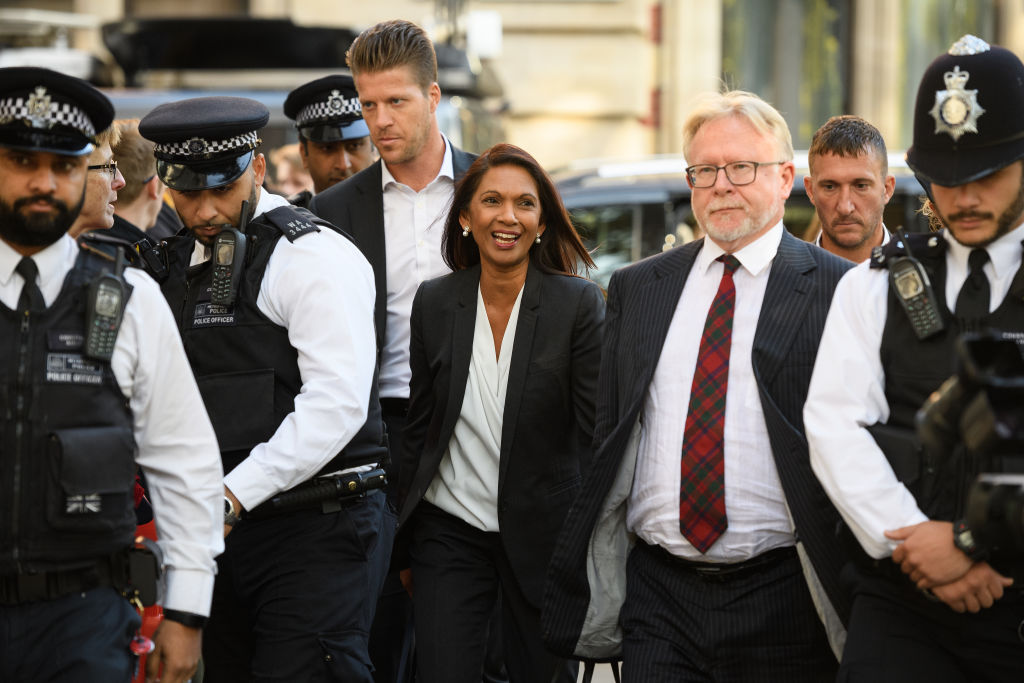
‘My case was not to do with Brexit. It was to do with parliament,’ she insists. ‘The way it was portrayed, or talked about, actually endangered me and my family. People have actually gone to jail for trying to kill me. The worst experience of my life was opening a letter saying they knew where my children lived and they would be taken that day.’
She appears to bear the Brexit side remarkably little ill will, considering. The Remain campaign, however, she is scathing about: ‘I was one of the ones going round the country. Very few of the Remain campaign ever left London. I went to Minehead, to Cardiff, to Leeds, to York and I came back and kept telling them, “You don’t get it. People are hurting.”
‘I remember sitting with this old woman in North Wales and she was saying, our town has gone, we have no jobs for our young people. I kept coming back to London and telling them. That’s when I was shocked with the response. Why were they not listening? These people were hurting. They wanted someone to listen. It was a cry for help.’
Rather infuriatingly, Ms Miller is presenting herself as a passionate advocate for the disenfranchised who voted to leave the EU. She even has a Brexit voter standing as her candidate in Wirral West.
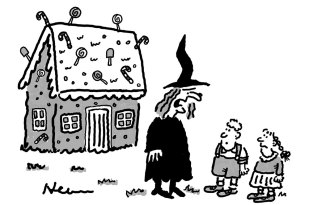
It’s confusing – until you look through her CV where, amid myriad glittering achievements, degrees and honorary degrees, the Vanity Fair Challenger Award, the theme that keeps recurring is branding. Miller was a marketing and events manager at BMW in the 1990s, then started a specialist financial services marketing agency. In February 2009, she co-founded the investment firm SCM Private, now SCM Direct wealth management, with her third husband Alan Miller, a multimillionaire hedge fund manager. She also set up Miller Philanthropy, rebranded to the True and Fair Foundation, which closed amid regulatory questions, but overlapped with the founding of the True and Fair Campaign, which had the stated aim of limiting mis-selling and financial scandals. In 2021 came the True and Fair party.
Instead of saying she wants to rejoin the EU, she steers me this way: ‘We need to start the road to rejoin, but it’s probably going to be a long road. But how do we repair some of the damage? Yesterday we launched this “Championing the Countryside” campaign.’
Rural issues are at the heart of her pitch for votes in Surrey. I point out that on her website she states she will raise taxes on agriculture, while in a tweet during a visit to Marlborough she said she wanted to support farmers. Which is it?
‘No, so, funnily enough,’ she says, hurriedly, ‘that one [the higher taxes] is not going to be in our fuller manifesto now we have consulted with the sector. We realise that would create an injustice for small farmers.’ One might almost say it was neither true nor fair. But at least she corrected it.
‘I’m learning all the time,’ she says.
She claims she was advised to hike taxes on farming by ‘the people who see farmers in a particular light, that they’re rich. These people have never been on a farm. They’re townies. They’re the environmentalists who don’t understand our farmers are the custodians of our environment.’ I ask if she is referring to her own glamorous friends in areas like Wimbledon, where she lives in a £7 million house and she nods, and laughs.
She says she’s been a vegetarian ‘for 40 odd years’ but does not agree with staunch veganism. ‘They would like to stop farming completely but you can’t do that. All these hobby lobbyists, who think they can shout the loudest…’ She rolls her eyes.
When I congratulate her on that stance, she says she does not disagree with veganism either. ‘We need a national food plan. We’re importing 46 per cent of our food.’
I mutter that this is because her townie friends hate farmers so much. She carries on: ‘It’s not just that we need to grow more potatoes. It should be the Fens where we grow them.’
Miller produces policies in a scattergun, contradictory fashion. She says on her website that she’s going to have a ‘truth’ law, to make lying while in office an offence. When I ask how this would work, she says: ‘Not lies. We’ve not quite phrased it that way. It’s ethics rather than truth because when we tested it that was doable.’
What about this one, I say, reading it out to her: ‘Fast track overseas doctors into the NHS’?
No, that has been dropped, she says, ‘having now spoken to people in the NHS. We have got a problem with retention. I worry about the fact that we’re bringing too many people in to work in our NHS. We have to train our own doctors more.’
She’s performing U-turns so fast I worry that she won’t have any policies left by the end of the interview. She says it is because she has ideas and then they are examined by expert teams.
She wants to merge income tax and national insurance, to make the poor better off, while raising capital gains tax and corporation tax, to fund social care. She wants a ‘sensory term’ added to the school year, so that children can learn ‘non-academic’ things like arts, crafts, music. People in the arts won’t be pleased at being called non-academic, but maybe her heart is in the right place – or should I say left place.
She readily admits she will be voting Lib Dem in Wimbledon. She wants PR, but after holding citizens’ assemblies, not a referendum. She thinks emissions charging is the right policy at the wrong time. She drives an electric car, but concedes they are too expensive. She would prioritise other measures to combat carbon, like planting more moss in walls.
Let it go, I tell myself, because we’ve only got an hour.
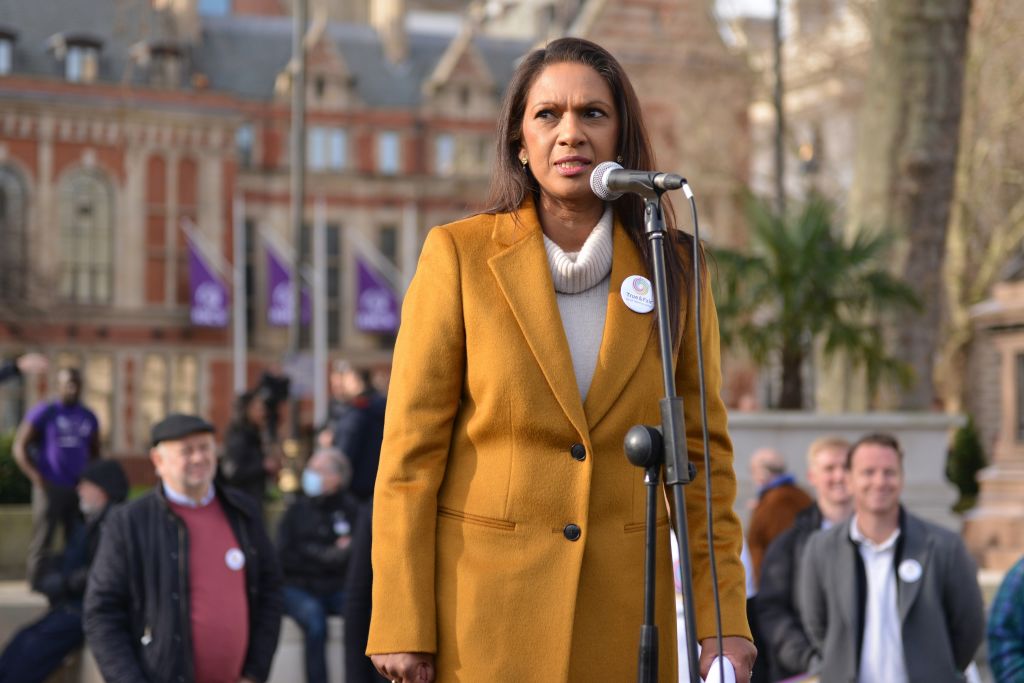
Miller seems to have an idea a second. She thinks Epsom and Ewell could be a spa destination. ‘You’ve got proximity to London and the provenance of Epsom salts. And we as a nation need to do something about our health and happiness. And that’s what Epsom should be – the home of health and happiness.’
Maybe it should, I end up thinking, because who am I to contradict Gina?
She does not have strong views on horse-racing. But she wants Epsom to be known for more than the handful of days a year when it hosts the Derby Festival, which sounds to me like she doesn’t like horse-racing that much. The sitting MP, Chris Grayling, she dismisses as ‘the least successful minister of the 21st century’, which seems a bit harsh.
She would prioritise other measures to combat carbon, like planting more moss in walls
I point out that Grayling is state school-educated whereas she went to a sea-view private boarding school that sounds like Mallory Towers – pony rides from its very own equestrian centre.
She grew up in newly independent Guyana, the daughter of a barrister who would become the country’s attorney general, and was sent to England to be educated aged ten. She took a summer job as a chambermaid when she was 14 because currency controls prevented her parents sending money.
Or, as she says on her website: ‘Gina fled a dictatorship as a child, and faced many hardships growing up in the UK… She found the strength to not just carry on but win many battles and accolades, for her bravery, determination, honesty and integrity.’
Tory insiders are quietly jubilant about her decision to stand. I tell her Grayling sees himself as more meritocratic. ‘Who says that? Him?’ She seems annoyed.
She says she is not going for that narrative but if she were: ‘I had to work my way up from being a survivor.’
She has various ‘survivor’ incidents she talks about, one of which relates to domestic violence in a previous marriage, one to an attack which happened during her time at university. ‘I’m a fighter. I don’t tend to stay down. I have a strong sense of injustice.’
She puts her success down to ‘hard work, being in the right place at the right time. I could have been a lot more successful than I am. Certain things I will not do, sell my soul. Financial services, I could have gone on. They were looking for a woman of colour to be on boards. I didn’t like the products. I have to be comfortable with the choices I make.’
She does a show called An Evening With Gina Miller, ‘where people come and ask me about anything. We did this one, why Britain is a nation of animal lovers. We talked about cats and I told them cats were actually pests. Then the drawings of one person made them look cute.’
I find myself wondering if it’s possible that she is naive in some respects. She produced a leaflet called The Great Reset, about her political views, and had to withdraw it, because she didn’t know it was the name of a right-wing conspiracy theory, and it went viral.
‘When did that start? Is it still going now?’ she asks me. She talks at breakneck speed and one idea crashes into another. ‘The world is going to carry on becoming more difficult. We can’t keep up with it.’ I can’t keep up with her.
I keep coming back to her party’s name: True and Fair. It seems a big idea. But I’ve no doubt she will try her best to sell it.
Britain has an entitlement problem
An Institute for Fiscal Studies paper, published at the end of last month, makes grim reading. Through the prism of the media reports it generated (‘One in 11 workers in England could be NHS staff by 2036,’ said the Guardian; ‘NHS staff will make up 49 per cent of the public sector workforce in 2036,’ said the Times), the most sensational finding was that our health service will be eating up an ever-increasing share of public spending. But, as so often, this particular cuckoo in the nest of public provision is only the most newsworthy of so many indications of Britain’s long, slow slide into insolvency.
The gap grows between what we consider ourselves entitled to and what our governments can afford
The paper is part of the Institute’s series Green Budget 2023. A week earlier its report ‘Tax and public finances: the fundamentals’ began with a sentence that says it all: ‘The big-picture choices over how much to tax and spend will be difficult in large part because of poor economic growth and growing spending pressures.’ Were we to look at this nation as a bank manager might look at his client, that might be rendered ‘spending beyond his means, with no indication that his means will catch up with his spending’.
And so we descend – or our politics descends – into bickering, special pleading and shroud-waving demands for more. As I write, the newspapers are full of stories about the Treasury’s failure to spend enough, early enough, on dangerous concrete in school buildings, and the story is moving on now to the need for asbestos removal. The NHS has never looked less fit for purpose – and it’s all, they say, about money.
Money, money, money. Ben Wallace, the former defence secretary, vents his dissatisfaction at waste in the Ministry of Defence and repeats demands for a budget that reflects the European war in which we’re half-engaged. Farmers Weekly worries that ministers won’t keep their word on the big new calls on the public purse that arise as we move away from the EU’s Common Agricultural Policy. Outer Londoners don’t want to pay the hefty new charges the Mayor’s Ultra Low Emission Zone imposes. The Shetland Islands – bless them – want to be linked by eye-wateringly expensive tunnels such as the Faroes have; and are not going to get them.
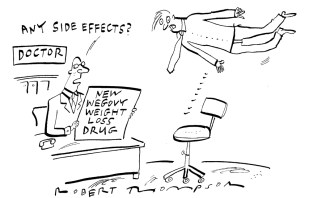
We witter on endlessly about ‘mental health’ and how we should be spending more on that least successful branch of medicine in terms of demonstrable outcomes. When the NHS struggles to afford costly new drugs or procedures our journalism snuggles back into the comfortable old lie that ‘one life lost is a life too many’. Nobody arguing for the amputation or cancellation of HS2 ever proposes that the imagined savings should just be pocketed by the Exchequer: they always argue it would be better spent on some different rail project. Motorists, meanwhile, rage against governments that have in fact lacked the guts to raise fuel duties in line with inflation. And, ever and anon, other less visible taxes keep rising – at 37 per cent of national income (says the IFS) the highest since the 1940s.
I have never known a time when our country has more depressingly resembled a mental health patient presenting with symptoms of what, given the current fashion for syndromes, we should perhaps call ADAS – Advanced Displacement Activity Syndrome. New laws to stop whatever abuse has most recently hit the headlines, new laws to be named after whichever child is the latest victim of private vice or public sector incompetence, new laws to bind ministers to their own promises, new laws to prevent ministers from repealing the new laws already enacted – promising, as it were, not to break their promises… I await the first new law promising that ministers won’t break their promise not to break their promises. And so it goes on as we slither into a nasty stew of suspicion, censoriousness and sentimentality.
I see no break in the clouds. Our economy is hardly growing, we can’t afford all this, and as a nation we actively dislike our most successful money-makers, the City. Indeed we appear to dislike our own metropolis, London. And our older generation, many choosing to retire early, leach off the younger generation, raising our own triple-locked pensions every year. As the gap grows between what we think ourselves entitled to and what our governments can afford, public debt or public dissatisfaction – most likely both – can only grow.
Could I ask readers, as I’ve done before, to think about Argentina, once one of the world’s richest countries, but whose sources of great wealth have long dried up and whose population has stubbornly refused to accept the consequences of their reduced circumstances? Every government, elected or military, falls as it becomes clear it cannot keep the promises that propelled it into power. In Buenos Aires – a city renowned for the numbers of its toy dogs and psychoanalysts – the middle classes bang saucepans under ministers’ windows to protest, while the poor succumb to waves of enthusiasm for each new and finally doomed saviour.
I was there recently. Inflation is heading for 140 per cent and there’s a general election next month. It looks as though the latest darling of the desperate, Javier Milei, a wild-man economist they call El Loco, may win. He’s promising to peg the peso to the US dollar. This should stabilise the economy; but it will also take an axe to state spending. Senor Milei will then fall, like the others.
Only war, or complete economic collapse, induces in a people the willingness to think again about what they’re entitled to. I begin to think that the worst possible outcome for Britain is for a cautious, sensible Conservative government or a capable, prudent Labour one, to take the reins and do their intelligent and realistic best to keep the show on the road. Either could stave off the inevitable for a while. And that’s the choice we’re likely to have at a general election next year. Après nous le déluge.
Letters: Stop talking, Rishi – and take action
Sick note
Sir: Kate Andrews illuminates how, for us British, the successful diagnosis of a major medical condition is frequently a matter of chance and, even then, usually occurs later than it should (‘Why are the British so anti-doctor?’, 2 September). The near asymptomatic nature of many serious conditions combined with the cultural pressures of stoicism and reluctance to be the bearer of bad news allows many cancers, for example, to run free for years before discovery. In addition, while treatments from the NHS can be brilliant, they vary enormously across the country in terms of accessibility and availability.
James Wilson
South Beddington, Sutton
Spare the Rod
Sir: I was of course thrilled and delighted to be the focus of Charles Moore’s typically elegant – and kindly – wrath last week (Notes, 2 September). However, please let me, for the sake of accuracy, address the principal charge Charles levels at me – that I am, in effect, a ghastly metropolitan who wouldn’t know a hawk from a handsaw. This suggestion was implicit throughout the piece – for example, that I can never have seen a red grouse, or heard a curlew. This is as far from the truth as it is possible to get. Unlike Charles, I do not visit a grouse moor for a single weekend out of the year. I live on one. Further, I have spent the majority of my life in the countryside, beginning as a child when I would tramp the North York Moors with my mum and dad. I can hear a curlew right now, outside my back door (it has been late leaving this year) and not a day goes by without my witnessing the mundane spectacle of panicked grouse. The problem for Charles is that once this canard is blasted from the sky, there does not seem to be very much of an argument left.
Rod Liddle
Stanhope, Co. Durham
Resistance was futile
Sir: Our Prime Minister has apparently ‘resisted calls… to articulate a grand plan’ (‘Risk management’, 2 September). The resistance did not last long. Later in the same article Katy Balls reports that he said in a letter to MPs: ‘In the autumn, we will… be setting out more of our plan for Britain.’ Please Mr Sunak, no more plans, no more pledges, no more telling us how you might go about solving the UK’s many problems. Just get on and do something.
Ivor Williams
Tavistock, Devon
Stop the pensioners
Sir: I read your editorial, ‘Taxing times’ (2 September), with a sense of déjà vu – but is it still déjà vu when it happens more than a dozen times? I believe nothing will change until those running the country have to manage their own future and not rely on the state to protect them. Let us stop all state-financed final salary pension schemes for all politicians (local and central) and any civil servant earning more than £100,000 a year. Surely then these people would think more carefully about how their taxes were spent.
Tom Phillips
Eltham, London
Local zeroes?
Sir: James Heale quotes a Westminster insider as saying that the Conservatives’ recent preference for selecting local candidates for parliamentary seats represents ‘mediocrity and nepotism at the expense of talent’, and that it will deprive the party of ‘future leaders of the country’ (‘Charge of the right brigade’, 26 August). The problem is that the skills required to be an elected representative are quite different from those needed for holding executive power. The solution is a separation of powers, enabling electors to have members of parliament who are locally based ‘super-councillors’, if that is what they wish, while placing no restrictions on the prime minister when choosing members of his or her government.
Adam Brownbridge
Devon
Marvellous Maigret
Sir: Deborah Ross lists previous actors to portray Inspector Maigret in her review of the new film (Arts, 2 September), but fails to mention the one who, in my opinion, brought the most humanity to the character: Rowan Atkinson, in a television series that began in 2016. In the past, Atkinson has usually either played brilliantly funny or embarrassingly cringeworthy comic roles, but here he was serious. He managed to convey exactly the right balance of world-weariness, cynicism, compassion and forensic analysis to make the depiction both credible and moving. Highly recommended.
Jeremy Tyrer
London SW19
Shall I be Brother?
Sir: My City livery company, the Stationers and Newspaper Makers, has been led by two women Masters (‘Brother in alms’, 2 September). The day before I was due, as Master, to ‘cloathe’ female members in the livery, I would ring them up and ask if they had any objection to my making them liverymen and addressing them as Brother. No candidate ever objected.
Christopher McKane
London N1
La même chose
Sir: It is said that the more things change, the more they stay the same. Leafing through a past copy of The Spectator, I read a letter from Naomi Parkes agreeing with Ysenda Maxtone Graham’s piece which stated that ‘the billions being squandered on HS2 (not to mention its destruction of swaths of beautiful countryside) would be far better spent on high-speed broadband and funding the cash-strapped NHS’. This letter appeared on 10 September 2016.
Guy Bargery
Edinburgh
The economy isn’t as sick as we thought
It would be churlish not to celebrate revisions from the Office for National Statistics that tell us the UK is not, after all, the post-Covid invalid of the G7. Contrary to previous figures suggesting we had struggled to regain pre-pandemic levels of economic output, it turns out that our gross domestic product passed that benchmark in late 2021 and our performance has been in line with France and ahead of Germany.
Large sectoral revisions for agriculture and manufacturing tell us that statistical reporting is almost as much of a mug’s game as forecasting. But the brighter overall picture accords with the anecdotal sketch of ‘definite warming’ in consumer spending and confidence that I offered here early last month.
Chancellor Jeremy Hunt says the new figures prove ‘the declinist narrative about Britain… is just wrong’, while ardent Brexiteers take the opportunity to raise two cheerful fingers to our former European partners. We enter the autumn season feeling a little better about ourselves – but with no excuse for complacency.
The current furore of crumbling concrete reminds us that economic progress is too often held back by bad infrastructure, as this week’s last item also illuminates. We’re a couple of weeks away from another likely interest-rate rise. Train drivers haven’t finished striking. Capital investment in UK businesses is perilously low. New trade deals beyond the EU have yet to deliver export triumph. So we’re not as sickly as we thought, but we’re a long way from rude health.
Shop alarm
What on earth has happened to society if Tesco staff have to be equipped with body cameras in response to a one-third year-on-year increase in physical assaults – and if incidences of abuse against retail workers have doubled generally, compared with pre-pandemic figures? Other supermarket chains report similar trends, with shoplifters, often in organised gangs, grabbing upwards of a billion pounds worth of goods per year while battering anyone in their way. A new low was reached last month with a mass raid on Oxford Street stores, organised via TikTok.
How did we come to this – and to a new normality which requires ‘Do not abuse our staff’ notices at every railway station, passport desk and post-office counter? Can it really be a function of the cost-of-living crisis? Or is it a residue of bad education, class resentment, urban alienation and lack of role models that makes modern Britain more prone than other nations to feral behaviour at the customer interface?
One thing for sure is that our miscreants are not deterred by fear of retribution: policing minister Chris Philp may call for ‘zero tolerance’ and prosecution of all offences for which there is CCTV evidence, but criminals and good citizens alike know the police have neither the resources nor will to respond to every shop alarm.
He who paid the piper
Sometime in the mid-1990s, I was asked by Luis Dominguez – the filmstar-handsome Anglo-Argentine who was then The Spectator’s commercial manager – to join him for lunch with Michael Cole, the highly polished ex-BBC PR man for Harrods owner Mohamed al-Fayed. If the encounter had been a contest for suavity, I would certainly have come third. Our conversation is lost to memory but I suspect the real agenda was unspoken: the prospect of Harrods advertising in The Spectator if we wrote favourably about Cole’s boss. We never did – but let me at least mark the controversial tycoon’s passing, aged 94, by finding three relatively kind things to say about him.
The first is that whatever his well-chronicled faults, I would rather have found myself on a desert island with the resourceful al-Fayed than with some of the counterparts he outwitted in business, including the ruthless Tiny Rowland of Lonrho and the murderous Haitian dictator Papa Doc Duvalier. Secondly, anyone who starts out selling Coca-Cola on the streets of Alexandria and ends up – never, as far as we know, having spent a night in jail – with a £1.7 billion fortune for his heirs to scrap over, deserves at least grudging admiration.
And thirdly, though he was shunned by the British establishment and more so after his crazed responses to the death of his son Dodi with Diana, Princess of Wales, al-Fayed was reportedly well regarded as a Highland laird. The community around his Balnagown estate in Easter Ross thought warmly of him not least for having led a campaign to halt construction of an incinerator at nearby Invergordon and for his sponsorship of the Tain pipe band. If he and his sidekick Cole never succeeded in calling the media tunes, you might say, at least he paid the pipers.
Ferry tale
Highland sources have also pointed me to the Corran Ferry, which is Scotland’s busiest single-vessel ferry route, carrying 270,000 vehicles per year on a five-minute crossing of Loch Linnhe between Lochaber and the Ardnamurchan peninsula. Operated by the SNP-led Highland Council, it offers a vivid parable of economic damage wrought by incompetent local government.
Its single vessel, MV Corran, was towed to Glasgow for repairs last October, spent many months waiting for ‘a part from Germany’ before being put in dry dock; a smaller, older replacement, MV Maid of Glencoul, repeatedly broke down and may not return to service, leaving motorists facing a 42-mile road diversion via busy Fort William on 80 days so far this year.
As tourists turn around and head elsewhere, local businesses report falls in trade of 40 per cent or more and some say they’ll have to close. ‘The health and safety of passengers and crew is our main priority,’ says a council spokesman, who naturally sought to blame a previous administration for the initial breakdown. Oh yes, and ‘we share the disappointment and the frustration’.
Bridge | 09 September 2023
The Bermuda Bowl, the most prestigious bridge World Championship, ended last weekend with a riveting final between Switzerland and Norway. Congratulations to Pierre Zimmermann’s team of ‘Swiss’ players: Michal Nowosadzki, Jacek Kalita and Michal Klukowski, Sjoert Brink and Bas Drijver. You would be quite right in thinking they don’t sound very Swiss, but hey – you can’t have everything. They defeated Norway by 68 IMPs over the 96-board final with no-nonsense aggressive bridge, while Norway made a few too many mistakes.
There were of course a number of fantastic moves in the card play – which you expect from a world final – some of which went a bit over the heads of the usually excellent VuGraph commentators (see diagram).
Redouble from East showed 3 Spades, and Helgemo in the South seat jumped to 3♦️.
Drijver, sitting West, obviously started with his singleton Heart, and Brink played K, A and 6 of Hearts for partner to ruff. Bas Drijver didn’t look at the situation for more than a few seconds before leading the four of Spades (!). Declarer played low and the 10 from East knocked out the Ace, and South had to go one down.
The commentator got a bit confused and started talking about a ‘Grosvenor Coup’, which is a play where you unnecessarily give the opponents a chance to make – one that they’ll never take because they don’t expect you to give away the contract.
But this is not it. West has to play a Spade, or declarer will get his Spade loser away on a Club, but a Spade honour allows South to win, draw trumps, and establish the Jack of Spades to dump his Club loser on.
Drijver’s small Spade was, in fact, his only chance to beat the contract, and was absolutely brilliant.
Kemi Badenoch’s growing popularity makes her vulnerable
The news is grim for supporters of Kemi Badenoch: our heroine has climbed to the top of the Conservative Home website’s monthly cabinet popularity table. This further cements her rating with the bookies as favourite to take over as Tory leader when Rishi Sunak’s race is run – and let’s be honest, that race does not seemed destined to go beyond the mid-distance.
Surely this is a happy turn of events for we Badenochians, you might think? Hardly. She might as well now have a target painted on her back. As one colleague puts it: ‘When you are seen as heir apparent, you are the person standing in the way of all the other people who think they should be the next leader. And that’s nearly everyone, by the way.’
Even over the summer there was a whispering campaign against her getting off the ground
Looking back over Badenoch’s press cuttings for August lends few clues as to why this disquieting turn of events has taken place. True, she has been working away diligently, laying the ground for a trade deal with India, talking up post-Brexit economic prospects and producing some worthy initiatives for supporting high added value manufacturing. Wearing her ‘equalities’ hat, she has also told top civil servants to get Whitehall departments out of the Stonewall diversity scheme.
This is all good stuff, I’m sure, but doesn’t constitute the main reason why Kemi has hit the front in the minds of the Tory grassroots. The rather simpler explanation for that is that Ben Wallace has gone. After topping the member popularity survey for more than a year, the former defence secretary’s return to the backbenches means he no longer features in ConHome’s survey.
So now Kemi leads with a rating of +59, ahead of Penny Mordaunt on +47.5, with James Cleverly in third place on +43.9. For comparison, the July chart had Wallace top on +77.1, Cleverly second on +54.4, Kemi third on +43.9 and Mordaunt in fourth on +43.3.
Friends of Badenoch report that she is very far from obsessed with her personal leadership prospects. But that won’t be true of some of her cabinet colleagues. Even over the summer those of us who place in her our hopes for the future noticed a whispering campaign against her getting off the ground.
Six weeks or so ago the Politico website reported that ‘some civil servants suggest Badenoch is struggling and neglecting parts of her brief. Even her closest allies accept the sheer breadth of her various roles is stretching her thin.’
It claimed that she had also made enemies of people in Sunak’s inner circle by exhibiting a ‘combative and sometimes dismissive approach towards colleagues’. Badenoch’s core supporters were said to be an ‘ever-diminishing group’.
We can now expect much more of this kind of sniping. There will undoubtedly also be efforts by the camp followers of her most ambitious leadership rivals to unearth a crisis within her Whitehall empire that can be used to damage her rather as the crumbling concrete scandal has damaged Gillian Keegan.
Politics shouldn’t be like this, but it is. Once senior figures have convinced themselves that their ascent is in the national interest it is but a short leap to conclude that the end justifies the means.
I remain confident that Kemi will stay cool and steady. But these are tense times. She’s hit the front sooner than is ideal because the pacemaker dropped out early. Our message to the trundlers and trimmers gathering in the pack behind her is simple: you shall not pass.
The charm of Carmel races
Racing at Cartmel probably began in the 15th century when Brother John wagered a mug of ale with Brother Cain at Cartmel Priory that his mule could give his fellow monk two lengths start and beat him back to the Abbot’s orchard. Nowadays Cartmel is one of racing’s precious smaller jewels. The tiny track nestled in a Cumbrian valley and reached by a tangle of winding country lanes not only attracts jump racing crowds of up to 20,000 (only Cheltenham and Aintree do better) but it also gives them an experience not to be found anywhere else.
Where else would the racecourse commentary declare: ‘And as they pass the Sticky Toffee Pudding Shop…’?
There’s nothing grand about Cartmel: as its owner, Baron Cavendish of Furness, once drove the late Queen Elizabeth past, she exclaimed with incredulity: ‘You call that a racecourse!’ Where else would the racecourse commentary declare: ‘And as they pass the Sticky Toffee Pudding Shop Brian Hughes moves into the lead.’ (The connections of all placed horses get a pudding along with their prize money.)
Winning owners don’t go home from Cartmel seriously enriched. It stages no Hennessy Gold Cups or Triumph Hurdles. But as Lord Cavendish notes: ‘Jump racing isn’t about money, it’s about love.’ The gatemen wear pink T-shirts, blue vests, flat caps and cheerful smiles. Nobody goes to Cartmel to be seen; they go there to enjoy themselves. It is part carnival and funfair, partly the biggest collection of picnics you’ve ever seen – right up to the winners’ enclosure. Some racetracks frown on barbecues and people bringing in their own food and drink. Not relaxed Cartmel. Most racecourses ban or discourage dogs; at Cartmel you cannot move three steps without encountering a furry friend. I felt half-undressed without my flatcoat retriever.
I’ve spent time on tracks with trainers, owners and jockeys, but never before with a racecourse owner. I am sure, though, that nobody else does it quite like Lord (Hugh) Cavendish. The sort of reasoning man who as a convinced Brexiteer urged in his valedictory speech in the Lords that it was time to make friends again with those in Europe who were bruised and puzzled by Britain’s exit.
Lord Cavendish is very much a man of his community. The assurance that comes with 17,000 acres is coupled with an obvious sense of obligation to the 300 livelihoods dependent on him and while the Holker Hall estates have been handed over to daughter Lucy, Cartmel Racecourse is assuredly still his baby. He bought out the ex-military management in 1998, built a new grandstand and installed a watering system. Cartmel may be small but it is innovative: it was one of the first courses to install mist-sprayers to cool down its equine athletes, snapped up second-hand after the London Olympics.
I trailed at a discreet distance as Lord C, in red bow tie and Rumpelstiltskin boots, toured not just the racecourse but the funfair stalls full of fluffy toys, the vans selling Cluckin Mama and Bhaji pizzas and the Cumberland sausage shops. Every vendor seemed to know him. The jockeys’ changing rooms were inspected closely – ‘I can’t bear a loose lavatory seat’ – and the ladies running the day’s appointed charity were sought out and invited to the directors’ marquee along with their collection tins. I overheard him urging the course commentators to check out any trainers and jockeys at the track for the first time: ‘They must be made to feel welcome.’ After the third race, he was on the track with the ground staff replacing divots. No wonder that one local grabbed me to insist: ‘Lord Cavendish is our national treasure – on a local scale.’
Racing that day was entirely appropriate for such an intimate track. Leading jump jockey Sean Bowen’s second winner of the day Fairlawn Flyer, trained by father Peter, was led up for the three-mile chase by his owner Ross Williams who bred him and rides him out occasionally. Said Sean afterwards: ‘Ross is brilliant for Mum and Dad. He harrows the gallops and looks after the muck heap – he does any odd job around the place.’
After the fourth, I saw winning jockey Jack Quinlan voicing a video for connections and giving all the credit to the horse whom he’d had to extricate from trouble after another runner pretty well fell into his lap: ‘He knew how to win even if his rider didn’t.’ ‘You were a bit hard on the jockey,’ I said. ‘Not really,’ he replied with a grin. ‘It was a bad ride.’
In the fifth Leah Noreci, a 10lb claiming conditional on only her sixth ride, came home a street clear on local trainer Jimmy Moffatt’s Cuzco Du Mathan after a patient ride. It was a first win for the horse and for Leah whose Albanian father married into the Moffatt family. Lord Cavendish had told me the Moffatt horses do well at Cartmel, so despite a lack of encouragement from the trainer I backed Moffatt’s entry in the next, Mr Rumbalicious, and went home happy when he came in at 16-1. I am pretty sure the other 14,000 present eventually went home the same way. Win or lose, Cartmel’s informal authenticity lifts the spirit.
Concrete, marmite and jam: the fight against Ulez
‘We’re renegades now. We’re outlaws. Bandits.’ This was my assessment as the builder boyfriend pulled up outside the house in his old truck with a load of wood hanging off the back.
White van man and dirty great pick-up truck man, in the case of the BB, have found a way around paying the Ulez. Mostly, they present their customer with the £12.50 a day charge, which is what they have been doing since the Ulez first started in more central areas of London.
Now it has been expanded to all London boroughs, including where a lot of these chaps live and have their work yards, they have had a go at being more inventive by way of protest. We know this, because it is all over the news, and Iain Duncan Smith has said he supports the men who are pouring cement into the cameras and putting bags over the top of them.
One of the builder boyfriend’s mates had smeared jam and Marmite on his registration plates
The builder b has not done that, though he has said he would really, really like to. He feels he ought to, in order to do his bit for his country, but he has restrained himself because we just want to give up and leave quietly.
On the first day of the charge coming into force where his builder’s yard is, he drove to work with an essential consignment of timber hanging off the back of the truck. ‘Unfortunately, officer, someone has just smashed it and it’s in for repair later,’ he was ready to explain regarding the front end of things. But no one asked him, and the computer was down anyway, crashed by all the owners of old bangers trying to pay. The system could not cope because so many had not scrapped their old cars, even though they were offered £2,000 to do so by Mr Khan, who is very generous in that respect with taxpayers’ money.
The BB does not want to scrap his old truck because we want to take it to Ireland to use on the land that comes with the house we are buying. We like the old pick-up. It’s reliable. We don’t want a new one loaded with electrics that he can’t crawl underneath and fix, like he does now.
Plus, he’s got this old-fashioned, romantic idea that his truck is his property and that his builder’s yard on the very outskirts of south-west London, where he and his dad have worked for most of their lives, is somewhere he ought to be able to go freely, without having a fee imposed on him by someone who has set himself up as the Decider in Chief of Who Gets To Earn Money in London.
So he got into the Mitsubishi L200 on the first day of the Ulez expansion and drove it to his yard, along with many others like him, as it turned out.

He was sitting in traffic surrounded by white vans with old rags hanging off the back driven by tattooed working men revving their engines. One of his mates had smeared jam and Marmite on his registration plates.
While queueing at some lights, he realised the driver of an electric VW was giving him filthy looks, pointing at his truck and coughing theatrically. The builder b gave him the thumbs up and shouted: ‘All right, mate? Nice car you got there. What did that cost you? £50k?’
And as the lights changed, he put his foot on the accelerator of the Warrior and sent smoke billowing out, as did all the white van men.
The BB came home very buoyed up by this and many other tales of Blitz-like spirit as down-at-heel south London came together to rev their old diesel engines for the rights of the common man.
For the lady whose job he was on as the Ulez was rolled out, it was not so jolly. Because aside from this symbolic day of protest, it was business as usual – the customer pays. This lady received her bill for a week of his charges together with a week of four other workmen, who also billed her £12.50 a day. They all wrote down their registrations and tasked her up with the bother of going online to sort it out.
She agreed, before going on holiday to Spain. They rang her a few days later to check and she confessed, from her sun bed, that she had forgotten.
They insisted that this was not their problem. She plaintively told the BB the Ulez fines were more than the job had cost her.
‘That’s Sadiq Khan for you,’ said the builder b, knowing full well she had voted for Khan, and was a supporter of emissions charging, being a prosperous sort and the owner of an electric Audi.
To be fair to the lady, she didn’t argue.
How to train like Taki
Gstaad
Here’s a tip for you young whippersnappers: don’t get old, but if you do, you can fool Father Time by training the smart way. By this I don’t mean you should follow all that bull that floats around online. I don’t use social media, but I’m told that a system exists, which reaches millions across multiple platforms, that spreads misinformation about health, and then some. The wellness industry means big moolah, and is as phoney as Hollywood morality.
Take it from Taki: all you need in order to feel good and be able to enjoy yourself is a little exercise before breakfast, and some semi-hard training in the afternoon. C’est tout, mes amis, as they say in gay Paree. Then you can drink all you want, eat within reason, and chase the opposite sex to your heart’s content. During lockdown, exercise became more important than ever, and I was lucky to be stuck in Gstaad because the place was empty, the mountain paths emptier, and the only living things one ran into while climbing the verdant hills were the cows.
So, how should an oldie start the day? What the poor little Greek boy does, with or without a hangover, is stretch. After a couple of minutes of stretching – all this is done outdoors no matter the weather – a two-minute stationary bike at full tilt is in order. This gets the heart rate up and then it’s time for 40 push-ups, 20 with the hands close together, and another 20 with the hands far apart. Isometrics follow, pushing against a wall while standing, and sitting on an imaginary stool against a wall for one minute. Then it’s front kicks and reverse punches for speed and accuracy using a bag and a makiwara. By now 20 minutes have gone by and it’s time for breakfast. In the afternoon a session of kick-boxing or karate with an opponent and a brisk walk before dinner mean you are ready for anything the night might suddenly offer.
I’ve been following this routine since giving up the tennis that I coupled with karate throughout my youth and middle age. I still ski, mostly cross country, but no longer ride as I gave up polo long ago. Martial arts have kept me hungry and fit, and they help when some loudmouth bully starts throwing his weight around. Not that it happens very often, especially here in Gstaad where young men are not known to carry knives or guns in nightclubs.
Which brings me to a parenthesis on how to stay young and healthy. Gstaad is not a violent place but neither is it what it used to be. When I first came here back in 1958 no one, but no one, locked their doors in the hotels or the few chalets that existed back then. There was only one policeman and the joke was that he was the laziest man in town. There was absolutely no crime, no theft and no violence of any sort except that of drunken farmers taking it out on their poor wives at times. Now things are different. Chalets built by the newly rich are a dime a dozen, including those with swimming pools and auditoriums. Once the nouveaux-riches arrived, crime was bound to follow. Jewellery stores have been held up at gunpoint and chalets have been broken into and robbed. The Alpina hotel’s concierge was recently tied up by an armed gang who took 20 minutes to break into a jewellery shop. The fuzz was asleep.
The reason I cannot state exactly how many robberies have taken place is that the commune refuses to acknowledge that anything out of the ordinary is happening. It’s the Swiss way: don’t rock the boat and deny everything. There are strong rumours that Slavica Ecclestone, the giant ex-wife of billionaire Bernie, got roughed up by bandits in her rather posh chalet. Apparently there have been around 20 robberies this season although the fuzz denies everything.
Here’s the scoop: there was a vote some time ago for more cops but the locals voted against it. This made sense. Thieves don’t steal from the locals but from rich foreigners, so why should the locals get stuck with higher taxes to pay for more fuzz? My own security people, who I hired once I moved to an area outside the village in a private road, explained it very well: ‘It comes from inside information, from disgruntled staff who pass vital info to professional crooks lurking around Switzerland.’
Saudis and Gulfers are notorious for the way they treat servants, especially staff from the Philippines. The servants, in turn, know where the bullies keep their jewels and moolah, as well as the hours they keep. It becomes elementary, my dear Watsons. Most of the bandits, I suspect, are from the Balkans, and very few have been caught. So, be nice to staff, do not leave jewellery and gold watches lying around, keep your cash in the bank, and you’re pretty safe. When I asked my security man whether one should fight or hand it over, he said that Gstaad crooks are not violent and one should not look for confrontation. ‘Just like in America and the GB,’ said I. My advice is do your exercises, take up martial arts, keep a low profile, be kind to your staff, and if the bandits come in and are not carrying guns or knives, what the hell, have a go.
Shane Gillis and the return of the dawgz
When the history of comedy’s resurgence in the early twenty-first century is written — when masses of people, silenced by the speech codes of the day, found solace and contrarian hope in the words of unsilenced comics — Shane Gillis will be a major turning point in that story.
It’s not just that he’s arguably the best stand-up under forty working today; it’s that his work won out over all the obstacles the world threw at him. He is now the comedy world’s embodiment of the Streisand Effect, where his attempted cancellation functioned instead as a rocket ship for his career based not on victimhood but on the stubborn nature of his skill.
Gillis’s first special, Live in Austin, was a YouTube joint that has racked up 14 million views. Now he’s on Netflix with his latest, Beautiful Dogs — a well-honed hour-long display of his talents that runs from the personal and historical to the political, and his fear of early-onset Republicanism.
He acknowledges at one point that most of the women in the room were probably dragged there by men who insist they turn up his podcast in the car, to affirming laughter. But he’s right: he and comedy brother Matt McCusker, whose own million-viewer special proves he’s no slouch, are currently the hosts of the number one podcast on Patreon. That’s right: the same edgy podcasting that doomed Gillis with the Saturday Night Live opportunity thanks to shrill progressives on Twitter is now making him bank.
The Gillis arc is reassuring for those who appreciate one of the few areas where individual skill can win out over the mob. He joked to himself when the world was collapsing around him that he’d just go on Joe Rogan and rebound. The same day his special launched, Rogan dropped episode 9 of “Protect Our Parks”, the combo comedian episodes he does with Gillis, Ari Shaffir and Mark Normand. It’s five hours long. You might ask who listens to that? The answer is a lot more people than you might think.
2618: Chain gang – solution
Adjacent pairs in the ordered chain of unclued entries [38] CHAIR, [14] MAN, [25] POWER, [15] STATION, [10] MASTER, [40] KEY, [8] RING, [29] FINGER, [36] POST, [44] CARD and [17] BOARD form single words in their own right.
First prize Andy Wallace, Ash Green, Coventry
Runners-up Jonathan Jones, Oxford; Elizabeth Duff, London NW5
2621: Faux
You can calculate 48 by 1 + 47 (ten words in total). However, 21 32 12 23 47 (nine words in total). The remaining unclued lights are the two authors who said so.
Across
14 Not so sure judge needs latitude to be good (6)
17 Sacred halls rebuilt in poor area (7)
18 9 stocks such organs (4)
19 Woman wanting hospital to make changes (4)
20 Sign of aging, like an Irish circus, say? (4,4)
22 German idioms translated in the style of a letter (7)
26 Weather problem has troubled swimmer (6)
27 Bridge player quick to change lead (4)
28 Painting over withdrawn mixture (4)
29 Courage without power, a quality Napoleon valued (4)
30 Try nuts when upset (4)
31 Raid on ground? (6)
35 Noisy generation? (7)
37 Muse about answer in a game (6)
41 What’s left in division? (4)
43 No silence in rush hour in urban region (4)
45 Payment determined (7)
46 Accessory coloured in layers (6)
Down
2 Funny girl almost promises to pay (9)
3 Frenchman in republic snubbed ruler (4)
4 27 judged, raising irritated reaction (5)
5 Low day – because of this? (4)
6 Stupid supporter, fashionably late? (5-4)
7 Take one into aesthetic curio (6)
8 Soldier in amusing ceremony, like ‘death cap’ (9)
9 Car that goes slowly tries electromotive force (6)
10 Club evening requirement (4)
11 Careless fielders jog around Perth (8)
13 Euros converted by France’s law codes (6)
15 Break Republicans’ building? (2,4)
16 City rivals for Sharks or Giants (4)
24 Salad cheers British parliament’s hearts (9)
25 Complaint mentioned bad back (9)
30 Web developer superhero saving man (6)
33 Fencing cut author (6)
34 Pedlar accepting shilling for king’s cable (6)
36 Flourish without one slave (4)
39 Special charm attributed to the capital of Italy (5)
40 Two athletes stifling rude word (4)
42 Covering animal with twisted tail (4)
44 Biblical artefact, four immense shields (4)
Download a printable version here.
A first prize of £30 for the first correct solution opened on 25 September. There are two runners-up prizes of £20. Please scan or photograph entries and email them (including the crossword number in the subject field) to crosswords@spectator.co.uk, or post to: Crossword 2621, The Spectator, 22 Old Queen Street, London SW1H 9HP. Please allow six weeks for prize delivery.
Spectator competition winners: how the poinsettia became – origin stories of flowers
In Competition No. 3315, you were invited to invent a legend that explains the origin and nature of a flower other than a sunflower or narcissus, whose well-known origin story tells of Narcissus, the beautiful youth who draws the vengeance of the gods, falls in love with his own reflection in the waters of a spring and, in Ovid’s version, wastes away, the flower that bears his name springing up where he died.
The winners below take £25.
‘I will come to you,’ said the young man, ‘under cover of darkness. Wait by the sea-cliff’s rocky edge, where I will surprise you.’
‘But come to me in folds of silk, a tapestry on your tongue,’ said the nymph. ‘For your beautiful robes catch everyone’s eye. I am half in love with the way they cling.’
‘No, dear lady,’ replied the youth. ‘Though pretty in pink, I need wear no finery in the dark. I do not care for ostentation. I shall be yours as a plain fellow, or never yours at all.’
‘When we are married,’ she cried that evening, hunting shadows, ‘you shall wear cloth of gold.’
‘No need, go to no expense on my account,’ said his voice. She started; sensed him falling backwards; heard his body breaking on the rocks. And ever after, a pink flower grew where he fell, and its name was Thrift.
Bill Greenwell
In the forests of Phrygia on the slopes of the sacred mountain lived a beautiful dryad who was noted for the colourful clothes she wore at special festivals. Her name was Poinsettia, and she attracted the attention of Zeus. Zeus’s wife, Hera, noticed this relationship but she was equally captivated by the dryad’s scarlet garments, and suggested that she should come and live with her. Poinsettia was an innocent, trusting young dryad, so she moved into Hera’s palace, where people admired her colourful dress for a while. However, during the festival period Hera herself went out to so many parties that she forgot Poinsettia, who was given no food or drink, and perished. This is why to this day the flower bearing her name is traditionally taken into homes during the festive season, but then placed in a room where people forget to water it, so that it invariably dies.
Brian Murdoch
The goddess Itys, mother of the seven sons of Soddit, ordered their lives and those of their progeny with a combination of received wisdom and retrospective smugness. She was the embodiment of an acronym – I Told You So.
Eventually, her descendants grew tired of her interventions and conspired to kill her, but her snorts of derision doomed all their attempts to failure. They tried poisoning her, smothering her, even hacking her to pieces with the Dagger of Retribution, forged in the Orient and smuggled thither by Hermes, but she survived unscathed.
Finally they trapped her between the Millstones of Last Resort and set them in motion, thereby reducing the ancient matriarch to a fine powder, which they scattered throughout the land. But she remained immortal. Wherever her dust landed she rose again, defiant and indestructible – since when the green shoots of her recovery have been known as ‘ground elder’.
Ann Drysdale
After years of war, the Giants and the Deities met at a great banquet to make peace. Their spears became spits on which to roast the savoury feast. All was well until Arom, a young Giant eager to show his strength, lifted a spit and slid a side of meat onto the table of the Deities, splashing them painfully with hot juices. They howled and leapt to their feet, overturning the heavy table. In the confusion, Arom stumbled back and fell, pinned to the ground, impaled on his own spear. The High Deity clasped the hand of the First Giant, proclaiming, ‘He died a martyr for peace. His corpse shall become the world’s mightiest flower, its tall central column wrapped at the base in an enormous leaf like a bloodstained cloak, its perfume the scent of dead flesh to draw the swarms of flies who will help the flower propagate.’
Chris O’Carroll
When Unia, demi-goddess of good times, consorted with Avanother, god of pubs, she became horribly hungover on new wine. Therefore, she begged her lover to cast a spell that would ensure she suffer no unpleasant after-effects, while still enjoying his company. ‘Choose a spell that enhances my natural charms,’ she cooed, winking suggestively. ‘I want to be delicate, but not too high maintenance. Remember, I am superb when bedded. I am lush, and thrive on liquids. I am a prettily fragrant beauty who blooms prolifically in summer, to brighten everyone’s day. I always mix well with others, and enjoy making a statement, so I should be eye-catching; colourful, dramatic, vivid. I want to run vigorously rampant, darling, and welcome all your friends.’
And that was how the god turned her into a petunia, placing her in colourful baskets, so the goddess could always hang around pubs, being well potted.
Janine Beacham
Now when Io, as a beautiful white heifer, was cropping the sparse turf on Mt Ida, she was pursued by a bee which she swished at angrily, striking it to earth. The dying bee addressed her thus: ‘Sister, I meant you no harm; I wished only to be your companion. I was once the maiden Melissa, and I too was ravaged by Zeus, until Hera took pity and changed me into the form you now see. Now I must make honey, as your kind give milk.’
At once a wonderful flower sprang up, remarkably resembling a bee in every aspect. This likeness attracted bees in their thousands, who, in collecting nectar for their own purposes, spread the pollen far and wide until hundreds of flowers carpeted the slopes. And that is why to this day, where noble cattle crop the grass on rugged uplands, you will find the Bee Orchid.
David Shields
No. 3318: Pen portrait
You are invited to provide a verse portrait of Seamus Heaney by any other poet, living or dead (please specify). Please email entries of up to 16 lines to lucy@spectator.co.uk by midday on 20 September.
No. 768
Black to play. Wall-Raczek, Northumbria Masters 2023. Black’s next move brought the game to a swift close. What did he play? Answers should be emailed to chess@spectator.co.uk by Monday 11 September. There is a prize of £20 for the first correct answer out of a hat. Please include a postal address and allow six weeks for prize delivery.
Last week’s solution 1 Nd5! Qxb5 2 Nc7#, or 1…Qxd6 2 Nf6+ wins. The game continued 1…exd5 2 Qe2+ Ne5 3 Qxe5+ Kd7 4 Qxh8 and Black resigned a few moves later.
Last week’s winner Kevin Taylor, Syston, Leicestershire
Norm score
‘How do you become a grandmaster?’
‘You must climb the mountain, and defeat the opponent at the top.’
Alas, the answer is not nearly so succinct, and when I get asked the question, I remind myself to spare the finer details. The gist is that you must outperform an ‘average’ grandmaster over the course of an event of around ten classical games. Each time you clear that bar you earn a ‘norm’, and racking up three norms earns you the title. There is no limit on the number of grandmasters in the world, and since their introduction in 1950, a couple of thousand players have attained that level.
By definition, achieving a norm involves surpassing one’s current abilities, which are measured with great precision by the international rating system. As such, it feels far more daunting than passing a test, and countless players have known the frustration of being just one good game away from a norm, only to wilt under pressure in the final game. Titles are highly prized, and even players on the cusp of achieving them may spend years in pursuit of their norms.
One difficulty is that an unfortunate pairing in a typical open event, particularly against an opponent who is rated too low, can significantly hamper your chances. With that in mind, some tournaments are designed to cater to the needs of norm seekers. Such events are played between a select group of players, who can calculate upfront the score they will need to achieve a norm.
The Northumbria Masters, held at the end of August, had traditional sections organised by rating bands, but also two invitational tournaments for those pursuing grandmaster norms or international master norms (the title below grandmaster), each with a dozen players.
These turned out to be an extraordinary success, with six young players achieving international master (IM) norms – Rajat Makkar, Krzysztof Raczek, Borna Derakhshani, Frederick Waldhausen Gordon, Edvin Trost, and Tanmay Chopra. Makkar, a 16-year-old who attends Hampton School, performed so exceptionally that he earned a grandmaster norm as well, even though he has yet to be awarded the lower IM title. He concluded the following game with a splendid firework display.
Raja Panjwani-Rajat Makkar
Northumbria Masters GM tournament, 2023
1 Nf3 d5 2 g3 Nc6 3 d4 Bf5 4 Bg2 Nb4 5 Na3 e6 6 c3 Nc6 The knight sally to b4 was more sophisticated than it looks. White has played c3 and Na3 ‘for free’ but the Na3 is misplaced. 7 Qb3 Rb8 8 Nh4 Bg4 9 h3 Bh5 10 e4 dxe4 11 Bxe4 Be7 12 Qb5 This ambitious move wins a pawn, but White’s light-squared bishop will be missed. Nf6 13 Bxc6+ bxc6 14 Qxc6+ Kf8 15 g4 Nd5 Uncovering an attack on the Nh4 ensures that White must compromise his pawn structure if he wishes to eliminate the Bh5. 16 Nf3 16 Nc4 Bxh4 17 gxh5 Qf6 18 Rh2 is hard to assess, but White can be happy that Black’s bishop can no longer cause trouble on the light squares. Bg6 17 Ne5 Be4 18 f3 Risky as it appears, 18 O-O was a better choice, though after 18…Nf6 19 Qa4 Ba8, preparing threats with Qd8-d5, I suspect Black has an easier game. Bh4+ 19 Kd2 Bg5+ 20 Ke1 Bxc1 21 Qd7 (see diagram) The threat of mate on f7 is a good try to complicate. No good was 21 fxe4 Qh4+ 22 Kd1 Qf2! wins, e.g. 23 Kxc1 Qxb2+ 24 Kd1 Nxc3+ 25 Ke1 Qe2# Qh4+ 22 Kd1 22 Kf1 Ne3+ and mate follows soon. Bxf3+ 23 Nxf3 Qf2! wins as before. 23 Kxc1 Qg5+ 24 Kc2 Be4+ 25 Kd1 Ne3+ 26 Ke1 Qh4+ 27 Ke2 Rxb2+ 28 Kxe3 Qg3+ 29 Kxe4 Re2 mate
Was Truss doomed to fail on day one?
‘I’m sorry for the damage and the loss. It was a scary time, and I’m sorry for that.’ Kwasi Kwarteng’s contrite apology on TalkTV last night was a striking contrast with the confidence, excitement and ambition which he and others exuded on taking up their new posts in Liz Truss’s government exactly one year ago today. Back then, there was talk from the likes of Truss’s chief of staff Mark Fullbrook about it being a ‘seven year premiership’. Yet it ended up being over in just seven weeks. How did it all go so wrong, so quickly?
Loyalty to the leader was prioritised over party unity
By the time the new prime minister walked up Downing Street to make her speech on that wet Tuesday afternoon, the course of her government had been set already. The economic climate had worsened throughout the summer leadership race, as Truss and Sunak slugged it out around the country. Energy bills were top of the political agenda, with costs set to soar by 80 per cent before the winter months. As she flew back on the plane from Balmoral that first day, Truss and her team were finalising her speech on the £180 billion package for families and businesses. The Energy Price Guarantee was expected to be the single biggest fiscal intervention in peacetime; bigger even than the Covid furlough scheme just two years earlier.
Truss had originally intended the energy scheme to be much more limited and targeted. However, by early September she had concluded that it was better to deal with this issue once and for all, rather than having to repeatedly revisit it.
Truss subsequently insisted that a cheaper, ‘targeted scheme was impossible given the urgency of the situation’ – despite targeted schemes having been created and implemented by government throughout 2022. It was hoped by her team that the energy package would give them the cover to implement her tax-cutting agenda; in the end, it was to fuel market fears about unfunded spending. Simon Clarke, a staunch supporter of Truss during her leadership campaign, has written of the broader shift in thinking that appears to have gone on in August 2022. Plans for a spending review on taking office to accompany her tax cuts were dropped. Clarke summarises it thus: ‘Her distaste for “abacus economics”, always present, won out over caution.’
Truss’s staff and cabinet appointments were largely completed by the time she actually became PM. In the fortnight before entering No. 10, she and aides had been based at the palatial splendour of Chevening, the Foreign Secretary’s country residence, drawing up lists of new roles. It was here that some of the incoming administration’s major faults were baked in. Of the 31 names attending Truss’s new cabinet, 30 backed her in the summer leadership race. Loyalty to the leader was prioritised over party unity, despite Truss winning less than a third of Tory MPs’ votes in the final parliamentary stage. The likes of Grant Shapps and Michael Gove were excluded. Rather than going out to defend her mini-Budget on the airwaves, they and other Sunak supporters were on the offensive at the October party conference.
‘She had half the parliamentary party against her from the start,’ one Trussite reflects. ‘It should have imbued her with a sense of caution. It didn’t.’ Another puts it more bluntly: ‘Better to have them inside the tent – they were going to knife her either way.’
Some of those MPs who did get jobs clearly ended up in the wrong ones. Wendy Morton can, truthfully, claim that ‘I never lost a vote when I was Chief Whip’ – but she did lose a prime minister after the farce of the fracking vote. There were tensions in the backroom team too. A number of her staff were unhappy about their Downing Street roles, as Truss’s existing Foreign Office team jockeyed with new arrivals. Fullbrook had not been Truss’s first, second or even third choice as chief of staff. Some aides think that a lack of government experience among senior staff could have helped them weather subsequent crises. ‘No. 10 was a step up’, admits one former special adviser.
Many mistakes were made in Truss’s 49 days in power. The mini-Budget was overly ambitious and mishandled. There was poor communications to reassure the markets and the voters. The political intelligence operation was found wanting too. But in retrospect it is clear that by the time Truss entered Downing Street on that hopeful September day, the seeds of her downfall had already been sown.
Lyrical and dreamlike: A World of Private Mystery – British Neo-Romantics, at the Fry Art Gallery, reviewed
‘My daughter’s moving to Saffron Walden, away from all this,’ said the railway man at Stratford station, gesturing at the tower blocks overlooking the platform. ‘It’s like going back to the 1970s and ’80s.’
For the neo-romantics the pastoral mode was an escape from the grimness of everyday wartime reality
Further back, in the case of Saffron Walden’s Fry Art Gallery. Purpose-built by a Victorian banker to house his collection, this gem of a gallery has since been devoted to collecting and showing artists who have lived and worked in north-west Essex, beginning with the group that congregated around Edward Bawden and Eric Ravilious in Great Bardfield from the 1930s. Half the gallery’s miniature enfilade is currently hung with their work, while the other half has been given over to a display of British neo-romantics including loans from the Ingram Collection.
The Englishness of Bawden, Ravilious and co. is too obvious to require elaboration, but it’s harder to get a handle on the neo-romantic movement that sprang up on this island in the shadow of the second world war. For the purposes of this show it’s described as British to accommodate ‘The Two Roberts’, Colquhoun and MacBryde, who left their native Scotland in 1941 to join the two Johns, Minton and Craxton, Keith Vaughan and Michael Ayrton on the London art scene that revolved around the watering holes of Soho and Fitzrovia.
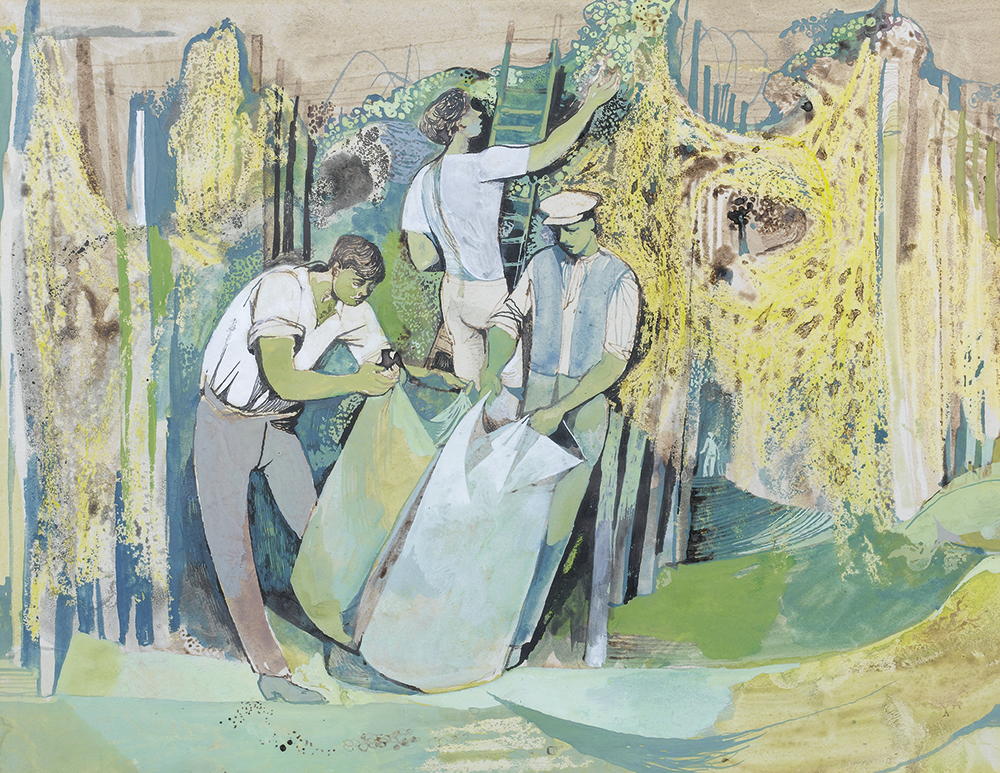
Glasgow-trained and working class, the Two Roberts owe their presence in the Fry’s collection to their notoriously rackety three-year stay in the early 1950s in a borrowed cottage near Great Dunmow, most of whose contents they allegedly smashed or sold. Unlike the English members of the group, these Ayrshire-born artists did not worship the ground Samuel Palmer walked on or adopt Graham Sutherland’s black shadows and twisted tree roots. They were more at ease with French modernism than their English friends, for whom war offered the chance to escape from Roger Fry’s ‘significant form’ into a lyricism expressed in figurative works on paper. It allowed a naturally gifted draughtsman like Minton to shine in watercolour paintings such as ‘The Hop Pickers’ (1945), combining detail with luminous simplicity (see below), and Vaughan to piece together wartime sketches made in the Non-Combatant Corps into dreamlike Arcadian compositions. His ‘Garden at Ashton Gifford’ (1942) is a world away from the prosaic paintings of land girls commissioned by the War Artists’ Advisory Committee.
While rejecting Fry’s boasted indifference to whether a picture’s subject was ‘Christ or a saucepan’, the neo-romantics didn’t go so far as to share Palmer’s religious faith in Nature as ‘the veil of Heaven… and proscenium of eternity’. For them, as for their patrons, the pastoral mode was an escape from the grimness of everyday wartime reality. ‘Moons are in!’ ‘Half-moons are really selling this year!’ joked Minton, in defiance of the fact that wartime moons benefitted German bombers. Only Michael Ayrton conveys a sense of foreboding in paintings like ‘Loneliness’ (1940) and ‘Winter Drought’ (1944); John Craxton, the baby of the group, is incorrigibly upbeat. With its impossibly blue sky, his ‘Reaper in a Welsh Landscape’ (1945) anticipates the vibrant landscapes he would paint in Crete, though the shadows – a hangover from his mentor Sutherland – remain black.
By 1950 the wartime window was closing on what William Scott, a lapsed neo-romantic, later dismissed as ‘the English watercolour nationalist romantic patriotic isolationist self-preservation movement’. In a post-war world the pathetic fallacy looked pathetic; the Kitchen Sink School flushed it down the realist plug. Minton’s last Lefevre Gallery exhibition in 1956, the year the Kitchen Sink painters represented Britain at the Venice Biennale, was panned by critics impatient of ‘the touching and melancholy impermanence of all physical beauty’ he still sought to enshrine in his art. Critics were brutal, too, about the horses and masked figures in Colquhoun’s 1951 Lefevre exhibition, despite their modernism; like Minton and the other Robert, he sought solace in drink. In the face of pop art even Vaughan – whose ‘Troys Farm’ (1960-72), with its geometric patchwork of fields, comes within a squeak of abstraction – began to ‘understand how the stranded dinosaurs felt when the hard terrain… suddenly started to get swampy under their feet’.
With its impossibly blue sky, Craxton’s ‘Reaper’ anticipates the vibrant landscapes he would paint in Crete
Minton took an overdose 1957; Vaughan chose the same way out 20 years later. MacBryde fell under a car in Dublin while drunk in 1966, four years after Colquhoun’s death in his arms from a heart attack. In the final issue of Horizon magazine in 1950 a reproduction of Francis Bacon’s ‘Three Studies for Figures at the Base of a Crucifixion’ (1944) was accompanied by this epitaph by Cyril Connolly: ‘It is closing time in the gardens of the West and from now on an artist will be judged only by the resonance of his solitude or the quality of his despair’. The neo-romantics’ despair was of the wrong quality – polite and private – but through the gate they held open the gardens can still be glimpsed.
Lacks any air of mystery, foreboding or darkness: Macbeth, at the Globe, reviewed
Macbeth at the Globe wants to put us at our ease and make us feel comfortable with the play’s arcane world of ghouls, hallucinations and murderous prophecies. Abigail Graham’s up-to-the-minute production offers a few nods to history, like the eagle masks worn by the three witches, but for some reason they speak in dense cockney accents and wear biohazard suits. And they’re all men. The Scottish soldiery favour black body armour like SAS recruits or Metropolitan Police officers. And King Duncan, benefitting from equality legislation, has been transformed into an alpha female: ‘Queen Duncan’, as everyone calls her. She strides on to the battlefield in the opening scene sporting a beautiful cream trouser suit and a salon-perfect ash-blonde hairdo. A puzzling costume for a tribal leader who just spent the day hacking her enemies to pieces with a longsword and a flanged mace.
It makes for joyful, thrilling and punishingly hilarious theatre
And it may be incorrect to assume that the early medieval period is too difficult for a modern audience to grasp. The Jacobeans who witnessed the first performance in 1606 were more remote in time from the historic Macbeth (born circa 1005) than we are from the Jacobeans. And if unlettered Londoners in the 17th century could understand history, we should try to emulate them.
But this production won’t let us. The show unfolds like a backstage bitch fight between a group of middle managers at a corporate awards ceremony. When Duncan retreats to Macbeth’s castle, the courtiers tear off their battle fatigues and climb into formal evening wear. The men look trim in their tuxedos and shiny black shoes while the women swish about in designer frocks and stilettos. The visual details jar constantly with Shakespeare’s storyline which requires the characters to commit murders with blades, like teenage thugs. Macbeth looks as slick as James Bond but he can’t kill Duncan with a Walther PPK so he uses a kitchen chopper instead, and he manages to spill a jar of blackcurrant juice all over his dress shirt while he does so. It’s hard to reconcile these inconsistencies with the narrative.
What’s really missing is the play’s essence: the air of mystery, foreboding, evil, darkness. The Macbeths’ touchy-feely relationship looks very off-kilter. A gap of some years separates the athletically handsome Max Bennett from Matti Houghton’s Lady Macbeth who seems to pay little attention to her appearance. We first meet her as she slobs around the castle in an oversized T-shirt and a pair of saggy tracksuit bottoms like a stressed-out A&E nurse. How did this overworked skivvy nab a husband who looks like Norway’s Olympic pole-vault champion? He’s all Sloane Square, she’s all car-boot sale. And her lines are often obscured by a quartet of warblers in the gallery who croon melodies during her finest speeches. It’s very galling for an actor to have to compete against a blaring choir as well as the fidgeting crowd, the circling pigeons, the police helicopters churning overhead and the distant moan of the Thames Clipper. Hardly a classic.
God of Carnage by Yasmina Reza is the play that everyone wishes Harold Pinter had written. He once described his subject as ‘the weasel under the cocktail cabinet’ but he later disavowed the phrase which he considered a trap. Reza’s play brings the Pinteresque mustelid to life.
Structurally the script is a marvel, as stark and simple as a pyramid, and yet it concerns an everyday tussle between middle-class neighbours. Two boys, aged 11, have had a fight that has left one of them with a missing tooth and a swollen lip. The four parents meet to finalise a joint statement which concludes that the more aggressive lad was ‘armed’ with a stick. Armed? The father, a corporate lawyer, takes exception and suggests ‘equipped’ instead. His substitution is adopted immediately. All the parents are keen to parade their good manners and sophistication even though they secretly mistrust and detest each other. Of course they find it wonderfully easy to conceal their real feelings behind the flim-flam of bourgeois hospitality. They share cups of coffee and homemade cake and they offer trite observations about each other’s careers and hobbies. In other words, they behave exactly like you and me.
But gradually, through the fog of pleasantries, their loathing starts to assert itself and an open war breaks out. First the partners go head-to-head like a mixed-doubles tennis match. Then the marriages fracture internally to reveal emotional difficulties that may or may not prove terminal. It makes for joyful, thrilling and punishingly hilarious theatre.
Nicholai La Barrie’s production is distinguished by superb performances and an eye-catching set from Lily Arnold. Beautiful rugs and side pieces. Two white sofas, one of them backless. A few simple but stylish accessories and the entire apartment unified by a pattern of dynamic concentric circles. Even if you don’t like the play, you’ll want to steal the furniture.
The best new album I’ve heard this year: Being Dead’s When Horses Would Run reviewed
Grade: A–
The point of a sudden, abrupt change in the time signature and instrumentation of a song is to surprise the listener and undermine his or her expectations. If, however, you do it in every song, then the point is lost, and the listener finds himself actually waiting for the weirdness
to begin.
So it is with Being Dead – and it’s about the only thing I have to carp about, because overall When Horses Would Run is a lovely album, full of often complex but always catchy melodies and imbued with an agreeably surreal sense of humour. The band is comprised of Falcon Bitch, Gumball and Ricky Moto and they come from Austin, Texas. Their shtick is punky surf guitar on top of which those clever tunes are sung as if by a cathedral choir in falsetto. There are whoops and Beach Boys harmonies and always a kind of descent into some sort of madness, which works more often than it does not. ‘Muriel’s Big Day Off’ tells the story of the lady in question enjoying a spot of shoplifting accompanied by perky ‘whoos’ and handclaps before it morphs into cocktail jazz. The title track is a beautiful, rather stately waltz and ‘God vs Bible’, which lasts for less than a minute, consists of the band repeating the line: ‘If God owned a bible he’d read it every day.’ I am not sure what they expect us to take from that. Possibly nothing – I’m not sure they give a monkey’s.
How to categorise? Perhaps they are a less sinister Pixies, with better tunes and more capable instrumentation. No great problem with that – it’s the best new album I’ve heard this year.