Notes on...

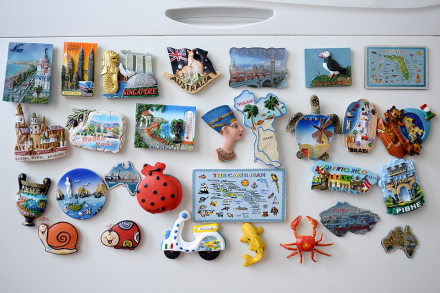
Who cares if fridge magnets are tacky?

Let’s dispense with the obvious question first. Are they common? While there’s a clear temptation to consult Nicky Haslam on such matters, I don’t think I can be bothered. Not least because first, I am a Prusso-Italian immigrant, second, I was born in Essex and third, I adore fridge magnets. We should be honest and admit that, like everything in life, they are signifiers. The aim is to show our friends how cultured, traveled, well-read, ironic and amusing we are. They are our lives writ in ceramic. Where to begin? One of my favorite magnets, designed to strike fear and dread into any intruder, dates back to Iraq circa 2004: “Caution Stay 100 meters back or you will be shot.” No punctuation, not even an exclamation mark!

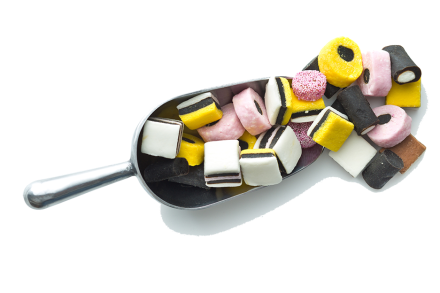
The joy of licorice

“I’ll swap you two of my rolls for three of your spogs.” That was the sort of thing you’d hear round the tuckshop in morning break when we schoolboys swapped and bartered our Liquorice Allsorts. We all had our favorites, spogs being the round pink or blue jelly buttons that had a coating of tiny sugar grains, while the pink or yellow coconut rolls featured a plug of licorice surrounded by coconut ice. Pontefract Cakes were another schoolboy favorite: small round discs of licorice that were allegedly one of, if not the oldest commercial sweets in the world. In the 11th century, Benedictine monks introduced licorice to Pontefract, Yorkshire. At that time, the plant’s roots were commonly chewed to soothe sore throats, ease coughs and help digestion.

A journey to the dark side of the Moon

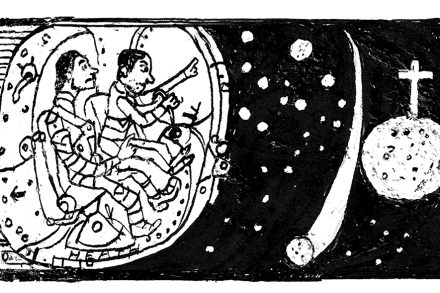
The climax of the Artemis II mission lasted just a few hours. The capsule, named Integrity, rounded the Moon, the crew becoming the most distant humans in history as they moved from its sunward side into its shadow. The familiar features of the permanently Earth-facing side made way for the more heavily cratered far side. This is not the Moon we know. The far side is different. It has a thicker crust, no major solidified lava plains and is more heavily cratered, like the aftermath of the final war. Before reaching it, the crew saw two Apollo landing sites: Apollo 12 touched down on Oceanus Procellarum (Ocean of Storms), and Apollo 14 landed on the plains of Fra Mauro, the target for the aborted Apollo 13 mission. There have been travelers here before, but not like this.

dark side moon

Potatoes are one of life’s great simple pleasures

My wife found the list in the back pocket of my gardening trousers. That ought to have been a clue, but she didn’t pick up on it. She marched into the study with an interrogative stride. “Who the hell are Mimi? Orla? Charlotte? Anya? Lady Christl!?” I felt a pang of relief that she hadn’t found my “tasting notes” as well. “Charlotte – firm, puts out well, nice finish.” If my wife had been a gardener or an allotmenteer she would have recognized the names as varieties of spud. Still, I can’t blame her. The faintly porny air does persist, as do some mysteries. Mimi, for instance – a redhead, “small, but plentiful” – disappeared suddenly some years ago and no one knows exactly why.

potatoes

My phobia is not to be sneezed at

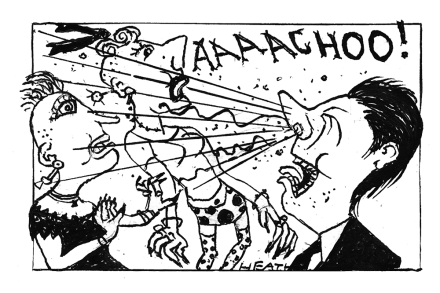
In January 1894, an assistant of Thomas Edison made a five-second silent film of Fred Ott taking snuff and then sneezing. It was the second ever film to be copyrighted – and it started with a sneeze. The sneeze is a blessing and a curse, associated with both good fortune and ill omen. In ancient Greece it was a prophetic sign from the gods – a sneeze could confirm the gods’ blessing of a decision. By the end of the 6th century, with plague sweeping through Rome, it had become associated with illness and death. Pope Pelagius II died from plague midsneeze. His successor, Gregory the Great, declared by papal decree that “God bless you” was the appropriate response of a Christian when someone sneezes, to keep the wildness and danger at bay.

Why my mustache had to go

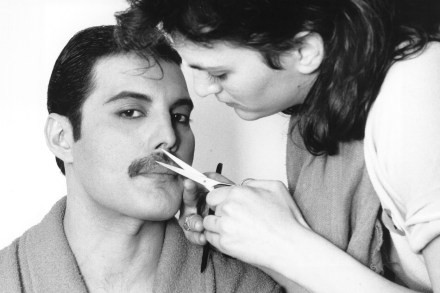
I loved my mustache. Unfortunately, my fondness for it seemed inversely proportionate to its popularity among my peers. After much unsolicited feedback from friends ("You look like a young Peter Mandelson") and online strangers ("You look like a 1970s porn star"), I put a poll on my Instagram asking my followers whether or not I should scrap it. Four-fifths said I should. After a brief consideration of my options (ignore the results? Rerun the vote? My mustache was making me think like a Latin American dictator), I reluctantly shaved. God how I miss it. There is something intoxicating about a mustache – a small hedgerow on his top lip can convince even the dowdiest man that he looks like a Battle of Britain pilot.

The horror of the male wig

Horrible injuries are commonplace in boxing but none, surely, has been quite so devastating as that sustained by the heavyweight Jarrell Miller. In the moment it took for an uppercut to land, the Brooklyn boxer’s life changed forever. Miller went from professional athlete to, well, "the man who got his wig punched off." I have rewatched Miller’s hairpiece getting punched off countless times, my hand clamped to my mouth. Why didn’t his team throw in the towel? Why didn’t the referee just stop the fight? Why didn’t Miller, his wig flipped up at 90 degrees like a kitchen trashcan lid, simply step out of the ring, exit the arena and start a new life several thousand miles away under an adopted identity?

wig

What Freud would say about Andrew Mountbatten-Windsor’s teddy bears

It is widely known that when a Duke of York is down, he is down, and the recent hit-piece in Heat – "'Pathetic' Andrew’s tantrums over prized teddy bears" – found a new way of kicking Andrew Mountbatten-Windsor. Its royal source said that "being forced to move [out of Royal Lodge] has sent him into a full-on meltdown because he keeps telling people the bears won’t cope with the change… as he says, it’s their home too." When it was reported last month that Andrew’s teddy bear collection was being sent to a south London storage facility, I was on the verge of feeling sorry for him; until I realized I was actually feeling sorry for the bears. There are no wonderful games to play in a lock-up. Of course I anthropomorphize teddy bears: that is what they are for.

The politics of long hair

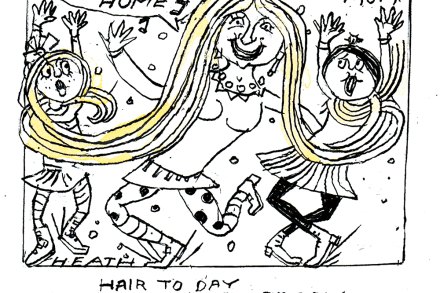
What is the literal cut-off point for women having very long hair (and by “long” I mean where it almost goes into the toilet bowl)? Thirty? Forty? Fifty? Try 65 – the age I turned this year. If this strikes you as grossly inappropriate, in theory I’m with you. The unspoken rule is that the older you get, the shorter your hair should be. Nobody within ten or even 20 years of me has hair as long as mine. What can I say? As with wearing inappropriately colored nail polish, it is just another small act of defiance women d’un certain age can employ to remind this cruel world that we do actually still exist. My hair has been this length for so long it has become a part of my identity: how I see myself in the universe. I am my hair and thus find it hard to imagine life without it.

Make mine a Moka pot

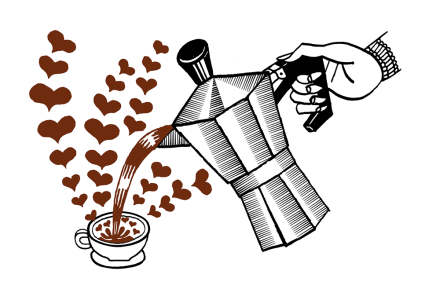
It’s strange the things that can trigger amity or affection. At the beginning of the capsule/pod coffee-maker craze, when George Clooney, with his come-to-bed eyes, was seducing the world with Nespresso machines, I bonded with my eldest daughter’s Italian boyfriend over the Bialetti Moka pot. Notwithstanding the expense and waste of the capsule coffee makers, I need at least three pods to get the lights on in my head in the morning. I’ve never had a good coffee from any of them. Contrast that with the cute, economical, environmentally friendly little Moka, the smallest of which – one cup – costs about $30 and, depending on the quality and freshness of the coffee used, makes a better cup than any café or restaurant.