Features

Do you have the patience to own an EV?

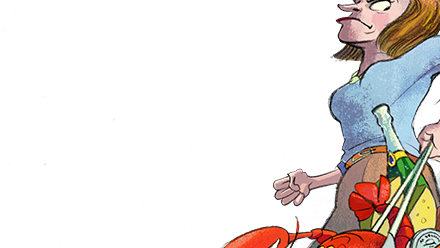
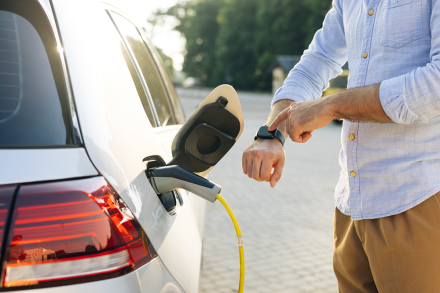
There’s a distinctive glow of virtue that emanates from people recharging their electric cars in public places. I call it the Light of the Charge Brigade. In the run-up to Easter, I spent two hours observing the phenomenon at Fleet Services on the M3. It was mostly men doing the charging. They’ve cracked the EV way of life, and are very pleased with themselves. A sparklingly fulfilled man called Paul was driving from Colchester to Seaton in Devon in his Skoda Enyaq with a carload of friends. He’d planned this stop for a first charge and Pret elevenses. Later he was planning to stop at Montacute House in Somerset for a late lunch and a second charge on one of the National Trust’s chargers.

pope leo xiv

How Pope Leo XIV is quietly reshaping the Vatican

On the afternoon of Easter Sunday last year, Pope Francis was driven through St. Peter’s Square in an open-topped Popemobile. A few weeks earlier he had nearly died from pneumonia, so pilgrims were thrilled to watch him blessing babies. They told journalists that it was a miracle to see the 88-year-old Argentinian in such good shape. At 9:45 the next morning, the Vatican announced that Francis had just died from a stroke. And so began the preparations for a conclave that elected the second pope from the Americas. Cardinal Robert Prevost – “Bob” to his friends – was a Chicago-born dual citizen of the United States and Peru. Until 2023 he’d been bishop of the Peruvian diocese of Chiclayo.

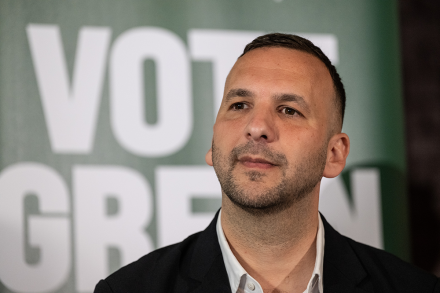
How the UK’s Green party abandoned its environmental roots

In the summer of 1972, Lesley Hill walked into a pub in rural Warwickshire. She had something for her husband Tony Whittaker. It was a copy of Playboy magazine. In that issue, there was an interview with the biologist Paul R. Ehrlich, who died last month aged 93. In it, he repeated the thesis of his 1968 book The Population Bomb, where he wrote that “in the 1970s hundreds of millions of people will starve to death.” There were simply too many of us. Worldwide famine was imminent. Lesley and Tony were terrified. Along with a local businessman, Michael Benfield, and his future wife, Freda Sanders, they talked about it over pints at the Bridge Inn, becoming known as a “Gang of Four.” Over several months, they roped in 39 others, and set up the People party in 1973.

Steve Hilton on running to be California governor: ‘I don’t want this state that I love to become the country I left’

“I don’t want this state that I love to become the country I left,” Steve Hilton tells the lunch meeting of South­ern California Republican Women. Knives and forks rattle on porcelain as the perfectly coiffured ladies down cutlery to clap. Remarkably, Hilton, director of strategy under former British prime minister David Cameron, has topped virtually every poll for governor of California since he launched his campaign in April last year. Hilton has leant into the West Coast aesthetic and spirit. Once the rebel of Downing Street in T-shirts and stockinged feet, today he sports a tech-bro beard, more bracelets and beads on his wrists than Prince Harry, and has the top three buttons of his white shirt undone. British by birth, he has renounced his citizenship and become an American.

republicans Steve Hilton

Revealed: Keir Starmer’s new plan to get closer to the EU

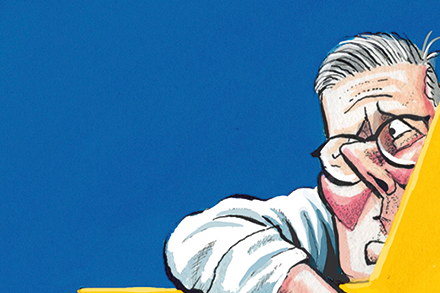
A Labour MP, reflecting on the problems UK Prime Minister faces over the war in Iran, observed: “Keir got it right, but things keep going wrong.” His point was that Starmer kept Britain out of the Israeli-American air strikes, a position popular both with the parliamentary Labour party and the electorate, yet the impact of that conflict has laid bare three serious problems at the heart of the British state. First, there has been a fracturing of relations between Starmer and Britain’s defense chief, Air Chief Marshal Sir Richard Knighton. Second is the vulnerability of the economy to energy price shocks. Third is Ed Miliband’s net-zero crusade, which has put further pressure on the cost of living, Starmer’s biggest domestic problem.

eu

How to master the left-wing brag

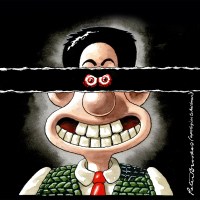
No one likes a blatant boaster. So, as adults, we learn that if we want to boast, we must be subtle about it. The way to show off without being loathed is to drop small details about your life into your conversation and your prose, to signal your taste, education, career achievements and social status. Doing this is tricky enough for right-wing people, who need to come up with subtle ways of letting others know, for example, that they can afford private school fees, went to Oxbridge, shop at Waitrose, own at least one home and go on holiday in Provence or Tuscany. Words and phrases such as “exeat,” “scraped through my Prelims,” “perfectly ripe avocados,” “basement kitchen” and “bumping up through the olive grove” do the work.

My addiction to playing the piano is driving everyone mad

From time to time, I’ve given some famous pianists a bit of a kicking in the arts pages of this magazine. You may be a Bach specialist, but that’s no excuse for sleepwalking through all six keyboard partitas in a marathon recital. Your -Beethoven Diabelli Variations may be renowned, but don’t expect a rave review if you trap me in an intimate concert venue while you pound the keys like a pneumatic drill. You’d think, though, that a journalist who snipes at world-class soloists would have the sense to keep his own amateur playing to himself. And if he’s idiot enough to post a recording on social media, he should learn to take what he dishes out. Alas, I never learn. I have the ears of a connoisseur but the fingers of an arthritic pub pianist.

Kim Jong-un’s sister or daughter? Only one can survive…

As a birthday treat, a good father might take his ten-year-old daughter to the ballet or a Disney movie. Three years ago, North Korea’s ruling dictator Kim Jong-un (“Brilliant Comrade”) took his ten-year-old daughter Kim Ju-ae to the launch of an intercontinental ballistic missile. It was her first public outing. Subsequent kiddie treats have included visits to the mausoleum that houses the bodies of her grandfather, Kim Jong-il (“the Dear Leader”), and great-grandfather, Kim Il-sung (“the Great Leader”). She also got to stand at military parades, inspect nuclear facilities and make an official visit to Beijing. In the North Korean media, Kim Ju-ae is referred to as the Supreme Leader’s “beloved” or “precious” daughter.

Those who believe in liberalism must now fight for it

I’m conscious that, just as the easiest way to lose an argument is to mention Hitler, so the easiest way to lose journalistic credibility is to invoke the 1930s. Yet the similarities to our own dismal decade are now too numerous to ignore. There is the same collection of morbid symptoms: the rise of strongmen, the collapse of the political center, the intellectual organization of political hatreds. Even more worryingly, there is the same sense of hurtling toward global conflagration. The similarities begin with the disintegration of the international order.

‘We don’t know what’s going on or why we’re doing this’: how Trump’s Iran gamble backfired

"Donald Trump is a complicated person with simple ideas," said Kellyanne Conway, the former White House senior counselor. "Way too many politicians are the exact opposite." It’s a good way of understanding the 45th and 47th President and his extraordinary success. His turbulent personality causes mayhem, yet his political aims have remained constant, straightforward and popular. Decades ago, as a New York tycoon with a keen eye on international affairs, he identified three priorities for America: tackle the nation’s trade imbalances, force NATO allies to spend more on defense, and destroy terrorists. When it comes to realizing those simple ideas, however, his more complex attributes emerge.

I love Dubai. Get over it

I am in Dubai where we are doing our best to keep calm and carry on. Granted, the sudden instruction to "seek immediate shelter' in the early hours of Sunday morning was unnerving, but with the exception of excitable "influencers," few people are cowering in their basements. On Saturday evening, I’d hotfooted it to the Palm Jumeirah. When my kids told me the Fairmont hotel had been hit, I didn’t believe them. The idea that the mad mullahs would start lashing out in this direction seemed completely absurd. Though the Emiratis take a far dimmer view of Islamic extremism than our own craven British government, they are careful not to upset "brotherly" neighbors. The UAE has prospered precisely because of this strategic restraint. Surely some mistake?

‘Whose side are you on?’: how Keir Starmer alienated Britain’s allies over Iran

The American-Israeli attacks on Iran were publicly called Epic Fury, but behind the scenes it is Britain’s handling of the war which provoked that reaction – not just from Donald Trump but from the UK’s allies in the Gulf. A Labour peer was in Washington when the first missiles slammed into Tehran on Friday evening and Keir Starmer refused to voice support. A member of the Trump administration told the peer: "Britain used to not contribute that much, but you were a good ally. Now you’re contributing nothing and you’re not even a good ally." A version of events has quickly become established: a Prime Minister with a near-religious belief in international law hid behind the advice of his Attorney General, Richard Hermer, that the attacks were illegal.

starmer

Inside MAGA’s meltdown over Iran

When President George W. Bush invaded Mesopotamia in 2003, everybody laughed at Comical Ali, the bespectacled Iraqi information minister who kept insisting that the American "rats" were doomed as Saddam Hussein’s regime collapsed around him. The world moved on. Iran is not Iraq, as President Donald Trump’s supporters are so fond of saying, and Bush-era "forever wars" are no more. Plus, these days the comedy communications come directly from the Commander-in-Chief. At the weekend, as missiles rained across the Middle East, Trump’s cabinet officials mostly avoided attention-grabbing interviews. The boss, however, embarked on his own heroic PR campaign.

Trump’s ultimate target in this war is China

The United States and Israel killed Ayatollah Khamenei, and Xi Jinping’s decade-long project to build an alternative to the American-led order died with him. For years, Beijing quietly assembled a network of dictatorships and client states designed to blunt American power. Iran supplied China with cheap oil and kept Washington bogged down in the Middle East. Russia waged war on Ukraine with Chinese materiel support, a gamble that was supposed to cement a powerful anti-western axis but has instead bled Moscow into dependence on Beijing. Regional proxies from Lebanon to Gaza added just enough chaos to stop Washington focusing on China. The Chinese Communist party (CCP) propped up Nicolas Maduro’s Venezuela, too, as it funneled narcotics and other ills into America.

‘More than half our squad were executed’: Inside Russia’s rotten army

The Russians are on the warpath – and Europe is Vladimir Putin’s next target. That was British Prime Minister Keir Starmer’s alarming claim at the Munich Security Conference in February. Britons "must be ready to fight, to do whatever it takes to protect our people, our values, and our way of life," Starmer warned. Britain and Germany’s top military commanders delivered the same message in a recent article. Russia’s military posture "has shifted decisively westward," wrote Air Chief Marshal Sir Richard Knighton and General Carsten Breuer. Soon the Kremlin "may be emboldened to extend its aggression beyond Ukraine." Really? According to much western coverage in mainstream and social media, the Russian army is crumbling, corrupt and inept.

Inside the daring plan to reclaim the Chagos Islands

Peros Banhos on the Chagos archipelago looks like your basic tropical island paradise: turquoise waters and golden sands, waves lapping on a palm-fringed beach. But step off the strip of sand into the wall of green behind, and you’re enveloped by mosquitoes. The old well you were counting on for water is a shallow puddle. And the silver fish between your feet dart past a net, despite not having seen one in 50 years. The jungle has grown over the old British colonial buildings, and the jungle is a harsh place. Four Chagos Islanders have been here more than a week, along with the man who brought them, Adam Holloway – former MP, ex-Guards officer, an adventurer seemingly from an earlier era. This is not, as the Foreign Office briefed journalists, "a political stunt.

In bed together: the writers of HBO’s Industry on bankers and politicians

No TV show better encapsulates the nexus between money and power than Industry. The HBO drama sees investment bankers screwing, snorting and slogging their way to the top of English society. Now, in its fourth season, political intrigue is taking center stage. Think House of Cards – but with more sex and better-remunerated hotties. Mickey Down and Konrad Kay, the co-writers of the show, explain when we chat that they wanted to "expand the canvas" as Industry progressed. It initially focused on the "hermetically sealed" world of the trading floor but has now expanded beyond. "Finance is linked to other spheres of influence," says Down. "Obviously finance and media have a transactional relationship. Finance and politics also have a transactional relationship.

My sister Ghislaine became a prop in the theater of global online outrage

My family name has become a byword for scandal. My father, Robert, went from press baron to tabloid monster within weeks of his death in 1991. My sister Ghislaine, convicted in New York three decades later for sex-trafficking offenses linked to Jeffrey Epstein, became the algorithmically optimized villain of the online age. Last week’s arrest of the former Prince Andrew shows how fully a newer system has taken hold: one in which guilt is first declared on the homepage and only later, if at all, tested in court. Law is meant to cool passions. The modern content economy is designed to inflame them Old protections – the presumption of innocence, etc – become threadbare once a story enters the global content mill. Defendants are no longer chiefly subjects of legal process.

Why are adults buying so many children’s toys?

On the fourth floor of Selfridges, in London, is the children’s toy department. Most of the vast space is given over to soft toys – mounds of synthetic fur, thousands of little beady eyes – and when I visited last Saturday afternoon the customers were almost all adults. I spent two hours there, standing by a tower of little Paddington bears, watching the shoppers in the queue for the register, and it was eye-opening. Almost no one was buying for a child. I saw two Chinese women with white toy lambs, a 17-year-old boy with a dragon, what looked like drug dealers waiting in line for Pokémon cards, and a genuinely troubling number of sad-looking women in their mid-twenties clutching long-eared toy bunnies made by a company called Jellycat.

‘Authority is like virginity. Once it’s gone, it’s gone’: Inside Keir Starmer’s downfall

Years ago, Peter Mandelson, Britain's former ambassador to Washington, shared a key lesson with his protégé Morgan McSweeney – until last week the prime minister Keir Starmer's chief of staff. Reminiscing about his involvement in the Labour party's 1987 general election campaign, he called it the "spray-paint election." The manifesto was a "beautiful technicolor" document but the tax-and-spend shibboleths of statist 'Old Labour' remained, along with the policy of unilateral nuclear disarmament. "I spray-painted the old Ford Cortina," Mandelson told McSweeney, "but it was still a Cortina. Policy is at the heart of political communication." Only after the election – a second three-figure landslide defeat – did Labour launch a policy review, out of which New Labour emerged.