Latest from Coffee House

Latest from Coffee House

All the latest analysis of the day's news and stories

Trump isn’t the greatest threat to the Special Relationship

Britain’s refusal to fully back the United States over strikes on Iran has triggered an unusually public transatlantic row. It has also revived an old question about the future of the so-called "Special Relationship." When Donald Trump returned to the White House last year, many in Westminster doubted Keir Starmer could build a workable relationship with him. The two men could hardly be more different in temperament or politics, and predictions of an early rupture were widespread. For a time, however, Starmer appeared to defy those expectations. Britain weathered Trump’s latest tariff wars better than most countries, and the Prime Minister seemed to have found a cautious way of managing Washington’s unpredictability.

special relationship

Will the Iran war propel Gavin Newsom to the presidency?

"I’m very angry about this war," said Gavin Newsom, the California Governor, on stage yesterday. Newsom has a memoir, Young Man in a Hurry, to plug, and a serious bid for the presidency in the offing. Like many other ambitious Democrats, he spies in Donald Trump’s new war an opportunity to cause grave damage to the Republicans in November’s midterms – and in the 2028 presidential election, too.  "Six Americans dead, including a young man from Sacramento," he said, beating his chest in a nauseatingly theatrical manner. "You have a President who still cannot explain the rationale. Why now, and what’s the endgame?"Operation Epic Fury, now into its sixth day, has united Democratic politicians in their condemnations of President Trump.

Is it wise for Spain to goad Donald Trump?

Spain’s refusal to allow the United States to use its military bases at Morón de la Frontera (Seville) and Rota (Cádiz) for its war on Iran, arguing that the US-Israeli attacks are "unilateral military actions outside the United Nations charter" has brought the simmering conflict between Pedro Sanchez, Spain’s socialist Prime Minister and President Trump to a head.   Sanchez’s carefully calculated strategy has been to position himself as one of Trump’s leading opponents on the world stage On Wednesday Sanchez followed up by delivering a stunning rebuke to Trump. Speaking for ten minutes on national television, he said that his government's position could be summed up in four words: "No a la guerra" (No to war).

Like that poor dog, Kristi Noem turned out to be untrainable

When Kristi Noem disclosed she once shot the family dog, Cricket, because Cricket was “untrainable”, the world wrote her off as unfit to be Donald Trump’s 2024 running mate. According to a new book, her dog-killing ruthlessness was, in fact, one of the key reasons Trump picked her for Homeland Security Secretary. It may have helped that Trump doesn’t like dogs.  Now that uncompromising approach has been her downfall. Trump has finally snapped and fired her for overshadowing his administration’s immigration achievements – achievements she has made – by turning public sentiment against ICE.

US Homeland Security Secretary Kristi Noem testifies during a Senate Judiciary Committee hearing on oversight of the Department of Homeland Security, on Capitol Hill in Washington, DC on March 3, 2026. (Photo by Mandel NGAN / AFP)

Why Iran marks the end of neoconservatism

45 min listen

Spectator columnist and Heritage Foundation fellow Daniel McCarthy joins Freddy to explain how Trump's war with Iran could mark the end of an era, that of neoconservatism. For Daniel, there is no contradiction between Trump's "America First" policy and its overseas interventions: Trump is pursuing a version of hegemony that will reduce the need for future interventions. If all goes to plan, this could mark an ideological watershed that stretches back to the first Gulf War in the early 1990s – but it's a big "if." What if the conflict spirals out of control? To what extent was this driven by Trump, or by Netanyahu? And what are the dynamics at play between the leadership figures in MAGA? Produced by Patrick Gibbons.

starmer

‘Whose side are you on?’: how Keir Starmer alienated Britain’s allies over Iran

The American-Israeli attacks on Iran were publicly called Epic Fury, but behind the scenes it is Britain’s handling of the war which provoked that reaction – not just from Donald Trump but from the UK’s allies in the Gulf. A Labour peer was in Washington when the first missiles slammed into Tehran on Friday evening and Keir Starmer refused to voice support. A member of the Trump administration told the peer: "Britain used to not contribute that much, but you were a good ally. Now you’re contributing nothing and you’re not even a good ally." A version of events has quickly become established: a Prime Minister with a near-religious belief in international law hid behind the advice of his Attorney General, Richard Hermer, that the attacks were illegal.

Who’s winning the missile war?

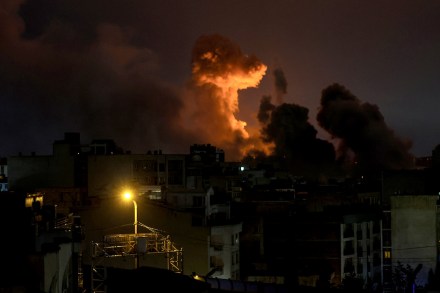
In the early hours of February 28, 2026, Operation Epic Fury commenced with large-scale American and Israeli air strikes against Iranian military, command, missile and infrastructure targets. Since then, the United States and Israel have conducted extensive operations against Iran, while Iran has retaliated with missile strikes against US bases, Israel and its regional neighbors. This is an initial assessment of the missile war, which has defined the early stages of this conflict. Over the past two nights, Iranian ballistic missile usage appears to have decreased sharply The central military dynamic between Israel and the United States on the one hand, and Iran on the other, can be understood as a race to the bottom.

Why Iran is not Iraq

At the moment, a lot of people – notably including the British Prime Minister, Sir Keir Starmer – are comparing the current war with Iran with the Iraq invasion of 2003. Do they have a point? There are several common claims of comparison, some good, some bad. When Saddam fell, there was little appetite in Iraq for a western-aligned replacement The principal claim, in Starmer's case, is that what happened in Iraq means the UK should steer well clear of any further involvement anywhere. It reminds me of the final scene in that magnificent film, Chinatown. A private detective moves to intervene to stop a horror unfolding but one of his associates holds him back, saying, “Leave it, Jake, it’s Chinatown.” In this reading, the Middle East is Chinatown.

What role will Turkey play in the Iran conflict?

34 min listen

Today NATO forces intercepted an Iranian missile headed for Turkey. While it remains unclear where that missile was intended to land, questions have emerged over whether President Erdoğan can continue his strategy of geopolitical pragmatism. So far the Turkish leader has managed to appeal to China, Russia, Europe and the US. But will he be forced to pick a side? Freddy discusses this with Spectator writer Owen Matthews and the recent reemergence of Kurdish forces being funded by Israel and the US to attack the Iranian regime. https://www.youtube.com/watch?

The Texas Republican revolt

Following last night’s primaries, Texas Democrats have a clear Senate candidate in James Talarico. Texas Republicans have a civil war. Ken Paxton and John Cornyn are headed for a nasty and expensive three-month runoff that will culminate in an election on May 26. Cornyn has made no secret of his disdain for Paxton, deeming him a “dead weight.” Are Texas Republicans facing an Alamo scenario, a last stand as the Democrats swarm over their defenses to reclaim the Lone Star state and the Senate majority? More than 2.4 million Texans cast ballots in the Democratic primary, the highest number in nearly two decades. The significance of Talarico’s victory over Jasmine Crockett can hardly be overstated.

Does Trump even know why he invaded Iran?

Napoleon is supposed to have defined strategy as "on s’engage, et puis on voit," loosely translated as "get stuck in and then see what happens." Donald Trump is not normally deemed Napoleonic, yet in his approach to strategy he appears to have taken the great general’s precept to heart, launching initiatives without much forethought regarding consequences or further steps in the light of unexpected developments. When the consequences turn out to be unwelcome, he swiftly readjusts, discarding the initial scheme in favor of an alternative course of action, as often as not headlong retreat. Thus the swingeing Liberation Day tariff regime unveiled with much fanfare in April 2025 was swiftly suspended in the face of crashing markets.

Iranian attacks aren’t worrying Washington

Many commentators are already claiming that the war with Iran is “spiraling out of control.” I try not to be uncharitable: I am a Catholic, after all, and the Church tells me it is a sin. But if I were tempted, I should say that the only thing spiraling out of control is cliché. You could argue that drone attacks are a sign that Iran’s ballistic and cruise missiles aren’t actually proving that effective Iran said it would hit out wildly if it were attacked. It also made clear that direct attacks on the leadership of the Islamic Republic would be treated as an existential threat.

Will Iran descend into civil war?

33 min listen

Freddy is joined by historian and former diplomat Charlie Gammell. They discuss the situation in Iran, whether the US is heading for a decisive confrontation, and examine the regional consequences: proxy warfare, Gulf energy security, Pakistan’s delicate position, and migration pressures on Europe. https://www.youtube.com/watch?

What comes after America’s retreat?

What is happening to the "rules-based international order" despairingly invoked by bewildered European leaders? The broad answer is that we are living through the retreat of American hegemony, masked by bluster and marked by contradictions. The retreat has two aspects, economic and geopolitical. Economists talk about Trump’s tariffs breaking up the free-trade order; geopoliticians about the Trump Corollary breaking up the NATO system. These are part of a single, reasonably coherent story. But the retreat is not as straightforward as it sounds. How does the bombing of Iran fit into it? What do people mean when they talk about a global "rules-based order"?

Did Israel bounce the US into war?

Operation Epic Fury has developed from a war to deprive Iran of nuclear weapons into a political war of blame. “We knew that there was going to be an Israeli action,” Marco Rubio told reporters at the Capitol last night. “We knew that that would precipitate an attack against American forces. And we knew that if we didn’t pre-emptively go after them [Iran] before they launched those attacks, we would suffer higher casualties.” The rationale came as a surprise to lawmakers. It sounded as though Israel had effectively bounced America into military action. Trump had told the American people from the outset that the war was to defang Iran of its nuclear weapons program as well as its ballistic missile capability. Regime change was optional.

Why Europe is terrified of standing up to Iran

America’s war on Iran has revealed much about its allies. Israel is as steadfast as ever, as secretary of war Pete Hegseth pointed out on Monday. Australia and Canada have also made clear their unequivocal support for the military action.  Russia, for all its malevolence, does not have the means to stoke civil unrest in western Europe. The Islamic Republic of Iran does In Europe, however, the response has been lackluster. Hegseth regretted the faintheartedness of "traditional partners who wring their hands and clutch their pearls, humming and hawing about the use of force." Step forward Keir Starmer, who has "disappointed" President Trump by his reluctance to throw Britain’s weight behind America.

The Middle East’s Muslims are cheering Khamenei’s death

The killing of ayatollah Ali Khamenei in US-Israeli strikes on Saturday was cheered by many Iranians who have suffered innumerable atrocities under his ruthless Islamist rule of the country. While the diaspora were vociferous in their jubilation over the death of Iran’s supreme leader, many in the country also braved violent crackdowns to rejoice in the streets. These Iranians chanted the slogan that has become a common anti-Khamenei refrain over the past four decades: "Death to the Islamic Republic.

What Iran means for the world

The Israeli-American air campaign against Iran will have profound global repercussions. What those repercussions will be depends on two crucial factors. First, will the bombing campaign remove the Shi’ite Islamist regime from power? We do not yet know if the campaign can accomplish that ambitious goal without foreign troops on the ground. If the US and Israel can do that, it would be an unprecedented achievement. Second, if the Islamists are removed, will the successor regime be stable and effective? Will it be able to control the streets and countryside, prevent successful breakaway regional movements, and begin the arduous process of rebuilding the country? Can the factions currently opposing the old regime join in supporting a new one or will they fracture?

Why is Vance silent on Iran?

Twenty eight hours or so into the new war against Iran, and America’s Vice President J.D. Vance has yet to declare his support in public. His social media account on X, which is normally so lively, has been conspicuously silent for the last two days.  He seems keen to position himself apart from the administration’s more ardent hawks when it comes to the Middle East It’s likely that will all change today and Vance, as he did after the Venezuela operation, will take to the airwaves for the big Sunday news shows in order to once again repeat that administration’s line that Donald Trump, the ultimate decider, has boldly done what no other US president would do, and that the evil Iranian regime could never be allowed to have weapons of mass destruction. But for now, nadda.

Who will lead Iran now?

The longest-serving autocrat in the Middle East, Iran’s Supreme Leader Ayatollah Ali Khamenei, is dead. This is a historic moment for the Iranian people, the region, America, and US allies and partners around the world. Given the unprecedented nature of this US and Israeli military operation, it remains hard to predict events in Iran. But several developments give us clues about Iran's direction of travel in the near-term. Khamenei was a brutal ruler who not only abused his people and fomented terror around the world but was also a tyrant to his own family. His estranged sister Badri Khamenei once recounted how Qassem, a good friend of her brother, was murdered by the Iranian regime in the early years of the Islamic Revolution.

Could Iran descend into civil war?

Ayatollah Ali Khamenei, a man whose life has been defined by the harshness of his rhetoric against the West (specifically, the US and Israel) and his ruthless rule, has died a martyr’s death under the rubble of his compound in Pasteur, Tehran.  It was always going to end this way. Khamenei came to prominence as a revolutionary first and then second as a wartime leader when he assumed the role of President of Iran during the Iran-Iraq war. What is needed is a clear plan that can unite Iranians behind a shared, inclusive vision of their country The Islamic Republic is facing its most serious crisis since January, when it set about killing its way out of nationwide protests.

Does Trump know what he is trying to do in Iran?

Donald Trump has urged Iranians to "take over" their government after the United States and Israel struck targets across the country. A multitude of Iranian military and government targets were hit by missiles in what is turning out to be a joint operation far more comprehensive than the 12-day air campaign last June. Freddy and Jacob Heilbrunn join to discuss why now, how this attack is fraught with risk for Trump's presidency and how Trump's administration was hijacked by the neoconservatives. https://www.youtube.com/watch?

Is this Trump’s Sarajevo moment?

Here we go again. Switch out Saddam Hussein for the Ayatollah Khamenei and Ahmed Chalabi for Reza Pahlavi and you have a fresh war for regime change in the Middle East, this time with Israel as America’s sidekick. With Operation Epic Fury, the American and Israeli bombing of Iran and push for regime change, the self-proclaimed “President of Peace” runs the risk not only of triggering wider upheaval in the Middle East, but also globally. Is this a new Sarajevo moment? With Trump’s own generals having warned him that attacking Iran could be a debacle, he may have torched his own presidency Unlike George W. Bush in 2003, who worked to bolster domestic and international support for attacking Iraq, Donald Trump has disdained the slightest effort to justify his war publicly.

It’s unclear what threat Iran actually poses

Donald Trump has urged Iranians to "take over" their government after the United States and Israel struck targets across the country. A multitude of Iranian military and government targets were hit by missiles in what is turning out to be a joint operation far more comprehensive than the 12-day air campaign last June. Back then, Trump’s objectives were limited: degrade Iran’s three largest nuclear facilities. This time, Trump’s eyes are on a bigger prize – a full-scale decapitation of the Iranian leadership and a degradation of Tehran’s military power.

Trump launches a remote-control regime-change war on Iran

"We’re going to destroy their missiles and raze their missile industry to the ground," said Donald Trump, as he stood at the lectern in his white USA cap and announced the launch of a "massive and ongoing" military operation against Iran.  "It will be totally, again, obliterated." He had to say "again" because he has insisted over and over that Iran’s nuclear facilities had been "utterly obliterated" last summer, after Operation Midnight Hammer.  But the objective of these latest midnight or very early morning strikes, conducted again by US and Israeli forces working together, is already far broader than the wiping out of weapons of mass destruction – whether that be uranium enrichment sites or Iran's ballistic missile capabilities.

iran

How careful is Trump being on Iran?

Every Friday, it seems, words spills from Washington that Donald Trump has ordered an imminent strike against Iran. He likes to initiate dramatic military action in the weekend early hours, when markets are closed and the media-consuming public can wake up to big news.  So far, despite the presence of significant US military assets in the region, Trump has resisted the urge to bomb, bomb, bomb, bomb, bomb Iran – preferring instead to pursue a diplomatic settlement with the regime in Tehran.   This weekend could be different. This morning, the US Ambassador to Israel, Mike Huckabee, sent an email to his staff saying those who wanted to leave "should do so TODAY." The path of diplomacy has, it seems, reached an impasse.

British politics is turning French

An editorial in Friday’s Le Figaro (France’s equivalent to the New York Times) is headlined "Mélenchon or the moral suicide of the left." The same statement could be applied to Britain’s Green party. Their open pandering to the Muslim vote in Thursday’s Gorton & Denton by-election was arguably a new low in British politics. It wasn’t just Israel and so-called Islamophobes who were targeted (in Urdu) in their campaign leaflets and videos, so was India. Le Figaro’s scathing critique of the left-wing populist leader Jean-Luc Melenchon was written as a reaction to his visit to Lyon on Thursday evening. A fortnight earlier 23-year-old Quentin Deranque had been kicked to death in Lyon, allegedly by a far-left mob.

Britain’s Green party is playing with fire

A good quiz question in the year 2050 will go something like this: "True or false, the 'green' in the 'Green Party' originally referred to the environment." By this point, the etymological origins of Britain’s sectional Islamic party will be as obscure as the relationship between British Conservatives and 17th century Irish bandits. A key milestone, our mid-century quiz regular will inform his teammates, was the 2026 Gorton and Denton by-election in which the Greens stood neck and neck in a three-way race with Labour and Reform before voting opened. If decades of generous immigration policies have created constituencies where people vote along religious lines, there is nothing to stop someone appealing to that market.

Lauren Boebert’s sneaky texts derail Hillary’s Epstein deposition

Hillary Clinton and her husband Bill austerely complied with a House Oversight Committee subpoena in order to explain their ties to disgraced financier Jeffrey Epstein. Yet Hillary’s testimony today didn’t exactly go to plan. Proceedings were halted after a breach of the hearing’s protocols – by a member of the committee. Congresswoman Lauren Boebert took two surreptitious photos of the closed-door hearing… and sent them to conservative influencer Benny Johnson. Johnson, in turn, plastered his watermark all over them and posted them on X.

lauren boebert
starmer

Is the Trump-Starmer bromance over?

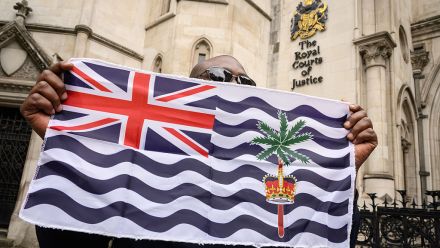
"The Special Relationship only exists when the Americans want something," a former Downing Street aide observed after Donald Trump rejected the Chagos Islands deal. There are profound differences between London and Washington over military action against Iran while the fourth anniversary of the war in Ukraine this week has exposed further fault lines. The result is that Anglo-American relations are at their worst point since the general election. Keir Starmer’s team argues he should not be ousted at a time of huge international instability. But the reality of the Anglo-American relationship raises three questions. Where did things go wrong? Does the PM still have some kind of relationship with Trump?