World

How Finland joined the West

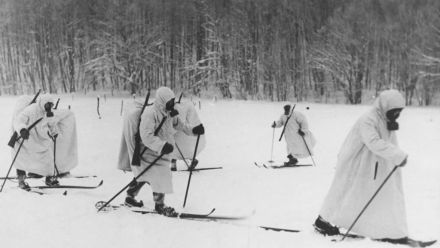
Finland’s entry into Nato in 2023 dealt a major blow to Russia in the Baltics. For years, President Putin had warned his Finnish counterparts that a decision to join the alliance would be met with an appropriate response, but the implicit threat has been slow to materialise. In February, Russia reconstituted its Leningrad Military District, a Soviet-era administrative region tasked with defending Russia’s northwestern territories, but otherwise there’s been a palpable quiet in the far north. In recent weeks, this has begun to change. On 18 November, the sole fibre optic cable linking Finland and Germany was severed, and hours after a cable connecting Sweden and Lithuania was also cut.

Alexandra Shulman, Sean Thomas, Matthew Parris, Adrian Dannatt and Philip Hensher

34 min listen

On this week’s Spectator Out Loud: Alexandra Shulman reads her fashion notebook (1:13); Sean Thomas asks if a demilitarised zone in Ukraine is inevitable (6:02); Matthew Parris argues against proportional representation (13:47); Adrian Dannatt explains his new exhibition Fresh Window: the art of display and display of art (21:46); and Philip Hensher declares he has met the man of his dreams: his Turkish barber (28:17).  Produced and presented by Patrick Gibbons.

How Angela Merkel broke Germany

Angela Merkel, who last month published her memoirs on her 16 years as German chancellor, was a great tactician. But she was dead wrong on many of the strategic questions hurled at Germany during her time in charge. Merkel is the architect of a Germany that’s again the sick man of Europe, now in a second year with a shrinking economy and surging parties on the far-right and far-left. Merkel doesn’t do mea culpas and this has annoyed some reviewers of her book. Those who hoped for admission of failures misunderstand Merkel. She’s a physicist, who disassembles problems before making, what she sees, as fact-based decisions. Her manner of deflecting

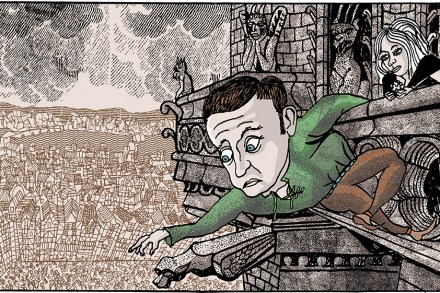
Donald Trump was right about Paris

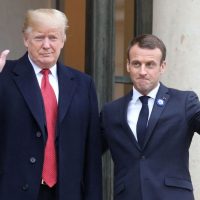
Donald Trump is in Paris today to attend the official reopening of the renovated Notre Dame cathedral. The president-elect has what could be described as a love-hate relationship with the French capital. He loves the place but it – more precisely its mayor and most of its right-on residents – hates him. This contempt first manifested itself days after he defeated Hillary Trump in the 2016 presidential election. Hundreds of protestors took to the streets of Paris, banging pots and pans and chanting ‘No Trump, no hate, no KKK’ and ‘Hey hey, ho ho, Donald Trump has got to go’. The organisers of the rally listed why they believed Trump

Why is Poland building a barrier with Ukraine?

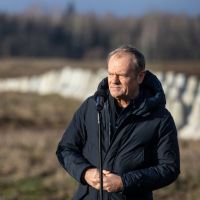
A ceasefire in Ukraine is far from being agreed, yet Poland is already preparing for its collapse. In recent months, Warsaw has been digging an anti-tank ditch along its border with Russia and Belarus – and has decided to extend it to Ukraine. The 400-mile-long ‘East Shield’ will almost double in size and include minefields and bunkers, anti-drone systems and AI-powered defences to protect Poland from possible invasion. Ukraine’s closest neighbour clearly puts little trust in Donald Trump’s promise of peace with Russia: if Vladimir Putin rearms and comes back for more, Poland must be ready to meet battle-hardened Russian troops at its border. Donald Tusk called the £2.5 billion

Emmanuel Macron is about to be humiliated – again

Emmanuel Macron addressed the French people on Thursday night and once again ruled out the possibility he will resign before his mandate expires in 2027. As for appointing a new Prime Minister – his fourth this year – Macron said he would nominate Michel Barnier’s successor in ‘the coming days’. The big decisions concerning France are no longer made in Paris, but in Brussels Also on television on Thursday evening were the ‘extremists’ who Macron blames for bringing down Barnier’s government. Marine Le Pen and Jean-Luc Melenchon gave lengthy interviews in which they justified their actions and, in the case of the latter, called on Macron to resign. Would it

What the ‘experts’ got wrong about Syria

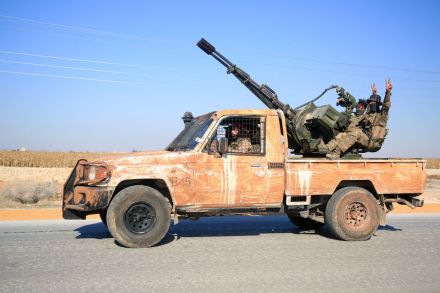
Provincial capitals falling before an unexpected advance. Military units allegedly defecting, deserting or switching sides. Talk of a coup in Damascus. The Syria of 2012 is the Syria of 2024. For years this was a so-called ‘frozen conflict’. The front lines did not move, no matter how many artillery and aerial attacks there were on civilians in the country’s north. The maps did not change, though dozens of people at a minimum were killed in fighting every week. But now Syria’s civil conflict has reignited. From their portion of Idlib province, a broad coalition of armed groups led by the Islamists Hayat Tahrir al-Sham (HTS) have taken over a significant

Macron's disastrous legacy of failure

Robert Tombs joined John Keiger and Will Kingston on Spectator TV to discuss the political turmoil in France and what this means for Emmanuel Macron’s presidency. Here is an extract of what Robert had to say. Emmanuel Macron’s legacy is very likely to be disastrous. He’s a very intelligent man, a man of great qualities. I once saw him when he was newly elected when he came to England and he attended a meeting, a sort of reception, with Theresa May at the time. Poor Theresa May was standing in a corner on her own, and Macron was surrounded by admirers. Macron gave a rather brilliant improvised speech in English

Macron’s France is no longer fit for purpose

Emmanuel Macron will address the French people this evening, 24 hours after parliament passed a vote of no confidence in the president’s government. Millions of French will likely tune in and the majority – 63 per cent, according to one poll – would love it to be a resignation speech. No chance, according to the man himself. Earlier this week Macron said he would remain in the Elysee Palace ‘until the very last second of my term to serve the country.’ The fact is that France is in unchartered waters and no one knows what will happen in the coming weeks and months Thursday’s newspapers in France pore over the

Angela Merkel regrets nothing

Last night, nearly three years to the day since she handed over the reins of power to Olaf Scholz, Angela Merkel appeared at London’s Royal Festival Hall to promote her newly published memoir, Freiheit, or ‘Freedom’.  The compulsion to write her memoirs first arose in 2015, she said, out of a desire to explain her decision to open Germany’s doors to over one million asylum seekers Merkel’s autobiography comes at an important moment for the country she used to govern. After the collapse of Scholz’s traffic light government, Germany is staring down the barrel of a snap election expected to take place in February. With the country grappling with all-time

The deepening unpopularity of Zelensky

Perhaps all political careers must end, inevitably, in failure. But few politicians have had careers as meteoric, as surprising, as consequential or as heroic as that of Ukraine’s President Volodymyr Zelensky. In just five years he has gone from TV comedian to victor of the biggest presidential landslide in his country’s history to inspiring wartime leader who impressed the world with his resolve and personal bravery. But now with the war entering its third (and probably last) winter, Zelensky’s extraordinary story as Ukraine’s leader has reached its final chapter. Voters blame Zelensky for the war’s failures – and do not wish him to play any part in their country’s future

Is Ukraine heading towards a Korean-style demilitarised zone?

It is the strangest place, the demilitarised zone (DMZ) that separates South Korea from North Korea. It is simultaneously a historic battlefield, a sombre graveyard, a tourist honeypot full of coach parties from Seoul, and a Cold War frontier, hotly defended on either side. One minute you are looking at a kiddies’ funfair, or a shop that sells ‘souvenir North Korean money’, the next you are staring at endless barbed wire and monuments to failed North Korean defectors, shot dead as they attempted to cross the two-and-a-half-mile strip of landmines. Which itself has turned into an Edenic eco-haven, full of deer and eagles, as the humans have vanished. In the

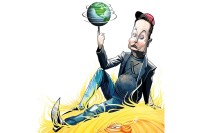
Why Elon Musk shouldn’t be kicked out of the Royal Society

Bishop did not wish to be associated with ‘someone who appears to be modelling himself on a Bond villain’ In a notorious interview in the Sunday Times in 2007, the Nobel Prize-winning geneticist James Watson said, among other things, that aborting babies with gay genes was ‘common sense’ and that ‘all our social policies are based on the fact that their [blacks] intelligence is the same as ours [whites] – whereas all the testing says not really’. He also defended the explanation offered by Larry Summers of why there are fewer female professors in Stem subjects than male – there are more men at the right-hand tail of the IQ

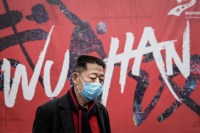
Wuhan wager: the $400 ‘bio bet’ that predicted the pandemic

At the end of this month, one of the world’s most renowned scientists will send $400 to a charity to settle a wager with another of the world’s most renowned scientists. We don’t yet know who will win, but it is likely to be the wrong person, in my view. The money will probably come from Cambridge, England, not Cambridge, Massachusetts. Rees thinks if the tragedy of Covid has an identified ‘villain’ it would aggravate tense US-China relations The two scientists involved are Lord (Martin) Rees, the Astronomer Royal and former president of the Royal Society, of Cambridge University, and Steven Pinker, the Harvard linguist, neuroscientist and author of many

Portrait of the week: Labour’s ‘plan for change’, falling productivity and 20,000 wolves in the EU

Home The Labour government announced a ‘Plan for Change’ that it refused to call a reset. Sir Chris Wormald was named Cabinet Secretary. In his Guildhall speech at the Lord Mayor’s banquet, Sir Keir Starmer, the Prime Minister, said that ‘the idea that we must choose between our allies, that somehow we’re with either America or Europe, is plain wrong’. He said ‘we must continue to back Ukraine’ against Vladimir Putin as something ‘deeply in our self-interest’. With the arrival of another 122 people on 1 December, more than 20,000 had crossed the Channel in small boats since Labour entered office. A group of about 60 Sri Lankan Tamil asylum-seekers

Macron is the author of his own despair

‘Notre-Dame has been restored to its full level of glory, and even more so,’ said the President-elect Donald J. Trump this week, as he confirmed that he would be honouring Emmanuel Macron with his presence for the big reopening of France’s most famous cathedral on Saturday. ‘It will be a very special day for all!’ Just like Trump, Macron relishes such stately occasions, and it would be churlish to deny him credit for Notre-Dame’s impressive reconstruction following the devastating fire that shocked the world in 2019. Paul McCartney has reportedly been given an ‘exceptional authorisation’ to sing ‘Imagine’ within the sacred walls, while the rapper Pharrell Williams will perform outside. Victor

South Korea's political chaos is far from over

Had you have taken a direct flight from London to Seoul yesterday afternoon, by the time you would have landed you might have been none the wiser that anything had happened at all. At near midnight South Korean time, President Yoon Suk Yeol imposed martial law across the so-called ‘land of the morning calm’. Only six hours later it was subsequently, and pointedly, revoked. As South Korean citizens continue with their daily lives, the political establishment has once again entered a period of precarity. Yoon has scored a significant own goal; its implications do not end there. It is no understatement to say that the decision by President Yoon to impose

South Korea's President Yoon will be lucky to escape jail

Six hours. That was the duration of the profoundly disturbing and simultaneously farcical version of martial law invoked by South Korea’s president Yoon Suk Yeol on Tuesday night – the country’s first experience of military rule for 40 years. It was so brief in duration that if you weren’t plugged in to social media or watching TV you may not have been aware it had even occurred. What this brief but extraordinary episode amounted to was a deployment of troops to the parliament building to bar the entrance of lawmakers. That operation failed utterly, as protesters were quickly on the scene to take on the military, in some cases with fire