World

Welcome to the age of nuclear blackmail

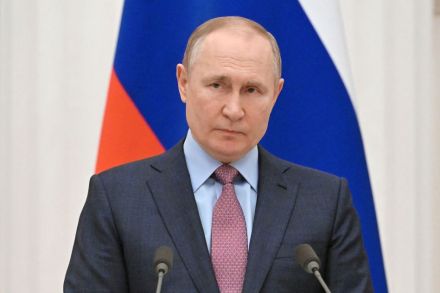
Vladimir Putin’s recent announcement that he was not bluffing about using nuclear weapons against the West in his war on Ukraine is one of the strongest indications yet of the risks the liberal world now faces in opposing authoritarian aggression. In the face of Russian aggression, or in committing the United States to defending Taiwan, as President Joe Biden did yet again recently, Washington and its partners face the possibility of direct confrontation with the world’s most powerful, nuclear-armed militaries. For the first time in a generation, Western powers risk being checked by adversaries willing to threaten massive conventional and nuclear warfare. The era of cost-free intervention to uphold the liberal world order is over.
nuclear
charles

What kind of king will Charles III be?

In 1988, Prince Charles asked the late Peregrine Worsthorne, then editor of the Sunday Telegraph, what he should do in public life. Perry told Charles he should restrict himself to public duties and never ever air his private thoughts. The prince buried his head in his hands, moaning, “But then I’m just a cipher.” And that, indeed, is what he has just become, as King Charles III. At the end of September, his cipher — the symbol of his reign — was unveiled. The elegant combination of a C, an R (for Rex) and the Roman numeral III come together to symbolize King Charles III. In time, the cipher will appear on government buildings, state documents and new postboxes. Perry Worsthorne was right all those years ago.

crimea

What price must the West pay for Crimea?

For centuries before Vladimir Putin arrived on the scene, Russian foreign policy has been shaped by the country’s need for warm-water ports. To be a great power in Europe and the Near East, Russia must have access to the Mediterranean. Commercial as well as military considerations dictate this. In the eighteenth century Russia conquered the khanate of Crimea and acquired a splendid location for a new Black Sea port — what is now the city of Sevastopol. The Crimean peninsula had been a gateway from Asia to the Mediterranean since the days of the ancient Greeks, who built some of their northernmost colonies there. Russia made Sevastopol the permanent home of its Black Sea Fleet.

Why Israel won’t give lethal aid to Ukraine

Israeli defense minister Benny Gantz announced this week that Israel would maintain its policy of not supplying weapons to Ukraine. This drew criticism, including charges that Israel has a moral obligation to help Ukraine and is instead foolishly prizing its relations with Russia. Critics also note that Israel’s archenemy Iran is providing weapons and advisors to Russia. They further point out that Israel’s Ukraine arms embargo puts it out of step with Israel’s most important partners in the West, especially the United States. Yet aiding Kyiv is a far riskier bet for Jerusalem than for most Western capitals. This is no easy call, and the one Israel made is probably the right one.

boris johnson right neoliberalism

The inevitable Boris Johnson

London, England When I checked the date that Boris Johnson resigned as prime minister, I thought it must have been wrong. July? The psychodrama that ensued felt as if it had been going on for years. If Boris’s tenure was the main show, Liz Truss’s stint as Britain's shortest-serving PM was the slapdash encore that no one asked for. You know, when the music restarts as you’re eyeing up a taxi home and secretly thinking the act needn’t have bothered. Boris’s downfall, the real one — not the multiple wobbles — began with Partygate. A steady drip of salacious stories for months, each one getting slightly more unforgivable, recounting incidences of Boris and members of his government breaching the strict lockdown rules he himself had set in place.

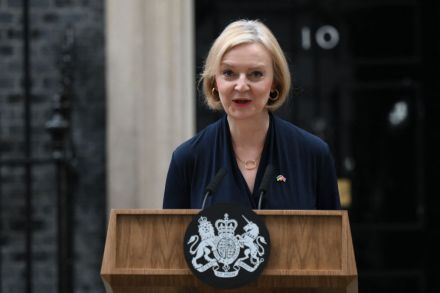
Why Liz Truss had to go

London, England Nobody in British politics really thought things could get worse than last night. Conservative MP Charles Walker told the BBC that the day was a "pitiful reflection" of the party; he added that there was "no coming back from it." Seasoned political editors described Wednesday as the most catastrophic day of their careers. The government victory on fracking — with 326 votes opposing the Labour motion to 230 backing it — was tarnished by claims of intimidation and bullying in the House of Commons. The home secretary, Suella Braverman was fired for sending official documents from her personal phone, something which is likely now a relief for her. Two other figures were said to have quit, but remained in their posts when questioned twelve hours later.

liz truss

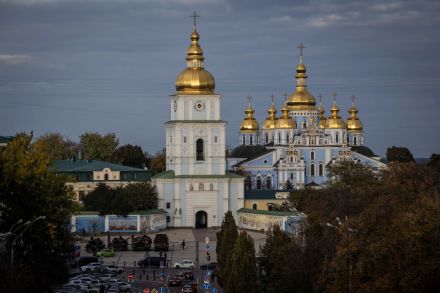
Homage to Kyiv

It was 11:15 p.m. in Kyiv, just after the curfew, and the military had set up its checkpoints on the city streets. Finding your way home after hours can be a hazardous business. The city is paranoid about assassins and saboteurs, and in wartime few are above suspicion. Things were looking ominous until my friend Sasha declared: “we are late for breakfast.” The guards waved us through. This was the daily password, shared with those important enough to move around after curfew. Checkpoints and curfews were a few reminders of the war in Kyiv, where I was just before last week’s deadly air strikes. In the capital city, life was approaching some form of normalcy.

kyiv

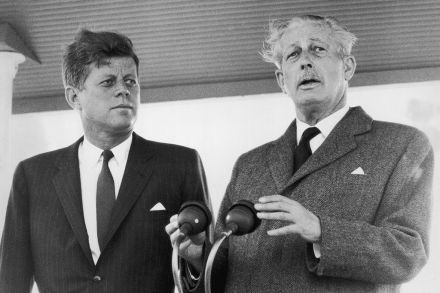
How the British helped JFK navigate the Cuban Missile Crisis

The Atlantic alliance hasn’t always been quite as special as politicians on both sides of the sea like to pretend. To take just the last sixty years: there were the differing views on Vietnam that led Lyndon Johnson to assess the British premier Harold Wilson as "a creep," while Richard Nixon privately considered Ted Heath "weak" and "as crooked as a corkscrew" (which was saying something coming from him). In October 1962, however, the principal Western leaders really did have something special. Between them, they probably helped save the world from nuclear annihilation. When on October 16, President John F.

How long can Europe’s support for Ukraine last?

Can Ukraine sustain a war effort that is proceeding far better than most military analysts ever expected? Part of that answer, of course, depends on the extent to which the Ukrainian army can keep their troops in the field equipped, supplied, and motivated. That challenge comes as the Russian military increasingly relies on so-called “kamikaze drones” to strike deep into Ukrainian territory (on October 17, a Russian drone attack killed four people in Kyiv during the morning rush hour). But another factor that will determine success or failure is whether Europe remains onboard — or, more to the point, whether Europe’s support to Kyiv will continue as the war enters a dreary, unforgiving winter.

The right’s dangerous embrace of soft isolationism

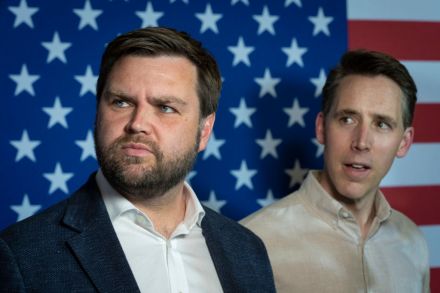
Traditionally, the GOP has been the favorite of those concerned with safety and national security. The party of Ronald Reagan emphasized the need for strong engagement abroad, a willingness to project power when necessary, and a commitment to the free world. Yet the contours of the conservative movement have begun to change in recent years, calling into question the GOP’s credibility on the issue of security. The growing support for a sort of soft isolationism is a problem. It is also fundamentally not conservative. Prominent voices from the American right have been carrying the banner of soft isolationism for years, from Tucker Carlson and J.D. Vance to Senator Josh Hawley and former president Donald Trump.

Why does the media never call world leaders ‘far left’?

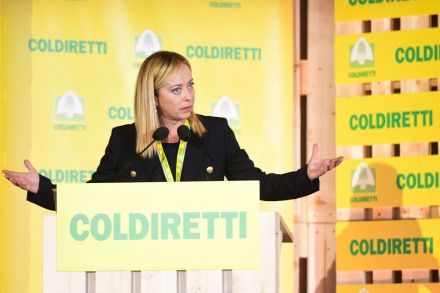
Italy is about to have its first female leader and the American left is furious. Giorgia Meloni grew up in a working-class neighborhood in Rome and was raised by a single mother, after her father, a communist, fled to the Canary Islands and was later convicted of drug trafficking in Mallorca. She wrote in her autobiography that her mother planned to have an abortion when she was pregnant with her but changed her mind at the last minute. Meloni worked as a nanny, a waitress, and a bartender before getting into politics, but she’s no AOC. Meloni, 45, is the leader of the right-wing populist Brothers of Italy party, which recently won Italy’s general election with 26 percent of the vote. She’s widely expected to be named Italy’s first female prime minister.

It’s time for the US to revoke China’s ‘normal trade’ status

In April 2022, six weeks after Moscow’s invasion of Ukraine, President Biden signed legislation to suspend Russia’s Permanent Normal Trade Relations (PNTR) status. “Revoking PNTR from Russia,” he said, “is going to make it harder for Russia to do business with the United States… The free world is coming together to defeat Putin.” PNTR status, also known as Most Favored Nation (MFN) status, is a designation granted among World Trade Organization members. Receiving nations are awarded all trade advantages that any other nation receives. Revoking PNTR status from Russia was a strategic move. It opened the door to deliver comprehensive economic strikes against Moscow and sent a clear signal to markets.

The Russia-Iran axis that’s menacing Ukraine

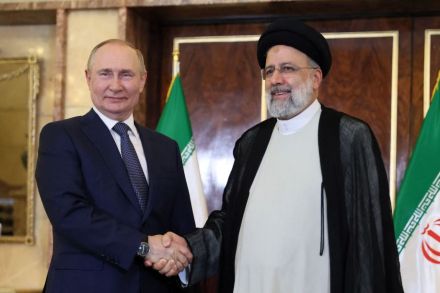
Russia’s brutal war in Ukraine is coming up on its eighth month, and the costs to the Kremlin’s military have been immense. Increasingly isolated on the world stage, Vladimir Putin has joined the world’s club of pariah states, the only group willing to give him support. Chief among his allies is the Islamic Republic of Iran, a state with similarly imperialistic designs and global isolation. This axis has been brewing for some time — the two nations worked together extensively in Syria, for example — but the relationship has reached new heights as the Russian armed forces buckle under the strain of war. Perhaps the most potent symbols of this relationship are the hundreds of Iranian drones flooding into Ukraine to fill a gap in Russia’s weapons inventory.

elon musk ian bremmer

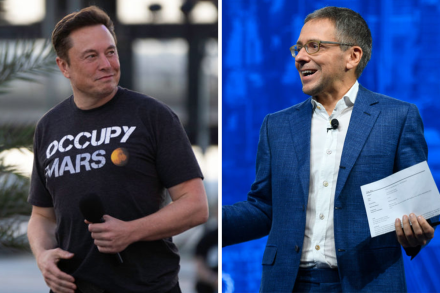
Elon Musk vs Ian Bremmer: who’s telling the truth?

Cockburn wasn’t surprised to hear that Elon Musk had found himself in yet another spat, but he was somewhat shocked to hear that this one was a matter of national security. This week's he-said-she-said involved political scientist Ian Bremmer. In a newsletter sent to his Eurasia Group subscribers, Bremmer wrote that Tesla CEO Musk had told him that Putin was “prepared to negotiate,” but only if Crimea remained Russian, if Ukraine accepted a form of permanent neutrality — and Ukraine recognized Russia’s annexation of Luhansk, Donetsk, Kherson and Zaporizhzhia. So, not asking too much then. Musk hit back in response to a tweet asking whether Bremmer's statement was true, replying: “No, it is not. I have spoken to Putin only once and that was about eighteen months ago.

Can Venezuela’s exodus become America’s gain?

Since the onset of Venezuela’s economic and humanitarian crisis back in 2015, around 6.8 million people have fled the country in search of refuge. The most popular destinations include neighboring countries Colombia and Brazil, as well as a host of other Latin American countries. Many who can afford it have also found safe passage to Europe. Yet many of Venezuela’s poorest and most disaffected are setting their sights on another destination entirely: the United States. At the height of the country’s troubles between 2015 and 2018, the number of Venezuelans apprehended by US officials never exceeded 100 people a year. Fast forward to 2022, and more than 150,000 Venezuelans have arrived this year already.

Russia’s brutal strategy of war is failing

Ukraine’s devastating attack on the Crimean Bridge and Russia’s sickening response — deliberately targeting civilians — perfectly encapsulate how these adversaries are fighting this war. Ukraine has a coherent strategy, effective operational design, and close coordination among its forces. Russia is failing because it has none of this. The centerpiece of Ukraine's strategy is eviscerating Russian combat power without getting into a raw slugfest that would sacrifice its own troops. That means knocking out Russian combat power without a head-on battle, wherever possible. How does Ukraine do that?

Queen Elizabeth II made a difference — to Britain and the world

“The Queen is dead, boys, and it’s so lonely on a limb.” So the ever-provocative Morrissey sang on the title track of the Smiths’ 1986 album. At the time, his wishes were regarded as little more than republican throat-clearing, shot through with satirical wit. In the same song, he imagined an unlikely encounter with the Queen, who remarks caustically, “Eh, I know you, and you cannot sing.” Some of his detractors might agree. But now, thirty-six years on, the Queen really is dead. Queen Elizabeth II, the longest-reigning monarch in British history, died on September 8, 2022 at the age of ninety-six. The second Elizabethan age — one that surpassed the first for both achievement and longevity — has come to an end.

queen elizabeth ii

America’s chip war with China

There is a joke in Taipei that if China invades Taiwan the best place to shelter is in microchip factories, the only places the People’s Liberation Army can’t afford to destroy. The country that controls advanced chips controls the future of technology — and Taiwan’s chip fabrication foundries (“fabs”) are the finest in the world. Successful reunification between the mainland and its renegade province would give China a virtual monopoly over the most advanced fabs. Given that Xi Jinping has made clear his intention to take control of Taiwan by 2032, it is no wonder that the American government is worried about the concentration of cutting-edge semiconductor technology on the island.

semiconductors

Why is Biden giving up on nuclear deterrence?

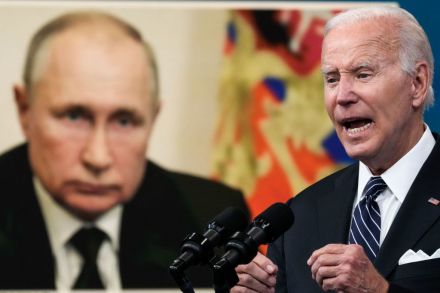
What’s more alarming than President Trump trying to frighten Kim Jong-un with “fire and fury”? President Biden trying to frighten Americans with Putin. “I don’t think there’s any such thing as the ability to easily [use] a tactical nuclear weapon and not end up with Armageddon,” the president riffed at a New York fundraiser, while fretting to supporters about his need to find that elusive off-ramp for the Russians. Biden’s loose talk about Putin’s formidability contrasted with US handwringing fits a pattern. Pervasive throughout Putin’s war has been far too much focus on what the United States should do to help Putin find these mythical off-ramps, and on how to restrain Ukraine to prevent it from getting nuked.