World

Elon Musk vs Ian Bremmer: who’s telling the truth?

Cockburn wasn’t surprised to hear that Elon Musk had found himself in yet another spat, but he was somewhat shocked to hear that this one was a matter of national security. This week's he-said-she-said involved political scientist Ian Bremmer. In a newsletter sent to his Eurasia Group subscribers, Bremmer wrote that Tesla CEO Musk had told him that Putin was “prepared to negotiate,” but only if Crimea remained Russian, if Ukraine accepted a form of permanent neutrality — and Ukraine recognized Russia’s annexation of Luhansk, Donetsk, Kherson and Zaporizhzhia. So, not asking too much then. Musk hit back in response to a tweet asking whether Bremmer's statement was true, replying: “No, it is not. I have spoken to Putin only once and that was about eighteen months ago.
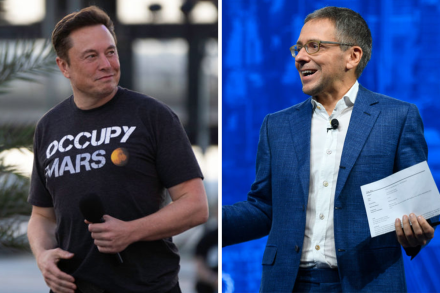

elon musk ian bremmer

Can Venezuela’s exodus become America’s gain?

Since the onset of Venezuela’s economic and humanitarian crisis back in 2015, around 6.8 million people have fled the country in search of refuge. The most popular destinations include neighboring countries Colombia and Brazil, as well as a host of other Latin American countries. Many who can afford it have also found safe passage to Europe. Yet many of Venezuela’s poorest and most disaffected are setting their sights on another destination entirely: the United States. At the height of the country’s troubles between 2015 and 2018, the number of Venezuelans apprehended by US officials never exceeded 100 people a year. Fast forward to 2022, and more than 150,000 Venezuelans have arrived this year already.

Russia’s brutal strategy of war is failing

Ukraine’s devastating attack on the Crimean Bridge and Russia’s sickening response — deliberately targeting civilians — perfectly encapsulate how these adversaries are fighting this war. Ukraine has a coherent strategy, effective operational design, and close coordination among its forces. Russia is failing because it has none of this. The centerpiece of Ukraine's strategy is eviscerating Russian combat power without getting into a raw slugfest that would sacrifice its own troops. That means knocking out Russian combat power without a head-on battle, wherever possible. How does Ukraine do that?

Queen Elizabeth II made a difference — to Britain and the world

“The Queen is dead, boys, and it’s so lonely on a limb.” So the ever-provocative Morrissey sang on the title track of the Smiths’ 1986 album. At the time, his wishes were regarded as little more than republican throat-clearing, shot through with satirical wit. In the same song, he imagined an unlikely encounter with the Queen, who remarks caustically, “Eh, I know you, and you cannot sing.” Some of his detractors might agree. But now, thirty-six years on, the Queen really is dead. Queen Elizabeth II, the longest-reigning monarch in British history, died on September 8, 2022 at the age of ninety-six. The second Elizabethan age — one that surpassed the first for both achievement and longevity — has come to an end.

queen elizabeth ii

America’s chip war with China

There is a joke in Taipei that if China invades Taiwan the best place to shelter is in microchip factories, the only places the People’s Liberation Army can’t afford to destroy. The country that controls advanced chips controls the future of technology — and Taiwan’s chip fabrication foundries (“fabs”) are the finest in the world. Successful reunification between the mainland and its renegade province would give China a virtual monopoly over the most advanced fabs. Given that Xi Jinping has made clear his intention to take control of Taiwan by 2032, it is no wonder that the American government is worried about the concentration of cutting-edge semiconductor technology on the island.

semiconductors

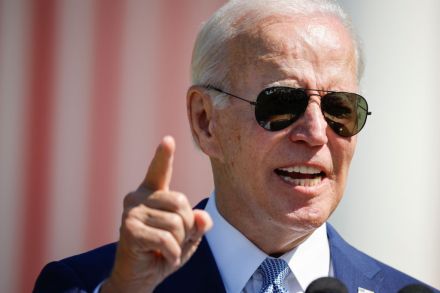
Why is Biden giving up on nuclear deterrence?

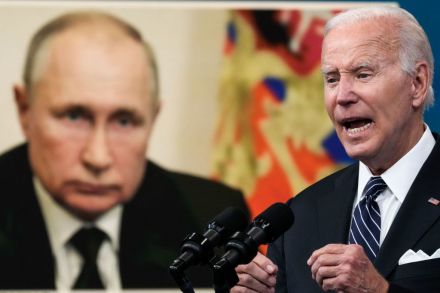
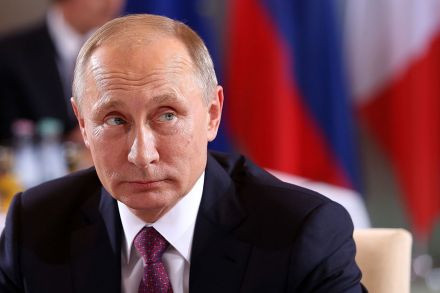
What’s more alarming than President Trump trying to frighten Kim Jong-un with “fire and fury”? President Biden trying to frighten Americans with Putin. “I don’t think there’s any such thing as the ability to easily [use] a tactical nuclear weapon and not end up with Armageddon,” the president riffed at a New York fundraiser, while fretting to supporters about his need to find that elusive off-ramp for the Russians. Biden’s loose talk about Putin’s formidability contrasted with US handwringing fits a pattern. Pervasive throughout Putin’s war has been far too much focus on what the United States should do to help Putin find these mythical off-ramps, and on how to restrain Ukraine to prevent it from getting nuked.

putin

How the Ukrainians personally humiliated Putin

The Russian army has been the source of an endless list of shortcomings and embarrassments over the last eight months. There are simply too many of them to count, from the failure to move through Kyiv’s suburbs in March to the sinking of the flagship Moskva in April to the loss in September of more than 3,000 square kilometers of territory in just days. But by far the most humiliating to Vladimir Putin personally was last weekend’s attack on the twelve-mile bridge that connects mainland Russia with Crimea, the peninsula Moscow annexed in 2014. That bridge, which cost more than $7 billion to build, was one of Putin’s pet projects, a visible signal to the world about Moscow’s staying power in the region.

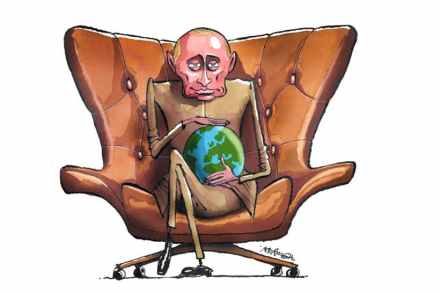
Vladimir Putin is simply mad

Vladimir Putin is mad: not in the cognitive but in the emotional sense of the word. He is an odd mixture of the cold, the plotting, the calculating, and the bloodless; the emotional, the impulsive, the hotblooded, and the sentimental. He is mad, in other words, in precisely the way that Adolf Hitler was mad. And like Hitler, Putin is disconnected from the world of fact but not of logic. This is a fundamental truth about the man that I think the West had never experienced before February. His condition became apparent in the diatribe against the West that he gave on Friday, which corresponded almost exactly to Hitler’s customary rants.

nuclear tactical putin war

Biden goes nuclear

At a swanky fundraiser in Manhattan, President Joe Biden alluded to the prospect of “Armageddon.” The biblical reference was not intended to woo the Christian evangelicals who form part of the base of the Republican Party, but to alert bien-pensant liberal opinion that something a trifle more threatening than global warming looms large in world politics. For the “first time since the Cuban missile crisis, we have a direct threat of the use [of a] nuclear weapon if, in fact, things continue down the path they are going," Biden said. For anyone with lingering memories of the Cold War, his remarks about the prospect that Russian president Vladimir Putin might reach for the nuclear button was bound to stir alarm coupled with — dare I say it? — a smidgen of pleasure.

Why Russia could use nuclear weapons in Ukraine

Here is one fact about the war in Ukraine you need to understand: the longer it goes on, the more advanced Western arms will flow to Kyiv. And that could mean that Russian president Vladimir Putin will feel he has no choice but to use tactical nuclear weapons to even the odds — no matter what happens as a result. You think that sounds crazy, right? Well, let me ask you this: did you ever imagine Putin would invade Ukraine? That action alone casts doubts on how rational an actor he really is. But let's take a step back for a moment. In order to understand why Putin may very well consider using tactical nukes, let's get a sense of where he thinks he stands in this war.

sanctions putin russia davos oligarch

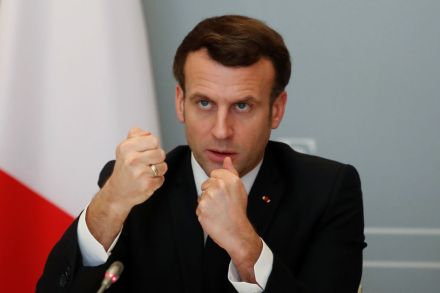
Europe is more bark than bite on Ukraine

Last Friday, President Biden signed a spending bill that will keep the government’s lights on until December 16, when lawmakers will have to cobble together a funding resolution to avert a shutdown. Tucked into that law was another tranche of security and economic assistance to Ukraine, to the tune of $12.3 billion. The signing came two days after the Defense Department announced the release of an additional $1.1 billion military package for Kyiv, which will include 18 more HIMARS systems, 150 armored vehicles, and ammunition of various calibers. The Biden administration has provided the Ukrainians with over $16 billion in security assistance since Russia’s invasion in February. Washington’s hands have been cramping up from writing so many checks.

macron europe blame

Who REALLY blew up the Nord Stream pipelines?

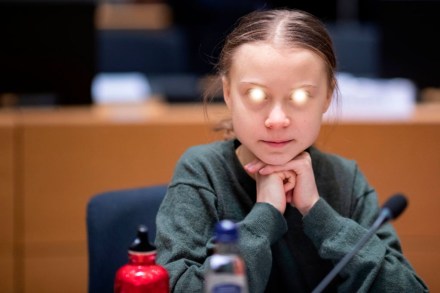
Four days have passed since the Nord Stream pipelines mysteriously ruptured in the Baltic Sea, just outside of NATO territory. Sabotage is suspected. Many in the West blame Vladimir Putin; others, such as Tucker Carlson, Radek Sikorski and, er, Vladimir Putin, blame America. But to truly solve this mystery, Cockburn thinks circumstances require us to cast the net a little wider. Here are some potential saboteurs deserving of further scrutiny. Greta Thunberg How dare we! The gray Swedish doom-gremlin has dedicated much of the last years to warning us of the looming Armageddon, traipsing from the UN to Davos to COP26. Is it farfetched to suggest that Thunberg might take dramatic steps to ensure her cause is the only option on the table?

nord stream

Why Putin might have attacked Nord Stream

As the world wonders what happened to the Nord Stream 1 and 2 pipelines, many suspect that Russian President Vladimir Putin is behind the sabotage. At first glance, it appears strange that Russia would damage pipelines that its own companies run. But Putin has several possible reasons for carrying out the attack. One reason could be that Gazprom (the Russian state-owned gas giant) wants to avoid paying penalties for failing to fulfill its contractual obligations. Since August 31, Russia has halted gas exports via both Nord Stream pipelines, which follows a similar move in July where the Kremlin cited erroneous maintenance issues as the cause of the short shutdown that month.

giorgia meloni

Giorgia Meloni and the reactionary axis that wasn’t

One is a blonde, photogenic woman who grew out of a youthful infatuation with Benito Mussolini to become the first female prime minister of Italy. The other is anything but photogenic, a grizzled veteran of more than three decades of political combat, who began his career as a student activist and became a respectable center-right statesman, only to reinvent himself as a populist firebrand. But if you were to judge Giorgia Meloni and Hungarian Prime Minister Viktor Orbán by the frequency with which they appear together in media coverage, usually with adjectives like “far-right” and “extreme” attached, you might assume that the two conservative heads-of-state are basically indistinguishable. The European Union and its assorted sympathizers certainly seem to think so.

Giorgia Meloni should inspire American conservatives

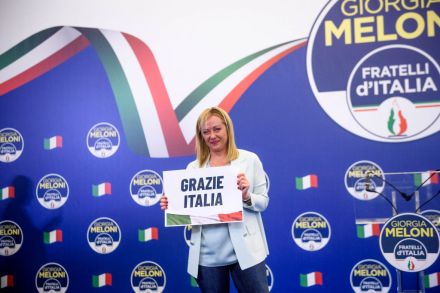
Giorgia Meloni and her Brothers of Italy party were swept into power in elections this weekend, a development that the media complex in America greeted with all the subtlety of a bird smacking into a sliding door. The New York Times managed to call her a “fascist” 28 times in a single article. Meloni stands to become Italy’s first female prime minister — but I suppose it’s only good for women to break glass ceilings if they’re the correct kind of women.

Giorgia Meloni is no springtime for Italian fascism

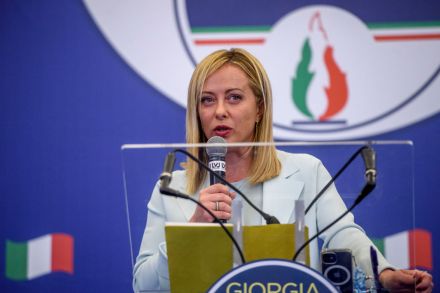
Is it springtime for fascism in Europe? First, it was Sweden. Now, it’s Italy. To judge by the reaction to Giorgia Meloni’s victory in the Italian elections on Sunday, the moment to say arrivederci to democracy has arrived. “Giorgia Meloni will be a minister-president whose political examples will be Viktor Orbàn and Donald Trump,” Katharina Barley, the vice-president of the European Parliament, declared. Maybe so, but will she actually be able to transform her country? Fratelli d’Italia, the Brothers of Italy, is a nationalist party that traces its roots back to Mussolini and is led by the charismatic Meloni. It's about to play a starring role in the Italian political firmament.

Liz Truss showed up Biden at the UN

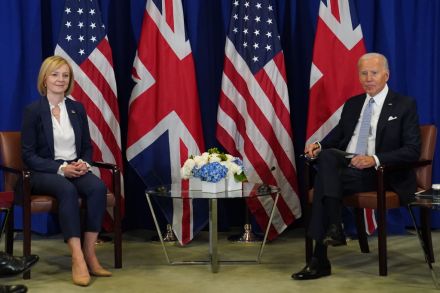
British prime minister Liz Truss’s speech at the United Nations this week was spot-on. It was clear, concise and left no question that the UK would do everything in its power to lead in the defense of the West and its values. President Biden’s address, by contrast, left you feeling overwhelmed and unsatisfied. That's not to say he failed to speak about Ukraine — he spent a reasonable amount of time on it — but the substance just was not there. Truss made a clear commitment to continue to “sustain or increase... military support to Ukraine, for as long as it takes,” a concrete and actionable statement. Though Biden issued a ringing condemnation of Putin’s war, he only made a vague pledge to “stand in solidarity against Russia’s aggression.

Russia isn’t just losing influence in Ukraine

If Vladimir Putin’s goal is to reestablish Russian influence, his ambitions are on track for another major setback. Far less high-profile than the war in Ukraine, a slow and quiet revolution has been brewing south of Russia’s borders in Central Asia and the Caucasus. These nations, members of the former Soviet Union, have traditionally been in Russia’s sphere of influence. That, however, is now changing. At the start of the year, it looked like Russia was ascendant. Putin had over 150,000 troops waiting to invade Ukraine, and was receiving a steady stream of Western visitors pleading with him to step back. When Kazakhstan was engulfed in popular protests, Putin stepped in and deployed about 2,500 Russian troops after an appeal by the Kazakh president to help quell the unrest.

The UN gets ready for hell week

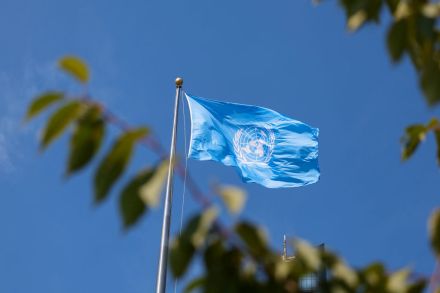
Every year in late September, the east side of Manhattan morphs into a giant sea of immovable cars. The culprit: the annual United Nations General Assembly debate, where diplomats from around the world fly to New York to shake hands, give speeches, and participate in dozens of side meetings and events throughout the city. This week’s UN General Assembly debate, however, is unique. For the first time since the UN was established after World War II, the meeting is occurring amid a large, deadly, conventional conflict in Europe. The war in Ukraine, which will cross its eight-month mark this Saturday, will dominate the session from beginning to end.

Putin and Xi herald a rising authoritarian axis

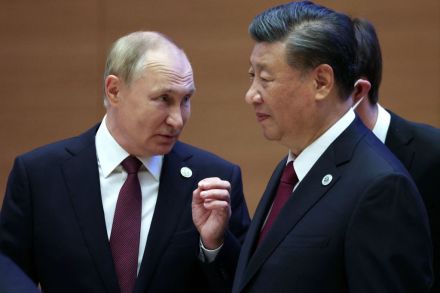
Russian President Vladimir Putin and Chinese President Xi Jinping met in Uzbekistan during this week’s Shanghai Cooperation Organization (SCO) summit — and a lot had happened since their last meeting. With the Russian Army on the back-foot in Ukraine and its economy forecasted to contract by over 4 percent in 2022, Putin is in a far worse position. Whether this impacted the meeting is hard to tell, though Putin indicated that Xi had “questions and concerns about [Ukraine].” Nevertheless, both countries expressed support for one another, touching on their respective concerns. Xi stated that China wanted to work with Russia “to set an example of a responsible world power,” a jab at the Western powers that both countries are positioning themselves against.