World

The barbarism of Canada’s euthanasia regime

“After a recent experience caring for a patient receiving medical assistance in dying, I felt distressed and uncomfortable. How should I manage these emotions?” According to the website of the College of Nurses of Ontario, that’s a frequently asked question for healthcare professionals involved in euthanasia. Perhaps Canadian health science programs ought to have some mandatory classes on Shakespeare. He wrote quite a bit about coping with the pangs of conscience, particularly after having been an accessory to the unnatural death of another.
America’s military isn’t ready for a war with China

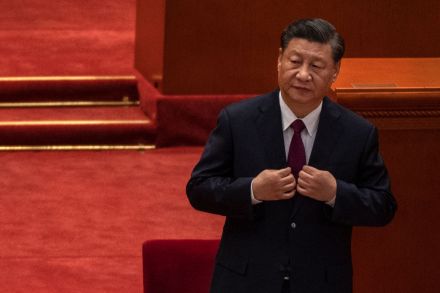
China’s 20th Party Congress concluded on October 23, and President Xi Jinping secured a norm-breaking third term as leader of the Chinese Communist Party (CCP). With the Politburo Standing Committee stacked with close confidants and dissent virtually wiped out, Xi is the strongest he has ever been. Xi has also redoubled the Party’s commitment to taking the island of Taiwan, by force if necessary. Secretary of State Antony Blinken recently said that China “was determined to pursue reunification on a much faster timeline.” The alarm has been repeatedly sounded by American military officials, with speculation that a Chinese invasion of Taiwan could occur as soon as 2023.

Bolsonaro falls as South America tilts toward socialism

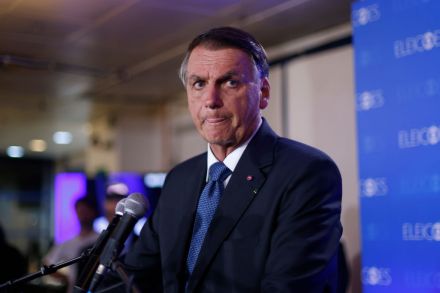
After a bruising campaign, the leftist former president of Brazil Lula Ignacio Da Silva appears to have won back control of the Palácio da Alvorada, the Brazilian presidential residence. Lula defeated conservative incumbent Jair Bolsonaro by the narrowest of margins and is now poised to bring back socialist leadership to the world’s fourth-largest democracy. However, the result was by no means a blowout for Lula and his Workers' Party, which polls had suggested could win a landslide victory. In reality, Bolsonaro outperformed expectations just by taking the vote to a second round, while his Social Liberal Party maintained control of Brazil's congress. Nevertheless, the outcome marks an incredible comeback story for the 77-year-old Lula.

Remembering Mussolini’s March on Rome

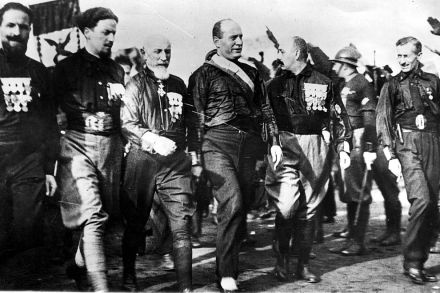
Shortly after 11 on the unseasonably warm Monday morning of October 30, 1922, a 39-year-old, one-time schoolteacher-turned-political journalist — and former Socialist Party activist — named Benito Mussolini stepped down from a train arriving at Rome’s Termini station. He had traveled in overnight from his home in Milan, and before embarking he told the local station master, pausing to cast his black eyes up and down the empty platform, “I need to be punctual. From now on there must be no more delays.” This was the source of the sardonic joke that at least under Mussolini the trains always ran on time.

The strange alliance between progressives and natcons on Ukraine

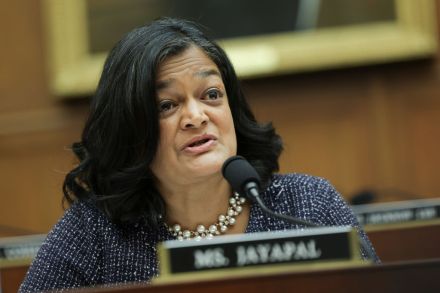
If you listened only to the rhetoric of so-called national conservatives, you would think progressives were their polar opposites. But on the issue of foreign policy, it seems like they can find some common ground. It was reported on Tuesday that the Congressional Progressive Caucus sent a letter to President Biden asking him to negotiate with Russia. It was later reported that the same letter had been hastily withdrawn after massive backlash within the Democratic Party. The missive was apparently written and signed in June, updated recently, and somehow carelessly published without all of the signatories’ consent. Either way, it seems to represent something real within the Democrats' progressive wing.

America and Russia are finally talking to each other again

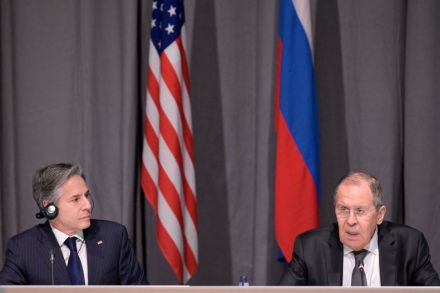
Defense Secretary Lloyd Austin and Russian Defense Minister Sergei Shoigu haven’t really been on speaking terms. That is, until last weekend, when the two defense chiefs conversed with each other twice in three days. The readouts released by the Defense Department are about as brief as brief can get. They don’t tell us much about what was said, other than the general observation that Austin, a former four-star army general, swatted away Moscow’s explanations for the war in Ukraine. What the conversations illustrate more than anything is just how rare they've been. Indeed, the reason why so many news outlets wrote about the Austin-Shoigu calls was because they were extraordinary.

JustStopOil protesters attack waxwork King Charles with chocolate cake

The JustStopOil activists are on the loose around Europe again. This time they’ve chosen to stop off at Madame Tussauds in London — the museum of life-sized wax replicas of famous celebrities and icons. So, who did they set their sights on? Kylie Jenner? Taylor Swift? Or any of the other gas-guzzling, private plane flying celebs? Nope. This time twenty-year-old Eilidh McFadden and twenty-nine-year-old Tom Johnson covered a waxwork model of King Charles III with chocolate cake. https://twitter.com/JustStop_Oil/status/1584491199771316225 Perhaps in their simple minds, this gesture made sense. Two fingers up to the Establishment and all that. But the new king is known for his extensive environmental campaigning.

charles

Welcome to the age of nuclear blackmail

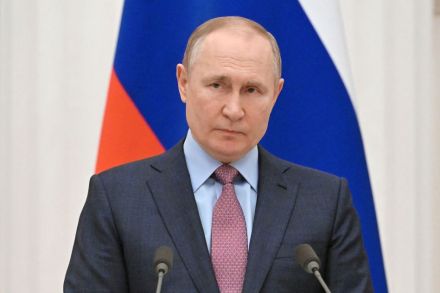
Vladimir Putin’s recent announcement that he was not bluffing about using nuclear weapons against the West in his war on Ukraine is one of the strongest indications yet of the risks the liberal world now faces in opposing authoritarian aggression. In the face of Russian aggression, or in committing the United States to defending Taiwan, as President Joe Biden did yet again recently, Washington and its partners face the possibility of direct confrontation with the world’s most powerful, nuclear-armed militaries. For the first time in a generation, Western powers risk being checked by adversaries willing to threaten massive conventional and nuclear warfare. The era of cost-free intervention to uphold the liberal world order is over.

nuclear
charles

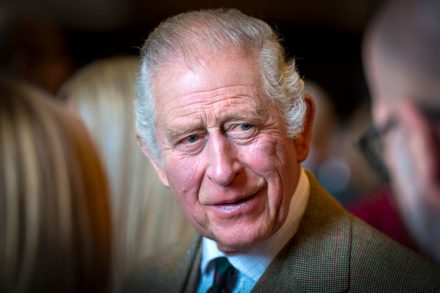
What kind of king will Charles III be?

In 1988, Prince Charles asked the late Peregrine Worsthorne, then editor of the Sunday Telegraph, what he should do in public life. Perry told Charles he should restrict himself to public duties and never ever air his private thoughts. The prince buried his head in his hands, moaning, “But then I’m just a cipher.” And that, indeed, is what he has just become, as King Charles III. At the end of September, his cipher — the symbol of his reign — was unveiled. The elegant combination of a C, an R (for Rex) and the Roman numeral III come together to symbolize King Charles III. In time, the cipher will appear on government buildings, state documents and new postboxes. Perry Worsthorne was right all those years ago.

crimea

What price must the West pay for Crimea?

For centuries before Vladimir Putin arrived on the scene, Russian foreign policy has been shaped by the country’s need for warm-water ports. To be a great power in Europe and the Near East, Russia must have access to the Mediterranean. Commercial as well as military considerations dictate this. In the eighteenth century Russia conquered the khanate of Crimea and acquired a splendid location for a new Black Sea port — what is now the city of Sevastopol. The Crimean peninsula had been a gateway from Asia to the Mediterranean since the days of the ancient Greeks, who built some of their northernmost colonies there. Russia made Sevastopol the permanent home of its Black Sea Fleet.

Why Israel won’t give lethal aid to Ukraine

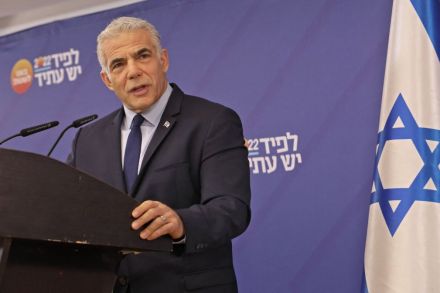
Israeli defense minister Benny Gantz announced this week that Israel would maintain its policy of not supplying weapons to Ukraine. This drew criticism, including charges that Israel has a moral obligation to help Ukraine and is instead foolishly prizing its relations with Russia. Critics also note that Israel’s archenemy Iran is providing weapons and advisors to Russia. They further point out that Israel’s Ukraine arms embargo puts it out of step with Israel’s most important partners in the West, especially the United States. Yet aiding Kyiv is a far riskier bet for Jerusalem than for most Western capitals. This is no easy call, and the one Israel made is probably the right one.

boris johnson right neoliberalism

The inevitable Boris Johnson

London, England When I checked the date that Boris Johnson resigned as prime minister, I thought it must have been wrong. July? The psychodrama that ensued felt as if it had been going on for years. If Boris’s tenure was the main show, Liz Truss’s stint as Britain's shortest-serving PM was the slapdash encore that no one asked for. You know, when the music restarts as you’re eyeing up a taxi home and secretly thinking the act needn’t have bothered. Boris’s downfall, the real one — not the multiple wobbles — began with Partygate. A steady drip of salacious stories for months, each one getting slightly more unforgivable, recounting incidences of Boris and members of his government breaching the strict lockdown rules he himself had set in place.

Why Liz Truss had to go

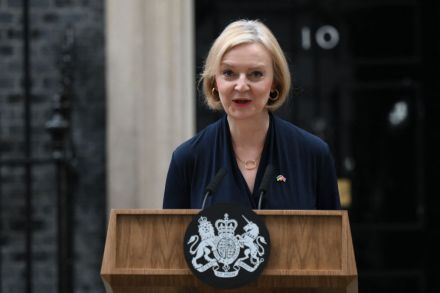
London, England Nobody in British politics really thought things could get worse than last night. Conservative MP Charles Walker told the BBC that the day was a "pitiful reflection" of the party; he added that there was "no coming back from it." Seasoned political editors described Wednesday as the most catastrophic day of their careers. The government victory on fracking — with 326 votes opposing the Labour motion to 230 backing it — was tarnished by claims of intimidation and bullying in the House of Commons. The home secretary, Suella Braverman was fired for sending official documents from her personal phone, something which is likely now a relief for her. Two other figures were said to have quit, but remained in their posts when questioned twelve hours later.

liz truss

Homage to Kyiv

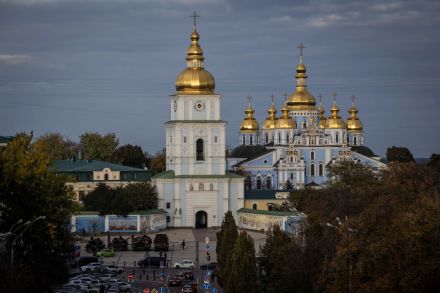
It was 11:15 p.m. in Kyiv, just after the curfew, and the military had set up its checkpoints on the city streets. Finding your way home after hours can be a hazardous business. The city is paranoid about assassins and saboteurs, and in wartime few are above suspicion. Things were looking ominous until my friend Sasha declared: “we are late for breakfast.” The guards waved us through. This was the daily password, shared with those important enough to move around after curfew. Checkpoints and curfews were a few reminders of the war in Kyiv, where I was just before last week’s deadly air strikes. In the capital city, life was approaching some form of normalcy.

kyiv

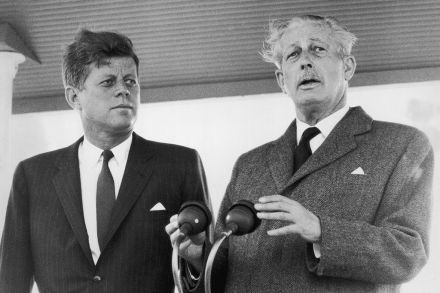
How the British helped JFK navigate the Cuban Missile Crisis

The Atlantic alliance hasn’t always been quite as special as politicians on both sides of the sea like to pretend. To take just the last sixty years: there were the differing views on Vietnam that led Lyndon Johnson to assess the British premier Harold Wilson as "a creep," while Richard Nixon privately considered Ted Heath "weak" and "as crooked as a corkscrew" (which was saying something coming from him). In October 1962, however, the principal Western leaders really did have something special. Between them, they probably helped save the world from nuclear annihilation. When on October 16, President John F.

How long can Europe’s support for Ukraine last?

Can Ukraine sustain a war effort that is proceeding far better than most military analysts ever expected? Part of that answer, of course, depends on the extent to which the Ukrainian army can keep their troops in the field equipped, supplied, and motivated. That challenge comes as the Russian military increasingly relies on so-called “kamikaze drones” to strike deep into Ukrainian territory (on October 17, a Russian drone attack killed four people in Kyiv during the morning rush hour). But another factor that will determine success or failure is whether Europe remains onboard — or, more to the point, whether Europe’s support to Kyiv will continue as the war enters a dreary, unforgiving winter.

The right’s dangerous embrace of soft isolationism

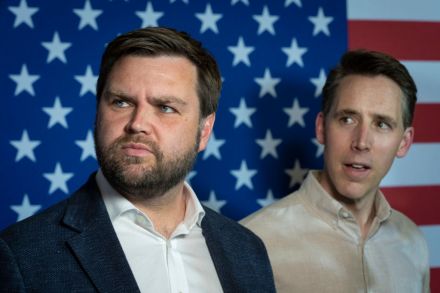
Traditionally, the GOP has been the favorite of those concerned with safety and national security. The party of Ronald Reagan emphasized the need for strong engagement abroad, a willingness to project power when necessary, and a commitment to the free world. Yet the contours of the conservative movement have begun to change in recent years, calling into question the GOP’s credibility on the issue of security. The growing support for a sort of soft isolationism is a problem. It is also fundamentally not conservative. Prominent voices from the American right have been carrying the banner of soft isolationism for years, from Tucker Carlson and J.D. Vance to Senator Josh Hawley and former president Donald Trump.

Why does the media never call world leaders ‘far left’?

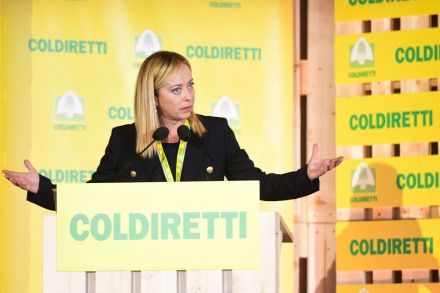
Italy is about to have its first female leader and the American left is furious. Giorgia Meloni grew up in a working-class neighborhood in Rome and was raised by a single mother, after her father, a communist, fled to the Canary Islands and was later convicted of drug trafficking in Mallorca. She wrote in her autobiography that her mother planned to have an abortion when she was pregnant with her but changed her mind at the last minute. Meloni worked as a nanny, a waitress, and a bartender before getting into politics, but she’s no AOC. Meloni, 45, is the leader of the right-wing populist Brothers of Italy party, which recently won Italy’s general election with 26 percent of the vote. She’s widely expected to be named Italy’s first female prime minister.

It’s time for the US to revoke China’s ‘normal trade’ status

In April 2022, six weeks after Moscow’s invasion of Ukraine, President Biden signed legislation to suspend Russia’s Permanent Normal Trade Relations (PNTR) status. “Revoking PNTR from Russia,” he said, “is going to make it harder for Russia to do business with the United States… The free world is coming together to defeat Putin.” PNTR status, also known as Most Favored Nation (MFN) status, is a designation granted among World Trade Organization members. Receiving nations are awarded all trade advantages that any other nation receives. Revoking PNTR status from Russia was a strategic move. It opened the door to deliver comprehensive economic strikes against Moscow and sent a clear signal to markets.