Book Reviews

Our reviews of the latest in literature

The English were never an overtly religious lot

Generalisations about national characteristics are open to question. Nevertheless, the overwhelming impression one gets from reading the major works of English literature, or from studying the famous English men and women of politics, the military or the academic world, is that the English have not been an especially religious lot. Or, if you think that a strange judgment of a nation that produced the finest Gothic cathedrals in Europe and the hymns of Charles Wesley, then you could rephrase it and say that they have not generally worn their religious feelings on their sleeve. Jane Austen’s hilarious novels do not quite prepare us for her letters in which she confesses

Will Keir Starmer ever learn to loosen up?

Tom Baldwin declares at the outset: ‘It’s only fair to warn those hoping to find these pages spattered with blood that they will be disappointed.’ Fair enough. This is not an authorised biography, but it is a friendly one, written with Keir Starmer’s co-operation. Baldwin briefly worked as Labour’s communications director, and then was asked to help Starmer with his autobiography. They did several interviews, but Starmer always had reservations and finally pulled the plug last spring. Instead, he agreed that Baldwin could write this book, using some of the material he had already gathered, and that he would assist him with contacts. Starmer’s worst fault, according to his friends,

There was nothing remotely pleasant about a peasant’s existence

If we are to remember peasants, we need a definition. Here is an imperfect but workable one. A peasant is a person working on the land in return for a bare subsistence. Patrick Joyce’s peasants are smallholders making just enough to feed their families and pay the rent in a normal year. They are people without status, tied to the land even if they are legally free. They occupy the lowest place in society, people with no ambitions and no future, who come into the light of history only when they revolt against their condition, as they frequently do. Historically, there have been peasants who did not fit this mould.

The making of Good Queen Bess

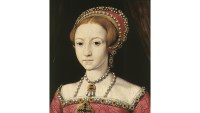
In the course of British history there have been few royals with a childhood as traumatic as that of Elizabeth I. She endured the torment of her mother Anne Boleyn’s execution, her father’s death, the comings and goings of four stepmothers, sexual abuse from a stepfather (who was executed soon after), the death of a half-brother, imprisonment and the death of a half-sister before finally acceding to the throne. All this by the age of 25. Throughout her young life, Elizabeth veered from sole inheritrix of the crown to hated bastard child Not many could cope with such a relentless identity crisis. Throughout her young life, Elizabeth veered from sole

Chris Bryant: A True Story of Prejudice and Murder

33 min listen

My guest on this week’s Book Club podcast is Chris Bryant, who tells me about his new book James and John: A True Story of Prejudice and Murder. In it, he seeks to tell what can be known of the lives, world and fatal luck of the last two men executed for homosexuality in Britain. 

Reluctant servant of the Raj: Burma Sahib, by Paul Theroux, reviewed

Eric Blair, to give George Orwell his baptismal name, arrived in Burma (present-day Myanmar) as a 19-year-old trainee police officer at the end of 1922 and left it in mid-1927 just before his 24th birthday. Not much of his time there had a direct impact on his work beyond a solitary novel, Burmese Days (1934), two luminous essays, ‘A Hanging’ (1931) and ‘Shooting an Elephant’ (1936), a poem or two and a scattering of autobiographical fragments, most of which turn up in the second half of The Road to Wigan Pier (1937). None of his letters home survives and only a handful of reminiscences by people who knew him as

Four dangerous visionary writers

‘The production of souls is more important than the production of tanks… And therefore I raise my glass to you, writers, the engineers of the human soul.’ The quote is usually attributed to Stalin, though the phrase ‘engineers of human souls’ most likely came from someone else. Who’s to argue? Purges, executions, deportations – what’s a little light plagiarism in comparison? Whoever coined the phrase, it certainly struck a chord and indeed continues to ring various alarm bells whenever one comes across writers who deliberately set out to influence politics and ideas – and not just the big beasts, the Nobel Prize winners, say, or the shopfront-filling non-fiction authors hawking

A mother-daughter love story

In Splinters, the American novelist and essayist Leslie Jamison leaves behind the issue of her addiction and recovery – the subject of her previous memoir, The Recovering (2018) – and takes us through her pregnancy, experience of childbirth, marriage, divorce and post-separation dating life. Each stage of her journey is related with the author’s trademark love of the telling detail: On the postpartum ward my window ledge filled up with snacks from friends: graham crackers, cashews, cheddar cheese, coconut water, oranges with tiny green leaves. Someone hands her a form to fill out. ‘Did I want bone broth?’ We can assume she does, as bone broth appears later on. Much

The firebrand preacher who put Martin Luther in the shade

‘Now tell us, you miserable wretched sack of maggots,’ wrote Thomas Müntzer, sounding like the love child of Owen Jones and Ian Paisley, ‘who made you into a prince over the people whom God redeemed with his own precious blood?’ The question Müntzer posed Count Albrecht of Mansfeld was, you’d think, rhetorical. Like his contemporary Martin Luther, if less unremittingly scatological, the radical millenarian preacher wielded a sharp pen. Don’t forget Ezekiel’s prophecy, he wrote to Count Albrecht’s brother Ernst: ‘God would command the birds of the air to feast on the flesh of the princes and command the unthinking beasts to lap up the blood of the bigwigs.’ Only

After Queen Victoria, the flood

Alwyn Turner writes early on that Little Englanders is ‘an attempt to take the temperature of the nation as it emerged from a century that had dominated the world and was beginning – whether it knew it or not – a long process of decline’. Perhaps for that reason, or perhaps because the high (and low) politics of the years from 1901 to 1914 – the Edwardian era continues for four years after the death of the eponymous sovereign, up to the lights going out all over Europe in August 1914 – have been so exhaustively covered in recent years, he tells his readers that he will draw heavily on

What do we mean when we say we are ‘giving up’?

Oscar Nemon’s statue of Sigmund Freud at the Tavistock Clinic glares out with such a contemptuous look of superior knowledge that Freud’s housekeeper told him it made him look too angry. ‘But I am angry,’ replied Freud. ‘I am angry with humanity.’ Meanwhile, the cover image of Adam Phillips’s new book on psychoanalysis is a detail of a figure from Michelangelo’s ‘Last Judgment’, cast down to damnation, face in hand, his eyes wracked with fear and regret, his muscular ring finger grinding anxiously into his muscular forehead. If you didn’t recognise him from the Sistine Chapel you could imagine an angry Freud, not an impassive Christ, glaring at him just

Lord Byron had many faults, but writing dull letters wasn’t one of them

In 1814, at the height of his fame, the poet, libertine and freedom fighter Lord Byron had his head examined. Not by a proto-psychiatrist but by the German phrenologist and physician Johann Spurzheim, who, after making a detailed study of the no doubt amused Byron’s cranium, pronounced the brain to be ‘very antithetical’ and said that it was an organ in which ‘good and evil are at perpetual war’. Two centuries after Byron’s death, this dichotomy is as pronounced as ever when it comes to analyses of the poet. His defenders point to his wit, his poetic genius, his heroic efforts in defence of Greek liberty and his personal flair;

Paula Byrne: Hardy Women

43 min listen

My guest on this week’s Book Club podcast is Paula Byrne. In her new book Hardy Women: Mothers, Sisters, Wives, Muses, she investigates the women in the life and work of the great poet and novelist Thomas Hardy. She talks to me about Hardy’s romantic life, the torture he inflicted on the women he fell for, and how – in the bitter words of his first wife Emma – ‘he understands only the women he invents’. 

Extremes of passion: What Will Survive of Us, by Howard Jacobson, reviewed

There is not going gently into that good night, and then there is teetering into it on spiked-heel boots while strapped into a leather corset in search of clandestine kicks among like-minded fetishists. If it sounds an exhausting and chilly way to spend an evening, well, it is. At least, that’s how it feels to Sam Quaid, the middle-aged playwright who is beset by misgivings – he himself is dressed in ‘the more chicken-hearted guise of a fallen Quaker who had never seen the sun’ – but gamely determined to accompany his lover, Lily. Where is Sam’s obeisance going to lead him, or Lily? Here is where the novel becomes

Saviours of souls: the heroism of lifeboat crews

Our summer holidays by the sea were the thrill of the year and the lifeboat was the thrill the holidays. Whissh-crack! went the maroon, sending the dauntless crew and their punchy little vessel off into the waves to save souls. The Royal National Lifeboat Institution has been doing this for 200 years. Mariners and all of us must hope it never stops, because its story is the best of us. In One Crew, Helen Doe, a maritime historian, writes the official history with verve and precision. She explains that there were 39 lifeboats operating independently around the coast, ‘enjoying varying degrees of effectiveness’, before Sir William Hillary, a ‘bankrupt baron’

Heartbreak in the workplace: Green Dot, by Madeleine Gray, reviewed

Hera, the heroine of Madeleine Gray’s first novel, is 24, which, as she says, ‘seems young to most people but not to people in their mid-twenties’. She lives in Sydney with her father and their dog and works as an online community moderator, but the contents of her work bag reveal her to be Bridget Jones’s edgier little sister: ‘My wallet, three pairs of underpants, headphones, nine tampons, a travel vibrator, two novels, a notebook, two beer caps, a bottle of sake and a fountain pen.’ She will also inevitably be compared to Hannah from Lena Dunham’s Girls and to Phoebe Waller-Bridge’s Fleabag. Gray’s writing style is droll but if

Progressives vs. bigots: How I Won a Nobel Prize, by Julius Taranto, reviewed

This is the kind of comic novel I greatly admire, because it makes me feel so anxious and wrong-footed. I laughed wholeheartedly until an inner voice chided, in a contradictory fashion, ‘that’s not supposed to be funny’ and ‘can’t you see it’s a joke?’ Given that the book is about that very modern set of dilemmas, my admiration for Julius Taranto’s work is even greater. The novel’s protagonist is Helen, a graduate student, who explains her field in the opening sentence: ‘The Rubin Institute had nothing to do with high-temperature superconductors, so I cannot say I had spent much time thinking about it.’ Her supervisor has been offered a position

Thugs in drape jackets: when the Teddy Boys ruled the roost

In the wake of wars, youth cults spring up, those too young to have fought behaving in a way to scandalise those who did. The Bright Young People were the younger siblings of those who perished, battalion by battalion, on the Western Front. (Come to that, it was after the end of the Peloponnesian War that Socrates’s corruption of the youth became intolerable to Athens.) So when Max Décharné describes the Teddy Boys as Britain’s first youth counterculture, what he means is that they were Britain’s first working-class youth counterculture. The Notting Hill riots of 1958 were largely blamed on Teddy Boys, possibly incited by Oswald Mosley’s sons  Décharné sketches