Arts Reviews

The good, bad and ugly in arts and exhbitions

The fascinating mechanics of striking a deal

If you wish to know how to become a master negotiator, a formidable body of books will now offer to train you in that art, but I’m not entirely sure it can be taught. The greatest natural asset, I suppose, is the ability to enjoy the game: the performative mulling, tough-talking, buttering-up, pitching of curve balls and – when absolutely necessary – flamboyant execution of a real or bluff exit. Yet even for those of us who are clumsy and reluctant hagglers, the mechanics of striking a deal can be fascinating. This is the stuff of the Dealcraft podcast, hosted by Jim Sebenius, a professor of the Harvard Business School,

The art inspired by the 1924 Paris Olympics was a very mixed bag

George Orwell took a dim view of competitive sport; he found the idea that ‘running, jumping and kicking a ball are tests of national virtue’ absurd. ‘Serious sport has nothing to do with fair play,’ he wrote in Tribune after scuffles broke out during the Russian Dynamo football team’s 1945 tour. ‘It is bound up with hatred, jealousy, boastfulness, disregard of all rules and sadistic pleasure in witnessing violence: in other words it is war without the shooting.’ Suzanne Lenglen’s loose-fitting knee-length tennis dresses inspired the new ‘style sportif’ of Coco Chanel Baron Pierre de Coubertin, visionary founder of the modern Olympics, took the opposite view: to him the three

The ethics of posthumous pop albums

‘At the record company meeting/ On their hands – at last! – a dead star!’ Back when Morrissey was more concerned with writing a decent lyric than sour internet tirades, ‘Paint a Vulgar Picture’ by the Smiths summed it all up rather neatly: a living pop star is all well and good, but a dead one is far less troublesome – and considerably more profitable. Some artists only really get going once they’re dead. Commercially speaking, Eva Cassidy’s entire career has been posthumous; the Van Gogh of the lustreless Radio 2 ballad. The motive feels pure: a family’s wish to keep their sibling alive through her art Death has been

Like The Joker, but less pretentious: The Penguin reviewed

Doctor Who fans may remember that after the show’s triumphant return in the early 2000s, we found out that showrunner Russell T. Davies had agreed with BBC mandarins to rid the franchise of some of its more unwieldy elements in order to make it palatable to casual viewers. Gotham City has long been the perfect backdrop for old-fashioned noir, and the city is on fine fettle here Watching the debut episode of The Penguin, HBO’s new crime series (available on Sky Atlantic), based on a popular Batman villain, I suspected a similar game was at play. The series might be visibly set in the Batman universe, but it’s also very

The show belongs to Jonathan Slinger and Ben Whishaw: Waiting for Godot reviewed

Waiting for Godot is a church service for suicidal unbelievers. Those who attend the rite on a regular basis find themselves wondering how boring it will be this time. A bit boring, of course, but there are laughs to be had in James Macdonald’s production. The set resembles a Gazan bombsite with a tree-stump stranded in a pit of ashen rubble. Didi is played as a goofy English toff by Ben Whishaw who supplied the voice of Paddington in the movies. The bear is back. Whishaw gives an engaging, high-energy performance, like a Blue Peter presenter with a theology degree Whishaw gives an engaging, high-energy performance, like a Blue Peter

A box set for those on the spectrum: Markus Poschner’s Bruckner Symphonies reviewed

Grade: B+ Anton Bruckner wrote 11 symphonies – Numbers One to Nine plus a student exercise and the formidable rejected symphony endearingly known as ‘Number 0’, actually finished between the First and Second. So why does this 200th anniversary cycle conducted by Markus Poschner, divided between the Bruckner Orchester Linz and the Vienna Radio Symphony Orchestra, run to 18 CDs? The answer is that it gives us two versions of Numbers One, Two and Eight, and three of Numbers Three and Four. The composer, generally agreed to have been ‘on the spectrum’, was hypersensitive to criticism and compulsively rewrote his symphonies in an attempt to tighten them up and silence

Committed performances – but who was the granny? Northern Ireland Opera's Eugene Onegin reviewed

It’s a critic’s job to pick holes in the dafter aspects of opera productions, but in truth audiences are usually capable of detecting nonsense when they see it. ‘She must be at least 150,’ commented the gentleman sitting behind me, referring to the wheelchair-bound old lady who was trundled on stage at the start of Northern Ireland Opera’s new production of Eugene Onegin, and then parked there, pretty much for the duration. It really buzzed along, even if the set resembled a public lavatory (urinal chic seems to be an emerging trend) He had a point. Was she meant to be an elderly Tatyana? Then why was she dressed in

Expressive and eloquent: Northern Ballet's Three Short Ballets reviewed

Ballet companies have become dismally timid about exploring their 20th-century heritage: everything nowadays must be either box-fresh new or a fairy-tale classic, which seems to me a recipe for an unbalanced diet. So I’m pleased that under the directorship of Federico Bonelli, Northern Ballet is pluckily dusting off neglected treasures of the recent past. Last year brought Hans van Manen’s exquisite Adagio Hammerklavier (1973) back to life; this year, it’s the turn of Rudi van Dantzig’s setting of Strauss’s Four Last Songs (1977), danced to the recording made by Gundula Janowitz and Herbert von Karajan. A dark angelic figure, hungry for some grim reaping, hovers over four youthful couples in

Paul Wood, Ross Clark, Andrew Lycett, Laura Gascoigne and Henry Jeffreys

33 min listen

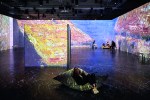
On this week’s Spectator Out Loud: as Lebanon reels from the exploding pagers, Paul Wood wonders what’s next for Israel and Hezbollah (1:24); Ross Clark examines Ireland’s low-tax project, following the news that they’re set to receive €13 billion… that they didn’t want (8:40); Reviewing Ben Macintyre’s new book, Andrew Lycett looks at the 1980 Iranian London embassy siege (15:29); Laura Gascoigne argues that Vincent Van Gogh would approve of the new exhibition of his works at the National Gallery (22:35); and Henry Jeffreys provides his notes on corkscrews (28:01).  Produced and presented by Patrick Gibbons.

Who should win the Stirling Prize?

The Stirling Prize is the Baftas for architects, a moment for auto-erotic self-congratulation. Awarded by the Royal Institute of British Architects, its premise is straightforward: it’s for Britain’s best building of the year. But this year, it seems the prize committee has struggled even with this. Among the six projects shortlisted for this ostensibly nationwide prize, four are in London and a couple could barely even be considered buildings at all. The most tenuous nominee for a ‘best building’ – yet one with the best bookies’ odds – is the Elizabeth Line by Grimshaw Architects. One of the most expensive infrastructure projects in Europe with a much-delayed opening, it remains

My night with the worst kind of nostalgia 

American Football are a band whose legend was formed by the internet: some Illinois college kids who made an album for a little label in 1999, went their separate ways, and in their absence found that a huge number of people had responded to their music. They duly reunited in 2014. They are often identified as emo, the most confounding of all genre names, given it means everything and nothing, but American Football are not of the eyeliner and dyed-hair variety exemplified by My Chemical Romance, nor the angsty pop-punk variant of Weezer or Jimmy Eat World, nor the shouty hardcore punk evolution of the genre’s founders in the 1980s.

Not for the squeamish: The Substance reviewed

Both horribly familiar and wonderfully shocking, this body-horror film written and directed by Coralie Fargeat does a very traditional thing – turning the scramble for youth and beauty into a monster of immeasurable disgust and immorality – in a huge way. There is nothing minimal or restrained or overly clever here; nothing of the nuance in language or wit that makes its forerunner, The Picture of Dorian Gray, so haunting. This is a presentation of the horror of ageing for the bombastic mash-up age, melding vampire, sci-fi, feminist tragicomedy and dystopian genres. It’s like a reverse Barbie but with lashings of Poor Things, Blonde, the uncomfortably up-close Marilyn Monroe biopic,

More Airplane! than Speed: Nightsleeper reviewed

Earlier this year, ITV brought us Red Eye, a six-part drama set mainly on an overnight plane from London to Beijing. Displaying a heroic indifference to plausibility, the show was an increasingly deranged mash-up of every thriller convention known to man – while still posing (when it remembered to) as a thoughtful exploration of realpolitik. By the end, it was all so daft that the biggest influence no longer seemed to be Speed, but Airplane! Funnily enough, this week’s Nightsleeper was much the same thing – only this time on an overnight train from Glasgow to London. The first sign that the passengers wouldn’t get a restful sleep before Euston

Manacorda's thrills and spills at Prom 72

At a Hollywood party in the 1940s, the garrulous socialite Elsa Maxwell spotted Arnold Schoenberg, then teaching music at UCLA, looking miserable. So she pushed him towards the piano with the words: ‘Come on, Professor, give us a tune!’ I couldn’t help thinking of those words on Friday night, when we heard the first Proms performance of a symphony written in 1847 by a professor at the Paris Conservatoire. The Third Symphony of Louise Farrenc is full of well-crafted melodic lines, neatly configured to fit maddeningly predictable textbook chord progressions. It’s delicately orchestrated, but even the feathery flutes of the Orchestra of the Age of Enlightenment couldn’t disguise the professor’s

A massive, joyous, sensational hit: Why Am I So Single? reviewed

Why Am I So Single? opens with two actors on stage impersonating the play’s writers Toby Marlow and Lucy Moss. You may not recognise the names but you’ve probably heard of their smash-hit, Six, which re-imagined the tragic wives of Henry VIII as glamorous pop divas. This follow-up show is a spoof of vintage musicals and it’s deliberately knowing and self-referential. That’s why the authors are played by members of the cast, and they start with a few disparaging quips about Mamma Mia! and other West End fare. They even call the audience at the Garrick ‘riff-raff’, which seems a little charmless. The actors then morph into two new characters,

Ten times better than Taylor Swift: Romance, by Fontaines D.C., reviewed

Grade: B+ Almost all modern popular music is afflicted by a desperate yearning for importance, and thus – as it translates these days – electronic bombast, which is of course available now at the flick of a switch in the studio. The song is not enough, nowhere near enough. What you need, to elevate your infantile and asinine observations of the world and your sad lack of a good choon, is confected importance. This has been increasingly true since about 1965, but never more so than now. The song is not enough? That’s because it’s not a very good song, kiddo. Write a good song and, you’ll find, marvellously, it

How Michael Craig-Martin changed a glass of water into a full-grown oak tree 

‘Of all the things I’ve drawn,’ Michael Craig-Martin reflects, ‘to me chairs are one of the most interesting.’ We are sitting in his light-filled apartment above London, the towers of the City rising around us, and we are discussing a profound question, namely, what makes an object a certain type of thing? Or to put it another way, what makes a chair a chair? Craig-Martin’s career has been characterised by what he calls ‘my object obsession’. There will be chairs on view in the grand retrospective of his work which is about to open at the Royal Academy, but by no means only chairs. The galleries will be filled by

Easy-on-the-eye tosh: Netflix's The Perfect Couple reviewed

The Perfect Couple is an exemplar of that genre sometimes cynically known as ‘poverty programming’: dramas that train all of us non-billionaire folk to be content with our miserable lot by showing us that even if we did have lots more money we’d actually really hate it. They’re all secretly messed up, treacherous and unfaithful, riddled with hatred, and popping pills It’s set on Nantucket Island, where the streets are cobbled and the old-moneyed families gather every summer to polish their bijou antique rowing boats at their beachside mansions which, I just checked, cost around £15 million. Tag Winbury (Liev Schreiber) and his bestselling romantic novelist wife (Nicole Kidman), happily