Culture

Culture

How Putin got the Hollywood treatment

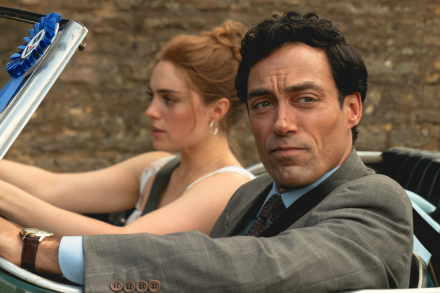
Sometimes life disappoints you in interesting ways. I hated Giuliano da Empoli's 2022 book The Wizard of the Kremlin, a fictional political thriller about the dawn of Putinism, with a shuddering passion. I had, therefore, been looking forward to despising the film version when it arrived in cinemas last month, too.  Yet it turns out that TWotK, directed and co-written by French filmmaker Olivier Assayas, is an impressive film: visually stunning, well cast, a straight story well told. Paul Dano (the greasy-faced young preacher from There Will Be Blood) plays Vadim Baranov, the fictional "Wizard" of the title, a whizkid theater and TV executive tasked with creating and curating a successor to the ailing Boris Yeltsin.

The message behind the US pavilion at the Venice Biennale

“All art is propaganda,” wrote George Orwell, “but not all propaganda is art.” Upon this subtle distinction rests the success or failure of whatever art we see at the Venice Biennale.  The Most Serene Republic’s exercise in art-world Olympics is propaganda by design. A garden of national pavilions – small buildings in various styles as you might find in a zoological park – presents exhibitions that compete with one another for a “Golden Lion for Best National Participation.” Here, in the murky parkland of the Giardini in the city’s eastern Castello district, nationalist and anti-nationalist passions mix with art-market imbroglio into a sordid spectacle. Just how bad will it be this year? To discover the answer is why we keep coming back.

venice biennale

Who says Lauren Sánchez Bezos doesn’t belong at the Met Gala?

Lauren Sánchez Bezos, with her blown-out lip filler, understands fashion. She understands that, unlike the gatekeepers of painting and literature, fashion figureheads aren’t ashamed to dirty their hands by digging around in the money pot. It was only fitting, then, that Lauren and her husband Jeff Bezos sponsored this year's Met Gala. Its theme was "Fashion Is Art." All Kardashian-Jenners present came in bodices protruding in the shape of their nipples Sánchez Bezos showed up to the Met red carpet in a navy-blue gown that nodded to John Singer Sargent's painting of Madame X, a socialite and the wife of a French banker. The painting's portrayal of a pale, corpse-like, high-society woman was considered indecent because of the single strap falling off her shoulder.

liza minnelli

Life is a Cabaret: inside Liza Minnelli’s memoir

Though she may well have been “one of the world’s most celebrated, beloved and iconic performers,” who’d have wanted Judy Garland as a mother? When not remaining in bed “for days at a time, heavily drugged and in a deep state of depression,” she was, according to her daughter Liza Minnelli, slashing her neck with a razor blade because “she loved playing the victim… Hospitals are a way of life for her.” Judy died of a (possibly accidental) drugs overdose in 1969, aged 47. At the Frank E. Campbell Funeral Chapel on the Upper East Side, her corpse was prepared for public view by the very same make-up expert who’d worked years previously on The Wizard of Oz. Twenty thousand people filed past the open coffin – more than had come to gawp at Valentino.

Lena Dunham is still her own worst enemy

In her seminal 1967 essay “Goodbye to All That,” Joan Didion writes of her former self, a 20-year-old naif arriving in New York City for the first time: “Was anyone ever so young?” Lena Dunham – an avowed Didion stan – should have used that line as the title of her new book, an account of the messy process of making Girls, the HBO show she created, scripted, directed and starred in. Despite her inexperience and juvenile blunders Dunham, at age 25, produced a hit. Why, then, call her memoir Famesick? Because, she contends, the most important story she has to tell is how her body turned on her “right in sync with the public.” It’s true that Dunham has been the object of sustained fascination since Girls launched in 2012.

lena dunham

J.G. Ballard’s surreal fiction continues to resonate through the century

In 1951, when J.G. Ballard was 20, Pandora and the Flying Dutchman premiered in London. Directed by Albert Lewin and starring James Mason, Ava Gardner and a solid cast of English actors, it was filmed on the Catalan coast by Jack Cardiff in lush MGM color. Man Ray contributed designs based on the work of de Chirico. Set in an Anglo-Spanish colony, it featured a surrealist painter. a racing car driver and a toreador. All love the mysterious Pandora, who is unable to love anyone until the Dutchman drops anchor. To prove his passion for Pandora one suitor takes poison while another pushes his beloved car over a cliff.

j.g. ballard

AI could never replace me

There are two main schools of thought on AI in the Delingpole household. I, as the resident batshit-crazy reactionary tinfoil-hat loon, think that it is evil, indeed quite possibly satanic, and that everything would be much better if only we went back to horse transport, herbal salves and abacuses. And Boy Delingpole, representing technologically literate youth, thinks I’m an idiot, that AI is the future and quite mind blowing in its potential to change everything. Probably we’re both right. Personally, I don’t feel quite as threatened by AI as perhaps I should. More by accident than design, I seem to have ended up in one of the very few jobs that AI isn’t going to steal.

zurbaran

The genius of Zurbarán – and why he vanished

A pious Caravaggio JASPREET SINGH BOPARAI The Spanish painter Francisco de Zurbarán is sometimes thought of as a pious equivalent to Caravaggio – a Caravaggio without the bad temper, brutal vices or criminal record. But it seems difficult to argue that Caravaggio had any direct influence on his work. After all, he died when Zurbarán was 11 years old. Since Zurbarán never left Spain, he could not have seen any of Caravaggio’s paintings with his own eyes. Indeed, he might never even have heard the artist’s name. Still, there are unavoidable similarities between the two men’s work. Zurbarán shared Caravaggio’s sense of drama and his love of shadows broken up by patches of strong light.

The nightmare of filming A Hard Day’s Night

It would be easy to dismiss A Hard Day’s Night, the Beatles film made in 1964, as a throwaway period piece. The plot hurls the Fab Four into a meta narrative: they’re playing themselves while a director – a seething Victor Spinetti – panics as the boys are delayed on their way to a televised variety performance by mishaps, distractions and stampeding fans. The film was thrown together to fit the group’s breakneck schedule – scripted over a few weeks in January by Alun Owen, shot by Richard Lester by May and out in cinemas in July. In her absorbing, concise book, Samira Ahmed sees the film not as a cursory promo but as a watershed moment in British culture – “a kind of cinematic big bang.

Antony Gormley’s lonely figures transfer to paper

If there’s any consolation to be had in the prospect of AI bots filling the world with humanoids, it’s the look on their glassy faces when they realize that one of us has beaten them to it. The Turner Prize-winning sculptor Sir Antony Gormley, 75, has installed casts of himself from Crosby Beach in Liverpool to Gateshead, from Texas to the Netherlands and western Australia. He and his simulacra might not detain our new overlords for very long, of course (but in the meantime “The Gormleys versus the Bots” is the Doctor Who series I’m here for).

The Michael Jackson biopic ignores half his life

If you’re planning on making a biopic of a major musical figure, you would be advised not to miss out various rather vital aspects of their life. For instance, Bohemian Rhapsody dealt – if at times obliquely – with Freddie Mercury’s homosexuality and AIDS. The recent Bruce Springsteen film Springsteen: Deliver Me From Nowhere attempted to tackle his mental health difficulties and near-breakdown. Neither film was perfect, but they were at least made with reasonably good intentions. That is rather more than can be said for Antoine Fuqua’s Michael Jackson biopic Michael, which opens in US cinemas this week and has been greeted with disbelief.

Michael Jackson

The photographer who connects Bob Dylan and the Beatles

MAX JONES: “What do you think of the Beatles as artists and people?” BOB DYLAN: “Oh, I think they’re the best. They’re artists and they’re people.” —Melody Maker, March 1965 For more than 60 years, people have been fascinated by the connections between Bob Dylan and the Beatles. All were born during World War Two. All loved the music of Little Richard and Elvis Presley and Eddie Cochran; all were blues fans swept off their feet by rock and roll. Dylan was a Minnesota boy who early in his life became the avatar of the American folk scene, and then a protean man containing multitudes, both musically and otherwise.

bob dylan

Don’t blame Kanye for his abject idiocy

Grade: C– Kanye? No, I can’t, quite. I will always quietly overlook the idiotic political sensibilities of the conformist millennial legions who comprise our pop charts – the keffiyeh-clad Hamas wannabes, the BLM halfwits, the greenies, the men-can-be-women wankpuffins – in order to let their music be judged on its own merits, free from boomer political disdain. But songs such as “Heil Hitler” and all those swastikas? Well, they are just a stretch too far for me. The man is an abject moron. Some will say, so what? There have been loads of abject morons down the years in pop. Why draw a line in the sand for Kanye West? Good question. And it turns out it’s not his fault.

kanye west

The Pitt doesn’t make HBO Max worth a subscription

HBO Max is the latest streaming channel trying to lure you into yet another of those subscription contracts you only remember having signed up for about three years later when you’re trying to work out why you are so skint. Its showpiece series is The Pitt which attracts ten million viewers per episode and has been called “the best medical drama on television in years.” This is a category of excellence I find about as enticing as “most amusing form of cancer” or “most ineradicable variety of testicular lice.” But, just for you, I watched to see what the fuss is about.

the pitt
schiaparelli

The art of Schiaparelli

It’s a great shame that Elsa Schiaparelli is less widely known than her rival Chanel. Perhaps that’s down to how difficult her name is to pronounce. Is it “shap,” “skap” or “skyap”? Tristram Hunt, director of the V&A, answers with a quip from Schiaparelli herself: “No one knows how to say it, but everyone knows what it means.” The V&A’s new exhibition Schiaparelli: Fashion Becomes Art traces the web of influences around one of the great couture houses of the 20th century. Like Coco Chanel (I hate to compare them), Elsa Schiaparelli created clothes for the modern, independent woman – it is now conventional to say so, but they “pushed boundaries.

The decline of the royal biography

About a decade ago, with my writing career going nowhere fast, I received some savvy advice from my then-literary agent. “Write about the royal family,” he said. “There’s an endless appetite for books about them. They combine history, social commentary and gossip with old-fashioned fascination with the rich and powerful. You can’t go wrong.” I listened to his advice and wrote a trilogy of books about the Windsors: The Crown in Crisis, The Windsors at War and Power and Glory. The first two sold very well, and the third was barely noticed, but I was glad that I took my agent’s counsel, even if we had to part ways because he had practiced what he preached, and diversified from historical biography into his own career writing about the royals.

A Tate show with dreamy, elusive power

One of the miracles of art history is how painting, so often written off, keeps on coming back. Right now we are in the middle of just such a resurgence, and one sign of the current vitality of the medium is the emergence of painters such as Hurvin Anderson. Admittedly, Anderson – who was born in 1965 – has been emerging for a long time now. But, with the opening of a big retrospective at Tate Britain, his status as a major figure in modern British art is clear. Anderson is completely individual yet visibly connected to the tradition – indeed, to several traditions – and capable of creating huge, wall-filling canvases into which you can sink and float away, but which also make you think and feel.

private equity

Is private equity secretly running your life?

Did you know that a secretive thing called private equity owns almost 10 percent of the UK economy? Did you know that it controls the jobs of several million people and may well own your local hospital, water supply, children’s school or even your home? No? Here is a book that aims to straighten you out on all that. Private equity is one of those things that you either know about or don’t. If you are in the finance business you know, because it is the story of the past quarter century. If you are not in that world, if leveraged buyouts and limited partners and debt pushdowns are all just business-page noise, then you are in the majority. And it turns out that means you may not know who is really running your life.

etna

Living in the shadow of Etna

The early Greek inhabitants of Sicily peered into Etna’s crater and declared the volcano to be full of monsters. Its “impenetrable darkness” reminded Samuel Taylor Coleridge of his opium addiction. Helena Attlee, whose hugely enjoyable The Land Where Lemons Grow (2014)won acclaim, brings to her portrait of Etna a softer, more admiring – yet respectful – eye. Unpicking its geological and human history and a landscape “cobbled together from the expressions of the Earth’s unrest” became for her a way of returning to the very beginnings of life. Mount Etna, at 11,200 feet in height, is Europe’s biggest volcano and one of the most active in the world, grumbling and spewing for many months at a time.

zac brettler russian london

The fate of the British teenager who posed as a Russian oligarch’s son

This story is little more than a brutal anecdote, which Patrick Radden Keefe has chosen to tell at excessive length. It has the kind of fact-checked gravity that indicates a star American journalist bent on perpetrating an entire book. (“Built in 1923 and originally known as the Empire Stadium, Wembley was the most iconic sporting ground in Britain.”) But it occurred to me more than once as I read it that it has the hallmarks of a particularly black London comedy by Charles Dickens or Ben Jonson or Joe Orton. A violent knave, his activities previously limited to cheating the police, murdering his equally appalling criminal rivals, doing underhand deals and ripping off the rich, acquires an associate.

Is Kanye West the David Bowie of his age? 

Kanye "Ye" West has been barred from appearing at London’s Wireless Festival by dint of having his temporary visa withdrawn. The move has generally been met with approval, save by those disappointed fans of his music whose pre-ordered tickets will now be refunded. “Kanye West should never have been invited to headline Wireless," said Prime Minister Keir Starmer. "This government stands firmly with the Jewish community, and we will not stop in our fight to confront and defeat the poison of antisemitism." Fair enough, many might say. Last year Ye released a single entitled "HH" (Heil Hitler) and declared himself a Nazi on social media. Ye has now made a series of groveling public apologies.

kanye west
karl ove knausgård

Meeting Karl Ove Knausgård

On a winter’s morning, outside the Three Lives bookstore in New York’s West Village, Karl Ove Knausgård has just finished signing copies of his latest novel, The School of Night. His features are familiar from the dustjackets – the gray-blue eyes, the grizzled beard – but he is surprisingly tall and his signature silver mane is now cropped short around the ears. Gone, too, are the cigarettes, traded for a vape. The School of Night is the fourth novel in Knausgård’s “Morning Star” series. It takes its name from a secret society of Elizabethan poets and scientists, which included the explorer Sir Walter Raleigh and the play-wright Christopher Marlowe.

In praise of Trump’s architecture

I was in Budapest last month, where the city’s castle is now being rebuilt in its old neo-Baroque style. The plan is to create a near-exact replica of the complex as it stood before the city’s siege in 1945, when it was reduced to rubble during the fighting. So much of the original was destroyed that whole wings – like the palace of the Archduke Joseph – will have to be rebuilt from scratch.  The new complex has been accused of being a sort of Disneyland. This isn’t helped by the fact that many of its structures are made largely out of concrete, with the baroque facades added later as an outer shell. Yet there is a deeper reason. The project is much too self-conscious.

Trump ballroom library

This Hockney show is disorientingly enjoyable

When so much contemporary art is riven with obscurity and angst, it is disorienting, at first, to encounter something as straightforwardly enjoyable as Hockney’s latest exhibition. Aged 88, the artist went out into his garden in Normandy with his iPad to make a visual diary of the year 2020. A hundred or so of the iPad sketches he made have been put together here, blended into a frieze, a walk-through panorama of the seasons rendered with Vivaldi-like virtuosity. As we move along the curve of this 90-meter frieze, we see nature through Hockney’s bright yellow spectacles. He distills the garden to its dramatic essences. The chill mist of winter is numinous, the dormant trees skeletal, the spring blossom riotously delicate, the blue sky bluer than blue.

hockney

Will the Stones ever play live again?

How times change. Our forebears once thought that full-figured Bill Haley was at the razor-sharp, frighteningly decadent and anarchic edge of pop culture. Compared to the Rolling Stones’ subsequent carnival of drug busts, court appearances, car crashes, house fires, paternity suits and chosen or enforced overseas exile, not to mention the matter of Keith Richards’s alleged blood transfusion, or of his unusual choice in dispersing his father’s ashes (cocaine, nostril), Haley’s act now seems as quaint as the background accompaniment to an Edwardian tea-dance.

twilight sad

Anthemic angst from The Twilight Sad

The only thing misery loves more than company is a backbeat. While capturing pure happiness surely remains the Holy Grail of any artistic endeavor, the blues is the bedrock of popular music for a reason. Sure enough, as we ready for the clocks to go forward, two albums arrive which could hardly be said to be full of the joys of spring, although they approach personal crisis – and catharsis – in very different ways. It’s The Long Goodbye, the sixth album by Scottish indie-rock band the Twilight Sad, is their first in seven years. During that hiatus lead singer and lyricist James Graham was dealing with his mother’s decline and eventual demise from early onset dementia, while also becoming a father.

Ovid puts today’s radicals to shame

It’s a crisp afternoon, and in a darkened room in central Amsterdam a woman is being smothered in snakes. Projected on to three walls is a massive video close-up of her face. She is young and beautiful and remarkably composed: just a nose twitch here, an eyelid flutter there, as a python wriggles across her mouth or languidly caresses her cheekbone with its tail. In the room behind me, another woman stares fiercely back. Her shoulders are bunched with muscle, arms stiff at her sides, like a nightclub brawler about to nut someone. But it’s the bull’s horns sprouting from her forehead, and the mane of matted fur marching down her back, that make it hard to meet her gaze.