World

Iran: is Trump’s ultimate target in this war China?

30 min listen

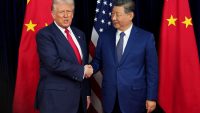
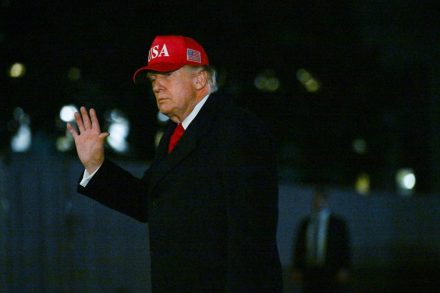
As the crisis in the Middle East has escalated, Donald Trump’s posturing has led many to question his strategy – and if he even has one. Geoffrey Cain, former foreign correspondent, expert on authoritarian regimes – and the author of this week’s cover piece in The Spectator, joins Freddy to explain why Trump’s ultimate target in the war is China. From the Belt and Road development initiative to more tacit bilateral support, President Xi has been playing a game of chess, to try to check America’s power. With Nicolás Maduro arrested and Ayatollah Khamenei assassinated, President Trump is showing his willingness to project American power, at whatever cost – so

iran
Une bouteille de beaujoulais nouveau à côté d'un repas McDonald's, France, 1994. (Photo by Robert DEYRAIL/Gamma-Rapho via Getty Images)

European culture is being Americanized

Did Mariah Carey mime or not when she headlined the opening ceremony of the Winter Olympics in Milan? That was the main takeaway from last month’s jamboree. Organizers have since suggested that the US singer did indeed lip-sync to Domenico Modugno’s “Nel Blu, dipinto di Blu” and the song that followed, her very own, “Nothing is Impossible.” “The technical, logistical and organizational complexities of an Olympic ceremony are not comparable to a live performance by a single artist,” said a spokesperson for the organizing committee.    Was there also a linguistic complexity in the decision? Perhaps Carey didn’t feel confident singing live in Italian in front of 75,000 spectators in the San Siro Stadium, plus the 9.2 million Italians watching the ceremony on television. Nevertheless, Maria Laura Iascone of the organizing committee called Carey’s performance “exceptional,” adding that

China Iran

Will the war in Iran really weaken China?

Analogies in international politics are tricky and easily abused, yet they remain irresistible because they can illuminate patterns that are otherwise hard to see. Consider the present moment.  Just as Ukraine has become a growing burden for Washington and its Western allies, Iran is now a strategic burden for Moscow and Beijing. The US, particularly under the Trump administration, appears to be placing less emphasis on supporting Ukraine. Something similar may be happening in reverse with Iran.  Moscow continues to provide Tehran with assistance – most notably intelligence on US military targets – but the broader pattern suggests caution rather than deep commitment. Beijing, despite its close ties with Iran,

Trump is heading for a hard reckoning over Iran

The social media video with which the White House has promoted its attack on Iran is, even by the standards we’ve come to expect from the Trump administration, grotesque on a level that still manages to be flabbergasting. Prefaced in the usual block capitals “JUSTICE THE AMERICAN WAY”, with a flag and flame emoji of the sort favored by pubescent boys rather than, usually, government agencies, it’s three quarters of a minute of pure brainrot. It isn’t a sign of Trump Derangement Syndrome to consider this video obscene It begins with Tony Stark in front of a bank of computers saying “Wake up. Daddy’s home.”, before launching into a rapid-cut

I love Dubai. Get over it

I am in Dubai where we are doing our best to keep calm and carry on. Granted, the sudden instruction to “seek immediate shelter’ in the early hours of Sunday morning was unnerving, but with the exception of excitable “influencers,” few people are cowering in their basements. On Saturday evening, I’d hotfooted it to the Palm Jumeirah. When my kids told me the Fairmont hotel had been hit, I didn’t believe them. The idea that the mad mullahs would start lashing out in this direction seemed completely absurd. Though the Emiratis take a far dimmer view of Islamic extremism than our own craven British government, they are careful not to

Won’t someone please think of Dubai’s influencers?

The human spirit is incredibly resilient really. Even in the depth of our concern over the Israeli-American war against Iran, the worry about what might come next, we can still find time to feel a warm and comforting sense of schadenfreude over the large number of British women with stapled-on lips who are cowering in their Dubai apartments as the Iranian shells come raining down. The name under which these women collectively labor is “influencer,” a term which, like “content creator” is close to meaningless and both could be usefully replaced by “shitgibbon” or “unemployable.” We laugh at their sense of entitlement, their shock that the real world has intruded

dubai
energy

The Iran war has exacerbated the failure of European energy policies

The history of the global trading system is a story of narrow and vulnerable waterways: the Suez and Panama Canals, the St. Lawrence Seaway, the Straits of Dover and the Skagerrak, which defends the entrance to the Baltic. But none has the power to seize up the global economy as much as the Strait of Hormuz. Barely 30 miles wide at the narrowest point and bounded on one side by the state of Iran, this passage is used for a quarter of the world’s oil supplies and a fifth of its liquified natural gas (LNG). As we have now discovered, the consequences of disruption are severe: on the day that

Trump isn’t the greatest threat to the Special Relationship

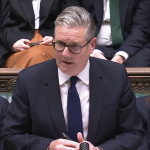
Britain’s refusal to fully back the United States over strikes on Iran has triggered an unusually public transatlantic row. It has also revived an old question about the future of the so-called “Special Relationship.” When Donald Trump returned to the White House last year, many in Westminster doubted Keir Starmer could build a workable relationship with him. The two men could hardly be more different in temperament or politics, and predictions of an early rupture were widespread. For a time, however, Starmer appeared to defy those expectations. Britain weathered Trump’s latest tariff wars better than most countries, and the Prime Minister seemed to have found a cautious way of managing

special relationship

Israel wants to destroy Hezbollah once and for all

At around 2:30 a.m. on March 2, Israel bombed Beirut’s mostly Shia southern suburbs in response to a Hezbollah rocket attack on northern Israel. The road heading into Beirut from South Lebanon and the city’s southern suburbs was jammed with cars filled with Lebanese fleeing further reprisals. Some 52 civilians were killed and 154 injured, a hefty butcher’s bill even in this part of the world. Most Lebanese are happy Hezbollah has been defanged, even if they wish it wasn’t thanks to Israel Hezbollah’s actions were a demonstration of their ongoing support for Iran, but goading Israel was a cataclysmic miscalculation. Not only did it guarantee that the Jewish state

Is it wise for Spain to goad Donald Trump?

Spain’s refusal to allow the United States to use its military bases at Morón de la Frontera (Seville) and Rota (Cádiz) for its war on Iran, arguing that the US-Israeli attacks are “unilateral military actions outside the United Nations charter” has brought the simmering conflict between Pedro Sanchez, Spain’s socialist Prime Minister and President Trump to a head.   Sanchez’s carefully calculated strategy has been to position himself as one of Trump’s leading opponents on the world stage On Wednesday Sanchez followed up by delivering a stunning rebuke to Trump. Speaking for ten minutes on national television, he said that his government’s position could be summed up in four words:

Why Iran marks the end of neoconservatism

45 min listen

Spectator columnist and Heritage Foundation fellow Daniel McCarthy joins Freddy to explain how Trump’s war with Iran could mark the end of an era, that of neoconservatism. For Daniel, there is no contradiction between Trump’s “America First” policy and its overseas interventions: Trump is pursuing a version of hegemony that will reduce the need for future interventions. If all goes to plan, this could mark an ideological watershed that stretches back to the first Gulf War in the early 1990s – but it’s a big “if.” What if the conflict spirals out of control? To what extent was this driven by Trump, or by Netanyahu? And what are the dynamics

Why I’m a proud Zionist

The bomb shelter reserved for ‘volunteers’ at Kibbutz Dafna near the town of Kiryat Shmona in northern Israel was definitely substandard. It was damp and smelly, more like a lavatory than a fortified bunker, and not considered fit for the kibbutzniks: a pampered species compared to us. But when the Soviet-built ordnance started raining down on us, it did its job. We emerged, unharmed, the following morning, blinking into the dawn light. The terrorists had not succeeded in hitting the kibbutz with a single Katyusha rocket. No, I’m not embedded with the Israel Defense Forces on the Lebanese border, although the area surrounding Kiryat Shmona was under fire from Hezbollah

Who’s winning the missile war?

In the early hours of February 28, 2026, Operation Epic Fury commenced with large-scale American and Israeli air strikes against Iranian military, command, missile and infrastructure targets. Since then, the United States and Israel have conducted extensive operations against Iran, while Iran has retaliated with missile strikes against US bases, Israel and its regional neighbors. This is an initial assessment of the missile war, which has defined the early stages of this conflict. Over the past two nights, Iranian ballistic missile usage appears to have decreased sharply The central military dynamic between Israel and the United States on the one hand, and Iran on the other, can be understood as

Why Iran is not Iraq

At the moment, a lot of people – notably including the British Prime Minister, Sir Keir Starmer – are comparing the current war with Iran with the Iraq invasion of 2003. Do they have a point? There are several common claims of comparison, some good, some bad. When Saddam fell, there was little appetite in Iraq for a western-aligned replacement The principal claim, in Starmer’s case, is that what happened in Iraq means the UK should steer well clear of any further involvement anywhere. It reminds me of the final scene in that magnificent film, Chinatown. A private detective moves to intervene to stop a horror unfolding but one of

Inside MAGA’s meltdown over Iran

When President George W. Bush invaded Mesopotamia in 2003, everybody laughed at Comical Ali, the bespectacled Iraqi information minister who kept insisting that the American “rats” were doomed as Saddam Hussein’s regime collapsed around him. The world moved on. Iran is not Iraq, as President Donald Trump’s supporters are so fond of saying, and Bush-era “forever wars” are no more. Plus, these days the comedy communications come directly from the Commander-in-Chief. At the weekend, as missiles rained across the Middle East, Trump’s cabinet officials mostly avoided attention-grabbing interviews. The boss, however, embarked on his own heroic PR campaign. Taking questions from just about any reporter who happened to call, he

Trump’s ultimate target in this war is China

The United States and Israel killed Ayatollah Khamenei, and Xi Jinping’s decade-long project to build an alternative to the American-led order died with him. For years, Beijing quietly assembled a network of dictatorships and client states designed to blunt American power. Iran supplied China with cheap oil and kept Washington bogged down in the Middle East. Russia waged war on Ukraine with Chinese materiel support, a gamble that was supposed to cement a powerful anti-western axis but has instead bled Moscow into dependence on Beijing. Regional proxies from Lebanon to Gaza added just enough chaos to stop Washington focusing on China. The Chinese Communist party (CCP) propped up Nicolas Maduro’s

What role will Turkey play in the Iran conflict?

34 min listen

Today NATO forces intercepted an Iranian missile headed for Turkey. While it remains unclear where that missile was intended to land, questions have emerged over whether President Erdoğan can continue his strategy of geopolitical pragmatism. So far the Turkish leader has managed to appeal to China, Russia, Europe and the US. But will he be forced to pick a side? Freddy discusses this with Spectator writer Owen Matthews and the recent reemergence of Kurdish forces being funded by Israel and the US to attack the Iranian regime.

gulf

The Gulf states have a big decision to make about Iran

Iran threatened harsh retaliation in the wake of the American-Israeli attacks that killed the country’s supreme leader and many of its senior commanders. Its response consisted of a barrage of missiles aimed at Israel. So far, so predictable. Yet, at the same time, Tehran chose to direct its firepower at neighboring Gulf states, countries that have been encouraging diplomacy and warning against war. Iran’s actions are an object lesson in how to alienate your friends and neighbors. So far, they have continued to employ the rhetoric of de-escalation. But that’s untenable if Iran continues to target their territory The Iranians targeted Saudi Arabia, the United Arab Emirates, Qatar, Bahrain, Kuwait,